

(UroToday.com) The 2025 European Association of Urology (EAU) Annual Meeting held in Madrid, Spain between March 21st and 24th 2025, was host to the Abstract Session 05: On the Horizon: Ongoing Trials in urology. Dr. Felix Guerrero-Ramos presented Abstract A0081: A Phase 1/2 study of detalimogene voraplasmid (EG-70) intravesical monotherapy for patients with high-risk non-muscle invasive bladder cancer – Trial in progress.
In 2020, over 221,000 new cases of bladder cancer were diagnosed in Europe, with 80% classified as non-muscle invasive bladder cancer (NMIBC), including 10–15% cases of carcinoma in situ. Meanwhile, 20% of cases were muscle-invasive or advanced bladder cancer. That same year, more than 73,000 deaths from bladder cancer were recorded in Europe.1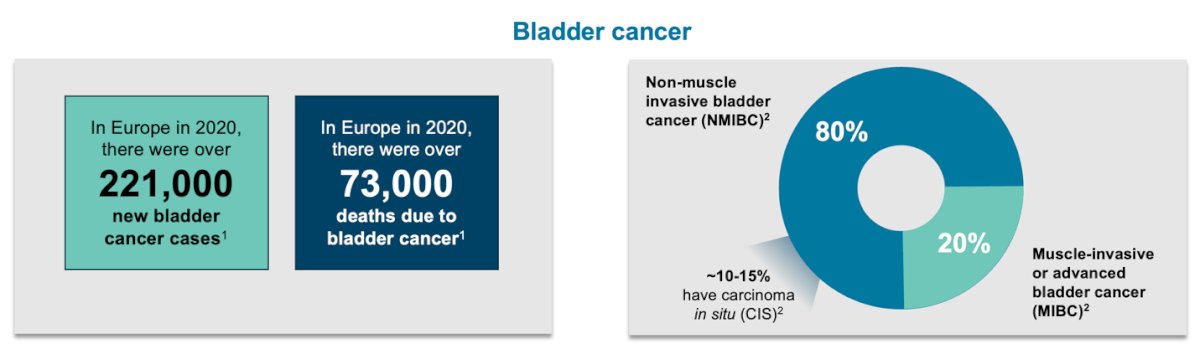
Intravesical Bacillus Calmette-Guérin (BCG) remains the gold-standard treatment for high-risk NMIBC. However, half of the patients experience recurrence or progression despite BCG and are considered BCG-unresponsive. For these patients, radical cystectomy remains the standard of care. Treatment options for high-risk NMIBC are limited, particularly in cases of BCG failure or shortage, highlighting the urgent need for effective bladder-sparing therapies.
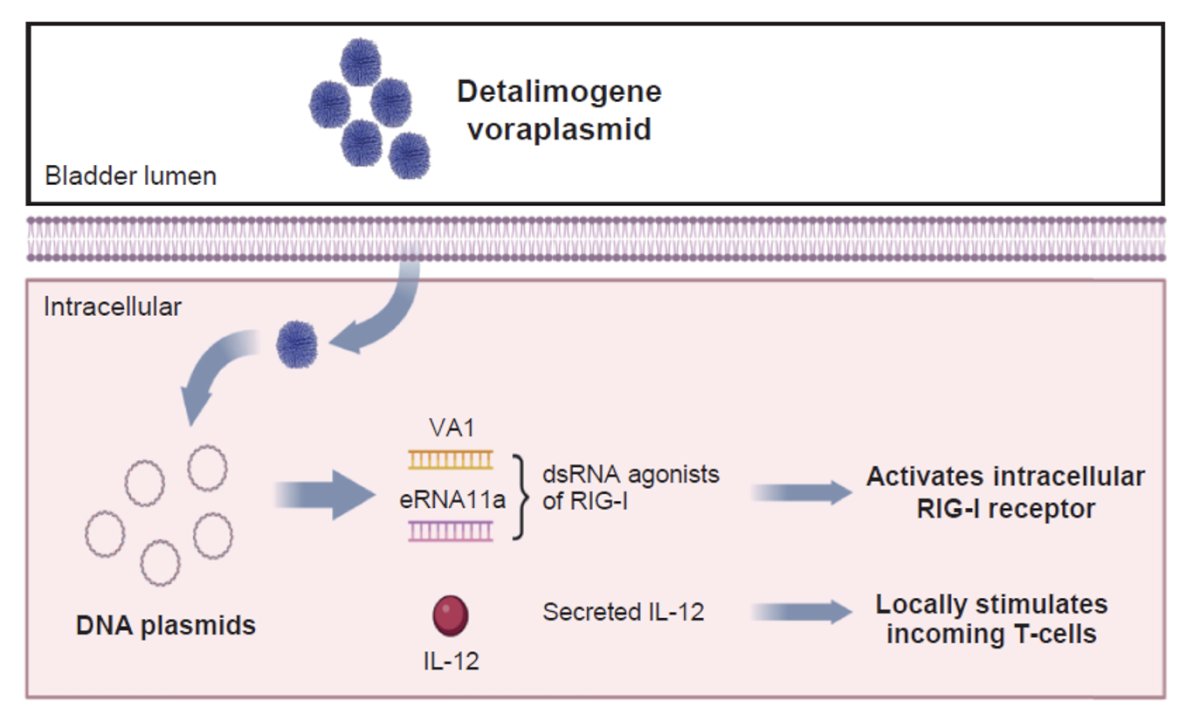
Detalimogene voraplasmid (EG-70) is an investigational, non-viral genetic medicine designed to eradicate tumors by synergistically stimulating innate and adaptive immune responses localized to the bladder:
- Innate immune system activation: Dual RIG-I agonists enhance NK cell stimulation and suppressor cell attenuation, promoting tumor killing. This also stimulates T-cell recruitment and neoantigen presentation.
- Adaptive immune system activation: Secreted IL-12 triggers a T-cell–dependent cytokine response, promoting tumor destruction and immune memory. Its bladder-restricted production may enhance therapeutic efficacy while minimizing systemic adverse events. The mechanism of action is illustrated below.
Detalimogene is designed to meet the practice needs of urologists. The product is designed for ease of use at the point of care, with simplified preparation and administration. It requires no extended vial thawing, pre-medication, or specialized storage, as the lyophilized powder is reconstituted in sterile water and remains stable at room temperature. Administration is straightforward via a 50 mL intravesical instillation with a 60-minute dwell time, without the need for detergents, bladder washes, or universal biosafety precautions. Unlike some therapies, it does not contain infectious or potentially immunogenic viruses or microbes, reducing the risk of infection. Additionally, it minimizes patient and clinic burden by eliminating the need for isolation, urine bleaching, or contact-avoidance protocols.
The phase 1 (dose-escalation) portion of the first-in-human LEGEND (NCT04752722) phase 1/2, open-label, multicenter study of EG-70 is complete. Dr Guerrero described the ongoing phase 2 portion of the study, which opened to enrollment in May 2023.
Eligibility criteria were as follows:
- Age ≥18 years
- ECOG performance status 0−2
- BCG-unresponsive NMIBC with CIS, with/without resected coexisting papillary tumors, ineligible for, or elected not to undergo, cystectomy
- Adequate bladder function with the ability to retain study drug for ≥60 minutes
Patients receive Detalimogene voraplasmid (EG-70) at 0.8 mg/mL in 50 mL via intravesical administration on weeks 1, 2, 5, and 6 of a 12-week cycle, for a total of four cycles. Treatment response is evaluated through cystoscopy, cytology, and bladder biopsy. Patients achieving a complete response at the end of cycle 4 proceed to maintenance treatment, receiving Detalimogene voraplasmid on weeks 1 and 2 of each 12-week cycle for up to four additional cycles. If a complete response is maintained at cycle 8, patients may either continue treatment for up to four more cycles or transition to follow-up. The LEGEND study design is illustrated below.
The LEGEND phase 2 study is a multicenter, multinational study and is currently enrolling patients in the United States, Canada, Australia, Europe, and the United Kingdom as shown below.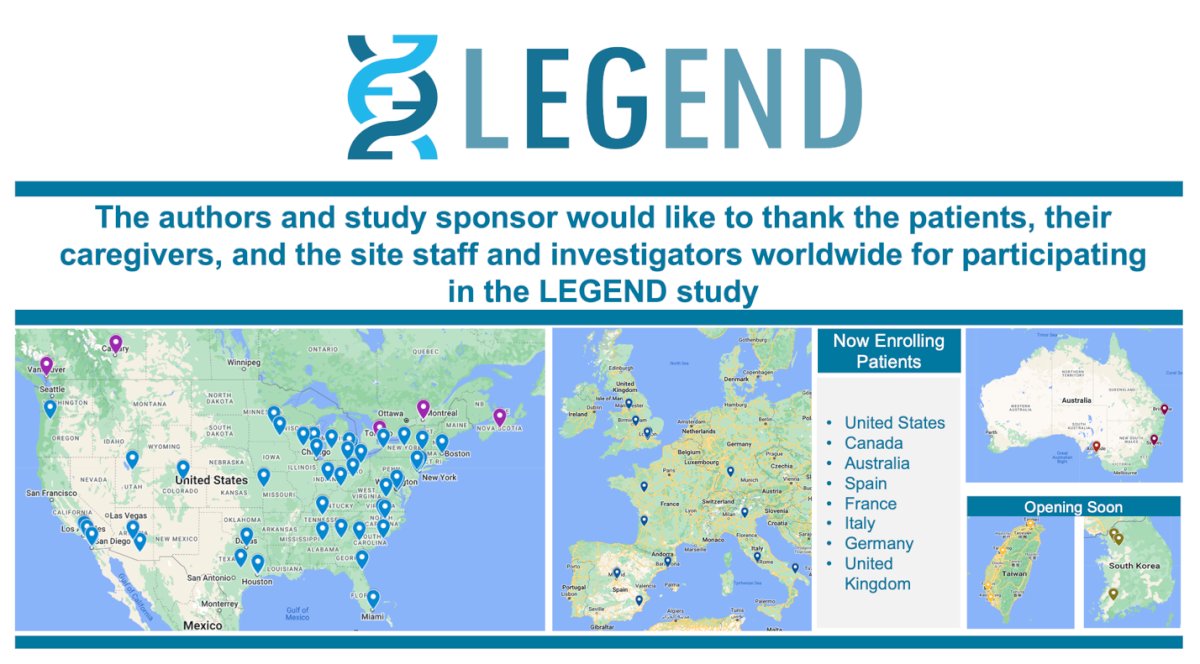
Presented by: Felix Guerrero-Ramos, MD, PhD, FEBU, Staff Urologist at Hospital Universitario 12 de Octubre, Department of Oncology, Madrid, Spain.
Written by: Julian Chavarriaga, MD – Urologic Oncologist at Cancer Treatment and Research Center (CTIC) via Society of Urologic Oncology (SUO) Fellow at The University of Toronto. @chavarriagaj on Twitter during the 2025 European Association of Urology (EAU) Annual Meeting held in Madrid, Spain between March 21st and 24th 2025
References:- Zhang Y, Rumgay H, Li M, Yu H, Pan H, Ni J. The global landscape of bladder cancer incidence and mortality in 2020 and projections to 2040. J Glob Health. 2023 Sep 15;13:04109. doi: 10.7189/jogh.13.04109. PMID: 37712386; PMCID: PMC10502766.
- Babjuk M, Burger M, Capoun O, Cohen D, Compérat EM, Dominguez Escrig JL, Gontero P, Liedberg F, Masson-Lecomte A, Mostafid AH, Palou J, van Rhijn BWG, Rouprêt M, Shariat SF, Seisen T, Soukup V, Sylvester RJ. European Association of Urology Guidelines on Non-muscle-invasive Bladder Cancer (Ta, T1, and Carcinoma in Situ). Eur Urol. 2022 Jan;81(1):75-94. doi: 10.1016/j.eururo.2021.08.010. Epub 2021 Sep 10. PMID: 34511303.