

(UroToday.com) The 2026 American Urologic Association (AUA) Annual Meeting hosted an advanced prostate cancer podium session. Mark Kidd presented an analysis of the utility of PROSTest, a novel blood-based mRNA assay, for predicting outcome to 177LuPSMA radioligand therapy.
177Lu-PSMA is a novel, targeted radioligand therapy (RLT) that is FDA-approved for the treatment of mCRPC. Treatment eligibility is based on positive 68Ga-PSMA-PET imaging; however, this cannot reliably predict treatment responses. This study investigated whether changes in PROSTest, a blood-based molecular assay utilizing prostate cancer-specific transcripts, after one cycle of therapy could predict treatment response to continued therapy with 177Lu-PSMA in mCRPC patients. The study investigators hypothesized that a decrease in the PROSTest score after the first cycle of treatment from baseline would be associated with response (PFS – PSA nadir) and overall survival (OS). Their goal was to determine who should continue with therapy.
This study included 268 patients (median age: 73 years, range: 58-89) with PET-positive mCRPC recruited from three different centers (Munster, Basel and Essen), who received a median of two (range: 1–6) cycles of 177Lu-PSMA. PROSTest scores were measured at baseline and following one treatment cycle. Samples for serum PSA levels were collected prior to every cycle and were measured using standard clinical assays. Clinical responses (PFS) were categorized by PSA nadir responses (greater than or less than 50% decreases). Changes in PROSTest scores (baseline versus after one cycle) were correlated with survival outcomes (PFS or OS) using area-under-curve receiver operating characteristic curves (AUC-ROC), Kaplan-Meier survival analyses, and quantified using hazard ratios (HRs).
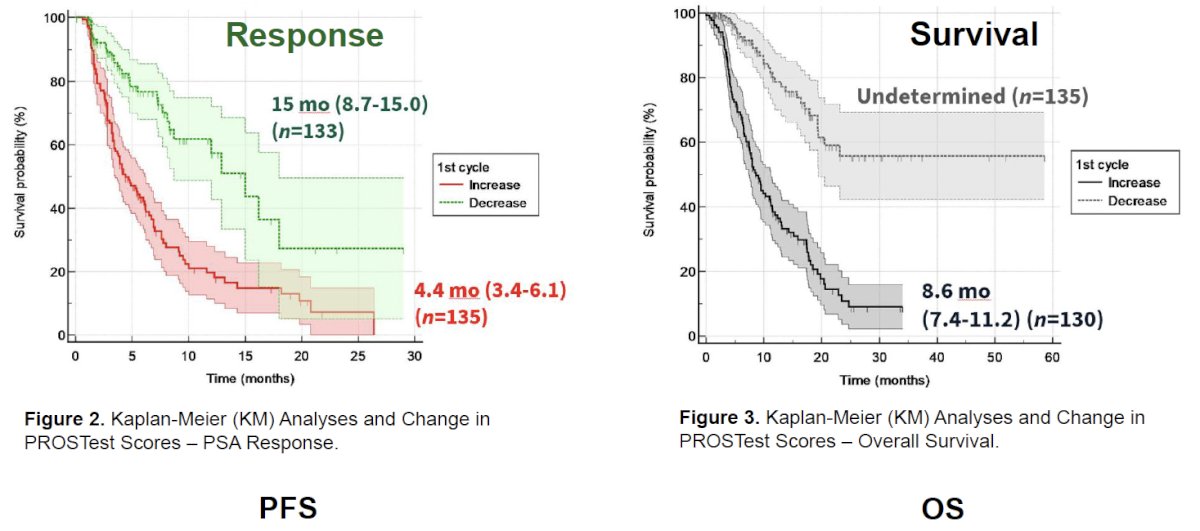
A total of 133 (50%) responded to treatment based on PSA nadir, and 135 were non-responders. The median PFS was 15 months (95% CI: 8.7–15.0] in responders versus 4.4 months (95% CI: 3.4–6.1) in non-responders.
Prostate cancer-related deaths were observed in 130 patients (49%). The median OS was 8.6 months (95% CI: 7.4–11.2] in deceased patients and undetermined in survivors (n=135).
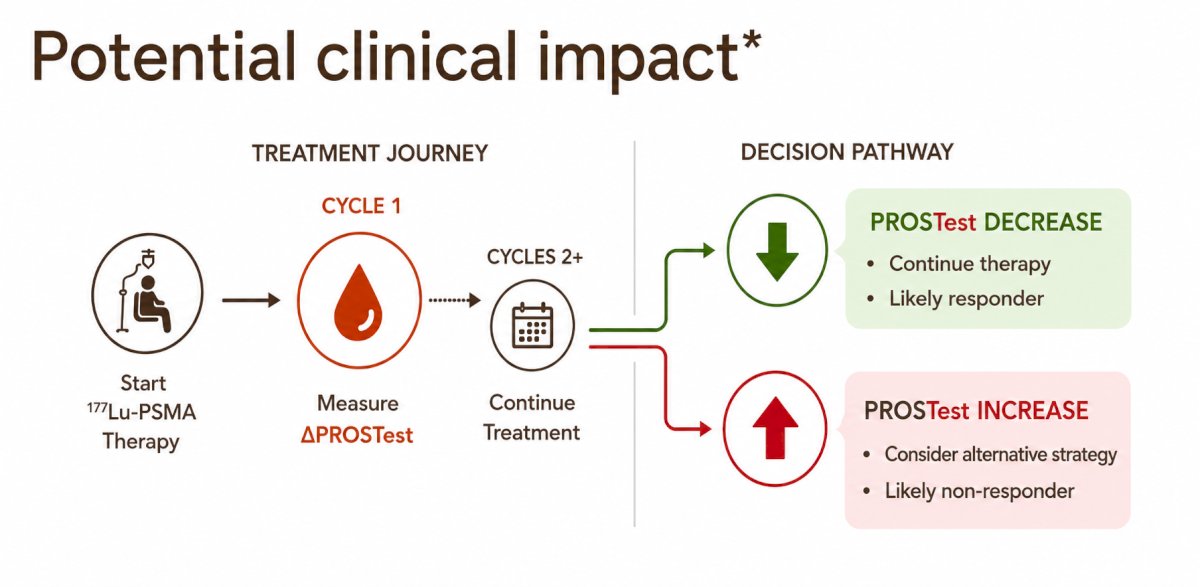
PROSTest was positive (≥50 scores) in all subjects. Changes in the PROSTest score correlated with both PFS and OS. Patients with a decrease in the PROSTest score after 1 cycle of 177Lu therapy had a significantly better response – the median PFS was 15 months (95% CI: 8.7–15) among those with a decrease, compared to 4.4 months (95% CI: 3.4–6.1) among those with increased scores.
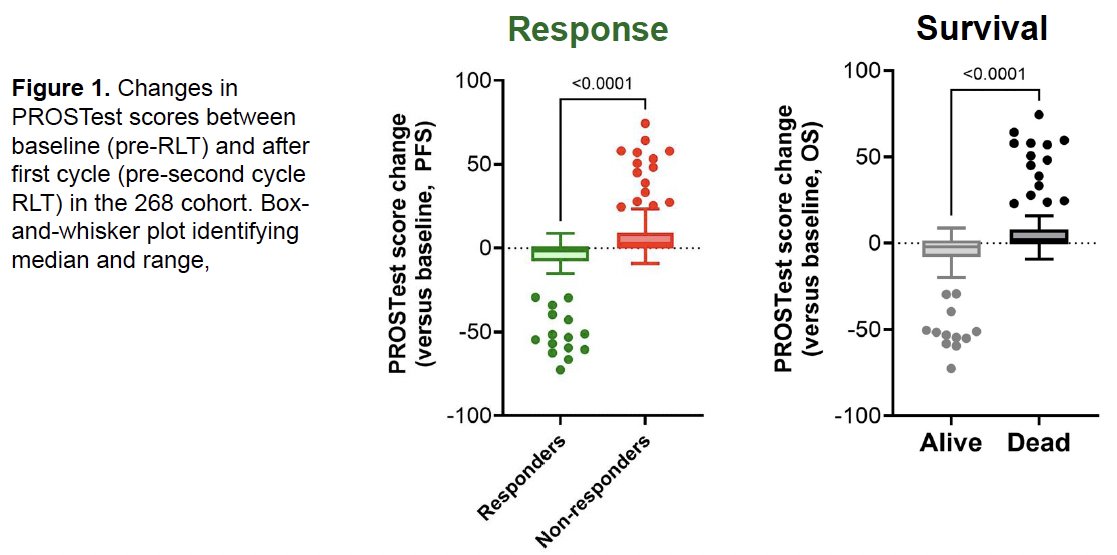
The PROSTest score after 1 cycle of 177Lu-PSMA therapy was significantly associated with both PFS (HR: 0.37, 95% CI: 0.36–0.71) and OS (HR: 0.26, 95% CI: 0.18–0.37).
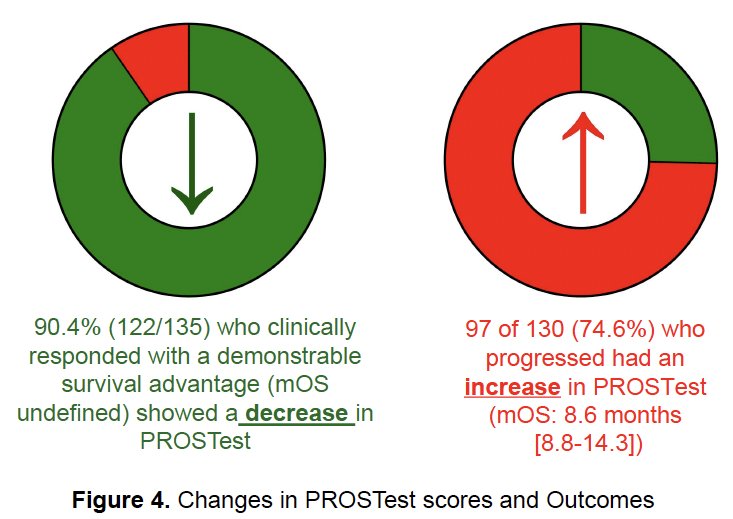
They demonstrated that 90% of clinical responders had a decrease in their PROSTest score after the 1st cycle of 177Lu-PSMA therapy, whereas 75% of those who progressed had an increase in their PROSTEST score.
Dr. Kidd concluded that this study demonstrates that early changes in the PROSTest score are significantly associated with PFS and OS in patients with mCRPC undergoing 177LuPSMA radioligand therapy.
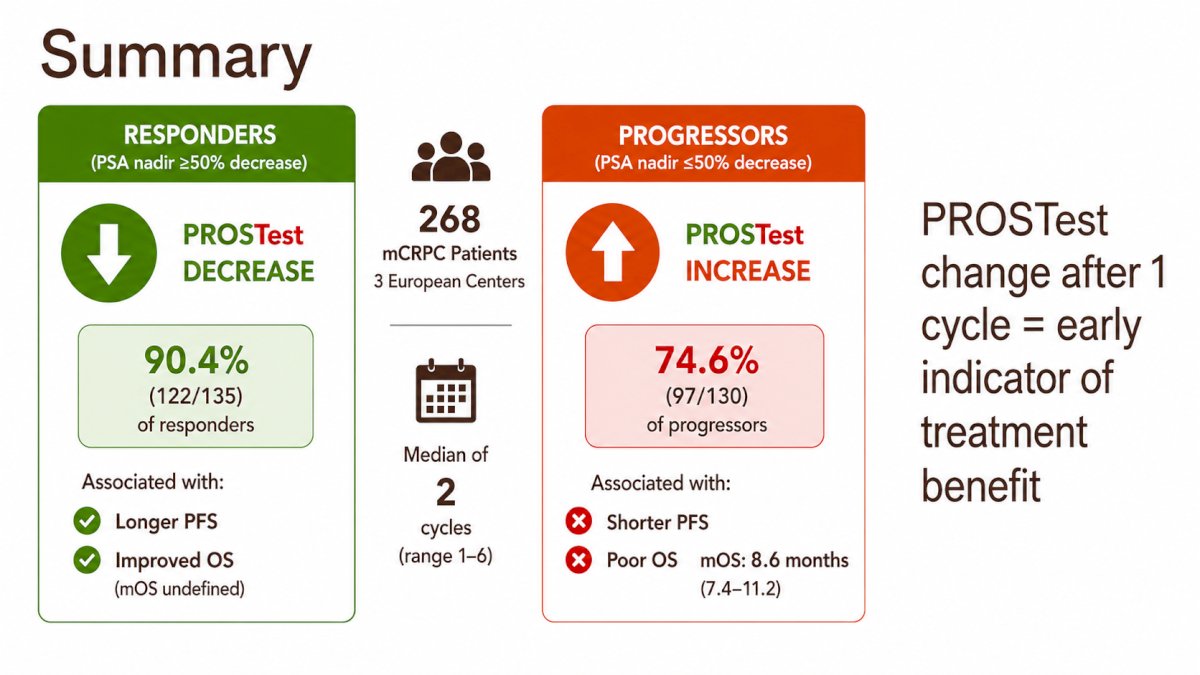
The results of this multi-center study suggest that this test may be a sensitive, early predictor of a therapeutic benefit with continued 177Lu-PSMA therapy and may act as a predictive biomarker for treatment personalization in mCRPC patients eligible for radioligand therapy.
Presented by: Mark Kidd, PhD, Scientific Director at Wren Laboratories, Branford, CT
Written by: Rashid K. Sayyid, MD, MSc, Assistant Professor, Urologic Oncologist, Department of Urology at The University of Arizona and Banner University Medical Center, Tucson, AZ – @rksayyid on X during the American Urological Association (AUA) 2026 Annual Meeting, Washington, DC, Fri, May 15 – Mon, May 18, 2026.
Related content: PROSTest mRNA Assay Tested for Response Prediction to Lutetium PSMA in mCRPC - Mark Kidd