

(UroToday.com) The American Urological Association's 2026 Annual Meeting, between May 15 – May 18, 2026 in Washington D.C., was host to the Clinical Trials in Progress: Bladder Cancer Session. Dr. Joshua Meeks presented the trial in progress: A phase 1/2 study of intravesical MK-3120 in participants with Bacillus Calmette-Guérin (BCG)-Naive or BCG-exposed high-risk non–muscle invasive bladder cancer.
Dr. Meeks began by noting that many patients with high-risk NMIBC continue to experience recurrence and progression despite standard treatment with intravesical BCG. While radical cystectomy remains the gold standard for recurrent or progressive disease after BCG, many patients prefer bladder-preserving approaches, highlighting the ongoing need for effective novel therapies in this disease space. He further explained that antibody-drug conjugates targeting Nectin-4, a cell adhesion protein highly expressed in urothelial carcinoma, have demonstrated significant activity in locally advanced and metastatic urothelial carcinoma, as well as in the perioperative setting for muscle-invasive bladder cancer.
Dr. Meeks explained that MK-3120 is an antibody-drug conjugate composed of a humanized anti–Nectin-4 monoclonal antibody linked through a proprietary cleavable linker to a cytotoxic topoisomerase 1 inhibitor payload. He noted that the agent is currently being evaluated in an open-label, multicenter phase 1/2 dose-escalation and dose-finding study assessing the safety and efficacy of intravesical MK-3120 in patients with high-risk NMIBC who are either BCG-naïve or BCG-exposed.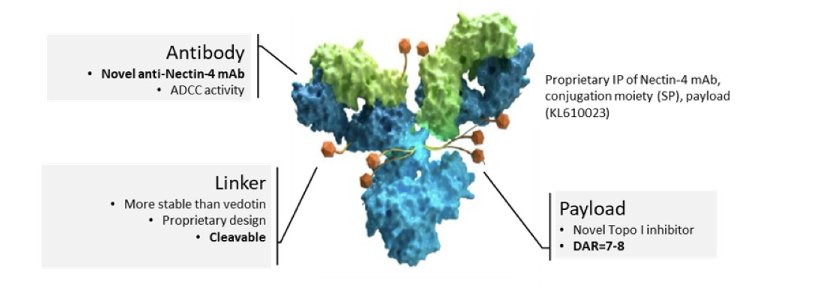
The study is an open-label phase 1 dose-escalation trial utilizing a Bayesian Optimal Interval (BOIN) design to evaluate intravesical MK-3120 (MK-3120 I-VESIC) in patients with high-risk NMIBC. Eligible patients include adults with histologically confirmed CIS with or without papillary high-risk disease who are either BCG-naïve or BCG-exposed and have an ECOG performance status of 0–2. Patients receive weekly intravesical MK-3120 for 6 weeks during the induction phase across escalating dose levels (DL1–DL3), with a target dose-limiting toxicity rate of 30%. Disease assessment is performed at week 12 using cystoscopy, urine cytology, and biopsy/imaging when indicated. Patients achieving a complete response proceed to monthly maintenance MK-3120 for up to 9 additional doses, while non-responders discontinue study treatment. The primary endpoint is safety and tolerability, with complete response rate at 3 months evaluated as a key secondary endpoint. The study design is presented below: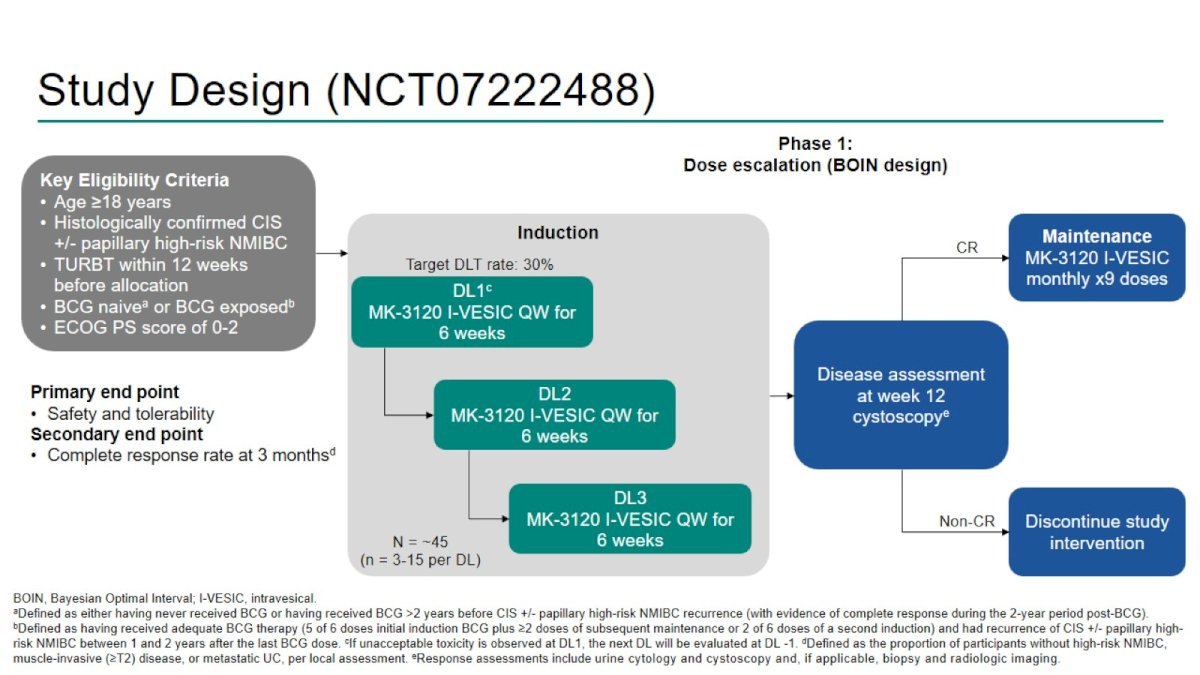
Lastly, the study is actively enrolling patients across a broad international network of sites spanning North America and Europe, including centers in Austria, Belgium, Canada, France, Greece, Israel, the Netherlands, Norway, Spain, Turkey, and the United States.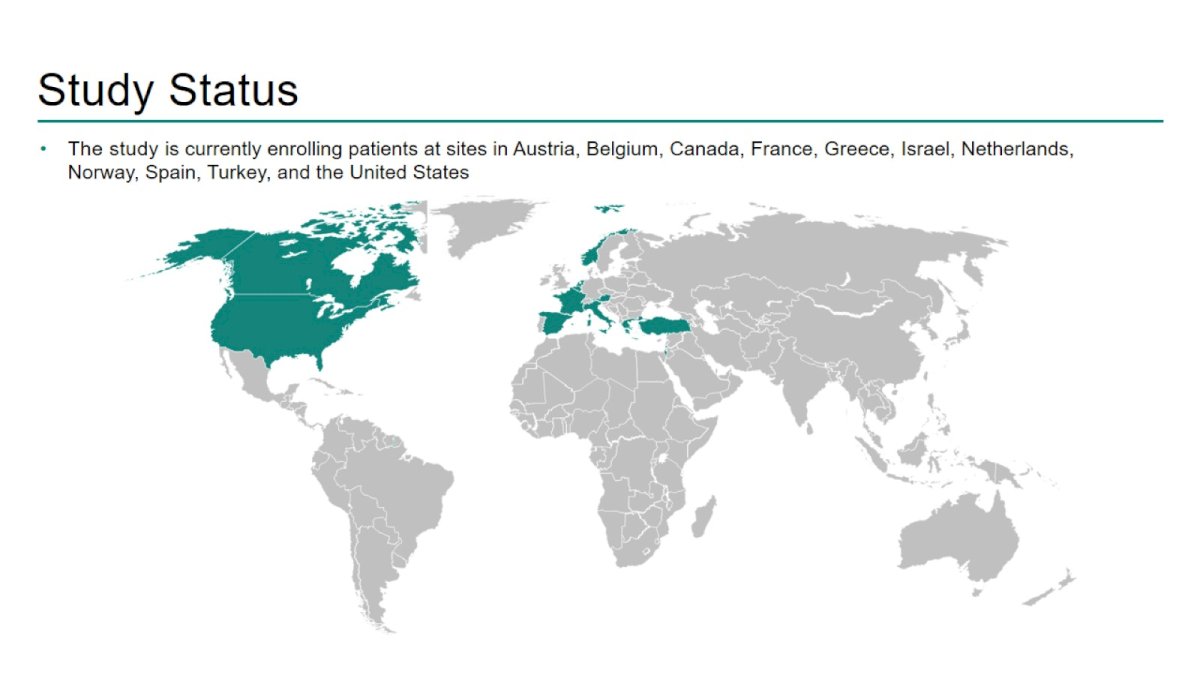
Presented by: Joshua J. Meeks, MD, PhD, Oncologist, Associate Professor of Urology, Biochemistry and Molecular Genetics, Northwestern University Feinberg School of Medicine, Jesse Brown VA Medical Center in Chicago, Chicago, IL
Written by: Julian Chavarriaga, MD, Clinical Assistant Professor, Urologic Oncologist, Department of Urology at Penn State Health @chavarriagaj on Twitter during the American Urological Association (AUA) 2026 Annual Meeting, Washington, DC, Fri, May 15 – Mon, May 18, 2026.
Related content: Intravesical Anti-Nectin-4 ADC in NMIBC: Phase 1/2 Trial Design and Tolerability - Joshua Meeks