

(UroToday.com) The 2026 AUA annual meeting featured a planning to plenary, behind the scenes of leading Urology clinical trials session, and a presentation by Dr. Noah Hahn discussing perspectives of running clinical trials as a medical oncologist in academic practice. For his presentation, Dr. Hahn discussed 5 pearls from his experience conducting clinical trials in academic oncology.
Pearl #1: Understand the Business Model
It is important for investigators to understand whether the trial is being conducted by “big pharma” versus a small biotech company, since the goals for each company running the trial will likely be much different. Also, it is important to understand if the trial is a US trial versus a global trial, as the jurisdiction ramifications will be quite different. Third, is there a single versus multiple sponsoring companies running this trial? Is this a device trial, a diagnostic trial, or a therapeutic trial? Finally, is this a trial with the goal of a route to a revenue stream versus a trial for scientific discovery?
Pearl #2: Understand the Future State
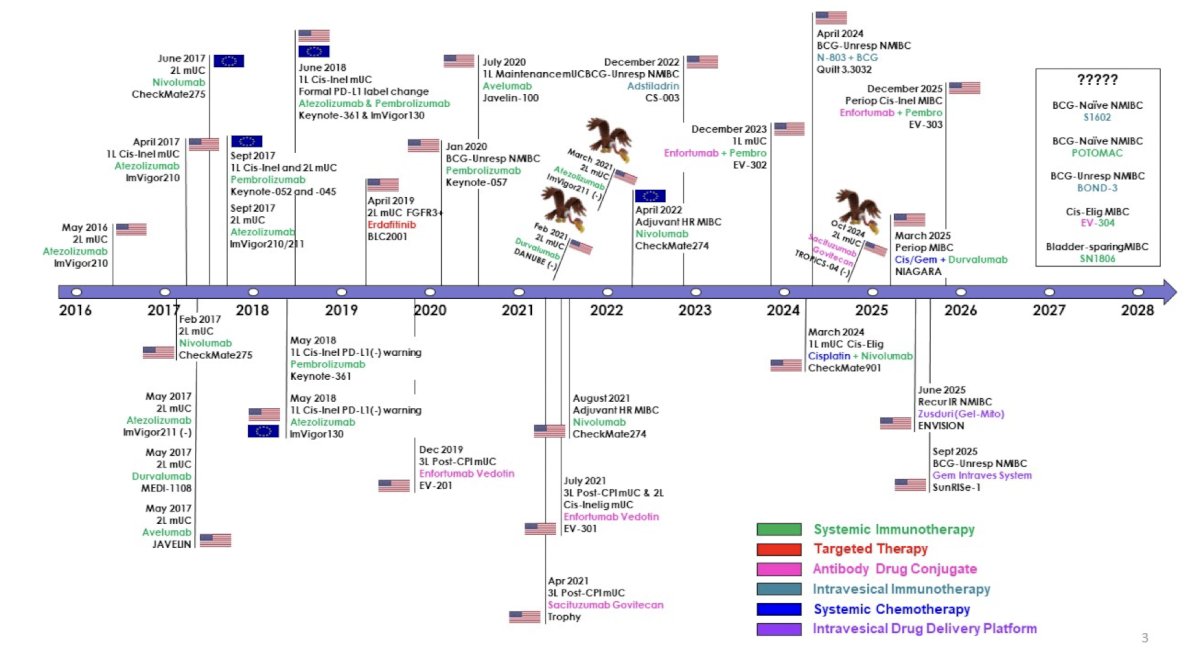
Dr. Hahn notes a favorite quote from hockey player Wayne Gretzky, “skate to where the puck is going, not where it has been,” which he states is similar to being involved in clinical trials: where is the field going? To further highlight this point, he notes the following approvals (and retractions) for non muscle invasive bladder cancer therapeutics stratified by US and European Union jurisdictions:
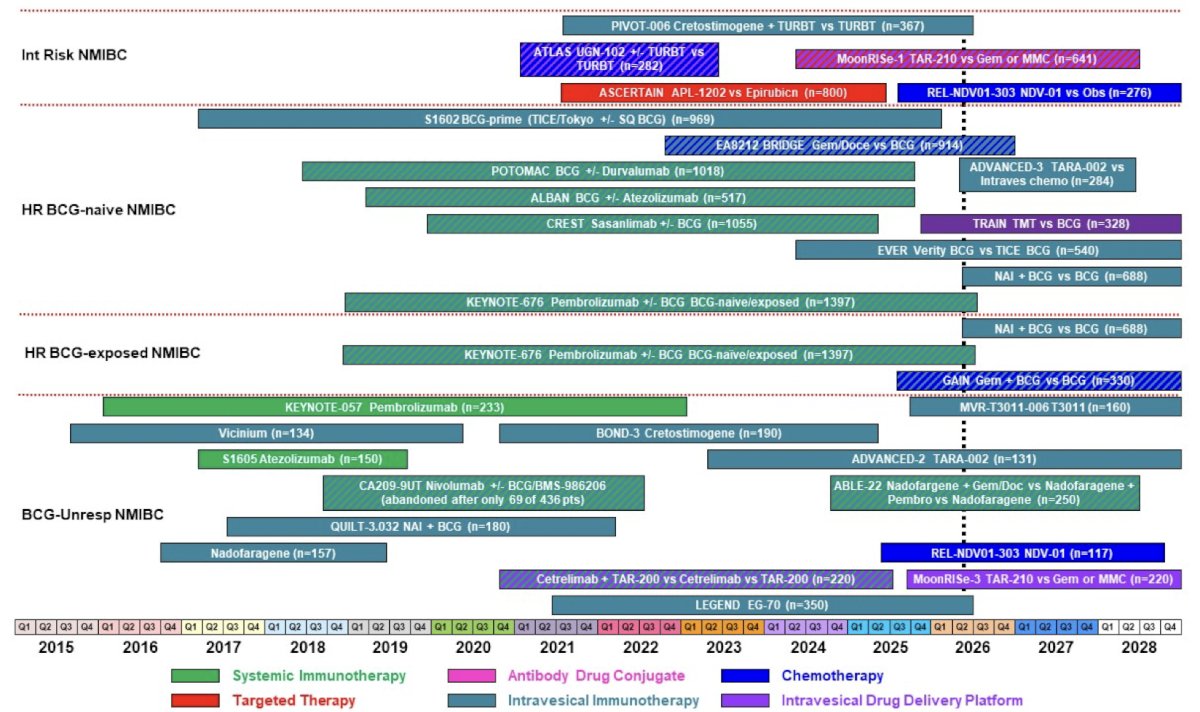
Moreover, the following figure notes the timeline of non muscle invasive bladder cancer approvals, importantly highlighting what’s coming in 2026-2028:
Pearl #3: Relationships Matter
Dr. Hahn notes a quote from Mark Cuban, “Business happens over years and years. Value is measured in the total upside of a business relationship, not by how much you squeezed out in any one deal.” Relationships matter with regard to our industry colleagues, clinical research office staff, budget and contracting personnel, members of the IRB, multi-disciplinary providers, and multi-site collaborators.
Pearl #4: Understand What you are Asking
This is important because we need to be cognizant of how much time and effort tasks are taking for those we are asking to work. Further, how much is it costing for what we are asking? Respect is also paramount for what we are asking, particularly with regard to the expectation of what and how long it reasonably takes to complete these tasks.
Part 5: Be Relentless
To highlight this point, Dr. Hahn quoted baseball player Babe Ruth “It’s hard to beat a person who never gives up.” Notably, 80% of the work is after the trial concept is approved, and we have to be a watchdog for threats to success. Dr. Hahn emphasized that we have to anticipate a fail-fast reflex from industry and rapidly implement amendments and corrective action plans. We need to educate and assert action when appropriate, taking ownership of problems, not just our success. Finally, and importantly, we must publicize and praise everyone but ourselves when success is achieved.
Presented by Noah Hahn, MD, Johns Hopkins, Hospital, Baltimore, MD
Written by: Zachary Klaassen, MD, MSc – Urologic Oncologist, Associate Professor of Urology, Georgia Cancer Center, Wellstar MCG Health, @zklaassen_md on Twitter during the American Urological Association (AUA) 2026 Annual Meeting, Washington, DC, Fri, May 15 – Mon, May 18, 2026.