

(UroToday.com) The American Urological Association (AUA) 2026 Annual Meeting featured an invasive bladder cancer session and a presentation by Matthew Kirschenbaum discussing differences in patient reported and objective functional recovery trajectories following radical cystectomy. Patient reported outcomes and objective performance measures capture distinct aspects of recovery after radical cystectomy, which may be differentially impacted by frailty. At the AUA 2026 annual meeting, the investigators compared functional recovery trajectories using patient reported outcomes and objective performance and examined whether baseline frailty modified these patterns.
This was a prospective cohort study of patients aged ≥ 60 years undergoing radical cystectomy at a tertiary center (University of Washington). Patient reported function was measured using the instrumental activities of daily living burden subscale of the Cancer and Aging Resilience Evaluation Frailty Index (CARE-FI; 0-6, higher = less function):
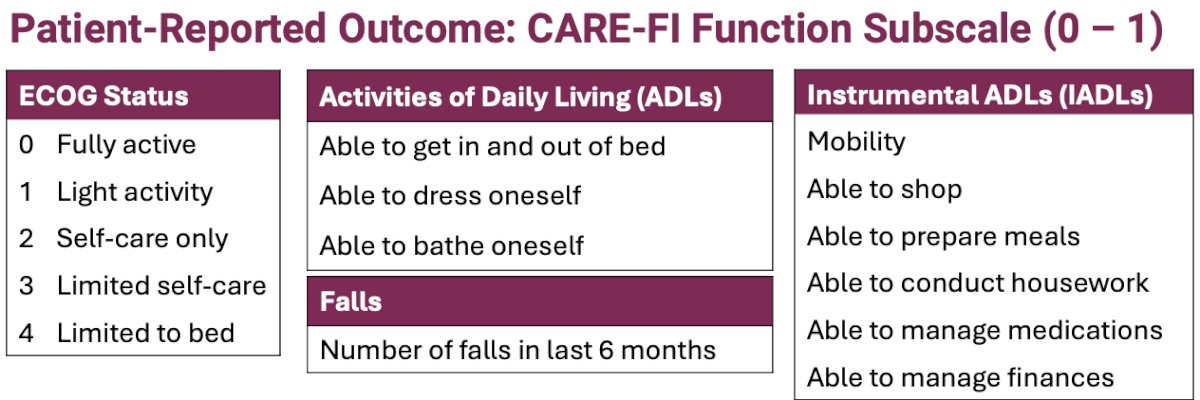
Objective function was measured by the Short Physical Performance Battery (0-12, higher = better function):

Assessments were collected preoperatively and at 2 weeks, 3, 6, 9, and 12 months postoperatively. Baseline frailty was quantified using the CARE-FI global score (0-1). A linear mixed-effects models evaluated functional trajectories and their associations with baseline frailty and Time × Frailty interactions. Models adjusted for age, Charlson Comorbidity Index (CCI), and neoadjuvant chemotherapy.
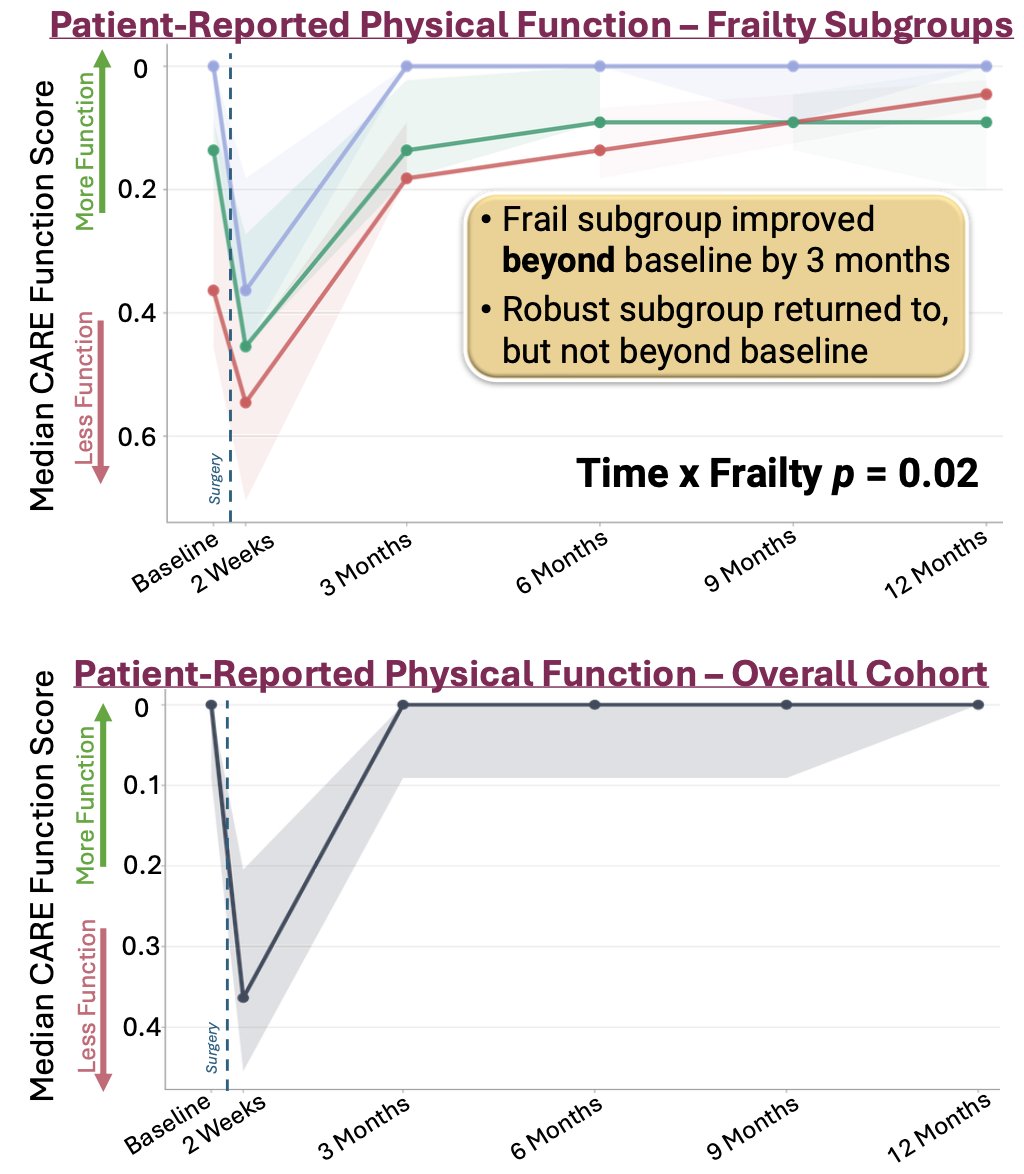
Among 69 patients, the median age was 71 years (IQR 68-76), 78% were male, 54% received neoadjuvant chemotherapy, and baseline frailty identified 48 robust patients, 12 pre-frail, and 9 frail patients. The median preoperative instrumental activities of daily living independence (6 of 6 tasks) declined to 2 at 2 weeks post-radical cystectomy (median instrumental activities of daily living burden 4 [IQR 1-4]) and returned to baseline by 3 months:
Short Physical Performance Battery fell from 10 (IQR 9-11) to 9 (IQR 7-10) at 2 weeks, recovering to 10 (IQR 9-11) by 12 months:
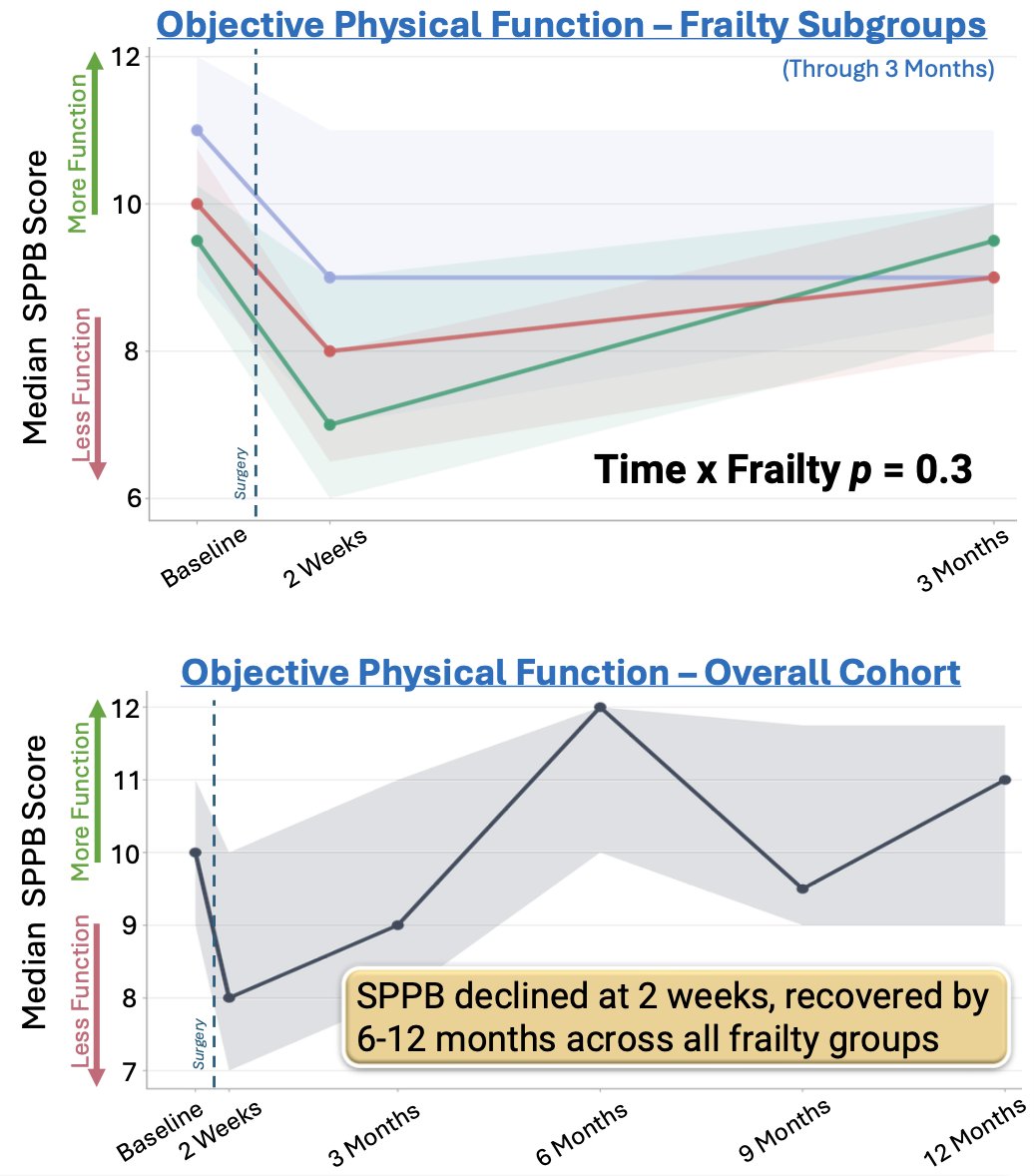
In mixed-effects models, both instrumental activities of daily living burden and Short Physical Performance Battery changed significantly over time (p < 0.001 and p = 0.008, respectively). Greater baseline frailty was associated with higher instrumental activities of daily living burden (β = +3.5, p < 0.001) and slower improvement (Time × Frailty β = –0.47, p = 0.03). Frailty was not associated with Short Physical Performance Battery trajectory (p = 0.8).
Matthew Kirschenbaum concluded his presentation discussing differences in patient-reported and objective functional recovery trajectories following radical cystectomy with the following take home points:
- Objective measures of physical fitness are not independently associated with recovery trajectories after radical cystectomy
- Standard performance testing may systematically misclassify patient reported function
Presented by: Matthew Kirschenbaum, University of Washington, Seattle, WA
Written by: Zachary Klaassen, MD, MSc – Urologic Oncologist, Associate Professor of Urology, Georgia Cancer Center, Wellstar MCG Health, @zklaassen_md on Twitter during the American Urological Association (AUA) 2026 Annual Meeting, Washington, DC, Fri, May 15 – Mon, May 18, 2026.