

(UroToday.com) The 2026 AUA annual meeting featured a non-invasive bladder cancer session and a presentation by Dr. Mark Tyson discussing primary results from PATAPSCO, a US-based, phase IIIb, open-label, single-arm, multicenter study assessing durvalumab in combination with BCG for BCG-naïve, high-risk non-muscle invasive bladder cancer.
For decades, the standard of care for BCG-naïve, high-risk non-muscle invasive bladder cancer has been TURBT followed by BCG induction and maintenance (induction + maintenance) therapy. However, ~40% of patients experience recurrence or progression within 2 years. In the POTOMAC study, 1 year of durvalumab in combination with BCG (induction + maintenance) demonstrated a statistically significant and clinically meaningful improvement in disease-free survival versus BCG (induction + maintenance) in patients with BCG-naïve, high-risk non-muscle invasive bladder cancer, after a median follow-up of >5 years.1 PATAPSCO is a Phase 3b study evaluating 1 year of durvalumab in combination with BCG (induction + maintenance) in patients with BCG-naïve, high-risk non-muscle invasive bladder cancer in the United States. The primary objective is to assess the safety and tolerability of durvalumab + BCG (induction + maintenance) combination therapy at 6 months post-treatment initiation. At AUA 2026, Dr. Tyson presented the primary analysis for the phase 3b PATAPSCO study.
Patients were ≥18 years of age with BCG-naïve, local histologically confirmed high-risk non-muscle invasive bladder cancer who had undergone complete resection of Ta/T1 papillary disease with TURBT (patients with residual CIS were eligible). Patients received durvalumab (1,500 mg every 4 weeks for 13 cycles for a maximum of 12 months) + BCG (induction + maintenance; weekly × 6 weeks [induction] and 3 weekly doses for up to 24 months):
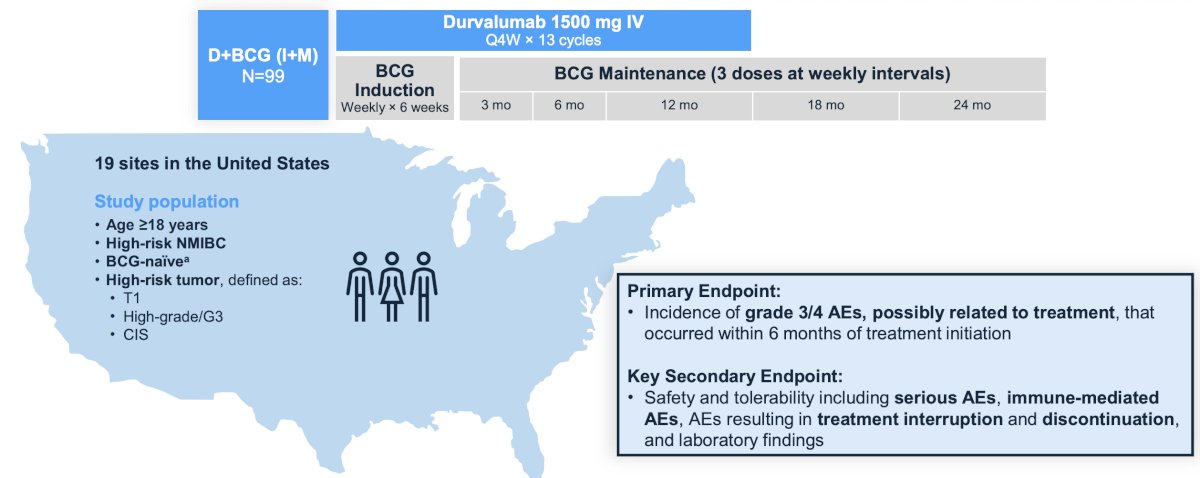
The primary endpoint was the incidence of grade 3 or 4 adverse events possibly related to treatment that occurred within 6 months of study treatment initiation.
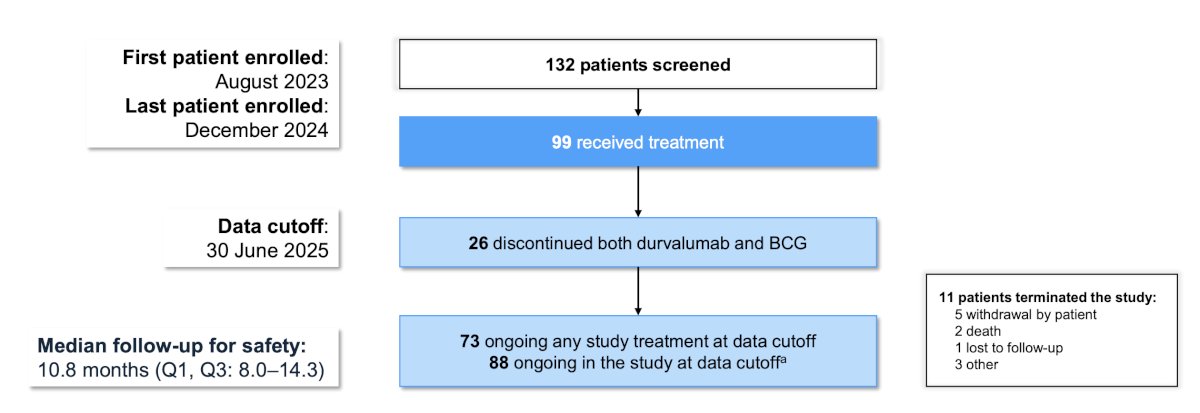
In PATAPSCO, the first patient was enrolled in August 2023, and the last patient was enrolled in December 2024. Among 132 patients screened, 99 received treatment, 26 discontinued both durvalumab and BCG, with 88 patients ongoing in the study at the data cutoff of June 30, 2025:
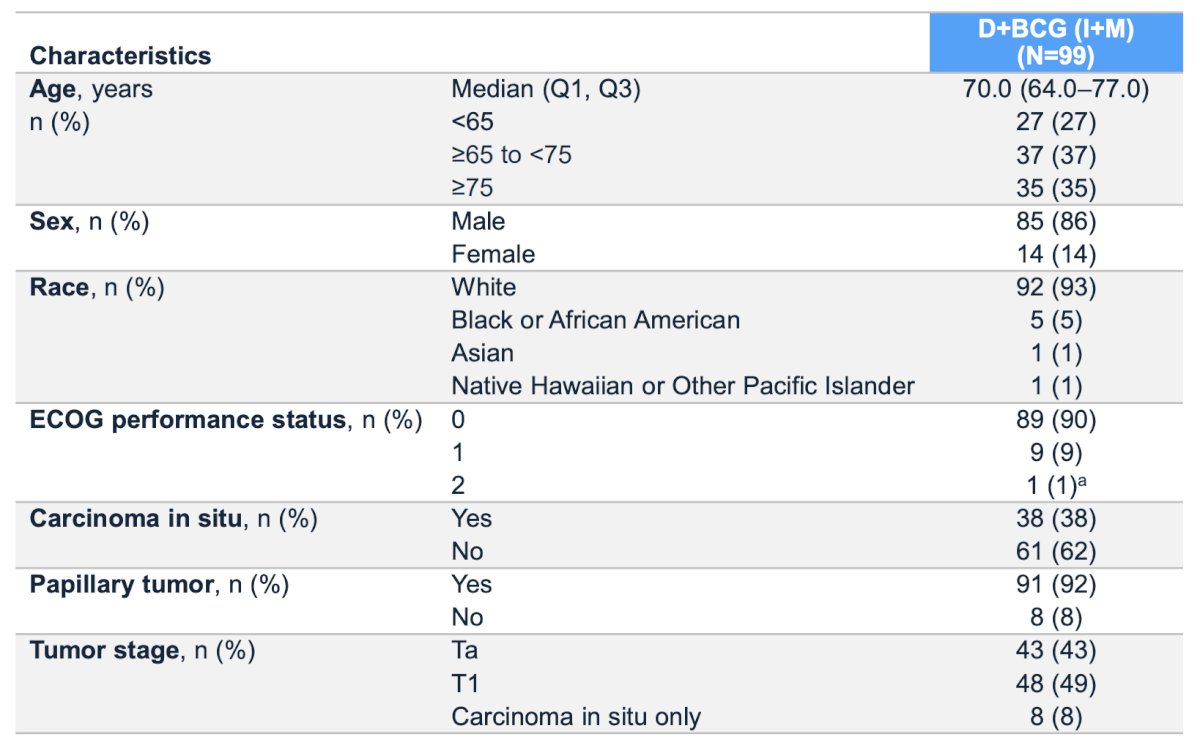
The median patient age was 70.0 years (IQR 64.0-77.0), most patients were male (85.9%), 43 (43.4%) patients had papillary tumor stage Ta, and 48 (48.5%) had T1 disease:
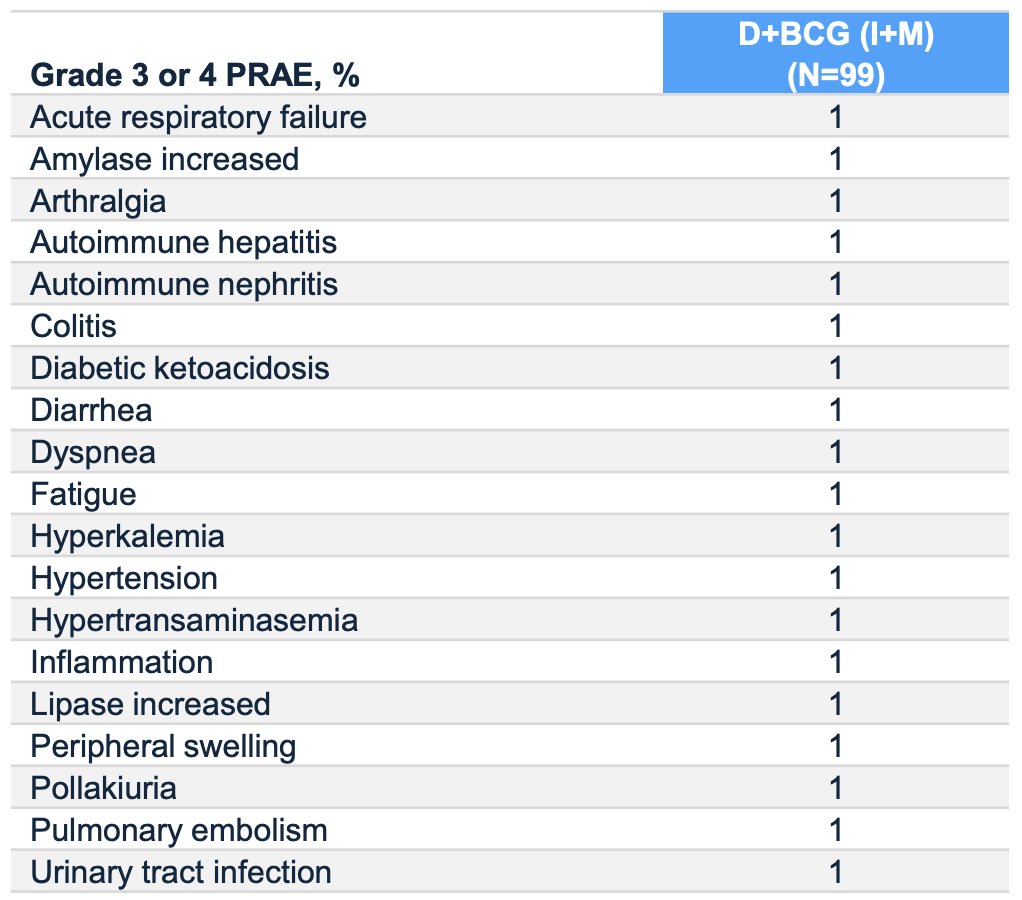
Within 6 months of treatment initiation, 12 patients (12.1%) had a grade 3 or 4 adverse event that was possibly related to any study treatment (investigator assessed), with no new safety signals identified:
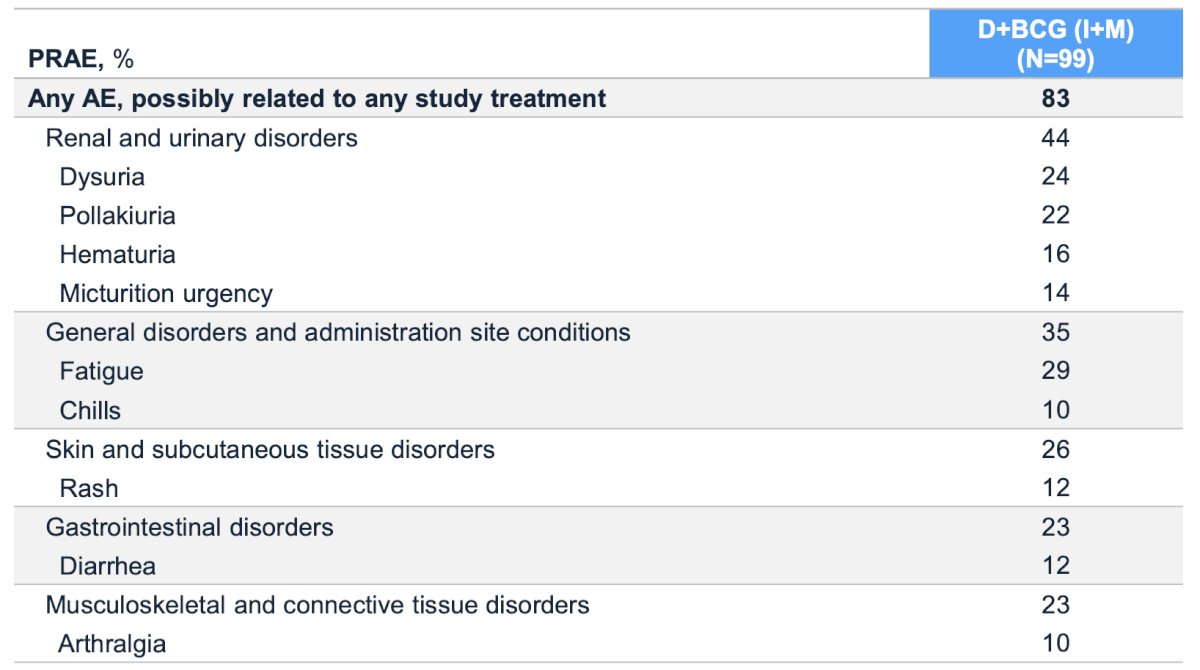
Overall, the safety profile of durvalumab + BCG (induction + maintenance) was consistent with those of the individual therapies:
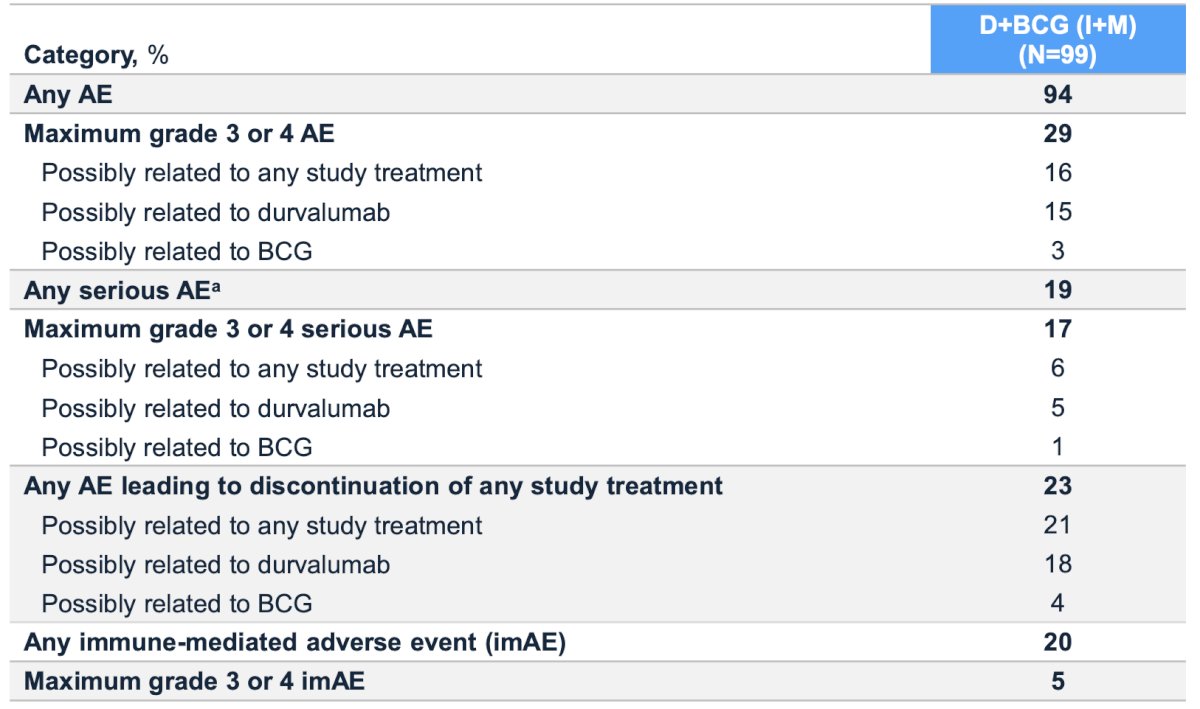
There were no unexpected adverse events reported with durvalumab in combination with BCG (induction + maintenance):
The majority of immune-related adverse events were low-grade and consistent with the safety profile of durvalumab:
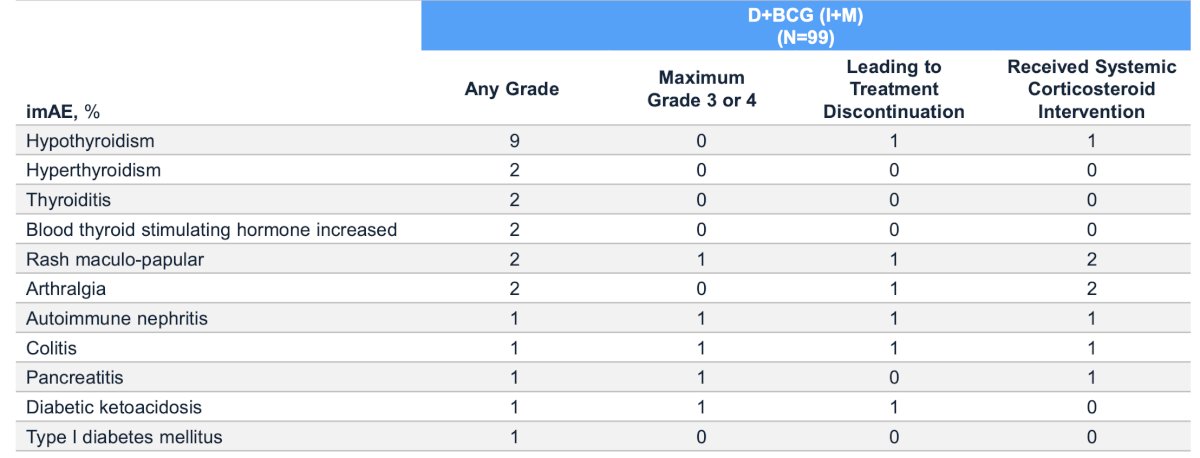
At the data cutoff date, immune-related adverse events had resolved in 6 of 20 (30%) of patients, and 10 out of 24 reported immune-related adverse events (42%) had resolved.
Dr. Tyson concluded his presentation discussing primary results from PATAPSCO with the following take-home points:
- In US patients with BCG-naïve, high-risk non-muscle invasive bladder cancer, the safety profile of durvalumab + BCG (induction + maintenance) was consistent with those of the individual therapies, with no new safety signals identified
- The majority of immune-related adverse events were low-grade and consistent with the known safety profile of durvalumab
Presented by: Mark Tyson II, MD, MPH, Urologic Oncologist, Mayo Clinic, Scottsdale, AZ
Written by: Zachary Klaassen, MD, MSc – Urologic Oncologist, Associate Professor of Urology, Georgia Cancer Center, Wellstar MCG Health, @zklaassen_md on Twitter during the American Urological Association (AUA) 2026 Annual Meeting, Washington, DC, Fri, May 15 – Mon, May 18, 2026.
Reference: