

(UroToday.com) The 2026 American Urological Association annual meeting featured an invasive bladder cancer session and a presentation by Dr. Naoto Wakita discussing real-world outcomes of enfortumab vedotin in patients with advanced urothelial carcinoma ineligible for clinical trials. Urothelial carcinoma is an aggressive malignancy with a poor prognosis. Although platinum-based chemotherapy and immune checkpoint inhibitors are established systemic therapies, their efficacy remains limited. Enfortumab vedotin, an antibody–drug conjugate, demonstrated a survival benefit after chemotherapy and immune checkpoint inhibitors in clinical trials, becoming a new standard of care.1
However, patients with impaired renal function (eGFR 30 ml/min/1.73 m2), poor performance status (ECOG performance status ≥2), or anemia (hemoglobin 9 g/dL) were excluded from pivotal trials. The efficacy and safety of enfortumab vedotin in such trial-ineligible patients remain unclear. This study, presented at AUA 2026, evaluated real-world outcomes of enfortumab vedotin in this population.
Dr. Wakita and colleagues retrospectively analyzed 180 patients with advanced urothelial carcinoma treated with enfortumab vedotin between December 2021 and December 2024 at Kobe University Hospital and affiliated institutions. Patients were classified as trial-eligible or ineligible according to the EV-301 exclusion criteria (eGFR <30, ECOG performance status ≥2, or hemoglobin <9 g/dL). Baseline clinical characteristics, laboratory data, and treatment-related variables were collected from medical records. Tumor response was evaluated according to RECIST version 1.1. Progression-free survival, overall survival, objective response rate, and adverse events (CTCAE v5.0) were assessed.
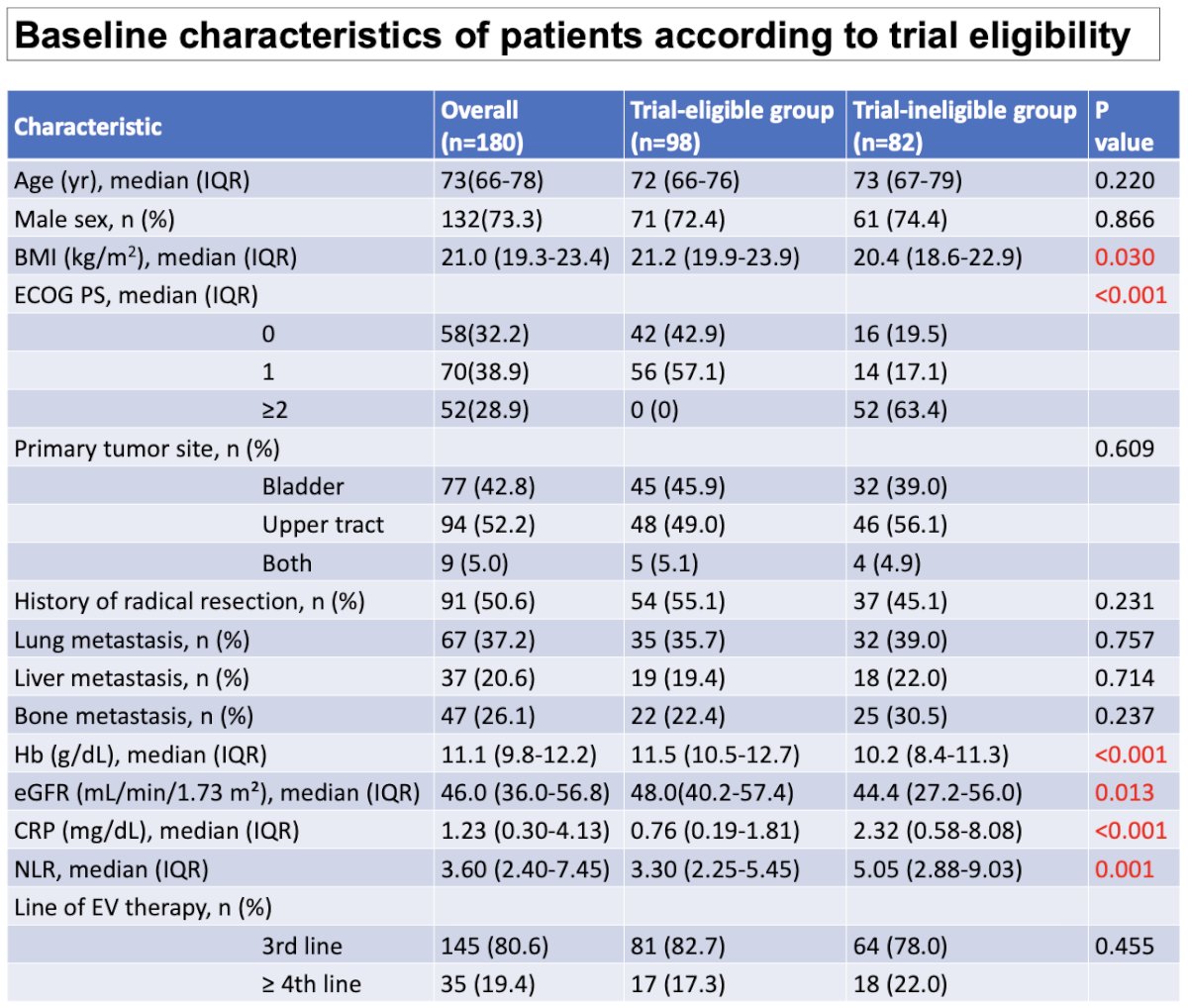
There were 180 patients in the study, including 98 in the trial-eligible group and 82 in the trial-ineligible group. The median age was 73 (IQR 66-78) years, and 73.3% were male. Patients in the trial ineligible group compared to the trial eligible group were more likely to be: ECOG performance status >= 2 (63.4% versus 28.9%, p < 0.001) and anemic (hemoglobin 10.2 versus 11.1, p < 0.001):
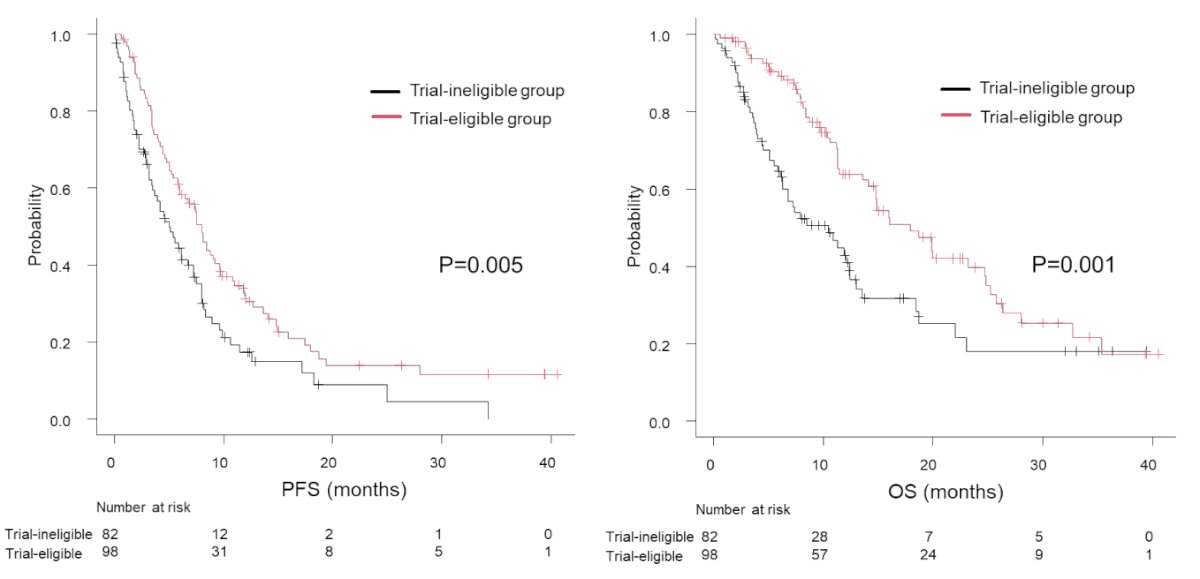
The median progression-free survival was 8.0 months (95% CI 5.9–9.0) in eligible patients and 5.0 months (95% CI 3.4–7.2) in ineligible patients (p = 0.005). The median overall survival was 17.9 months (95% CI 14.1–24.8) versus 10.5 months (95% CI 6.3–12.4) (p = 0.001):
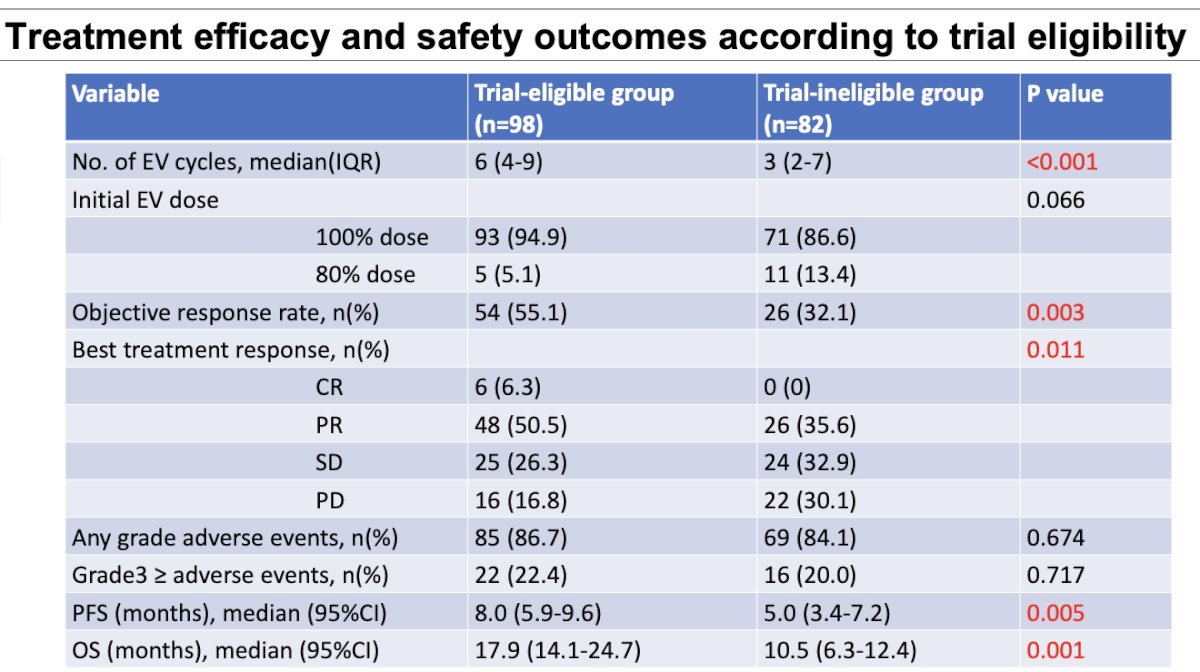
Objective response rate was higher in the eligible group (55.7% versus 32.1%, p = 0.003). Rates of all-grade (86.7% versus 84.1%, p = 0.674) and grade ≥3 adverse events (22.4% versus 20.0%, p = 0.717) were comparable:
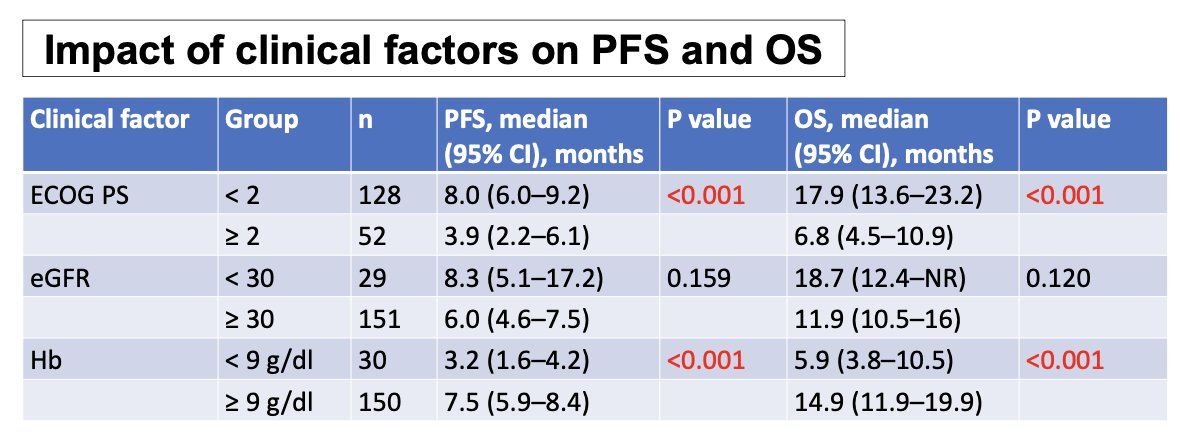
Further, progression-free survival and overall survival were significantly shorter in patients with ECOG performance status ≥2 or hemoglobin <9 g/dL, whereas no significant differences were seen between eGFR <30 and ≥30:
Dr. Wakita concluded this presentation discussing real-world outcomes of enfortumab vedotin in patients with advanced urothelial carcinoma ineligible for clinical trials with the following take-home points:
- Trial-ineligible patients showed inferior efficacy for enfortumab vedotin compared with trial-eligible patients, while safety was comparable between the two groups
- Poor performance status and anemia were associated with worse survival outcomes, whereas renal impairment had no significant impact
- These findings suggest that enfortumab vedotin remains a feasible treatment option even in trial-ineligible patients
Presented by: Naoto Wakita, MD, Kobe University Graduate School of Medicine, Kobe, Japan
Written by: Zachary Klaassen, MD, MSc – Urologic Oncologist, Associate Professor of Urology, Georgia Cancer Center, Wellstar MCG Health, @zklaassen_md on Twitter during the American Urological Association (AUA) 2026 Annual Meeting, Washington, DC, Fri, May 15 – Mon, May 18, 2026.
Reference:
- Powles T, Rosenberg JE, Sonpavde GP, et al. Enfortumab Vedotin in Previously Treated Advanced Urothelial Carcinoma. N Engl J Med 2021 Mar 25;384(12):1125-1135.