

(UroToday.com) The American Urological Association's 2026 Annual Meeting, between May 15 – May 18, 2026 in Washington D.C., was host to the Interactive Poster (IP20): Bladder Cancer: Non-invasive II session. Dr. Wassim Kassouf presented an interactive poster, IP20-17: Interim Analysis of Light-Activated TLD-1433 in a Phase II Clinical Study of BCG-Unresponsive Non-Muscle Invasive Bladder Cancer Carcinoma In-Situ.
Dr. Kassouf began by highlighting that BCG-unresponsive high-risk NMIBC with CIS ± resected Ta/T1 disease remains an important unmet clinical need in urologic oncology, underscoring the necessity for novel bladder-sparing therapeutic approaches for patients who are unwilling or unfit to undergo radical cystectomy.
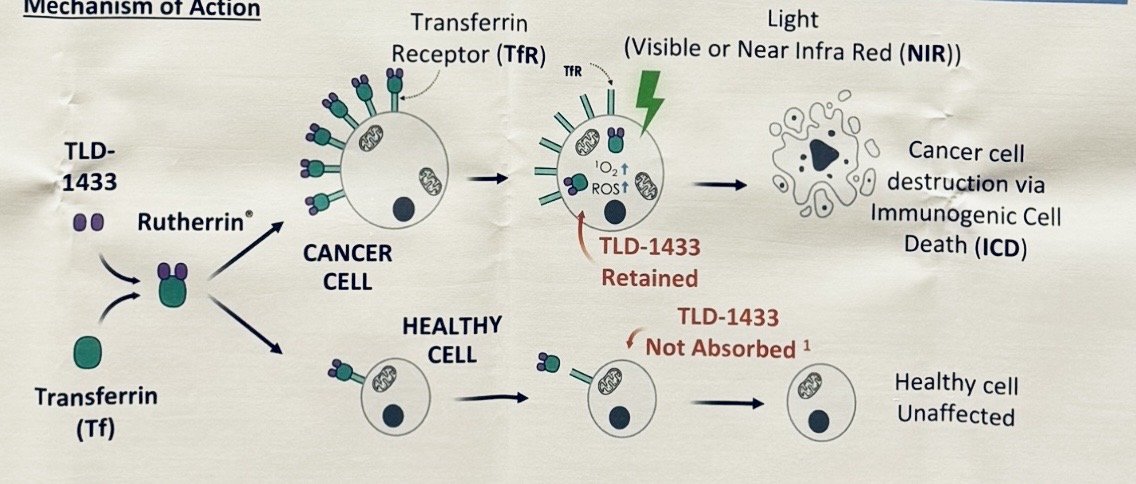
TLD-1433 is a ruthenium-based photosensitizer designed to selectively accumulate within bladder cancer cells through transferrin receptor–mediated uptake.1 Following intravesical instillation, activation with visible or near-infrared light generates reactive oxygen species, leading to targeted tumor cell destruction through immunogenic cell death while largely sparing surrounding healthy urothelial tissue. The mechanism of action of TLD-1433 is shown below:
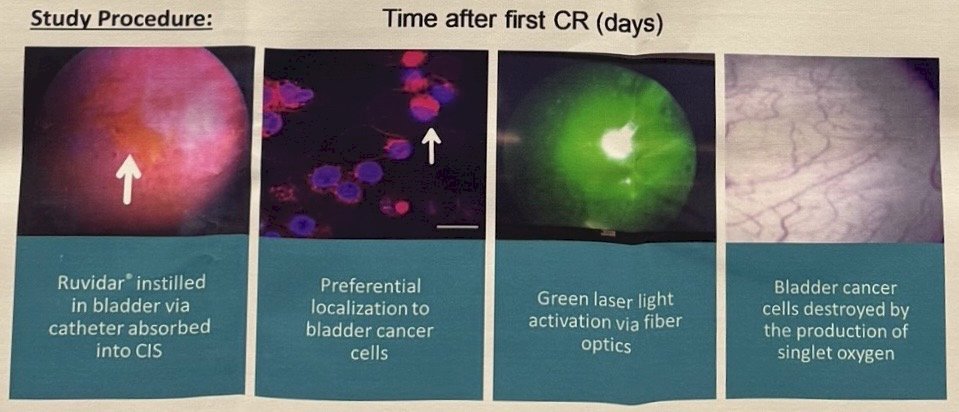
Treatment consisted of intravesical instillation of TLD-1433 followed by photoactivation using the TLC-3200 laser system. After administration of the photosensitizer into the bladder, visible green light (520 nm) was delivered through a laser emitter catheter to activate the drug locally within the urothelium. This photodynamic approach was designed to selectively induce tumor cell destruction while minimizing damage to surrounding normal tissue.
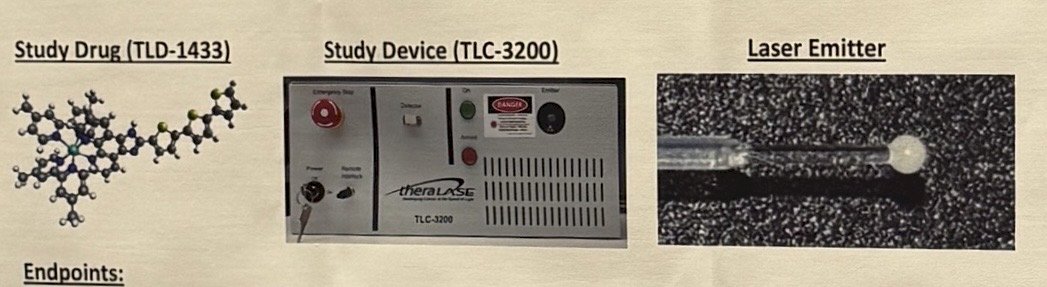
This study enrolled 91 patients, of whom 82 completed treatment and follow-up assessments. Patients underwent intravesical instillation of TLD-1433 followed by photoactivation using the TLC-3200 laser system under general anesthesia. The treatment utilized a 520 nm laser with light activation delivered at 90 J/cm² as shown in the figure below.
The study endpoints included:
- Primary endpoint: Complete response (CR) at any time during follow-up
- Secondary endpoint: Duration of complete response at 12 months following initial CR
- Tertiary endpoint: Serious adverse events, including grade ≥4 toxicities directly related to the study drug or device that did not resolve within 450 days after treatment
Notably, the study population was predominantly older, male, and heavily pretreated. Overall, 81% of patients were ≥65 years old, 81% were male, and 83% were White. Most patients had CIS-only disease at enrollment (81%), while smaller proportions had concomitant CIS + T1 (12%) or CIS + Ta disease (7%). Importantly, nearly all patients (98%) had received at least 7 prior BCG instillations, highlighting the heavily pretreated nature of this BCG-unresponsive cohort.
In terms of efficacy, 58 of 89 evaluable patients (65.2%) achieved a complete response at any point during follow-up. Among responders, 40.4% maintained a complete response at 450 days. Long-term durability was also observed in a subset of patients, with 19.2% remaining in complete response at both 2 and 3 years. Importantly, all 82 patients included in the safety analysis met the predefined tertiary safety endpoint criteria.
Notably, Kaplan-Meier analysis demonstrated durable responses in a subset of patients achieving an initial complete response. The probability of maintaining a complete response was 48.6% at 1 year, 34.5% at 2 years, and 25.4% at 3 years.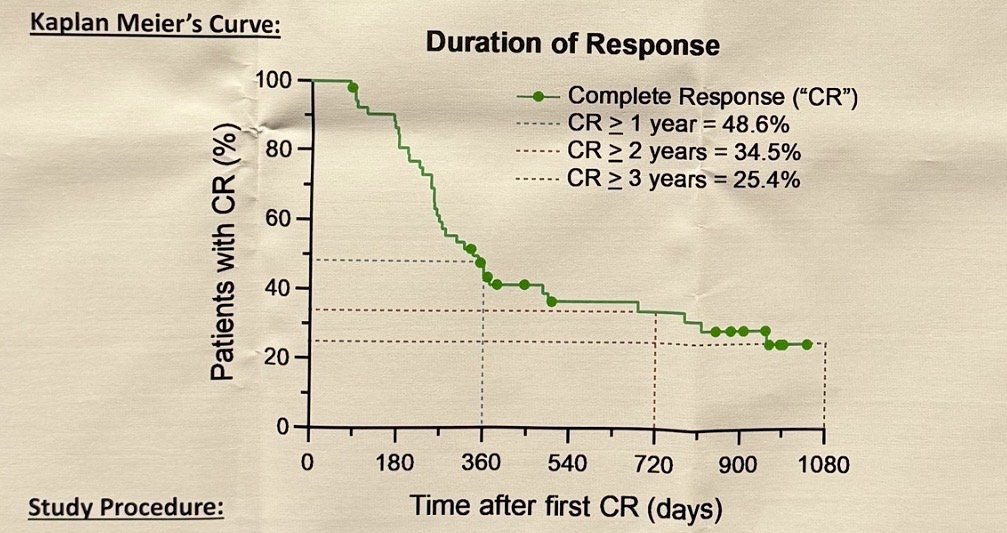
Lastly, the investigators highlighted durable responses in a subset of patients, with a median duration of response of 14.8 months. Several patients maintained ongoing complete responses beyond 2 and 3 years following treatment, as shown in the Swimmers plot below.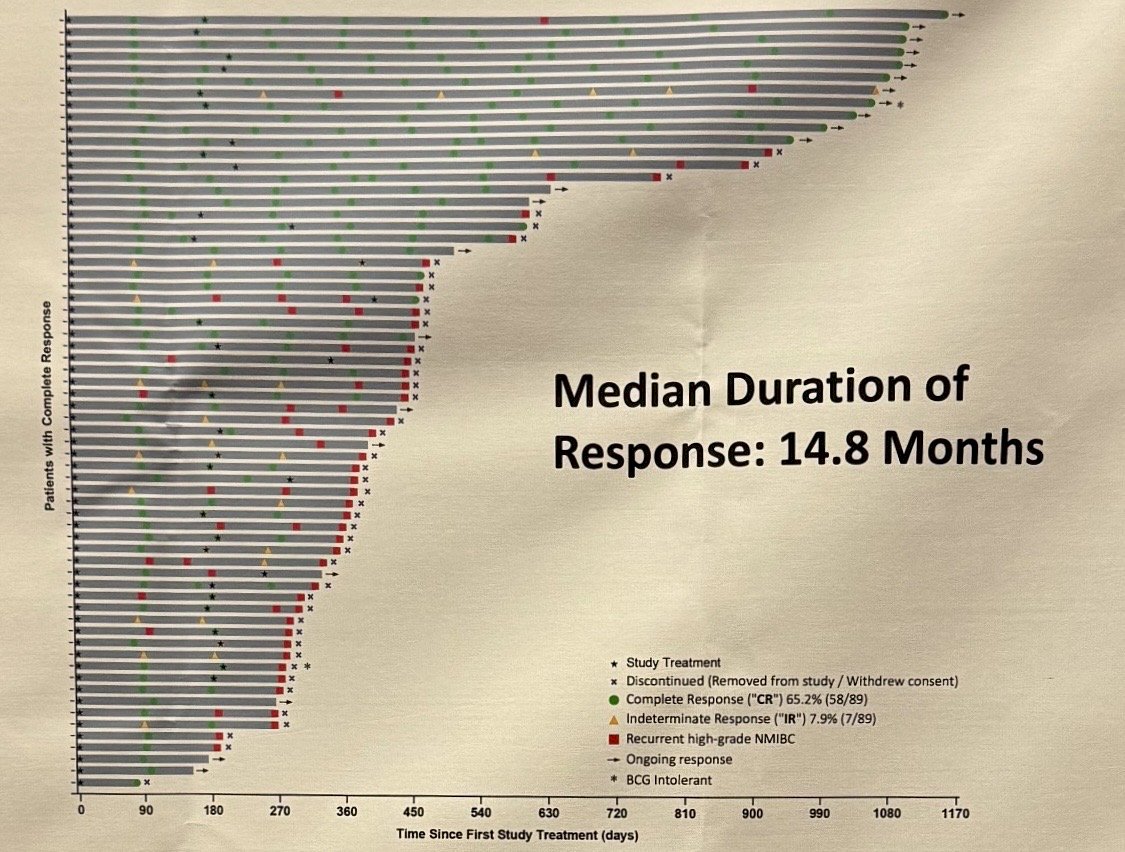
Treatment-emergent adverse events were common but generally manageable and did not meet criteria for serious adverse events. The most frequently reported toxicities included urinary frequency (65%), hematuria (62.5%), and urinary urgency (53.8%), with most symptoms resolving within one month following treatment.
Dr. Kassouf concluded his presentation with the following key points:
- Light-activated TLD-1433 demonstrated encouraging activity in patients with BCG-unresponsive high-risk NMIBC with CIS ± Ta/T1 disease
- A complete response at any time was achieved in 65.2% of evaluable patients
- Among responders, 40.4% maintained a durable complete response at 450 days
- Responses appeared durable in a subset of patients, with ongoing complete responses extending beyond 2 and 3 years in select cases
- Interim clinical results support TLD-1433 photodynamic therapy as a promising bladder-sparing treatment option in this difficult-to-treat patient population
Presented by: Wassim Kassouf, MD, CM, FRCSC, Urologic Oncologist, McGill University Health Center, Montreal, QC, Canada
Written by: Julian Chavarriaga, MD, Clinical Assistant Professor, Urologic Oncologist, Department of Urology at Penn State Health @chavarriagaj on Twitter during the American Urological Association's 2025 Annual Meeting, between May 15 – May 18, 2026, in Washington, D.C
Reference:
- Seymour GJ, Walsh MD, Lavin MF, Strutton G, Gardiner RA. Transferrin receptor expression by human bladder transitional cell carcinomas. Urol Res. 1987;15(6):341-4. doi: 10.1007/BF00265663. PMID: 3324443.