

(UroToday.com) The 2026 AUA annual meeting featured practice-changing, paradigm-shifting clinical trials in urology and a presentation by Dr. Ashish Kamat discussing pivotal phase 2 interim results assessing detalimogene voraplasmid for BCG-unresponsive non muscle invasive bladder cancer with CIS, with or without papillary disease. Patients with BCG-unresponsive non muscle invasive bladder cancer have a persistent need for novel bladder sparing treatment options. The global burden of bladder cancer includes ~656,000 new bladder cancer cases worldwide in 2025, including ~87,000 in the United States. Despite recent approvals, there is still a significant need for novel therapies that address key limitations:
- Patient burden: toxicity, frequent visits and procedures, and post-treatment precautions
- Practice burden: complex administration, storage, and biosafety handling requirements
- Limited durability: ~60-80% of patients are not in response within 1 year of treatment
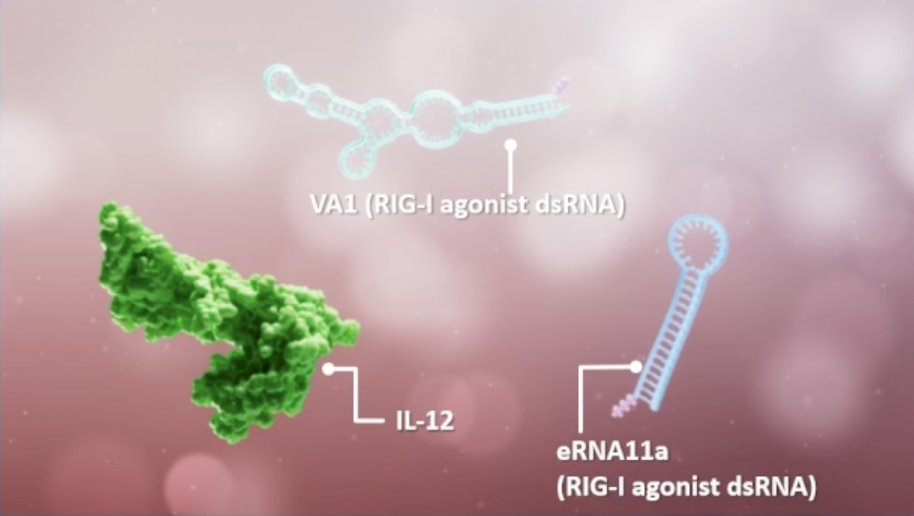
Detalimogene simultaneously activates innate immune signaling and adaptive immune responses by delivering 3 genes to the bladder urothelium:
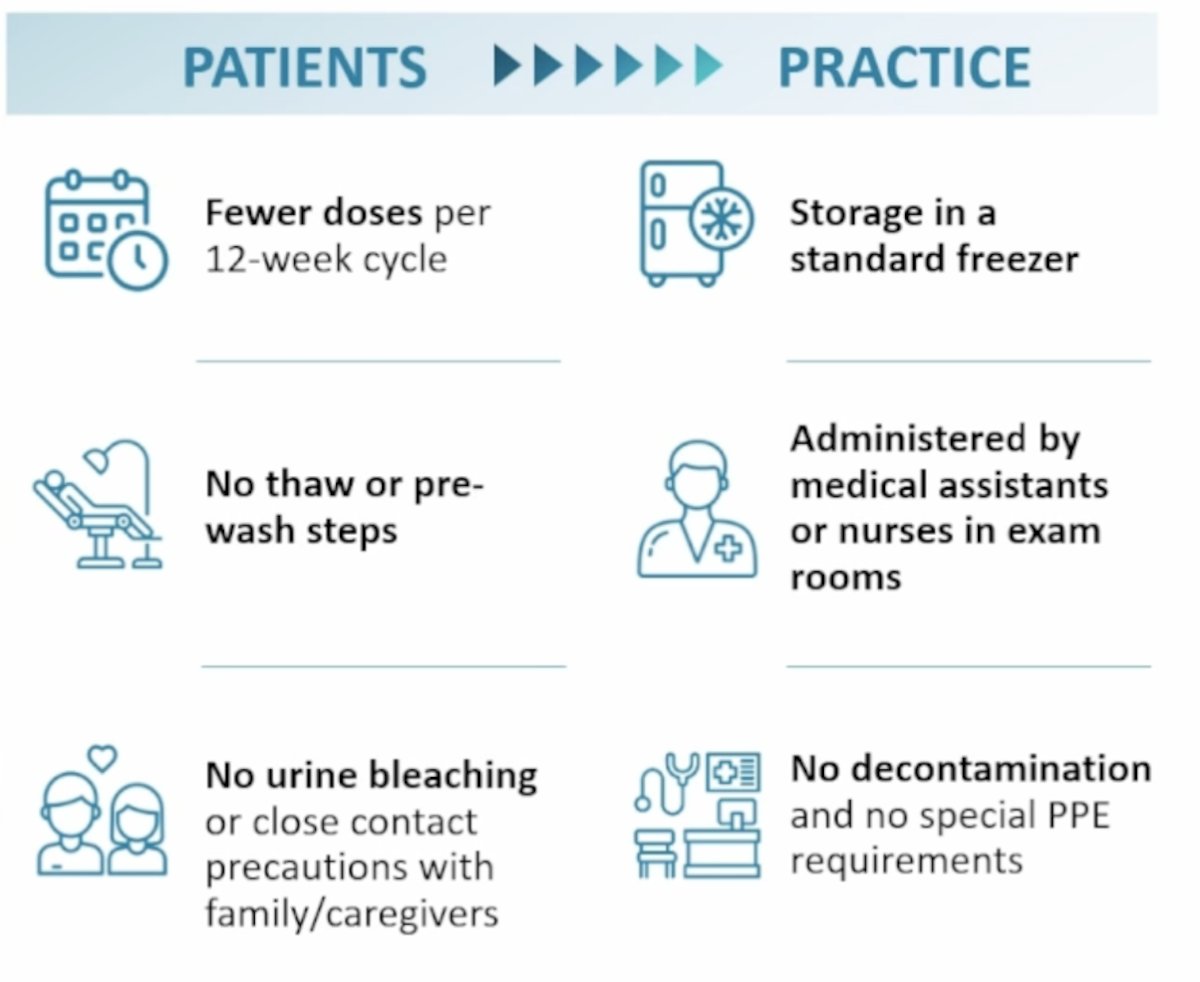
As a non viral gene therapy, detalimogene is easy to administer and overcomes several limitations of viral therapies: (i) fewer doses per 12 week cycle, (ii) no thaw or pre-wash steps, (iii) no urine bleaching or close contact precautions with family or caregivers, (iv) storage in a standard freezer, (v) administration by medical assistants or nurses in exam rooms, and (vi) no decontamination and no special PPE requirements:
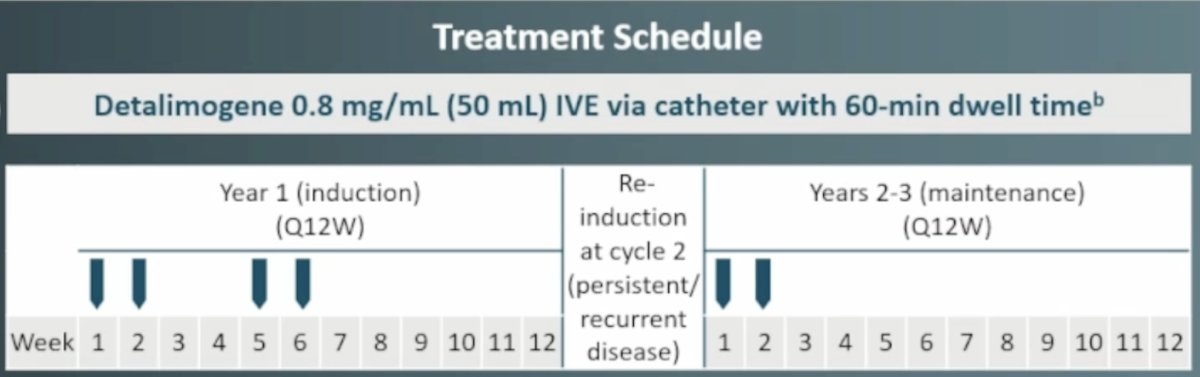
LEGEND is a single arm, open label study of detalimogene in high risk non muscle invasive bladder cancer. The pivotal cohort included 125 BCG unresponsive non muscle invasive bladder cancer patients with CIS +/- HG Ta/T1 with persistent or recurrent disease within 12 months of adequate BCG. Key eligibility included age >= 18 years, ECOG performance status of 0-2, ineligible for or not electing for cystectomy, adequate bladder function, and the ability to retain study drug in the bladder for >= 60 minutes. Detalimogene 0.8 mg/mL (50 mL) is an intravesical therapy via catheter with a 60 minute dwell time, with the following treatment schedule:
The primary endpoint is complete response rate at any time, and secondary endpoints include: duration of response >= 12 months, complete response at landmark time points, safety, and progression free survival. Other cohorts of interest/note include:
- BCG-naïve non muscle invasive bladder cancer with CIS (n = 30)
- BCG-exposed non muscle invasive bladder cancer with CIS (n = 70)
- BCG-unresponsive HG Ta/T1 papillary disease without CIS (n = 90)
- BCG-unresponsive with CIS utilizing a bladder rinse
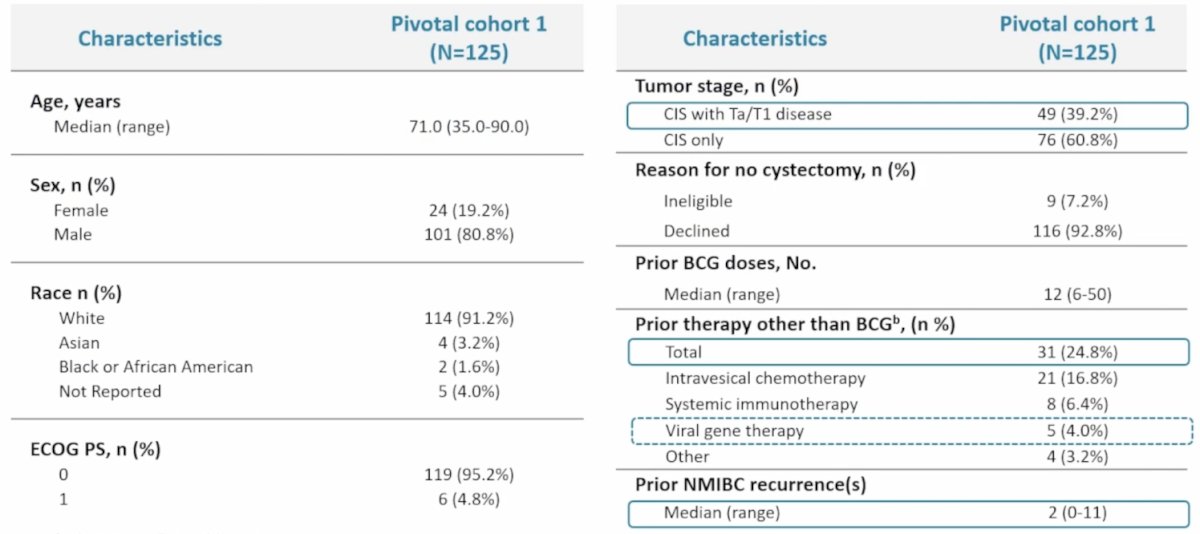
The baseline characteristics of the 125 enrolled patients included the following:
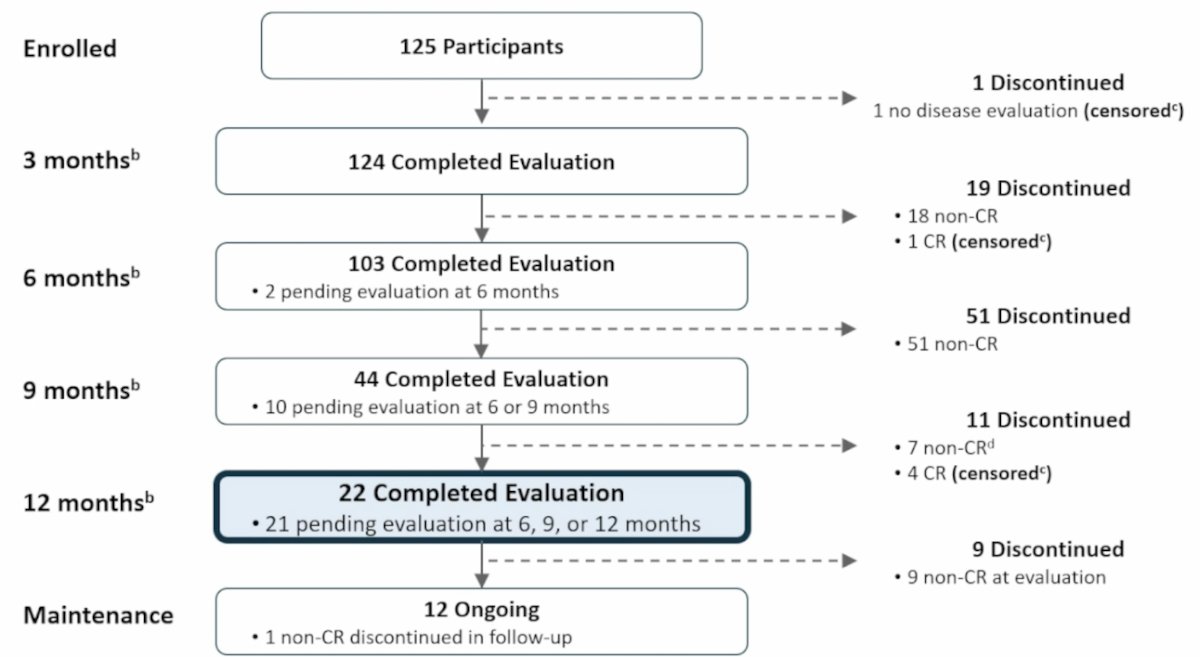
At 12 months, 22 patients had completed this landmark evaluation, summarized in the CONSORT diagram:
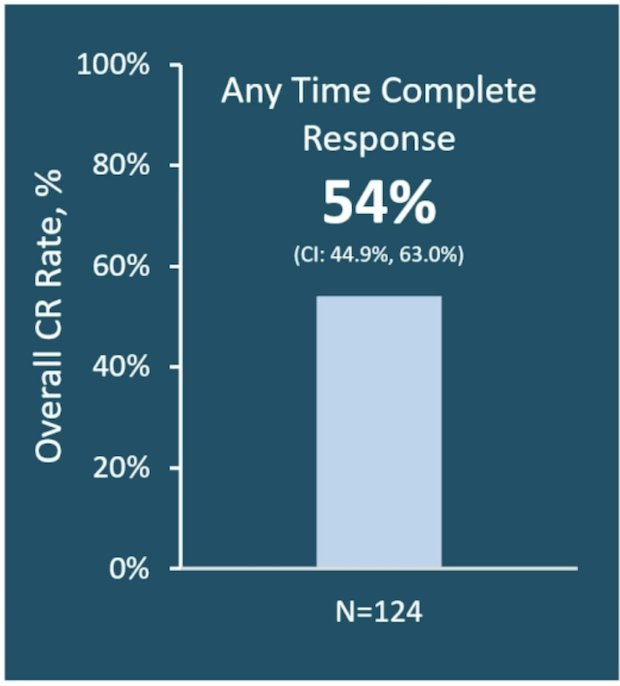
Over a median follow up of 5.5 months (range: 1.0-25.8 months), the anytime complete response rate was 54% (95% CI 44.9 – 63.0):
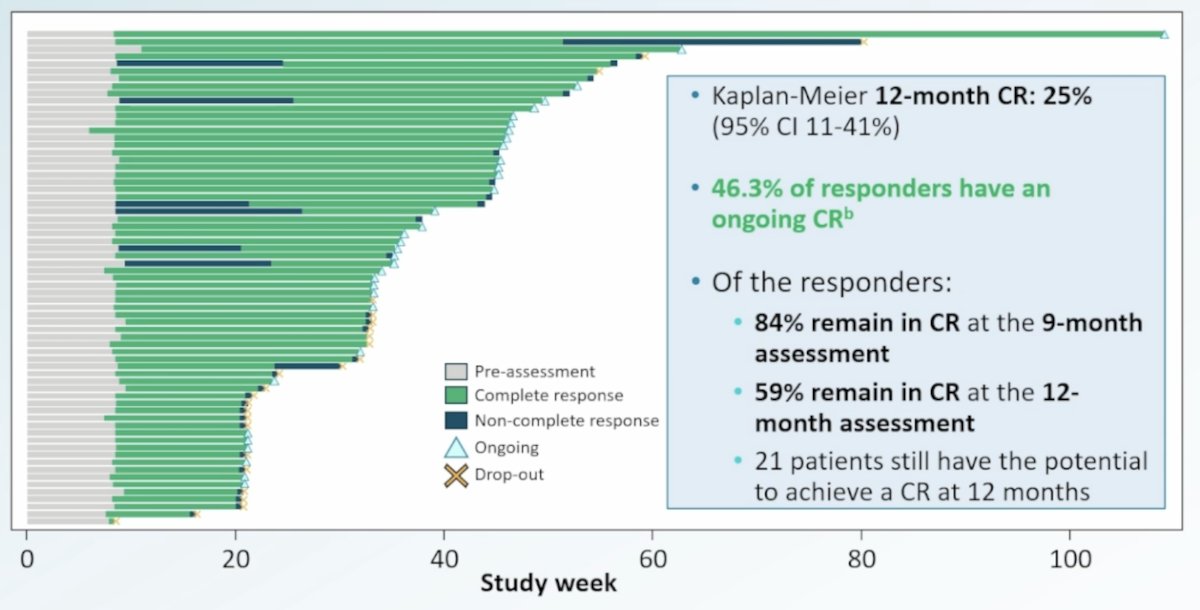
Overall, 91.0% of complete responses occurred at the first assessment, and the median time to onset of complete response was 2.1 months (range: 1.5-6.2 months). The re-induction success rate was 14.0%, 96.8% were free from progression to >= T2 disease, and 90.4% of participants remain free from cystectomy. The Kaplan Meier 12 month complete response was 25% (95% CI 11-41%), and 46.3% of responders have an ongoing complete response. Of the responders, 84% remain in complete response at the 9 month assessment, 59% remain in complete response at the 12 month assessment, and 21 patients still have the potential to achieve a complete response at 12 months:
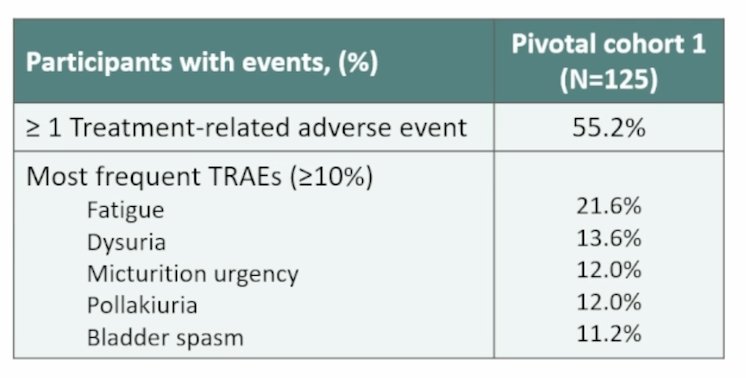
Most treatment related adverse events were localized, brief, low grade events. Overall, 69 patients (55.2%) had any grade treatment related adverse events, and of those, 91.3% had grade 1-2 events. Treatment related adverse events resolved after a median of 8 days, and only 6 patients (4.8%) had grade 3+ treatment related adverse events. No grade 5 adverse events were reported. There were 3 patients (2.4%) who had treatment related dose interruptions, and 3 patients (2.4%) who had treatment related dose discontinuation. The most frequent treatment related adverse events were as follows:
Dr. Kamat concluded his presentation discussing pivotal phase 2 interim results assessing detalimogene voraplasmid for BCG-unresponsive non muscle invasive bladder cancer with CIS, with or without papillary disease, with the following take home points:
- Detalimogene is a next generation non viral gene therapy in development for high risk non muscle invasive bladder cancer, designed to:
- Reduce patient burden (fewer visits, procedures, pre- or post-treatment precautions)
- Simplify urologist workflow (administration, storage, handling)
- Detalimogene was safe and very well tolerated
- Most treatment related adverse events were brief, low-grade, lower urinary tract symptoms
- Serious treatment related adverse events (1.6%) and grade ≥3 treatment related adverse events (4.8%) were highly infrequent
- Treatment related adverse events leading to dose interruption (2.4%) or discontinuation (2.4%) were rare
- Detalimogene showed encouraging activity in heavily pre-treated participants with BCG-unresponsive non muscle invasive bladder cancer
- Complete response rate of 54.0% at any time
- Durability data is preliminary (n = 104) and continues to evolve
- 96.8% free from progression to ≥T2 disease
- A primary analysis with longer follow-up is expected in the second half of 2026
- A FDA discussion is planned in the second half of 2026
Presented by: Ashish Kamat, MD, MD Anderson Cancer Center, Houston, TX
Written by: Zachary Klaassen, MD, MSc – Urologic Oncologist, Associate Professor of Urology, Georgia Cancer Center, Wellstar MCG Health, @zklaassen_md on Twitter during the American Urological Association (AUA) 2026 Annual Meeting, Washington, DC, Fri, May 15 – Mon, May 18, 2026.
Related content: Interim Phase 2 LEGEND Trial Results for Detalimogene in BCG-Unresponsive NMIBC - Ashish Kamat