

(UroToday.com) The American Urological Association (AUA) 2025 Annual Meeting, held in Las Vegas, NV between April 26th and 29th, 2025, was host to a practice patterns, quality of life, and shared decision-making health services research interactive poster session. Dr. Zachary Klaassen presented the results of a US-based quantitative survey evaluating the challenges and unmet needs of caregivers for patients with prostate cancer.
Many patients with prostate cancer rely on caregivers to provide emotional and physical support and help with navigating challenges surrounding medical management. A quantitative survey was conducted to gather insights regarding the unmet needs of caregivers for prostate cancer patients in the US.
A 57-question, online survey was developed by Bayer Pharmaceuticals and fielded independently and anonymously by OptiBrandRx between June and July 2024.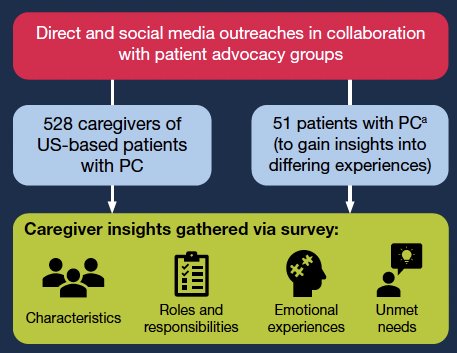
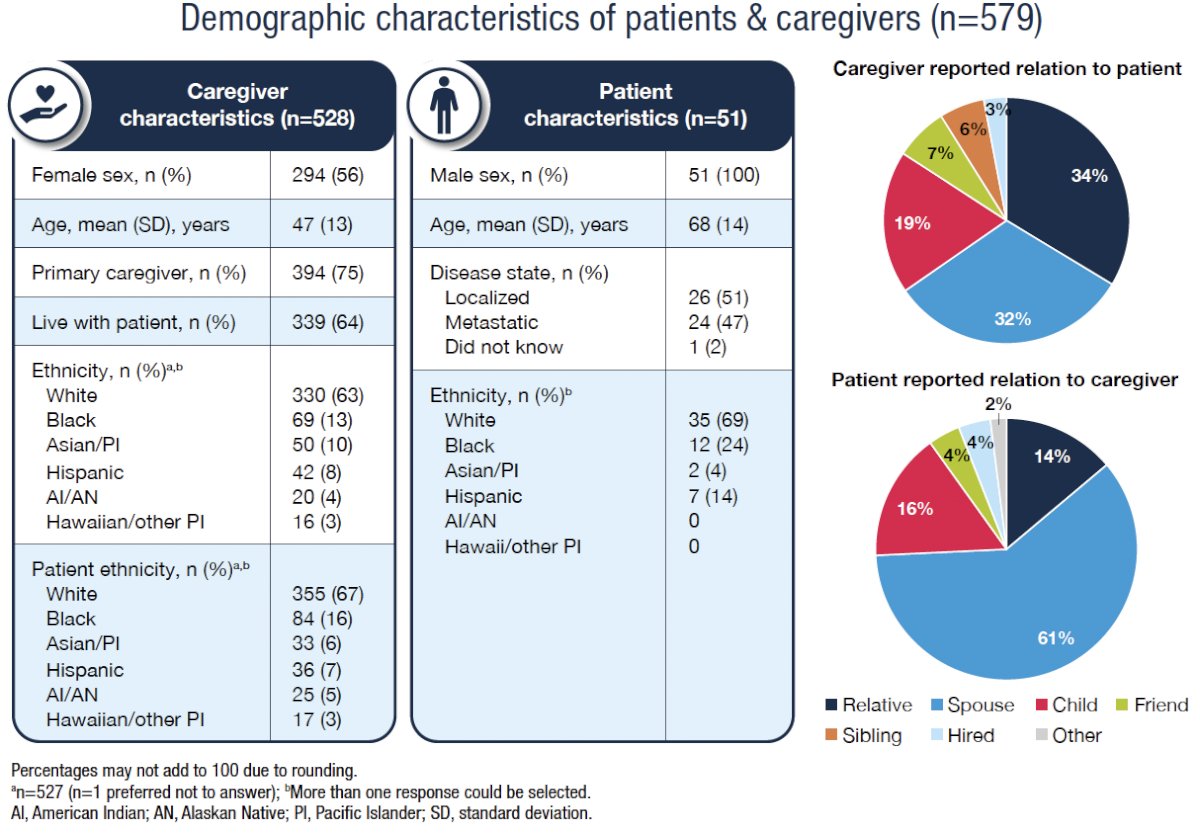
The demographic characteristics of the caregivers (n=528) and the patients (n=51) are summarized below. 56% of the caregivers were female, their mean age was 47 years, 64% lived with the patient, and the majority (63%) were white. The mean age of the patients was 68 years. There was a well-balanced mix of patients with localized (51%) and metastatic disease (47%). The caregivers were most commonly a spouse (32–61%), relative (14–34%), or a child (16–19%).
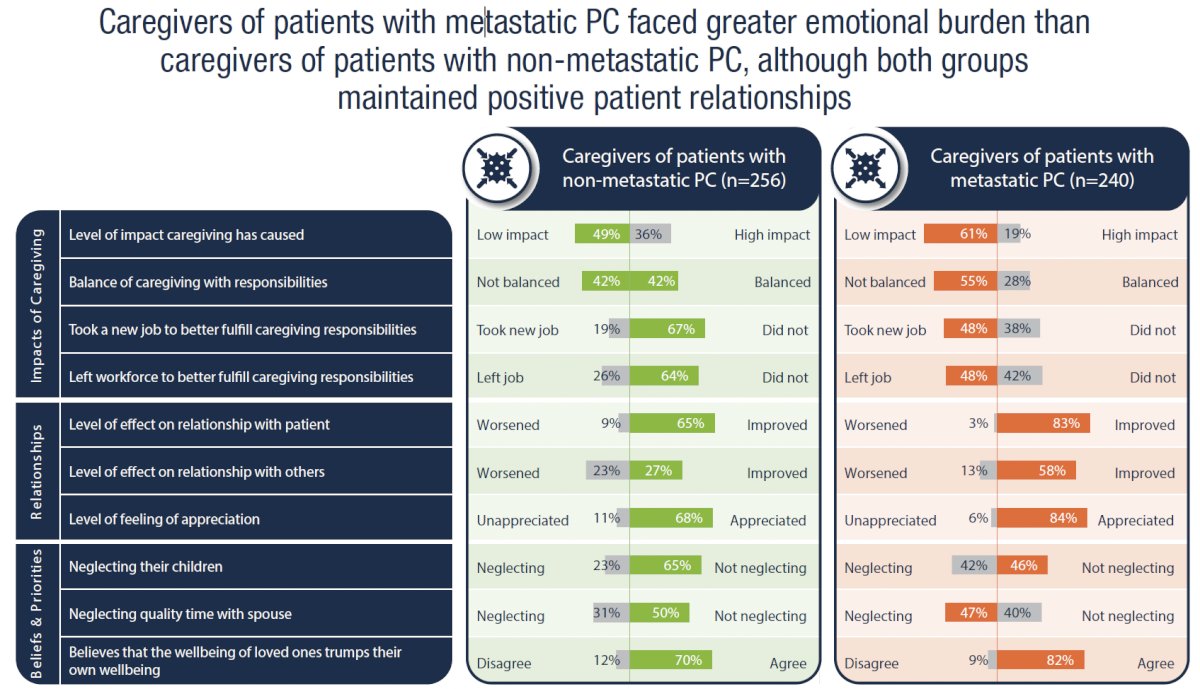
Summarized below is the impact of the prostate cancer diagnosis on various aspects of caregiving, relationships between caregivers and patients, and benefits/priorities. Notable findings were as follows:
- 48% of caregivers of metastatic patients had to take a new job to better fulfill caregiving responsibilities (19% of caregivers of patients with non-metastatic disease)
- 48% of caregivers of metastatic patients had to leave the workforce to better fulfil caregiving responsibilities
- The majority of caregivers of metastatic patients noted that the cancer diagnosis positively affected their relationship with the patient (83%) and others (58%), with 84% noting that they felt appreciated
- There appeared to be an adverse effect on their relationships with other people, including the patients themselves, with 42% and 47% reporting that their caregiving duties led to feelings of neglecting their children and quality time with their spouse, respectively (23% and 31% for non-metastatic)
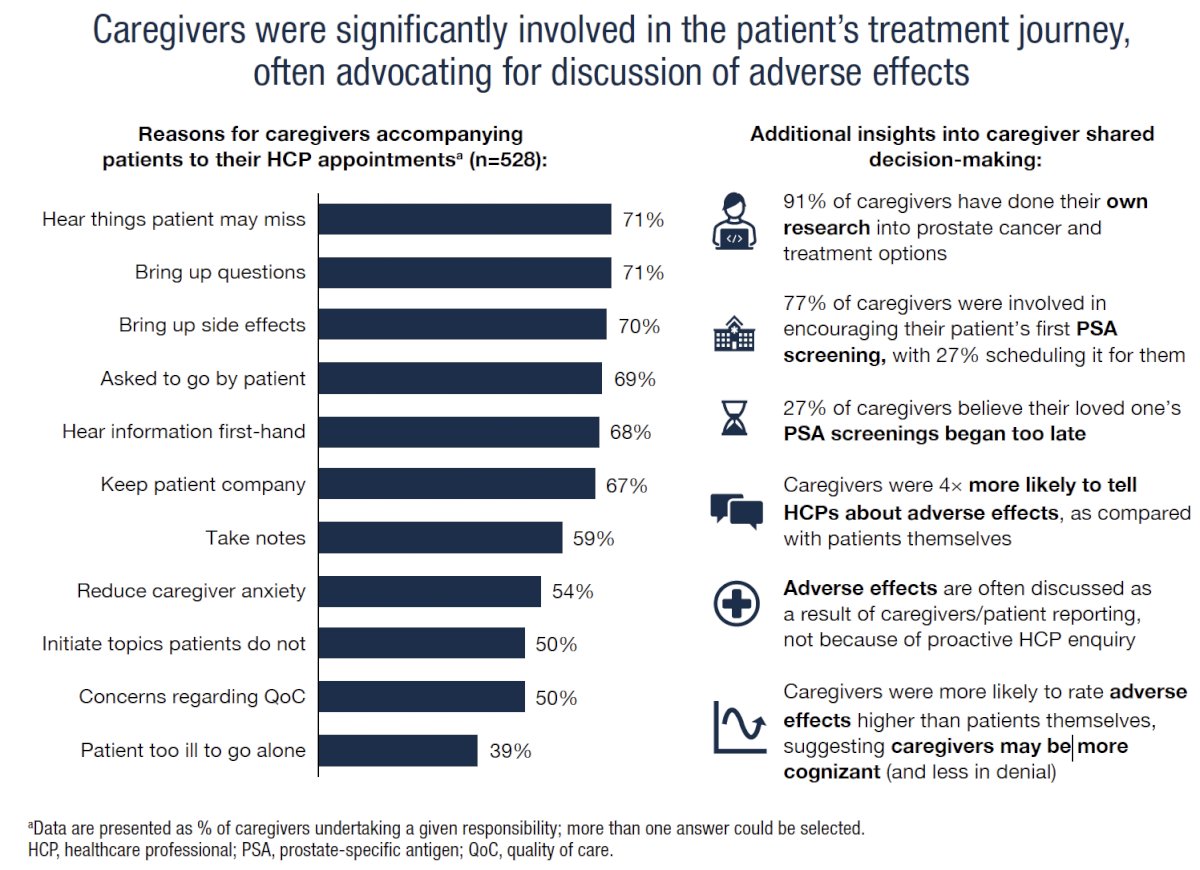
Caregivers were significantly involved in the patient’s treatment journey, often advocating for discussion of adverse effects. The top reasons for caregivers accompanying patients to their healthcare provider’s appointments were to:
- Hear things patient may miss (71%)
- Bring up questions (71%)
- Bring up side effects (70%)
- Asked to go by patient (69%)
- Hear information 1st hand (68%)
Additional insights were as follows:
- 91% of caregivers have done their own research into prostate cancer and treatment options
- 77% of caregivers were involved in encouraging their patients’ first PSA screening, with 27% scheduling it for them
- 27% of caregivers believe their loved one’s PSA screenings began too late
- Caregivers were 4× more likely to tell healthcare providers about adverse effects, as compared with patients themselves
- Adverse effects are often discussed as a result of caregivers/patients reporting, not because of proactive healthcare provider enquiry
- Caregivers were more likely to rate adverse effects higher than patients themselves, suggesting caregivers may be more cognizant (and less in denial)
Summarized below are the top resources/tools caregivers would find most helpful and how they would prefer to receive these resources:
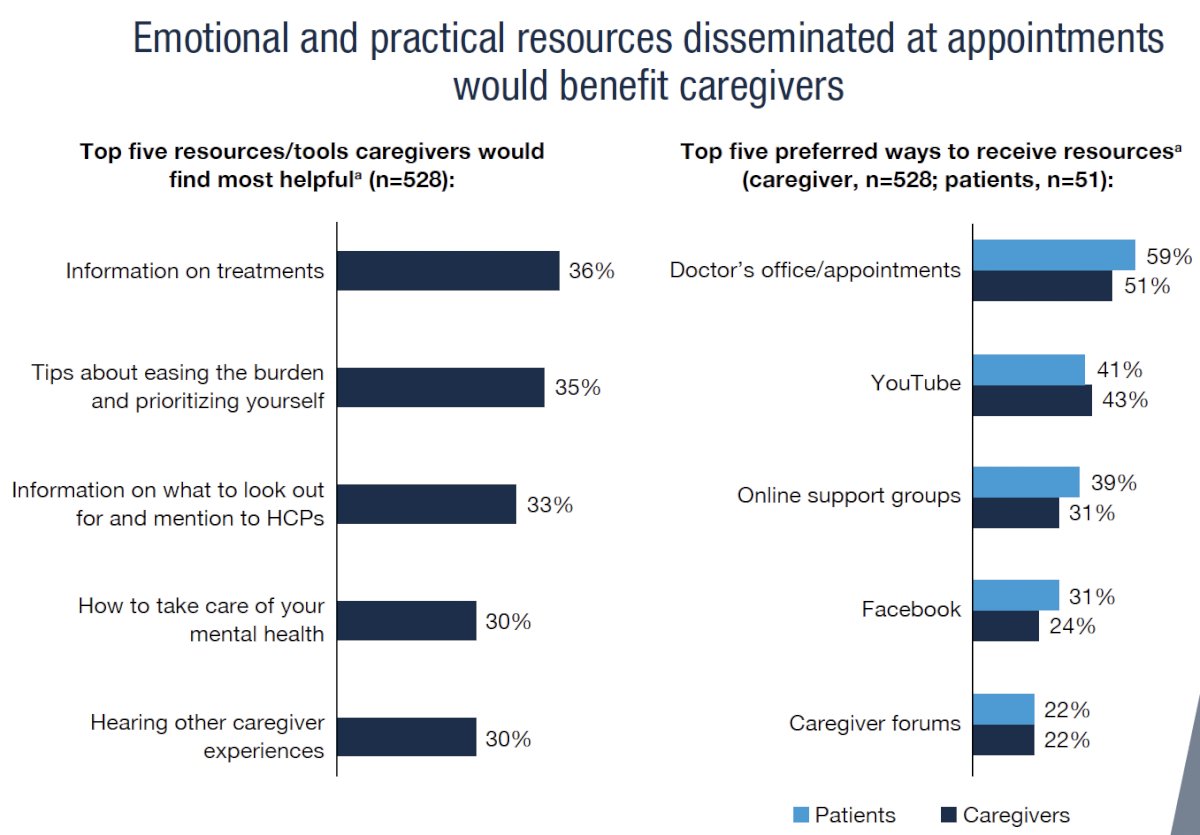
Dr. Klaassen concluded by highlighting the following unmet needs with regard to caregivers of prostate cancer patients:
- Caregivers need to be included in treatment decision-making alongside patients and health care providers
- Caregivers require tailored educational and emotional support resources
- Caregiver support services should be available at the point of need
- Healthcare providers must identify patients’ primary caregivers, involve them in discussions, and facilitate access to resources for more informed shared decision-making
Presented by: Zachary Klaassen, MD, MSc, Associate Professor, Department of Urology, WellStar MCG Health, Augusta, GA
Written by: Rashid K. Sayyid, MD, MSc – Robotic Urologic Oncology Fellow at The University of Southern California, @rksayyid on Twitter during the 2025 American Urological Association (AUA) annual meeting held in Las Vegas, NV, Saturday, April 26 - Tuesday, April 29, 2025