

(UroToday.com) The 2025 AUA annual meeting featured a bladder cancer clinical trials in progress session and a presentation by Dr. Neal Shore discussing MoonRISe-3, a phase 3 study of TAR-210 intravesical erdafitinib releasing system versus intravesical chemotherapy in patients with BCG–treated high-risk non muscle invasive bladder cancer with susceptible FGFR alterations. TURBT followed by intravesical BCG is standard of care for high grade papillary non muscle invasive bladder cancer, however, 60% of patients have recurrence (BCG-unresponsive or BCG-experienced) or progression within 12 months of BCG therapy. Moreover, ~20% of patients are BCG-intolerant. After exhausting BCG and other alternatives, treatment guidelines recommend radical cystectomy, however, radical cystectomy carries significant morbidity (~60%), mortality (2-8% within 90 days), and a negative impact on quality of life.
FGFR alterations are found in 35-40% of papillary only high risk non muscle invasive bladder cancer tumors and may function as oncogenic drivers. Despite recent approvals of novel agents for high risk non muscle invasive bladder cancer CIS, there remains an unmet need with no approved treatment options for papillary only high risk non muscle invasive bladder cancer (high grade Ta or T1), recurrent after BCG or BCG-intolerant, and no treatments targeting FGFR-altered disease.
Erdafitinib is a selective pan-FGFR tyrosine kinase inhibitor. Oral erdafitinib has US approval for FGFR3-altered metastatic urothelial carcinoma following progression after prior systemic treatment, with additional approvals worldwide.1 In THOR-2, oral erdafitinib showed preliminary evidence of prolonged recurrence free survival versus intravesical chemotherapy in patients with papillary-only high risk non muscle invasive bladder cancer harboring FGFR alterations (12-month recurrence free survival rate: 77% versus 41%).2 TAR-210 is a novel intravesical erdafitinib-releasing system designed for sustained exposure over 3 months in the bladder:
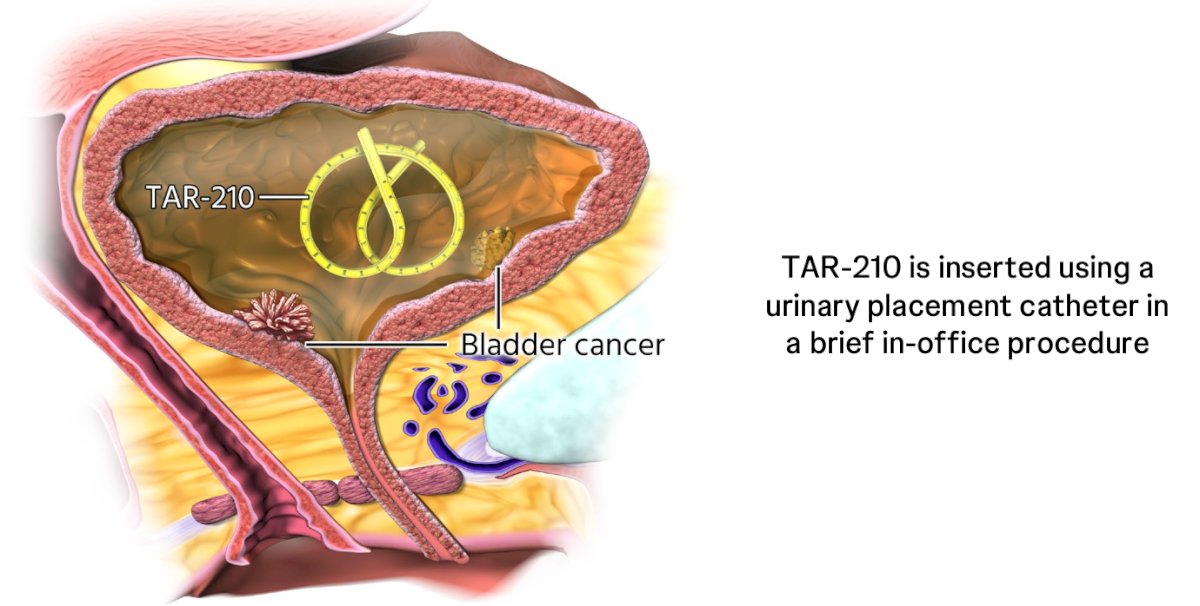
In a first-in-human study, TAR-210 was well tolerated, with encouraging clinical activity in FGFR-altered papillary only high risk non muscle invasive bladder cancer (12-month recurrence free survival rate: 90%). MoonRIS-3 is a phase 3 study of TAR-210 versus intravesical chemotherapy in patients with BCG-treated, FGFR-altered papillary only high risk non muscle invasive bladder cancer. Papillary only high risk non muscle invasive bladder cancer patients will be randomized 1:1 to TAR-210 every 12 weeks for 2 years versus investigator’s choice of single agent intravesical chemotherapy (mitomycin C or gemcitabine). The primary endpoint is disease free survival, and key secondary endpoints include (i) recurrence free survival, (ii) time to next intervention, (iii) time to disease worsening, (iv) time to progression, (v) overall survival and (vi) safety and tolerability.

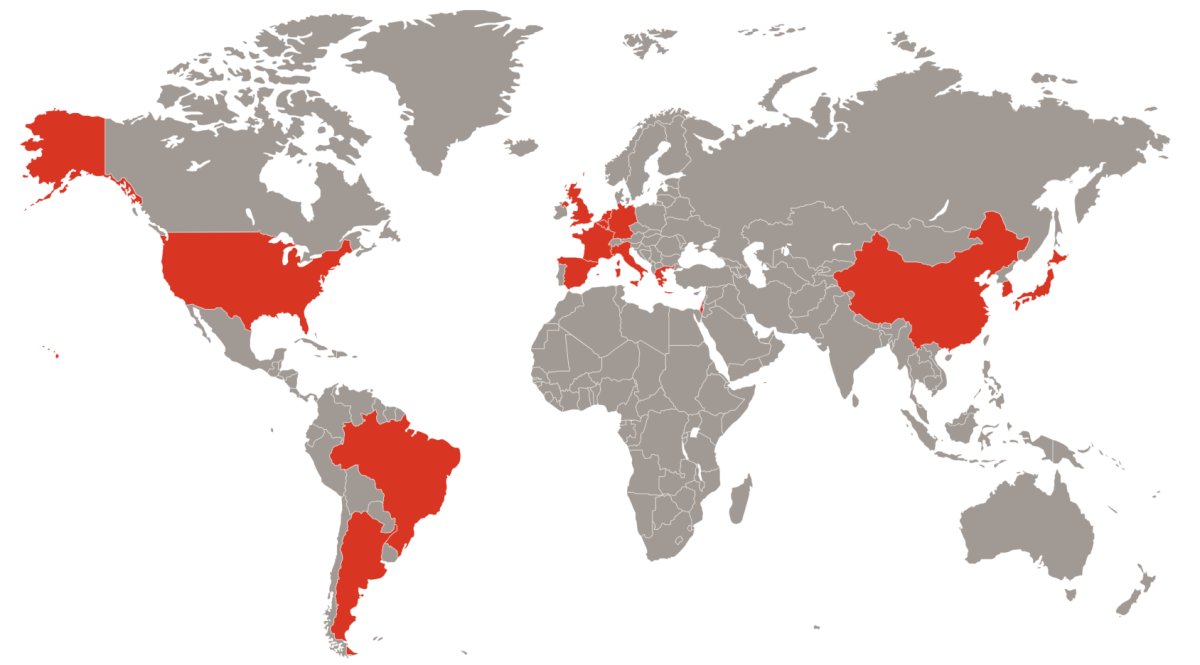
Assessments of recurrence or progression will be based on central urine cytology, bladder biopsy, and imaging results. After a positive interim analysis, the IDMC may recommend a crossover option for patients with recurrence in the intravesical chemotherapy arm. There is a global footprint for MoonRISe-3, with enrollment planned at 105 sites in 15 countries across 4 continents:
Written by: Zachary Klaassen, MD, MSc – Urologic Oncologist, Associate Professor of Urology, Georgia Cancer Center, Wellstar MCG Health, @zklaassen_md on Twitter during the 2025 American Urological Association (AUA) annual meeting held in Las Vegas, NV, Saturday, April 26 - Tuesday, April 29, 2025
References:
- Loriot Y, Necchi A, Park SH, et al. Erdafitinib in Locally Advanced or Metastatic Urothelial Carcinoma. N Engl J Med 2019 Jul 25;381(4):338-348.
- Catto JWF, Tran B, Roupret M, et al. Erdafitinib in BCG-treated high-risk non-muscle invasive bladder cancer. Ann Oncol. 2024;35(1):98-105.