

(UroToday.com) Upper tract urothelial carcinoma (UTUC) is a relatively rare malignancy, comprising a small subset of urothelial disease. The diagnosis of UTUC is often delayed as a result of vague, non-specific, or absent symptoms until significant disease progression. Further, compared to bladder cancer, endoscopic diagnosis, and management of UTUC is substantially more difficult which makes diagnosis and preoperative risk stratification more difficult.
In a podium presentation at the American Urologic Association Annual Meeting, Dr. Alireza Ghoreifi and colleagues presented their analysis exploring the feasibility of a urine-based epigenetic assay to detect UTUC.
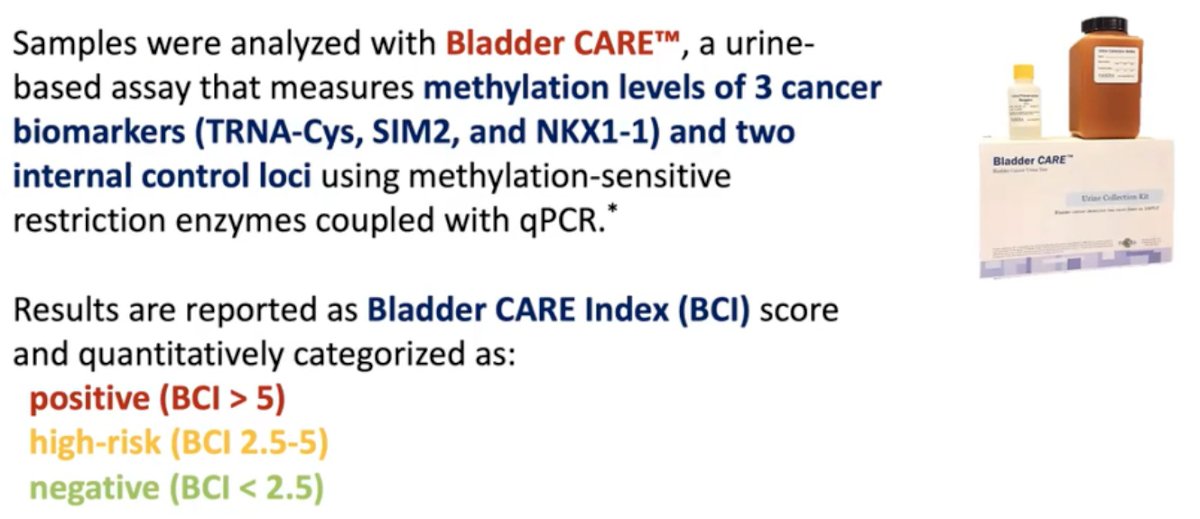
To do so, they collected urine samples from patients with UTUC before radical nephroureterectomy between December 2019 and December 2020. Patients with concomitant bladder cancer (n=4) and those who did not pass the quality control due to low DNA concentration (n=5) were excluded from the analysis. Samples were analyzed with Bladder CARE™, a urine-based assay that measures methylation levels of 3 cancer biomarkers (TRNA-Cys, SIM2, and NKX1-1) and two internal control loci using methylation-sensitive restriction enzymes coupled with qPCR. Results are reported as Bladder CARE Index (BCI) score and categorized as positive (BCI>5), high-risk (BCI 2.5-5), or negative (BCI<2.5), which correlate to the concentration of cancer DNA in the sample. The findings were compared to 54 sex/age-matched healthy (cancer-free) individuals.
The authors included 19 patients with a median age of 73 year of whom 14 were male and 5 were female. Separate samples were sent from bladder and nephrostomy tube in 2 patients (total urine sample n=21). Final pathology revealed stage Ta (n=11), T1 (n=2), T2 (n=2), and T3 (n=4) UTUC at the time of nephroureterectomy.
Among all samples, 20 showed positive and 1 high-risk BCI results. Urine cytology was available in 9 patients, in whom 3 had positive BCI results despite negative cytology. UTUC patients had a significantly higher BCI value compared to the control cases (average BCI value of 227.3 vs. 1.7, respectively; p < 0.0001).

The Receiver Operating Characteristic (ROC) curve demonstrating the sensitivity, specificity, positive predictive values, and negative predictive value of 100%, 87.1%, 75%, and 100%, respectively (AUC=0.996).
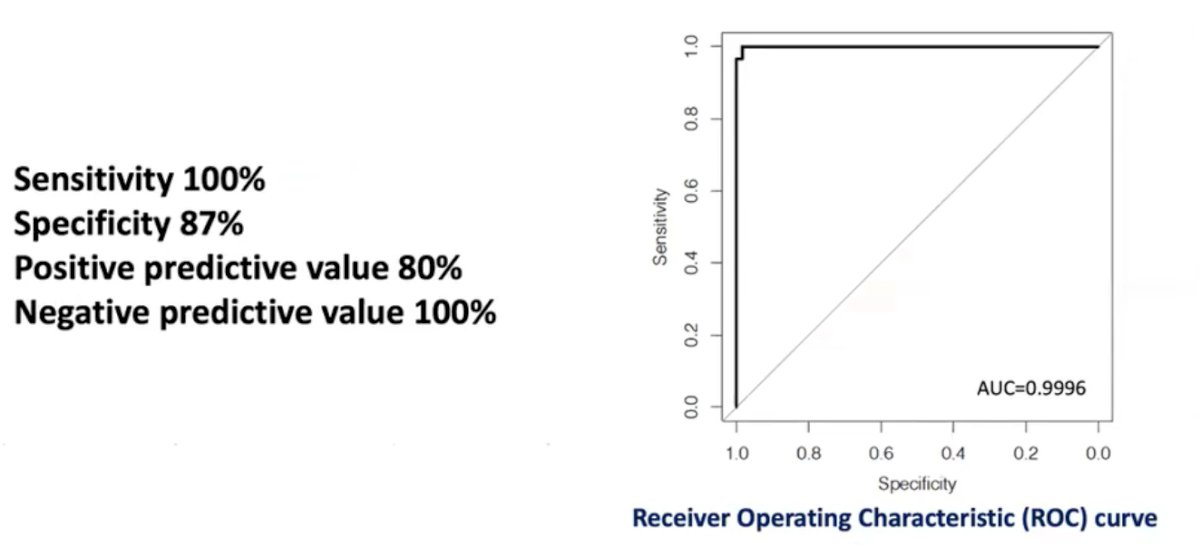
The authors, therefore, conclude that this pilot study has demonstrated that a urine-based epigenetic assay has high sensitivity and negative predictive value in the diagnosis of patients with UTUC. These results however require validation.
Presented by: Alireza Ghoreifi, MD, Research Fellow of Urologic Oncology, Norris Cancer Center, University of Southern California
Written by: Christopher J.D. Wallis, University of Toronto Twitter: @WallisCJD during the 2021 American Urological Association, (AUA) Annual Meeting, Fri, Sep 10, 2021 – Mon, Sep 13, 2021.