

(UroToday.com) The 2025 ASTRO annual meeting featured a metastatic prostate cancer session and a presentation by Dr. Huizhu Chen discussing the efficacy of all-site radiotherapy at the hormone-sensitive stage in combination with systemic therapy in Gleason grade group 5 metastatic prostate cancer. Prostate radiotherapy is recommended by the NCCN guidelines for low tumor burden metastatic hormone-sensitive prostate cancer.1 All-site radiotherapy has become a focus of research as a potential treatment strategy for further improving outcomes. Gleason grade group 5 metastatic hormone-sensitive prostate cancer represents a high-risk subgroup of patients with a more aggressive biological profile. These patients carry the highest metastatic risk, ~13-15x that of low-grade disease:

This study aimed to compare the survival benefit of all-site radiotherapy in the metastatic hormone-sensitive prostate cancer stage, in addition to standard systemic therapies, for patients with Gleason grade group 5 metastatic prostate cancer, and to explore a comprehensive treatment approach for this population.
This study consecutively enrolled patients diagnosed with prostate adenocarcinoma (Gleason grade group 5) from 2018 to 2024. All participants had confirmed distant metastases via imaging. In the radiotherapy group, patients received all-site radiotherapy after 3-6 months of standard systemic therapy at the time of initial diagnosis. Those who did not receive radiotherapy during the metastatic hormone-sensitive prostate cancer stage were divided into the non-radiotherapy group and later received radiotherapy upon progression to castration resistant prostate cancer. Radiotherapy regimens included all-site radiotherapy for oligometastatic patients (with fewer than 10 metastases) and residual lesion radiotherapy for those with extensive metastatic disease after systemic therapy. The systemic treatment included ADT with novel hormonal therapy with or without docetaxel. The primary endpoint was castration resistant prostate cancer-free survival.
A total of 166 patients were included in the study. The median age was 67.5 years (46-89 years), and the median follow-up time was 17.7 months (0.8-76.8 months). All of these patients received ADT + novel hormonal therapy, and 80 patients initiated all-site radiotherapy during the hormone-sensitive prostate cancer stage (radiotherapy group). In terms of survival, the intervention of all-site radiotherapy at the hormone-sensitive prostate cancer stage among low-volume patients significantly prolonged castration resistant prostate cancer-free survival in patients with any systemic treatment strategy:

The secondary endpoint of PSA progression-free survival among low-volume patients also favored standard of care + all-site radiotherapy (HR 0.07, 95% CI 0.01-0.40):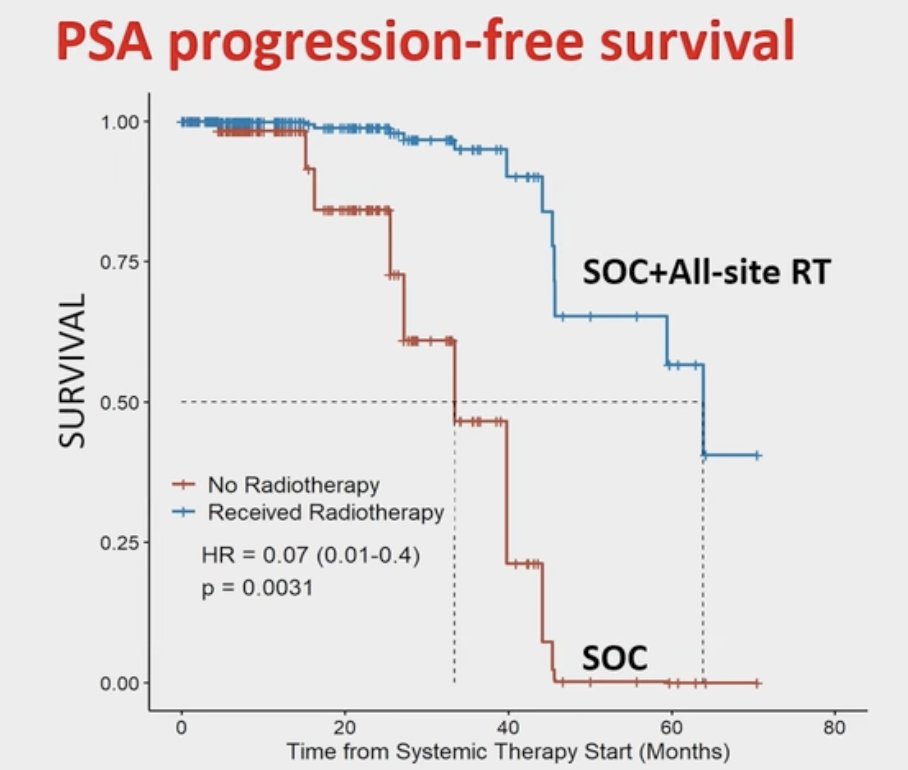
With regards to high volume patients, all site radiotherapy also improved PSA progression-free survival among high volume patients (HR 0.29, 95% CI 0.11-0.75):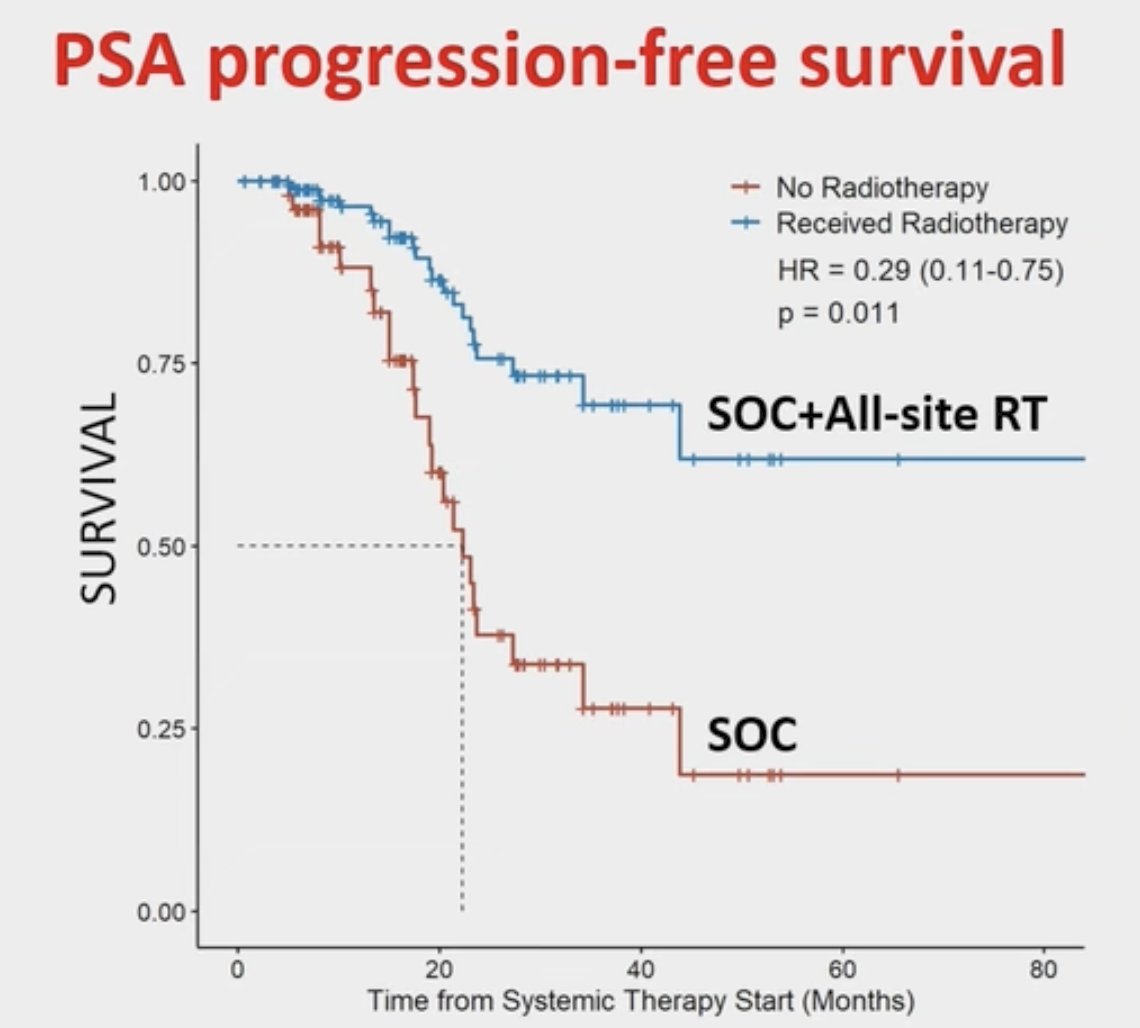
Dr. Chen concluded her presentation discussing the efficacy of all-site radiotherapy at the hormone-sensitive stage in combination with systemic therapy in Gleason grade group 5 metastatic prostate cancer with the following take-home points:
- In Gleason Grade Group 5 metastatic hormone-sensitive prostate cancer, all-site radiotherapy to the primary and all metastases is associated with improved overall survival, regardless of whether patients have low-volume or high-volume disease
- These findings warrant larger prospective or randomized controlled trials to confirm the benefits and explore the impact on long-term overall survival
Presented by: Huizhu Chen, MD, Peking University First Hospital, Beijing, Beijing
Written by: Zachary Klaassen, MD, MSc – Urologic Oncologist, Associate Professor of Urology, Georgia Cancer Center, Wellstar MCG Health, @zklaassen_md on Twitter during the 2025 American Society for Radiation Oncology (ASTRO) Annual Meeting, San Francisco, CA, Sat, Sept 27 – Wed, Oct 1, 2025.
Reference: