

(UroToday.com) The 2025 ASTRO annual meeting featured a prostate cancer radiation toxicity session and a presentation by Dr. Vishal Manik discussing driving improvement in prostate cancer radiotherapy outcomes through a national quality assurance program. UK National Prostate Cancer Audit is the largest international quality assurance program in prostate cancer, which reports annually hospital level prostate cancer radical treatment outcomes for all public sector UK hospitals. In 2019, Dr. Manik’s 10 Linac center had a National Prostate Cancer Audit reported grade 2 or higher rectal toxicity rate at 2 years following external beam radiotherapy of 16%, which was higher than the UK average of 10%. In this study, Dr. Manik and colleagues reported a systematic multi-disciplinary review of external beam radiotherapy pathway triggered by this to identify causes of higher toxicity, the subsequent practice changes implemented with an aim to reduce grade 2 or higher rectal toxicity rate, and the results of the National Prostate Cancer Audit re-audit.
In 2019, there was a review of all prostate cancer patients treated with radical external beam radiotherapy in 2016 and their follow up data for 2 years, up to 2018. A multi-disciplinary review of the external beam radiotherapy pathway was conducted as part of a root cause analysis involving clinicians, physicists, radiographers and data managers:

Patient, tumor, radiotherapy characteristics, and grade 2 or higher rectal toxicity rate based on RTOG scale were collected from electronic notes and sigmoidoscope reports. External beam radiotherapy plans were reviewed to assess rectal dosimetry, and the impact of mean rectal dose and maximum anterior posterior rectal diameter on grade 2 or higher rectal toxicity rate, and accuracy of daily on-board image matching for a sample with grade 2 or higher rectal toxicity rate was assessed. Protocols from UK centers with lower toxicity were reviewed, and based on the findings, a consensus based new treatment protocol was implemented in 2021.
Overall, 281 of 290 patients treated with external beam radiotherapy in 2016 had follow up data. Grade 2 or higher rectal toxicity rate was confirmed in 16%. There were no significant differences in patient and tumor characteristics or fractionation between those with and without grade 2 or higher rectal toxicity rate. Additionally, CTV to PTV margins were similar in patients with or without grade 2 or higher rectal toxicity rate. All pre-defined mandatory and optimal rectal dosimetric constraints were met in 100% and 93.7% with grade 2 or higher rectal toxicity rate, respectively. Higher rectal mean dose (>45Gy in 37 Fr & >35Gy in 20 Fr) was significantly associated with grade 2 or higher rectal toxicity rate (p = 0.04), and 36% with grade 2 or higher rectal toxicity rate had a rectal diameter >=4.5 cm. Further on-board CT matching correction was recommended in 13% of 134 images reviewed in 3 patients with highest grade 2 or higher rectal toxicity rate. Dr. Manik’s group implemented the following changes between 2020 and 2021:
- Tighter rectal constraints (mean dose, V60/V74 <0.01)
- Peer review process for target volumes and organs at risk
- Encouraged enema use
- Re-developed radiographer verification treatment decision pathway
- Reduced CTV to PTV margins following a contouring study
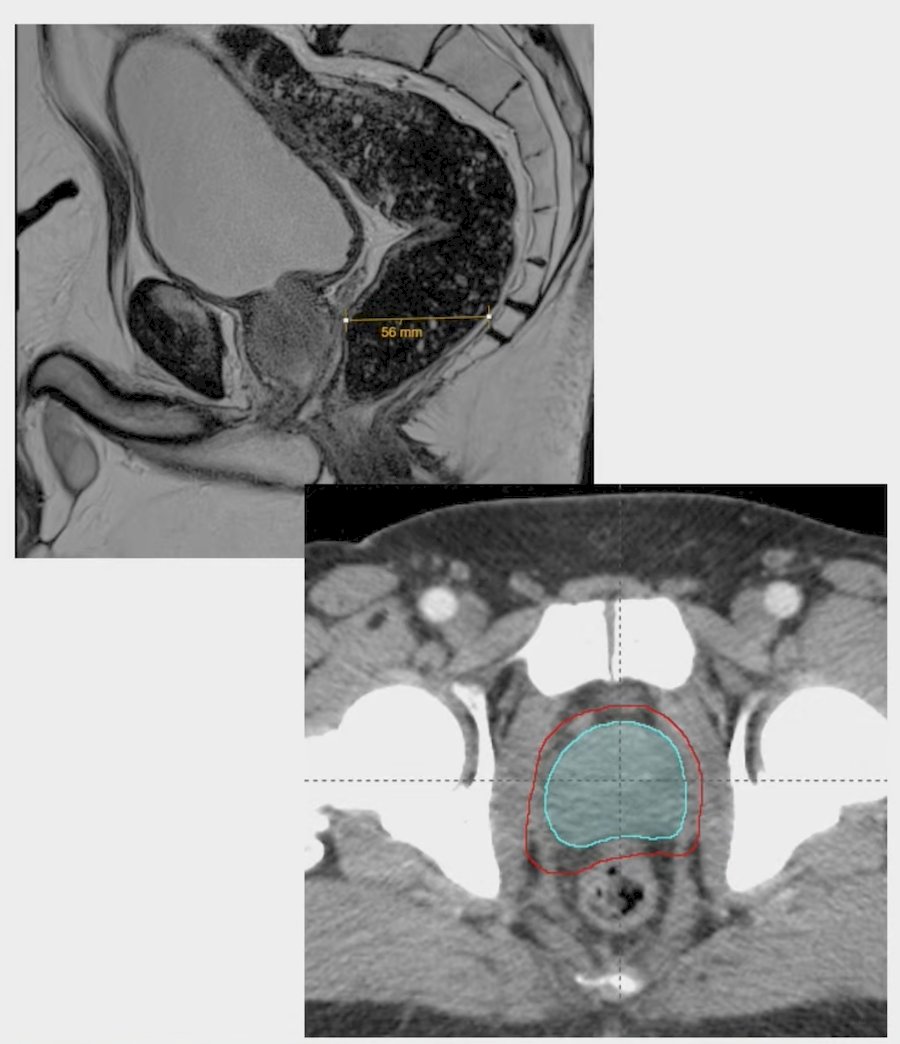
Dr. Manik concluded his presentation discussing driving improvement in prostate cancer radiotherapy outcomes through a national quality assurance program with the following take home points:
- Since the implementation of changes, the National Prostate Cancer Audit re-audit in 2024 reported grade 2 or higher rectal toxicity rate at 2 years decreased to 7.5% from 16%
- This study highlights the value of national radiation toxicity audits in prompting robust internal multi-disciplinary reviews, resulting in changes to improve patient outcomes
Presented by: Vishal Manik, FRCR, Guys and St Thomas' NHS Foundation Trust, London, UK
Written by: Zachary Klaassen, MD, MSc – Urologic Oncologist, Associate Professor of Urology, Georgia Cancer Center, Wellstar MCG Health, @zklaassen_md on Twitter during the 2025 American Society for Radiation Oncology (ASTRO) Annual Meeting, San Francisco, CA, September 28th – 30th, 2025