

(UroToday.com) The 2025 ASTRO annual meeting featured a prostate cancer radiation toxicity session and a presentation by Dr. Young Suk Kwon discussing an EPIC-26 longitudinal analyses of prostatic urethral lift implant with stereotactic ablative body radiotherapy for men with prostate cancer and BPH. In clinical practice, BPH limits stereotactic ablative body radiotherapy eligibility due to lower urinary tract symptoms. Historically, transurethral resection of the prostate prior to stereotactic ablative body radiotherapy increases toxicity. Thus, the optimal use of outlet procedures in stereotactic ablative body radiotherapy is unknown and is dependent on patient-perception. Prostatic urethral life is an FDA-approved, minimally invasive option for lower urinary tract symptoms:
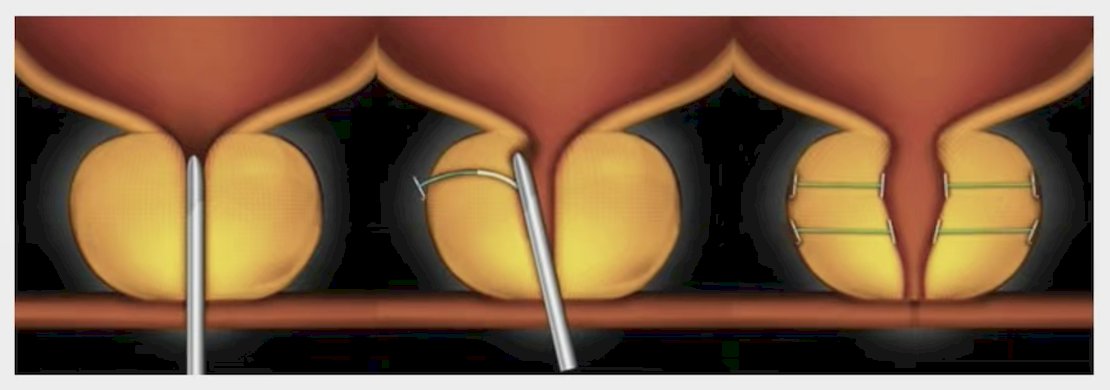
In an institutional phase I trial, Dr. Kwon and colleagues sought to evaluate the safety and feasibility of performing prostatic urethral lift, followed by stereotactic ablative body radiotherapy for men with baseline lower urinary symptoms related to BPH. Understanding the importance of quality of life metrics, they obtained patient reported quality of life measures using validated questionnaires as secondary endpoints.
This phase I, non-blinded single-arm safety trial enrolled 15 patients, meeting the target accrual goal. Patients were eligible if they had intermediate risk prostate cancer and an AUA symptom score of 17+. Men with a prostate volume > 100 g, prior prostate surgery, prior ADT, or those whose PSA > 20 ng/ml were excluded. Prostatic urethral lift, rectoprostatic spacer gel, and fiducial markers were implanted simultaneously under general anesthesia. Study participants underwent stereotactic ablative body radiotherapy to a total dose of 40 Gy in 5 fractions to the prostate and the proximal seminal vesicles:
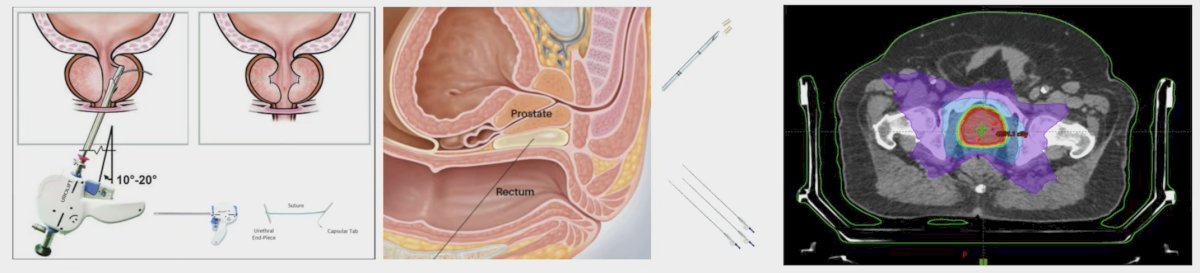
Quality of life parameters included the AUA symptom score and four domains of EPIC-26. Four EPIC-26 subscales in incontinence, irritation/obstruction, bowel and sexual domains were analyzed at five time points longitudinally:
- Baseline
- Early post-prostatic urethral lift
- 5-week post-prostatic urethral lift
- Early post-stereotactic ablative body radiotherapy
- 3-month post-stereotactic ablative body radiotherapy
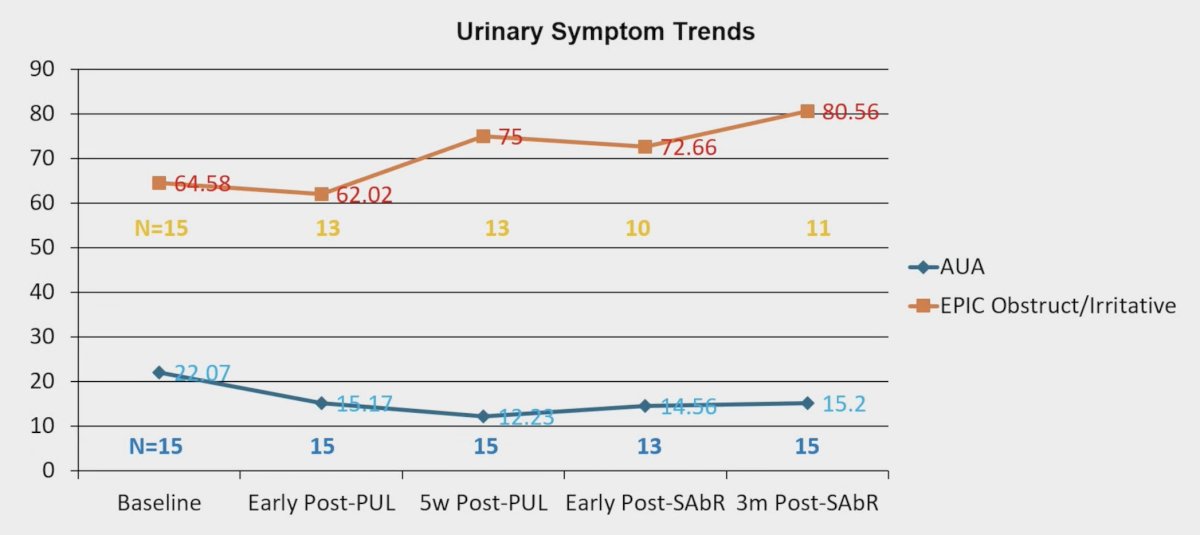
The mean prostate volume was 49.9 cc (range 19-70). Changes in the AUA symptom scores at baseline and 3-month post-stereotactic ablative body radiotherapy were statistically different (22.1 versus 15.2; p < 0.01, Wilcoxon Rank Sum), whereas the changes in the EPIC urinary obstructive/irritative scores were not statistically significant (64.6 versus 80.6; p = 0.08):
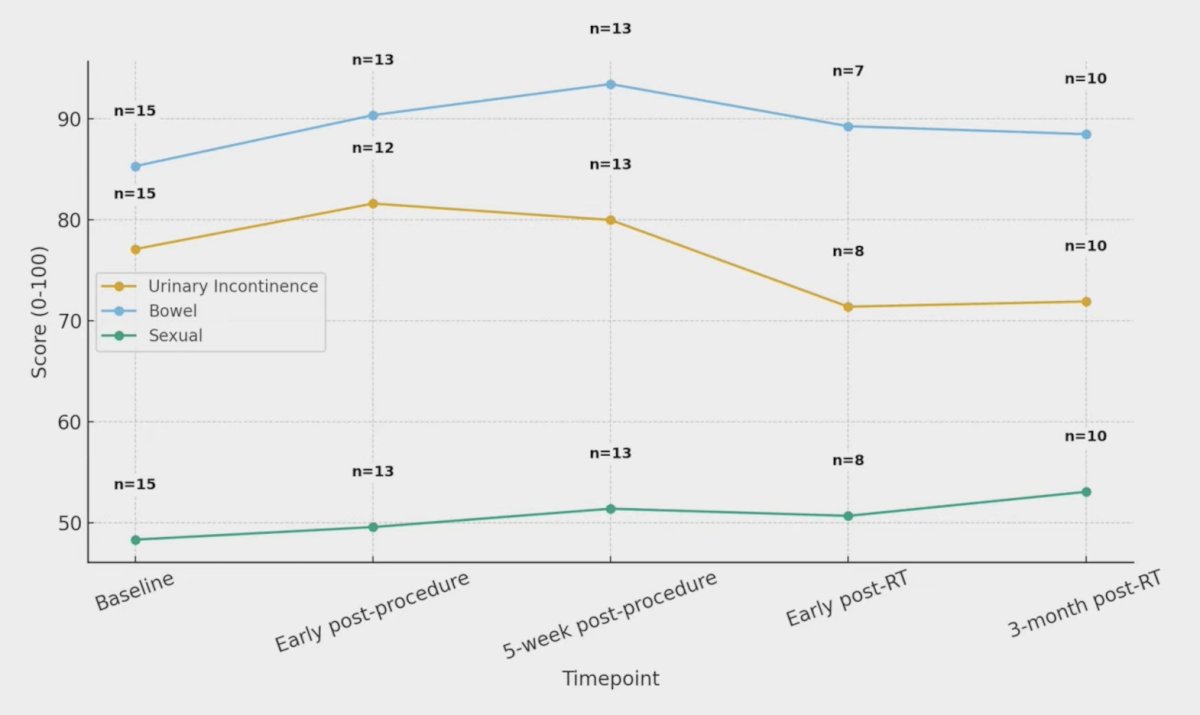
Otherwise, participants had stable symptoms in urinary incontinence, bowel, and sexual domains:
Dr. Kwon concluded his presentation discussing an EPIC-26 longitudinal analyses of prostatic urethral lift implant with stereotactic ablative body radiotherapy for men with prostate cancer and BPH with the following take home points:
- Prostatic urethral life + spacer + stereotactic body radiotherapy is safe and feasible (no grade 3 events)
- There was a significant improvement in lower urinary tract symptoms (AUA score) at 3 months
- There was a trend towards statistical significance for the changes in the EPIC urinary obstructive/irritative scores
- Longer-term follow-up visits are required to better understand urinary, bowel, and sexual outcomes after the combined procedures of prostatic urethral lift and stereotactic ablative body radiotherapy
Presented by: Young Suk Kwon, MD, University of Texas Southwestern Medical Center, Dallas, TX
Written by: Zachary Klaassen, MD, MSc – Urologic Oncologist, Associate Professor of Urology, Georgia Cancer Center, Wellstar MCG Health, @zklaassen_md on Twitter during the 2025 American Society for Radiation Oncology (ASTRO) Annual Meeting, San Francisco, CA, September 28th – 30th, 2025