

(UroToday.com) The 2025 ASTRO annual meeting featured a prostate cancer radiation toxicity session and a presentation by Dr. Sophia Kim-Wang discussing whether dose reduction to the pudendal arteries during radiation therapy can preserve sexual health. In men treated with prostate radiation therapy, dose to the internal pudendal arteries, which supply blood to the penile bulb and corpora, may contribute to sexual dysfunction via arteriosclerosis:
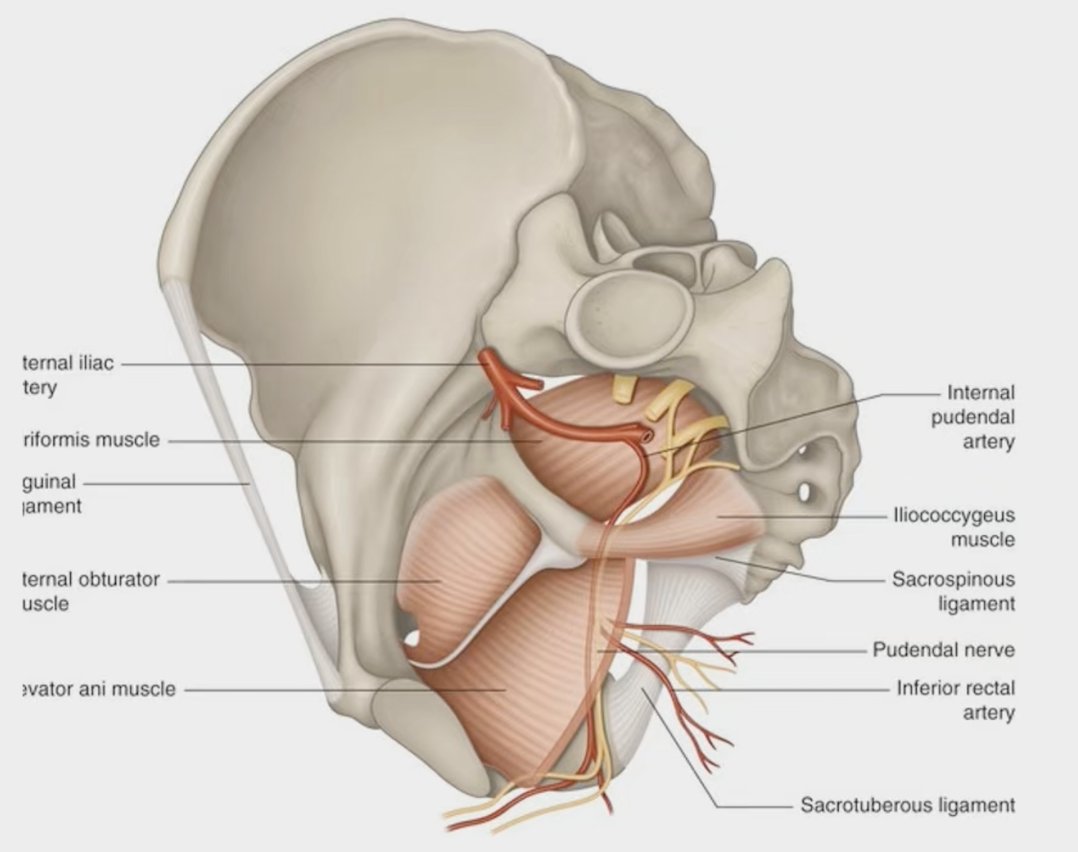
However, there is limited data on sparing the internal pudendal arteries and their effects on sexual function. As such, Dr. Kim-Wang and investigators assessed the relationship between dose to the internal pudendal arteries and sexual health in men treated with non-vessel sparing prostate radiation therapy.
Overall, 170 men were treated with prostate ± pelvic lymph node radiation therapy from 2011-2020. Bilateral internal pudendal arteries were retrospectively contoured per the POTEN-C Trial Atlas with a 5mm brush and craniocaudal borders at the superior edge of the seminal vesicles and penile bulb, respectively:
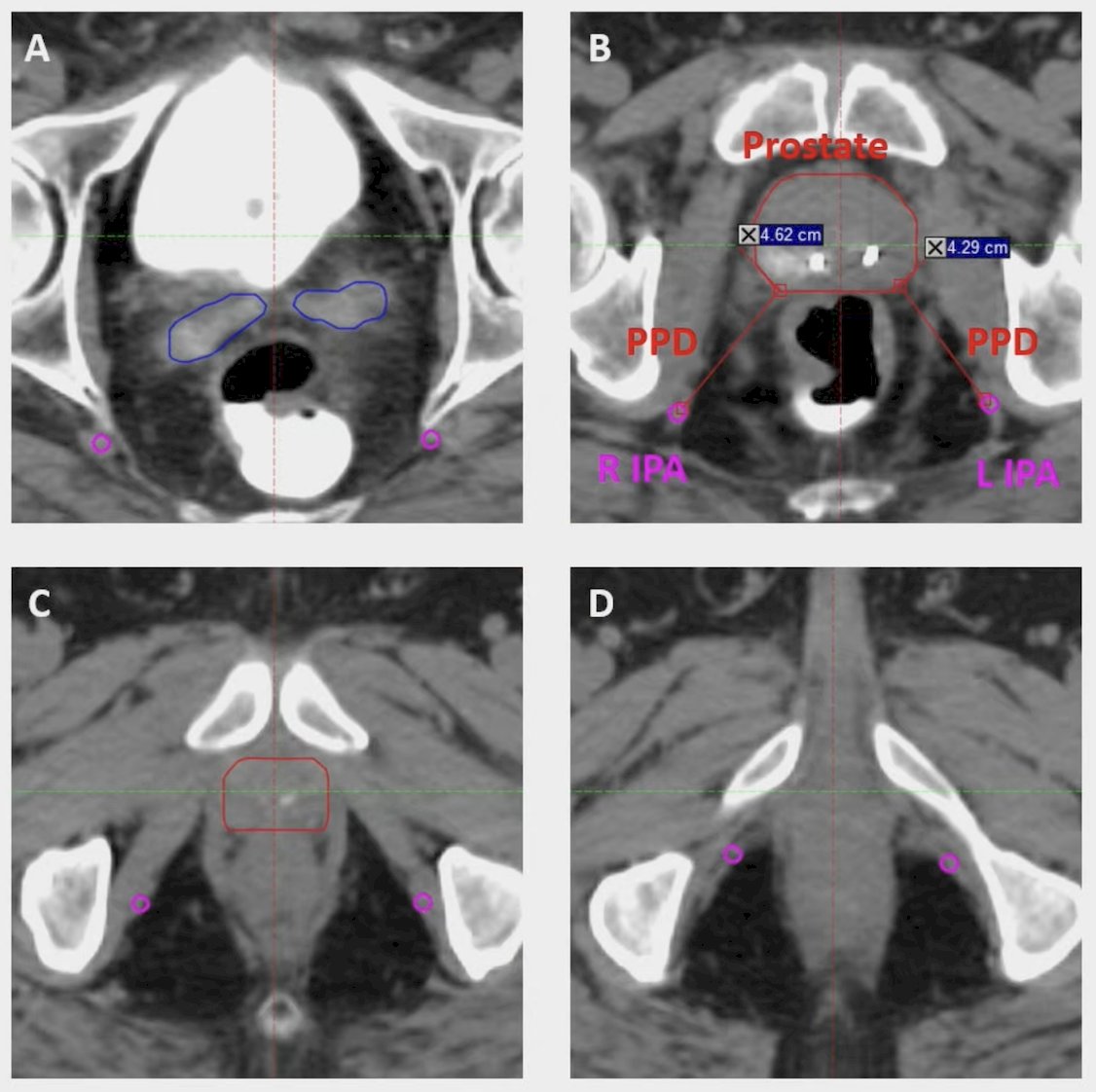
Patient reported sexual function was assessed with the EPIC-26 survey. Prostate dose was 60 Gy/20 (n = 46), 78 Gy/38 (n = 80), and 79.2 Gy/44 (n = 44); 62 (37%) men received concurrent ADT. To account for different fractionation schemes, biologically equivalent doses were calculated for dose (ie. D1, D10, D20, through D90, D99, and mean) to the bilateral internal pudendal arteries (?/ß=3). The distance between the prostate mid-gland to the internal pudendal arteries was measured (PDD). The primary endpoint was change in global sexual score, and generalized estimated equation models and cox regression were used, adjusting for baseline global sexual score, age, and ADT. A change in global sexual score more than the minimum clinically important difference (10), was also assessed, and the two sided t-test was used to compare the change in global sexual score from baseline to last follow-up. Median follow-up after radiation therapy for the last sexual health assessment was 37 months (IQR 21-52 months).
The patient characteristics for this study are highlighted in the following table:
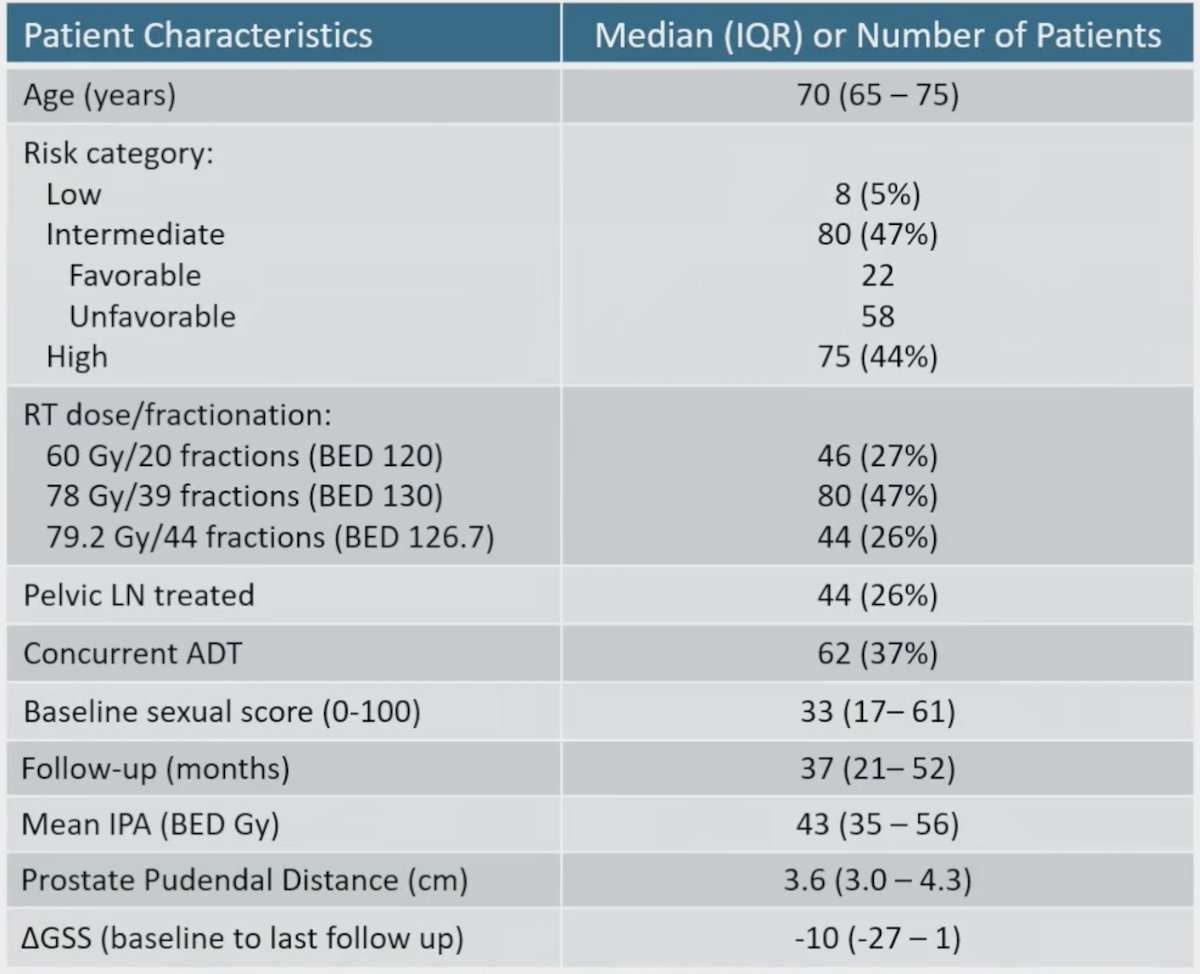
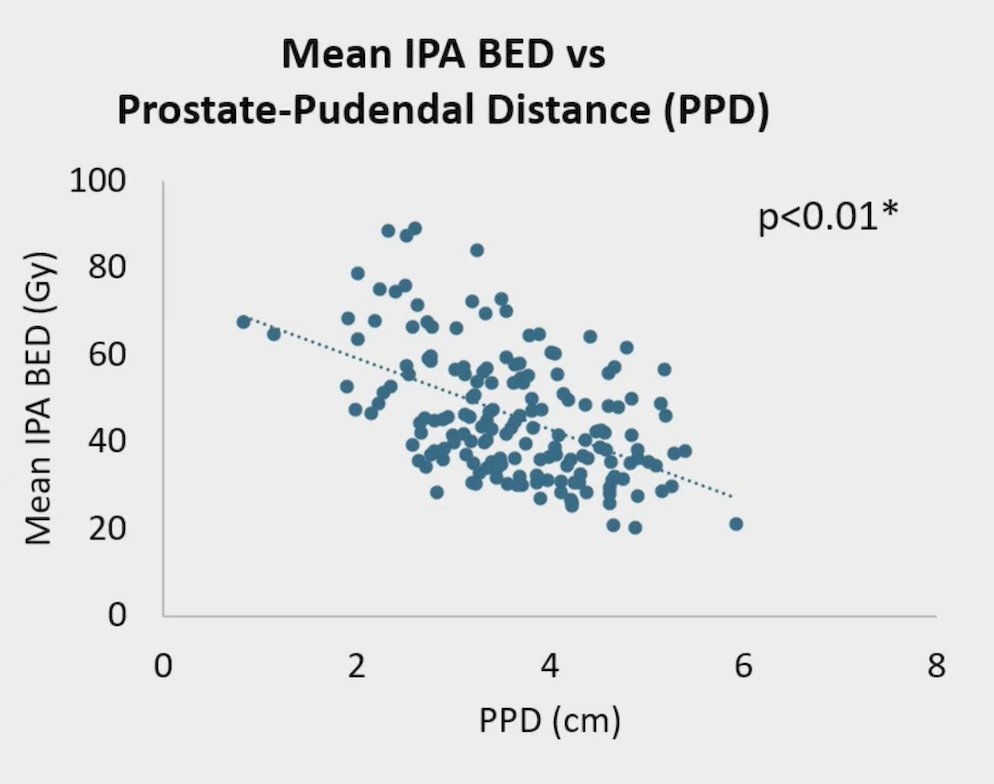
The median dose to the internal pudendal arteries was 43 Gy biologically equivalent dose, and the median PDD was 3.6 cm. The median change in global sexual score was -10 from baseline to last follow up, and internal pudendal artery dose was correlated with PDD (p < 0.01):
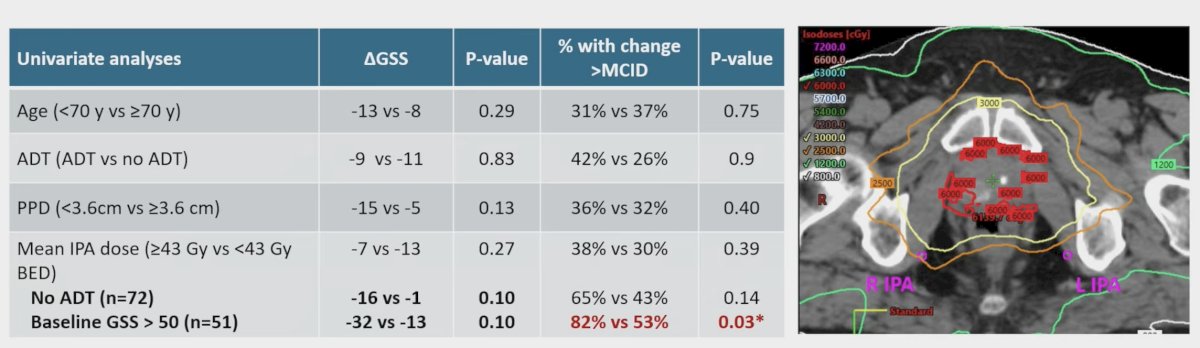
In the overall cohort, on generalized estimated equation analysis, global sexual score was correlated with age (p = 0.03) and ADT (p = 0.006), but not mean internal pudendal arteries dose (p = 0.21). Assessment of various dose volume relationships with internal pudendal arteries, other than mean dose revealed the strongest associations for pudendal D10% biologically equivalent dose to global sexual score (p = 0.08). Analysis of the change in global sexual score from baseline to last follow-up revealed further associations. Larger PDD (>3.6 cm) was correlated with a smaller drop in global sexual score (-4.8 versus -15, p = 0.13). On a subset analysis in men without ADT, men with mean internal pudendal artery dose > 43 Gy biologically equivalent dose had a change in global sexual score of -16 compared to -1 (p = 0.10); 65% had a drop > minimum clinically important difference compared to 43% (p = 0.14). In men with a baseline global sexual score of 50+, men with mean internal pudendal artery dose > 43 Gy had a change in global sexual score of -32 compared to -13 (p = 0.10); 82% had a drop > minimum clinically important difference compared to 53% (p = 0.03):
Dr. Kim-Wang concluded his presentation discussing whether dose reduction to the pudendal arteries during radiation therapy can preserve sexual health with the following take home points:
- Sparing dose to the internal pudendal arteries (<43 Gy biologically equivalent dose, or <26 Gy EqD2, corresponding roughly to a dose at or below the 50% isodose line) may help preserve sexual health in subsets of men treated with prostate radiation therapy
- Considering the internal pudendal arteries as a dose constraint in prostate cancer radiation has the potential to improve sexual health outcomes for men with good baseline health
- Internal pudendal artery dose <12 Gy in a 20 Fx plan can be achievable without compromising the treatment plan
- An expanded analysis will include more men with baseline global sexual score > 50
Presented by: Sophia Kim-Wang, MD, PhD, University of Chicago, Chicago, IL
Written by: Zachary Klaassen, MD, MSc – Urologic Oncologist, Associate Professor of Urology, Georgia Cancer Center, Wellstar MCG Health, @zklaassen_md on Twitter during the 2025 American Society for Radiation Oncology (ASTRO) Annual Meeting, San Francisco, CA, September 28th – 30th, 2025