

(UroToday.com) The 2025 American Society for Radiation Oncology (ASTRO) Annual Meeting held in San Francisco, CA between September 28th and 30th, 2025, was host to an advances in localized prostate cancer session. Dr. Giuseppe Sanguineti presented a study assessing the oncologic outcomes of stereotactic body radiotherapy (SBRT) administered in 3 fractions for patients with localized, low- to favorable intermediate-risk prostate cancer.
This was a prospective, multicenter phase I/II trial (NCT02623647) evaluating SBRT (40 Gy in 3 fractions) to the whole prostate gland. The main eligibility criteria were as follows:
- Pathologic diagnosis of prostate cancer
- NCCN low or favorable intermediate-risk disease
- Prostate volume ≤80 cc
- Baseline IPSS ≤15
- No prior TURP
All patients underwent a multiparametric MRI for staging purposes. They had 3-4 fiducial markers and a rectal spacer gel inserted prior to the simulation. The rectum was ensured to be empty, and patients had a foley catheter inserted for controlled bladder filling/emptying. Patients underwent both Volumetric Modulated Arc Therapy (VMAT) and Intensity-Modulated Radiation Therapy (IMRT) approaches.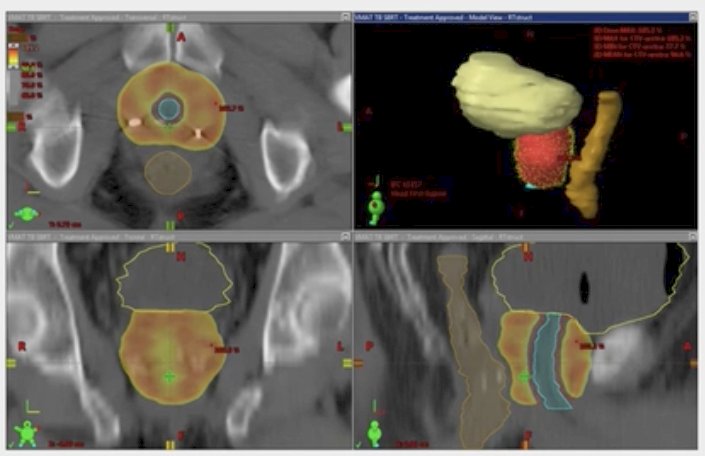
The selected dose objectives were as follows: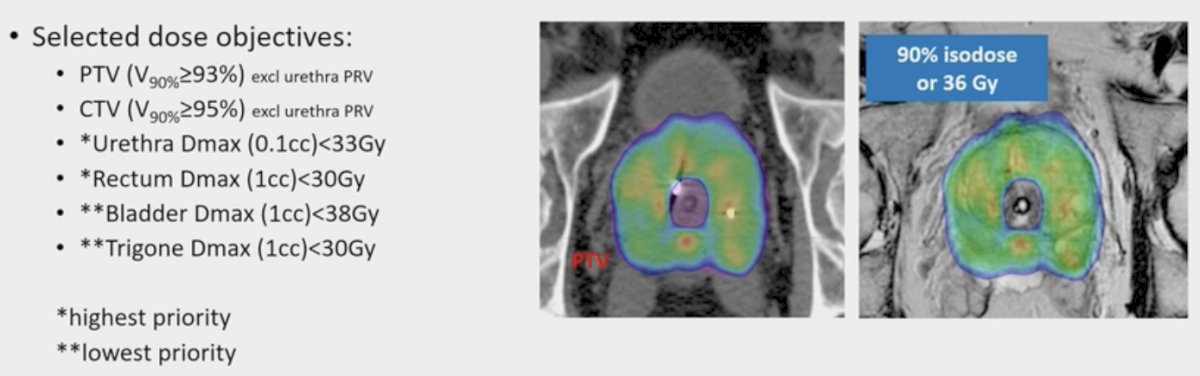
Dr. Sanguineti noted that the feasibility (Grade ≥2 GU toxicity <15% at 1 year per the CTCAE v4 criteria) of this novel dosing schedule has been previously demonstrated in a cohort of 59 patients.1 The study investigators planned to expand the population to 150 patients to estimate the biochemical no evidence of disease (bNED) control with a standard error of ~2.5%. A Generalized Estimating Equation (GEE) model was used to analyze longitudinal data. The Sidak post-hoc test was used to adjust p-values for multiple comparisons. Herein, Dr. Sanguineti reported the results at a median follow-up of 59.8 months.
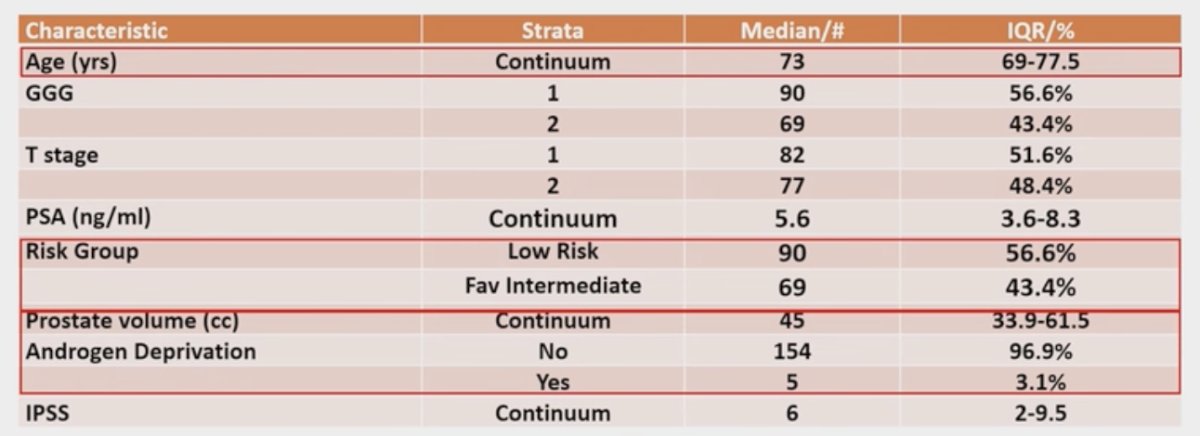
Between November 2015 and March 2023, 159 patients were enrolled. The median patient age was 73 years. The median serum PSA level was 5.6 ng/ml. 57% of patients had low-risk disease, and 43% favorable intermediate-risk disease.
All enrolled patients completed treatment as planned. The median PSA nadir was 0.08 ng/ml at a median of 48 months post-SBRT.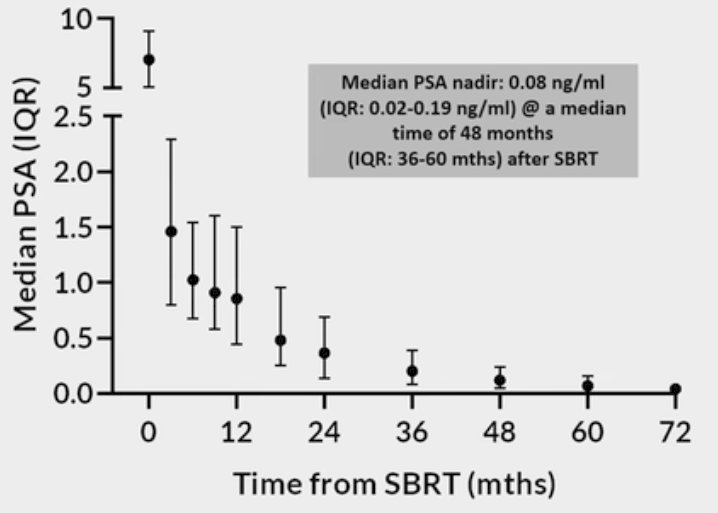
Four patients developed biochemical failure, and all eventually developed recurrent disease.

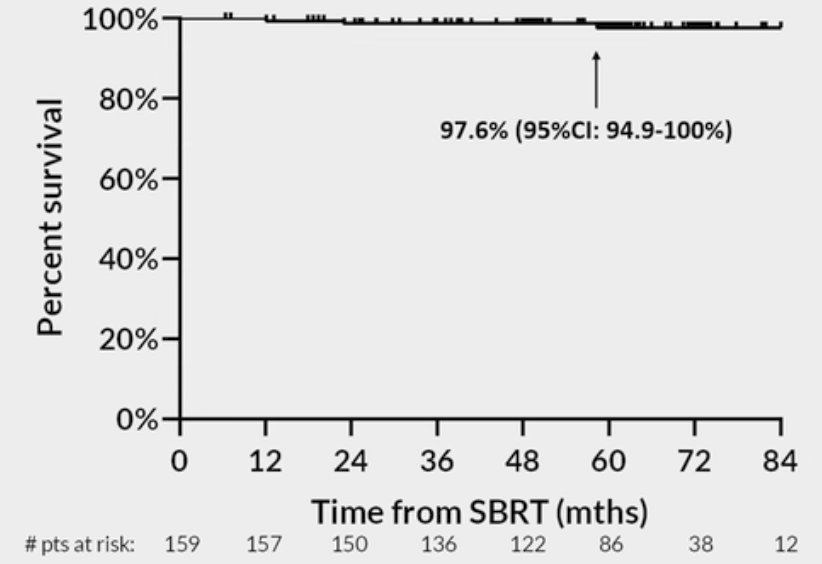
No patients died of prostate cancer. The 5-year overall survival was 90%.
The patterns of failure for those 4 patients are summarized below:
Of the 159 accrued patients, 147 underwent a multiparametric MRI (mpMRI) and 129 a biopsy at two years post-SBRT. A positive mpMRI was noted in 5/147 (3.4%) patients, and 11/129 (8.5%) had a positive biopsy.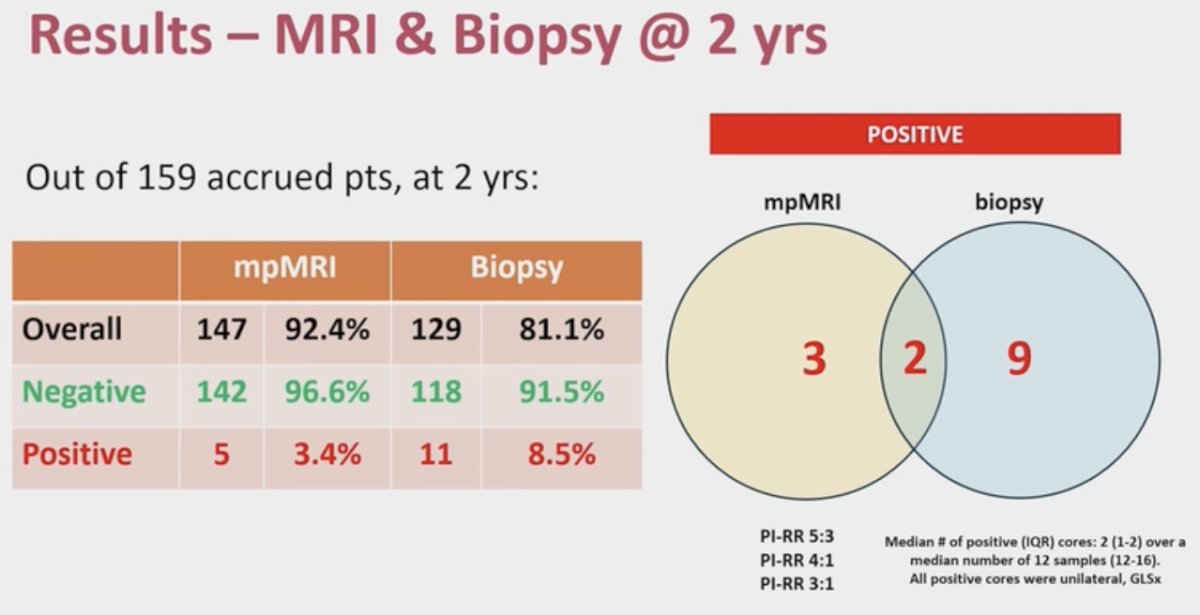
With regards to toxicity, late grade ≥2 GU adverse events were observed in 17 (10.7%) patients. No Grade ≥3 toxicity was observed. Late GI toxicity was observed in 6 (3.8%) patients (Grade 2: 4, Grade 3: 2 perforations).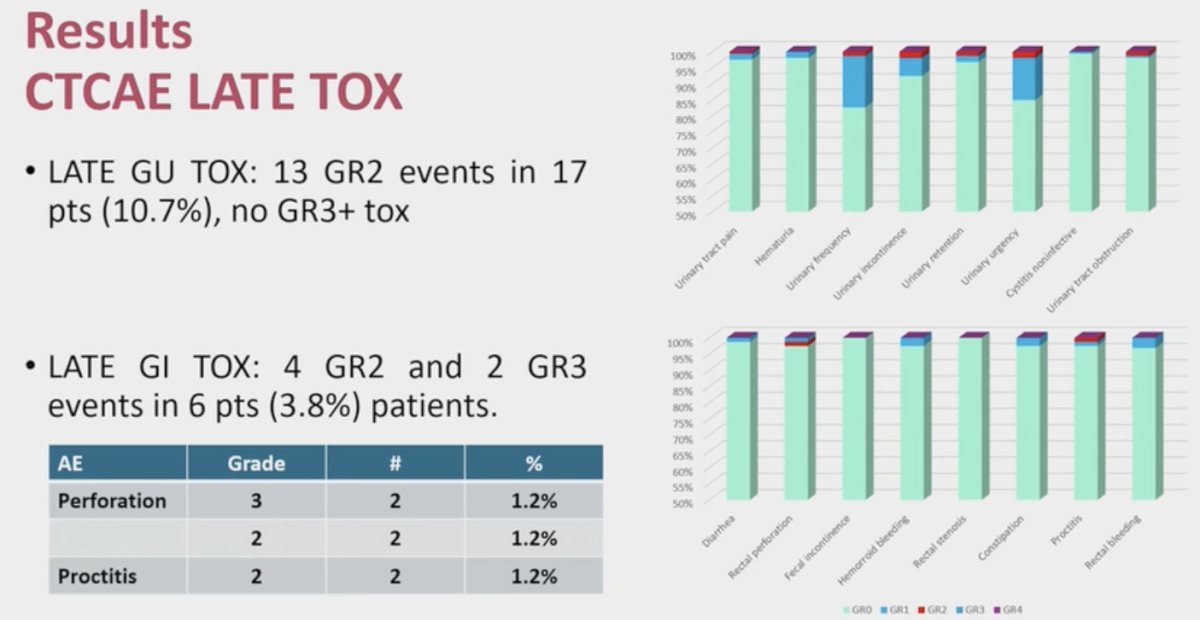
Dr. Sanguineti noted that the IPSS score changed over time, including the proportion of patients with severe symptoms. Notably, the proportion of patients with severe symptoms was significantly lower at 60 months, compared to baseline: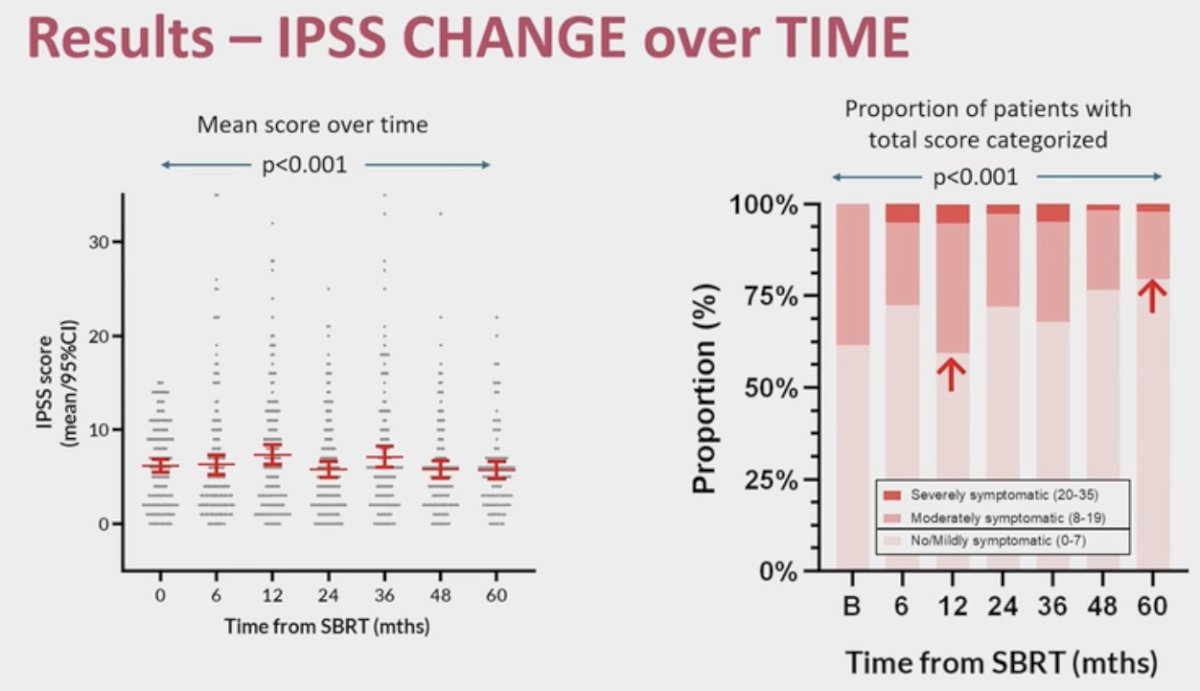
As expected, sexual function, as quantified by the IIEF-5 score, declined significantly over time: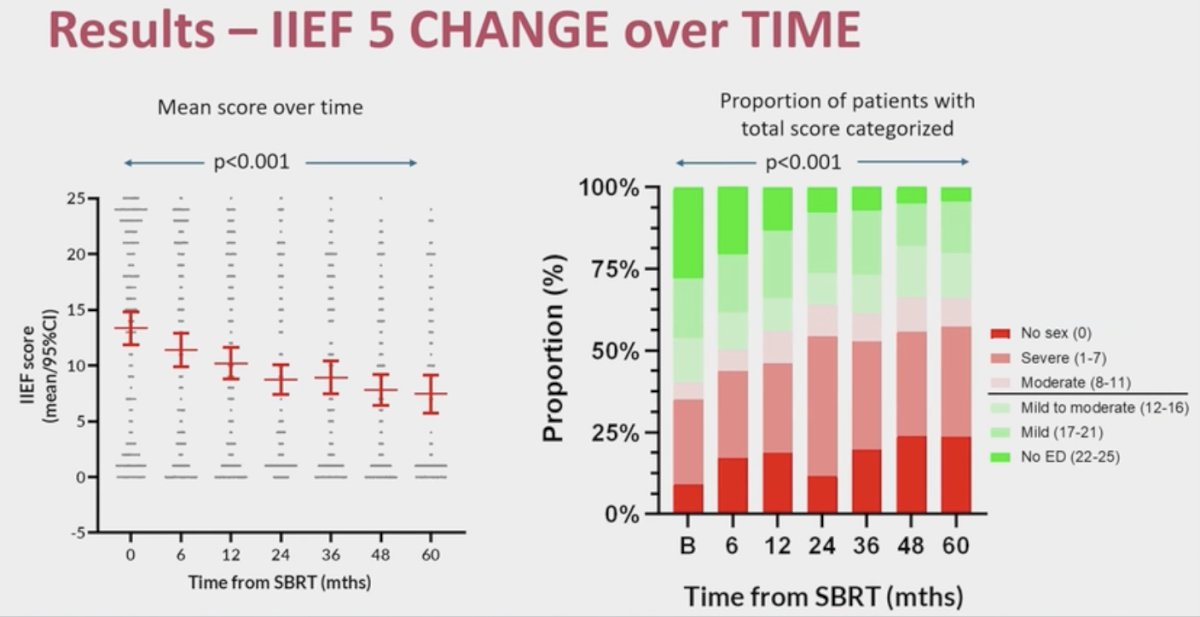
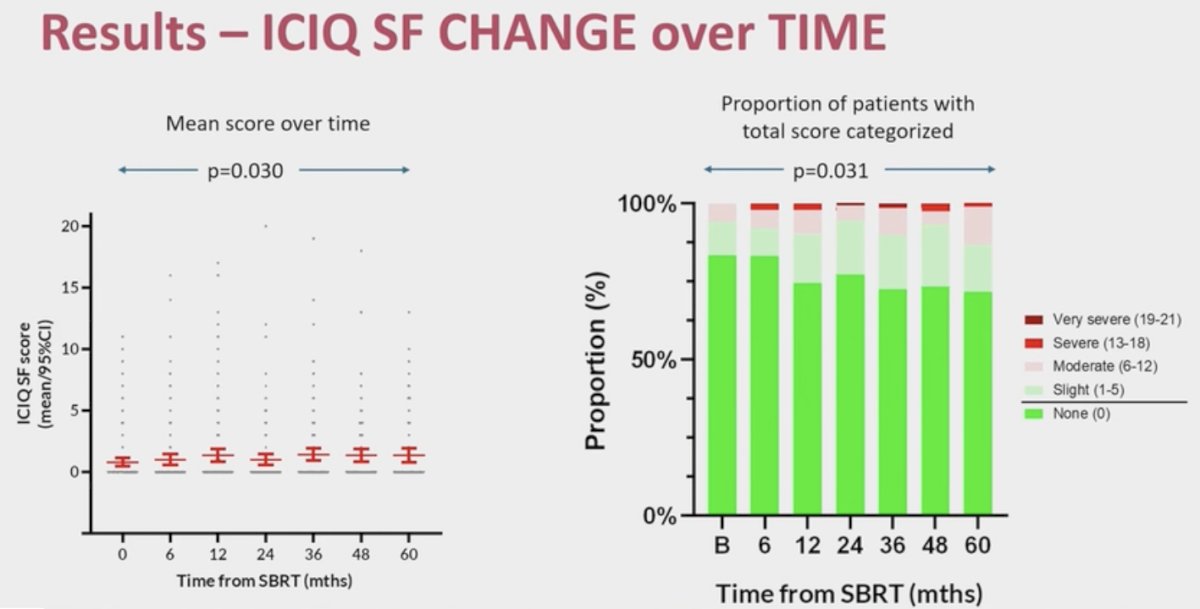
The impact of urinary incontinence on patient quality of life, as quantified by the ICIQ-UI SF questionnaire, significantly worsened over time:
Summary measures of selected GI items from the EORTC questionnaire are illustrated below: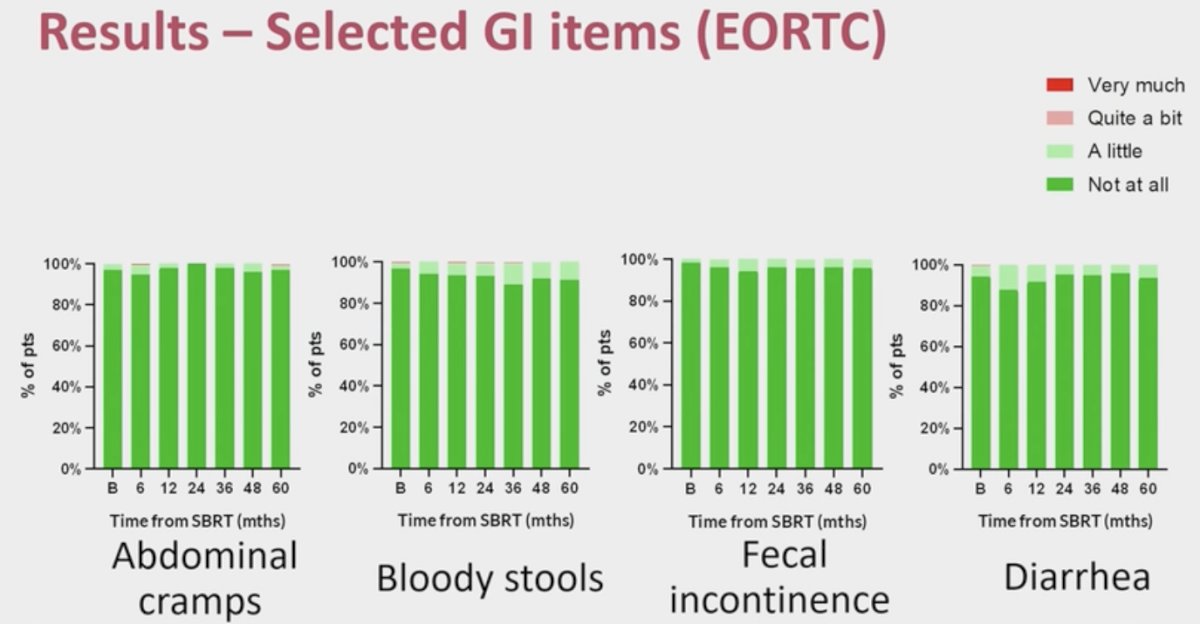
Based on these results, Dr. Sanguineti concluded that SBRT with 40 Gy in 3 fractions is highly effective and well-tolerated by patients with low- to favorable intermediate-risk prostate cancer.
Presented by: Giuseppe Sanguineti, MD, Department of Radiation Oncology, IRCCS Regina Elena National Cancer Institute, Rome, Italy.
Written by: Rashid K. Sayyid, MD, MSc, Urologic Oncologist, Department of Urology, The University of Arizona, @rksayyid on X during the 2025 American Society for Radiation Oncology (ASTRO) Annual Meeting, San Francisco, CA, September 28th – 30th, 2025
Reference:- Magli A, Farneti A, Faiella A, et al. Toxicity at 1 Year After Stereotactic Body Radiation Therapy in 3 Fractions for Localized Prostate Cancer. Int J Radiat Oncol Biol Phys. 2021; 111(1):93-100.