

(UroToday.com) The 2025 American Society for Radiation Oncology (ASTRO) Annual Meeting, held in San Francisco, CA, between September 28th and 30th, 2025, was host to a bladder and post-prostatectomy radiation session. Dr. Stefano Arcangeli presented the results of POPART, a study evaluating the safety and efficacy of post-operative ablative radiotherapy in the post-prostatectomy setting.
Dr. Arcangeli highlighted that the radiobiology of prostate cancer holds steady in the post-operative setting:

In the post-prostatectomy setting, the NRG-GU003 phase III trial demonstrated that hypofractionated postprostatectomy radiotherapy (HYPORT) was associated with greater patient-reported GI symptoms compared with conventionally fractionated postprostatectomy (COPORT) radiation therapy; however, this difference resolved within 6 months. HYPORT, compared with COPORT, was not associated with significantly higher patient-reported genitourinary or GI symptoms 1 or 2 years after radiotherapy 1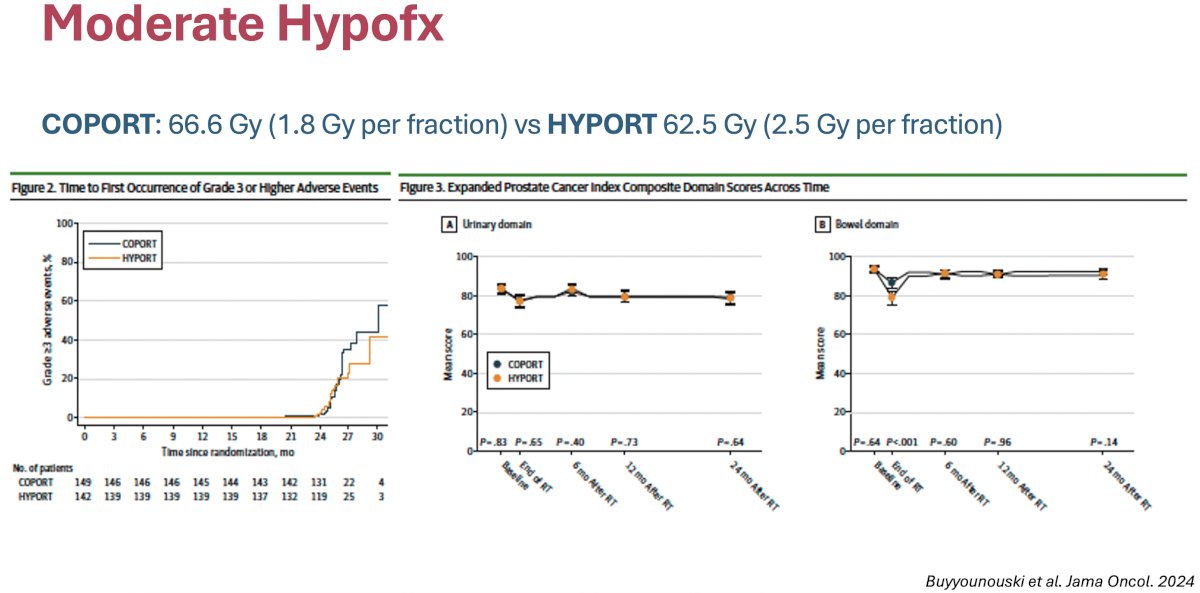
What about moderate versus extreme hypofractionation in the post-prostatectomy setting? Salvage radiotherapy delivered in five fractions was shown to be not associated with a significantly worse decline in patient-reported GU or GI toxicities at 3 or 6 months.2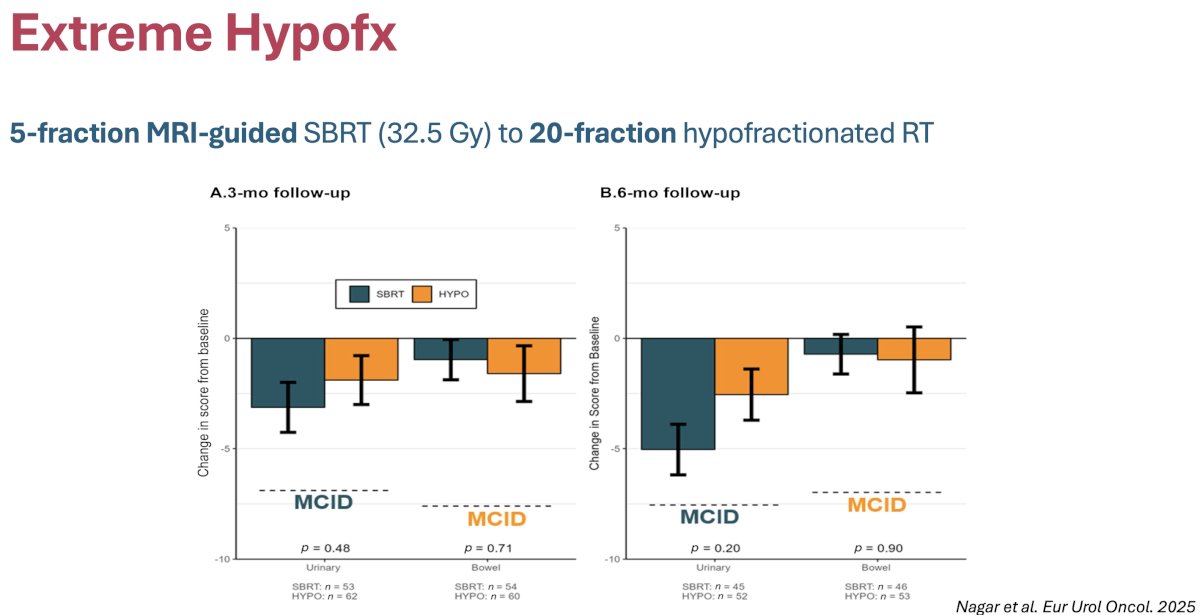
The objective of this study was to evaluate predictors of toxicity, patient-reported outcomes, and biochemical recurrence following salvage SBRT to the prostate bed (32.5 Gy in 5 fractions) in 100 patients enrolled in a multicenter prospective trial.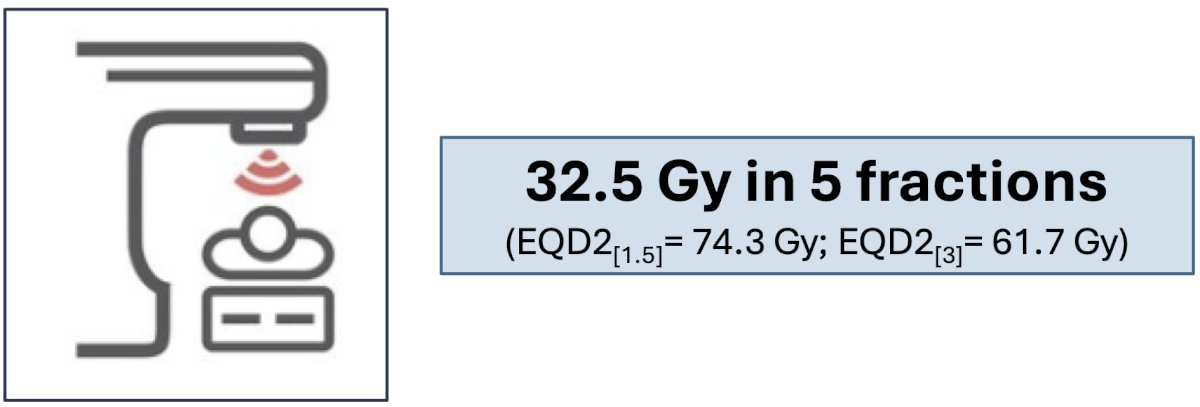
The inclusion criteria were as follows:
- Prostate adenocarcinoma treated with radical prostatectomy
- Post-prostatectomy serum PSA level between 0.1 and 2 ng/ml
- N0M0 at PSMA PET/CT within 60 days prior to registration
- Prior/concurrent ADT is allowed
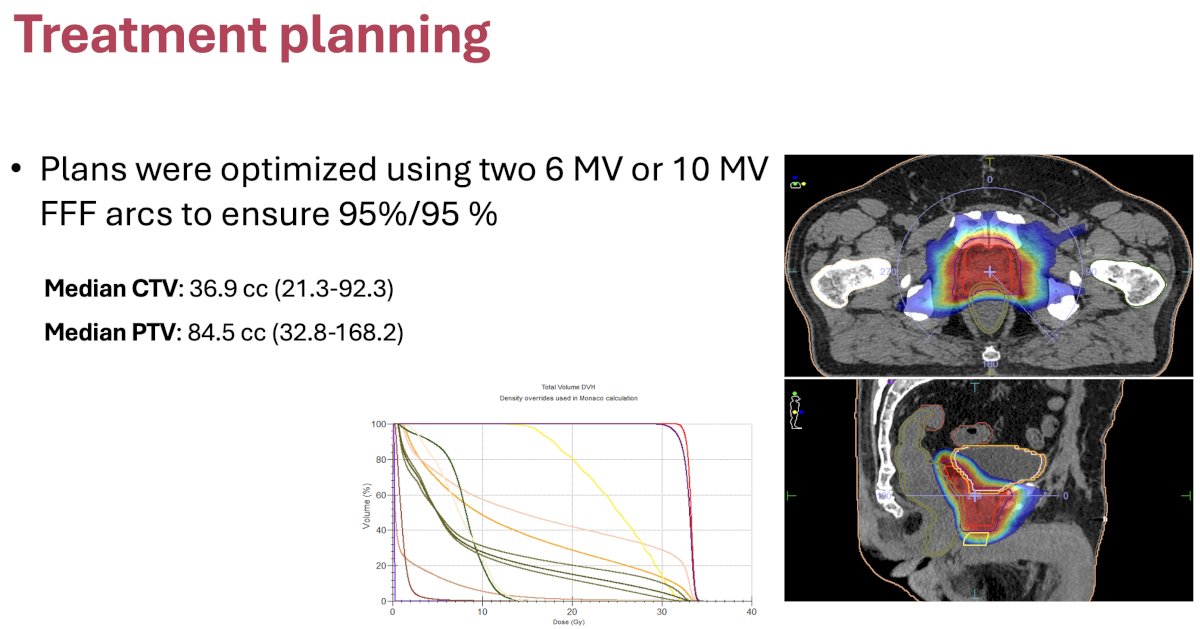
Organ motion mitigation was obtained prior to simulation and each treatment fraction with a rectal micro-enema and a comfortably full bladder. The clinical target volume (CTV) was delineated according to the GFRU guidelines. The prostate target volume (PTV) included the CTV + 5 mm isotropic margins, except for 3 mm at the rectal interface.
Plans were optimized using two 6 MV or 10 MV flattening filter-free (FFF) arcs to ensure 95%/95% dose coverage.
The study endpoints were:
- Acute and late toxicity, per CTCAE v.5
- Minimal clinically important differences (MCIDs) >0.5 standard deviations from baseline for:
- Expanded Prostate Cancer Index Composite for Clinical Practice (EPIC-CP) score
- International Consultation on Incontinence Questionnaire Short Form (ICIQ-SF) score
- International Index of Erectile Function Questionnaire: IIEF-5 score
- Serum PSA level
The study cohort included 100 patients. The median age was 71 years. 72% of patients had pathologic Grade Group 2 or 3 disease. 44% of patients had ≥pT3a disease. All patients were either pN0 or pNx (i.e., node dissection not performed). 46% of patients had positive surgical margins. The median time from surgery to SBRT was 38.2 months. The pre-SBRT PSA was 0.3 ng/ml. 13% used ADT concurrently for a median of 6 months.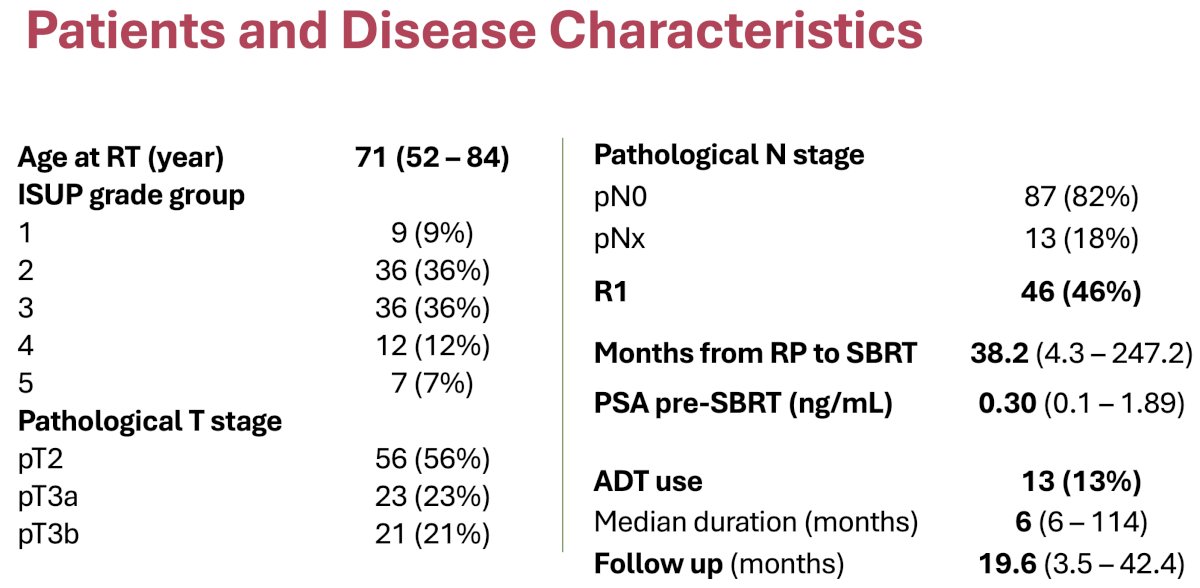
No acute Grade ≥2 GU toxicity was observed in the acute setting. Late Grade ≥2 GU toxicity was observed in 7.5% of patients (Grade 2: 6.4%; Grade 3: 1.1%). Acute and late grade ≥2 GI toxicity was observed in 5% and 1% of patients, respectively.
With regards to patient-reported outcomes, 7% of patients were incontinent at baseline (ICIQ-SF score ≥11), and 68% had severe erectile dysfunction (IIEF-5 scores ≤7). In the acute phase, both quality of life and sexual function were the most affected domains, whereas in the late phase, quality of life and urinary continence were the most impacted.

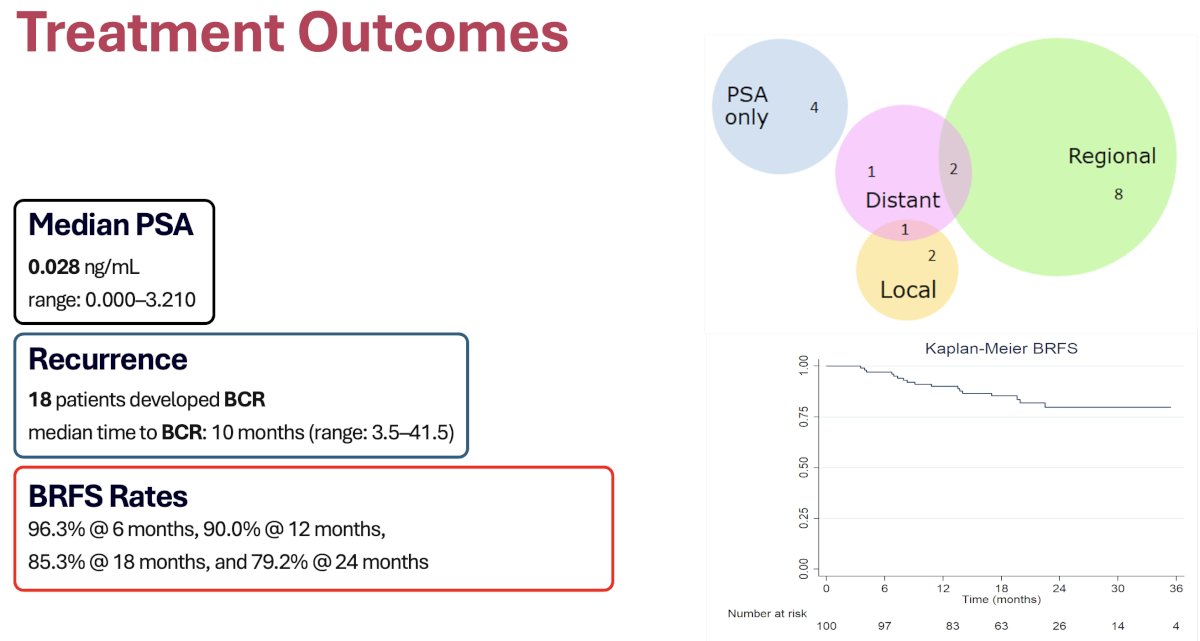
At a median follow-up of 19.6 months, the median PSA was 0.028 ng/mL. 18/100 patients developed biochemical recurrence, with a median time to recurrence of 10 months. The biochemical recurrence-free rates were:
- 6 months: 96.3%
- 12 months: 90%
- 18 months: 85%
- 24 months: 79%
The patterns of recurrence are summarized in the illustration below:
What were the predictive factors for toxicity, worsening of patient-reported outcomes, and biochemical recurrence?
Predictors of toxicity were as follows:
- Acute GI toxicity
- Larger CTV (OR: 1.02, p=0.03)
- Higher baseline EPIC Bowel scores (OR: 2.56, p=0.008)
- Late GU toxicity
- Acute MCIDs in EPIC Incontinence scores (OR: 16.2, p=0.04)
The predictors of patient-reported outcomes, MCIDs, are summarized below:

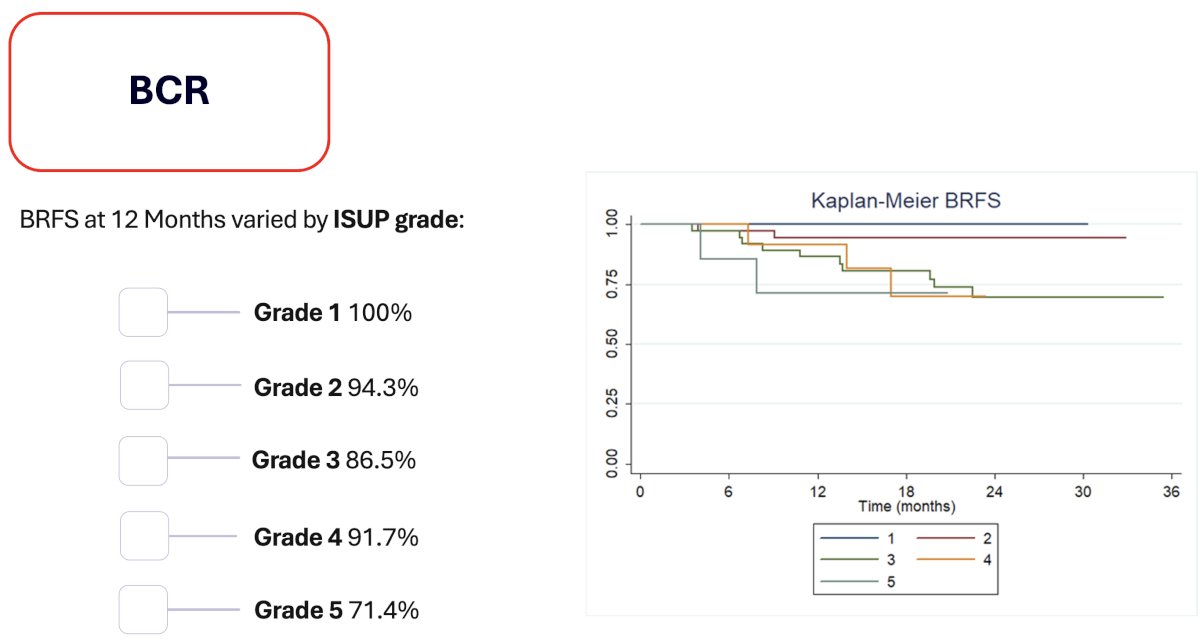
Biochemical-recurrence free survival rates varied by the ISUP grade:
Dr. Arcangeli concluded as follows:
- Postoperative SBRT to the prostate bed (32.5 Gy/5 fractions) is feasible with low rates of Grade ≥2 GU and GI toxicities
- Acute treatment-related symptoms predicted late side effects
- Higher bladder wall doses were associated with increased acute and late urinary incontinence
- Long-term follow-up and comparative trials are needed to confirm these findings
Presented by: Stefano Arcangeli, MD, Associate Professor, Department of Medicine and Surgery, University of Milan Bicocca, Milan, Italy
Written by: Rashid K. Sayyid, MD, MSc, Urologic Oncologist, Department of Urology, The University of Arizona, @rksayyid on X during the 2025 American Society for Radiation Oncology (ASTRO) Annual Meeting, San Francisco, CA, September 28th – 30th, 2025
References:- Buyyounouski MK, Pugh SL, Chen RC, et al. Noninferiority of Hypofractionated vs Conventional Postprostatectomy Radiotherapy for Genitourinary and Gastrointestinal Symptoms: The NRG-GU003 Phase 3 Randomized Clinical Trial. JAMA Oncol. 2024; 10(5):584-591.
- Nagar H, Diven MA, Rippon B, et al. A Randomized Controlled Phase 2 Trial Comparing Salvage Radiotherapy for Prostate Cancer Delivered in 4 Versus 2 Weeks (SHORTER): Acute Genitourinary and Gastrointestinal Patient-reported Outcomes at a Single Institution. Eur Urol Oncol. 2025: S2588-9311(25)00152-X.