

(UroToday.com) The 2025 American Society for Radiation Oncology (ASTRO) Annual Meeting held in San Francisco, CA between September 28th and 30th, 2025, was host to a bladder and post-prostatectomy radiation session. Dr. Jesus Juarez Casillas presented the four-year outcomes of SCIMITAR, a phase II trial of stereotactic intensity modulated radiotherapy after radical prostatectomy.
Stereotactic body radiation therapy (SBRT), defined as the delivery of >5Gy per fraction, has emerged as a well-established standard of care option for the definitive management of localized prostate cancer. Post-prostatectomy radiotherapy challenges include:
- The high mobility and deformability of the prostate bed
- The presence of sensitive organs adjacent to the prostate (bladder, rectum)
- The unclear radiosensitivity of the vesicourethral anastomosis
Moderately hypofractionated radiotherapy to the prostatic fossa is supported by emerging data, including a phase III clinical trial, although long-term toxicity remains a concern.
The study investigators hypothesized that SBRT to the prostatic fossa would be safe and efficacious, comparable to conventionally fractionated radiotherapy. The study objective was to evaluate the safety and efficacy of SBRT (30–34 Gy in 5 fractions) administered in the post-prostatectomy setting.
SCIMITAR (NCT03541850) was a multicenter, single-arm, phase II trial conducted at the University of Southern California (USC) and California, Los Angeles (UCLA). The eligibility criteria were as follows:
- Clinically localized prostate adenocarcinoma on radical prostatectomy pathology
- Patients meeting ≥1 of the following criteria
- Adverse pathologic features on the RP specimen (i.e., positive surgical margin, pT3-4 disease, Gleason Score 8–10 or tertiary Gleason 5).
- Biochemical recurrence: Rising serum PSA level >0.03 ng/mL on two consecutive tests
- High genomic risk score (i.e., Decipher >0.45)
- Exclusion criteria were as follows:
- Pathologic N1 disease
- Clinical evidence of distant metastases
- Prior pelvic radiotherapy
The primary efficacy endpoint was 4-year biochemical recurrence-free survival (BCRFS), with biochemical recurrence defined by:
- A rise in post-treatment nadir PSA ≥0.2 ng/mL, confirmed on a repeat test, or a continued PSA rise after SBRT
- Initiation of salvage hormonal therapy
- Death from any cause
Additional endpoints included:
- Physician-scored late toxicity (CTCAE v4.03) for the gastrointestinal (GI) and genitourinary (GU) domains
- Patient-Reported Outcomes (PROs):
- Expanded Prostate Cancer Index-26 (EPIC-26)
The study outcomes were compared to those of a historical cohort of 742 men from a phase III trial of conventionally fractionated radiotherapy (GETUG-AFU 16)1 using inverse probability of treatment weighting (IPTW) and Fine and Gray modeling.
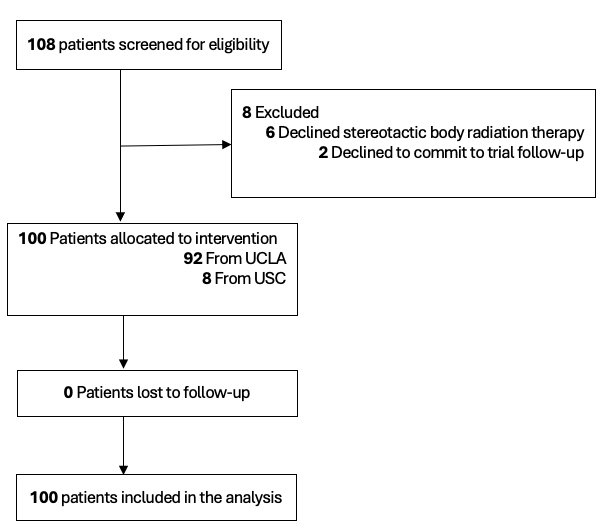
The study cohort included 100 eligible patients recruited between 2018 and 2021.
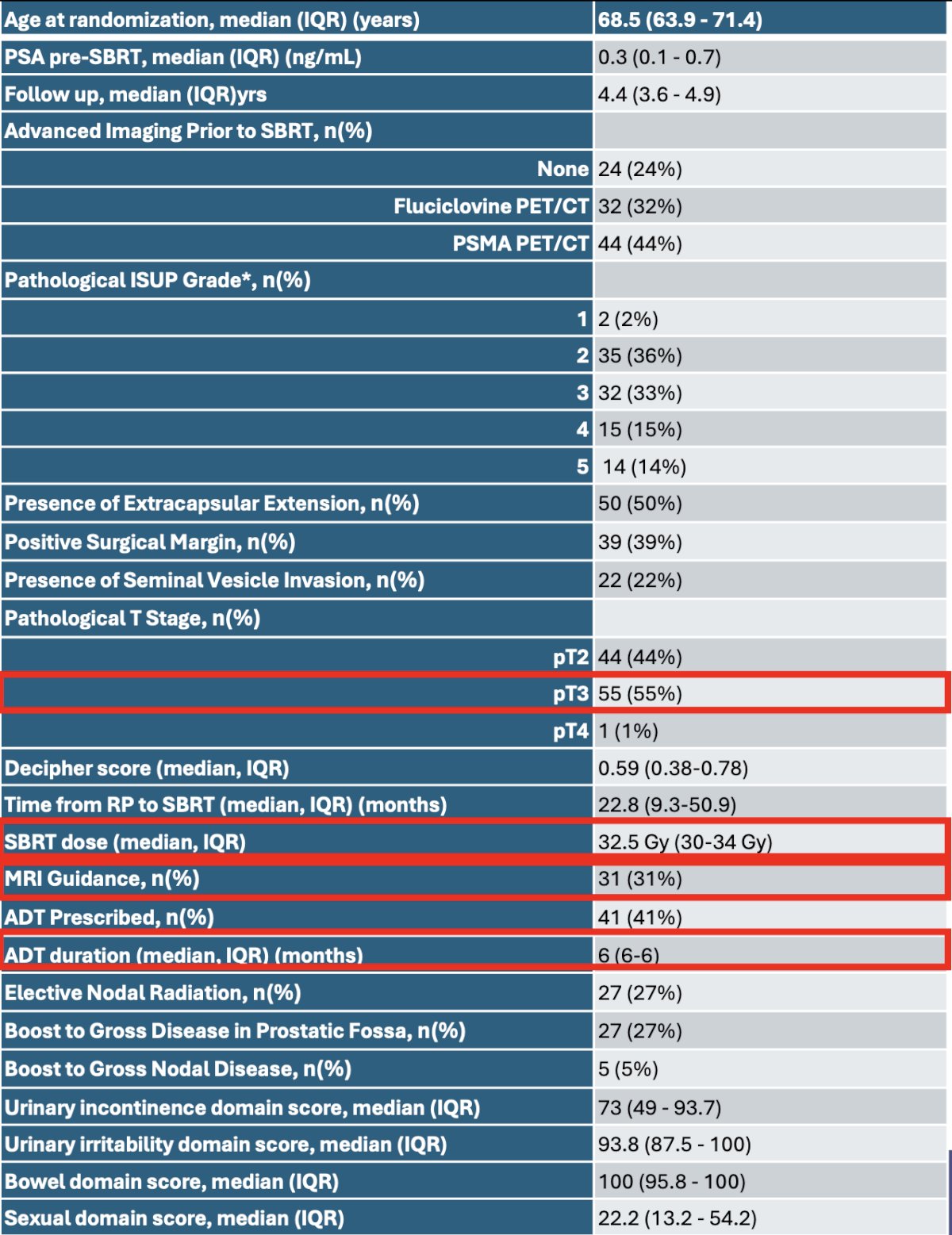
The median patient age was 68.5 years, and the median pre-SBRT PSA was 0.3 ng/ml. 55% of patients had pT3 disease on the radical prostatectomy specimen. The median SBRT dose was 32.5 Gy, and 31% were performed under MRI guidance. 41% received ADT for a median duration of 6 months.
Compared to patients enrolled in the comparator GETUG-AFU 16 trial (see table below), patients in the SCIMITAR trial were more likely to have:
- Higher pre-radiation PSA levels (no ADT cohort: 0.2 vs 0.3 ng/ml; ADT cohort: 0.7 vs 0.3 ng/ml; p=0.018)
- Worse pathologic Gleason scores 8-10 (30% vs 13%; p<0.001)
- Extracapsular extension (50% vs 37%; p=0.018)
- Seminal vesicle invasion (22% vs 16%; p=0.18)
Positive surgical margins were more prevalent in the GETUG AFU-17 cohort (50% vs 40%; p=0.06).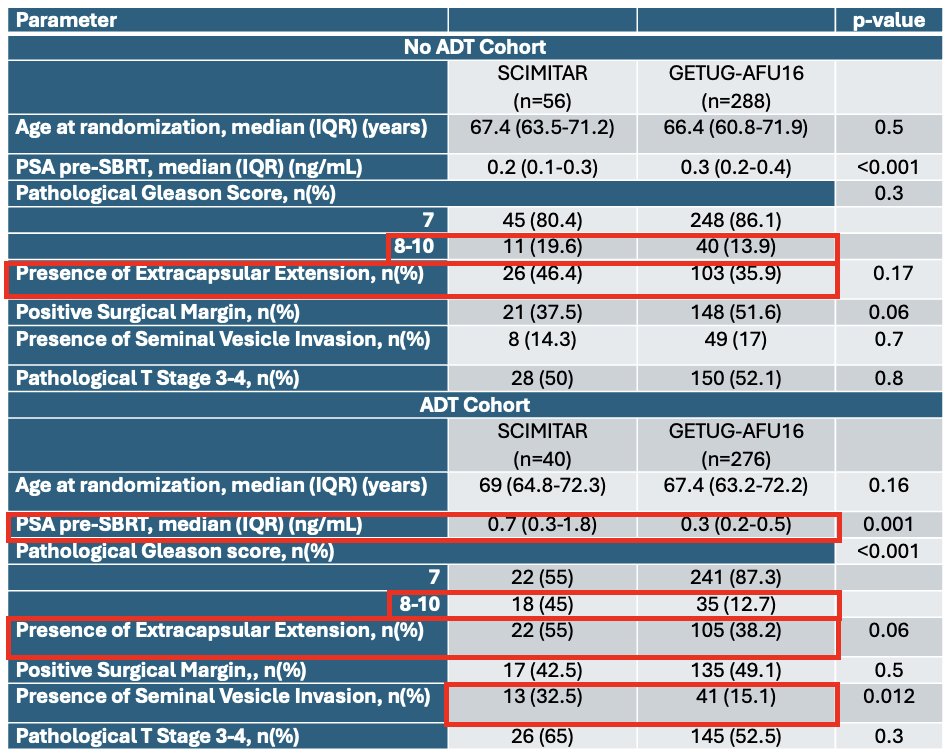
At a median follow-up of 4.4 years, the 4-year BCRFS was 60% (95% CI: 49–70%). Among the patients who did not receive ADT, SBRT was associated with a lower recurrence rate, compared to conventionally fractionated radiotherapy (sHR: 0.49, p=0.009). There was no difference among patients who received ADT.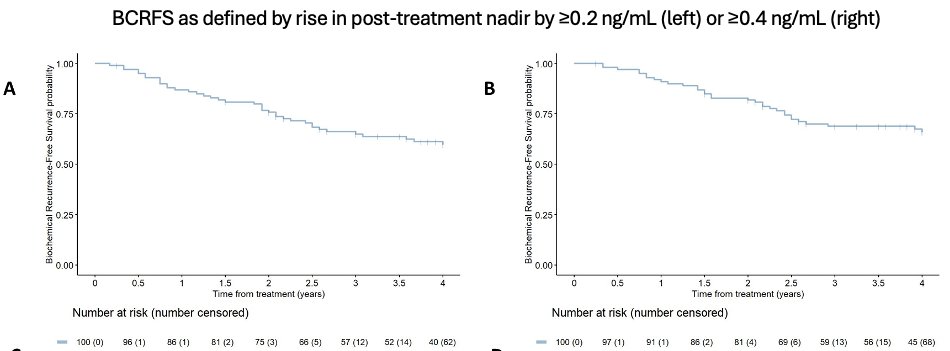
With regards to toxicity, late grade ≥2 GI and GU events were observed in 6.2% and 31% of patients, respectively. MRI-guided radiotherapy was associated with a lower rate of GU toxicity (sHR: 0.34, p=0.045).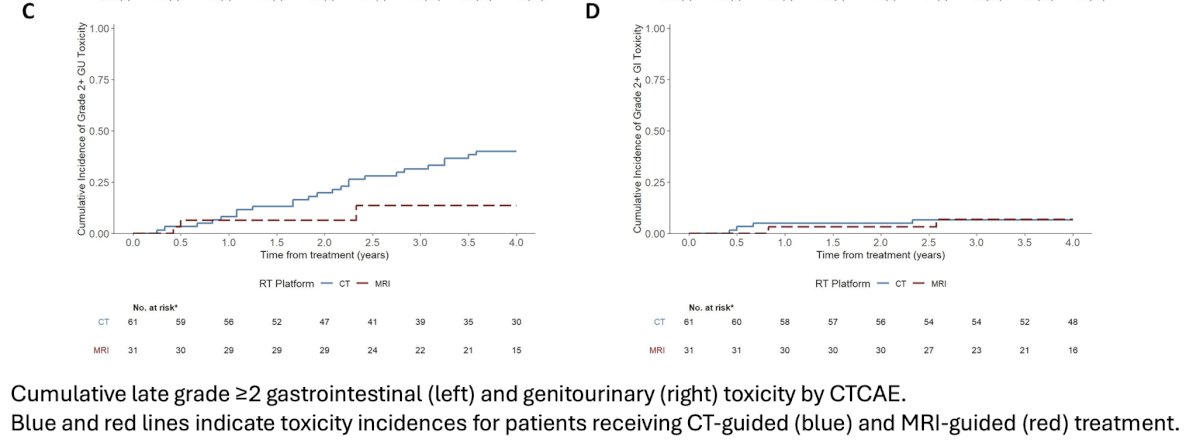
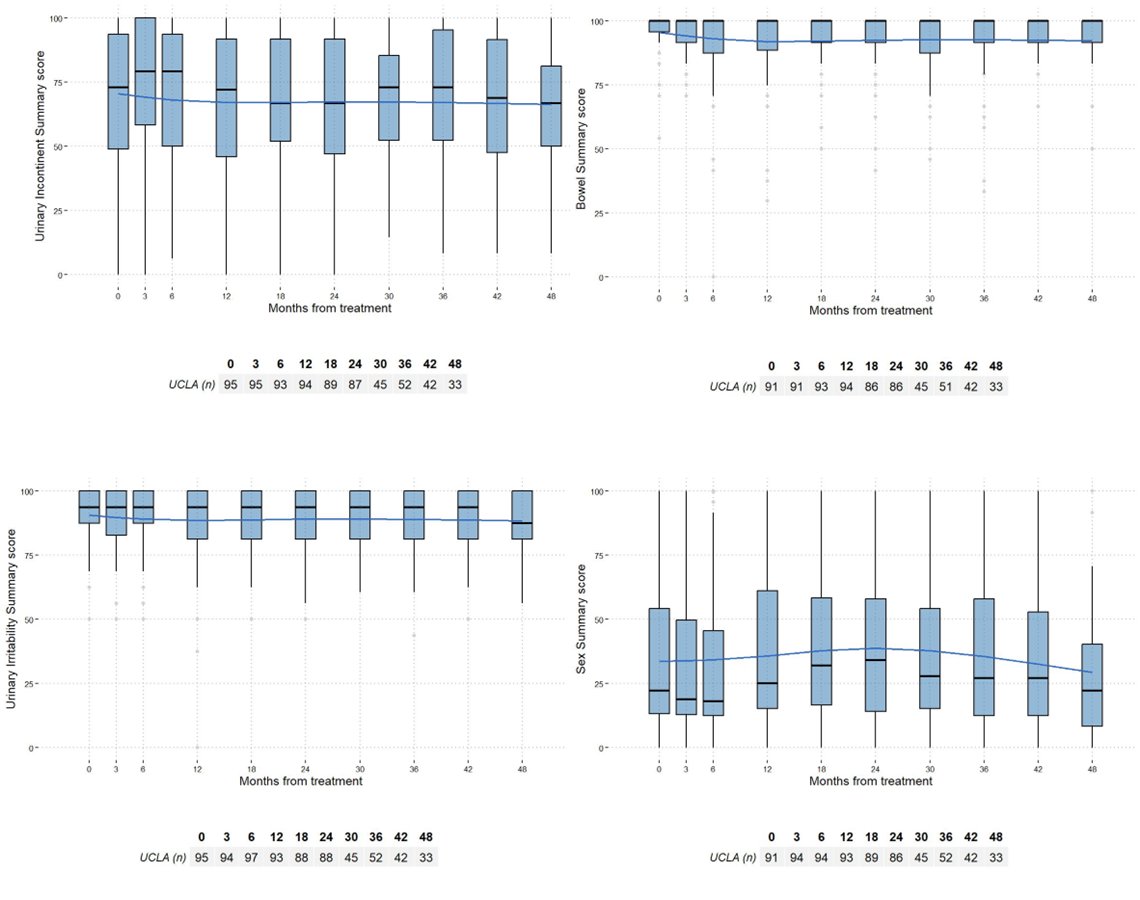
The median changes from baseline through 4 years were:
- Urinary incontinence: -6.3 points (IQR, -14.8 to 6.3)
- Urinary irritative/obstructive: 0 (IQR, -12.5 to 0)
- Bowel: 0 (IQR, -8.3 to 0)
- Sexual: 0 (IQR, -5.5 to 8.3)
Clinically meaningful PRO declines (2× minimal clinically important difference) for SBRT at 48 months were:
- Urinary incontinence: 23%
- Urinary irritative/obstructive: 6.7%
- Bowel: 13%
- Sexual: 9.7%
Dr. Juarez Casillas concluded as follows:
- SCIMITAR provides the first prospective evidence from a phase II trial supporting SBRT as an alternative to conventionally fractionated radiotherapy post-radical prostatectomy
- MRI-guided SBRT may further reduce SBRT-related GU toxicity
- SBRT to the prostatic fossa is safe, effective, and efficient based on 4-year follow-up data
Presented by: Jesus Juarez Casillas, MD, MS, Resident Physician, Department of Radiation Oncology, UCLA, Los Angeles, CA
Written by: Rashid K. Sayyid, MD, MSc, Urologic Oncologist, Department of Urology, The University of Arizona, @rksayyid on X during the 2025 American Society for Radiation Oncology (ASTRO) Annual Meeting, San Francisco, CA, September 28th – 30th, 2025
References:- Sargos P, Chabaud S, Latorzeff I, et al. Adjuvant radiotherapy versus early salvage radiotherapy plus short-term androgen deprivation therapy in men with localized prostate cancer after radical prostatectomy (GETUG-AFU 17): A randomized, phase 3 trial. Lancet Oncol 2020; 21(10):1341-1352.