

(UroToday.com) The 2025 American Society for Radiation Oncology (ASTRO) Annual Meeting, held in San Francisco, CA, was host to an advances in localized prostate cancer session. Dr. Tamim Niazi presented PCS VI, a phase III study of hypofractionated, dose escalation radiotherapy versus conventional pelvic radiotherapy followed by high-dose rate brachytherapy boost for high-risk prostatic adenocarcinoma.
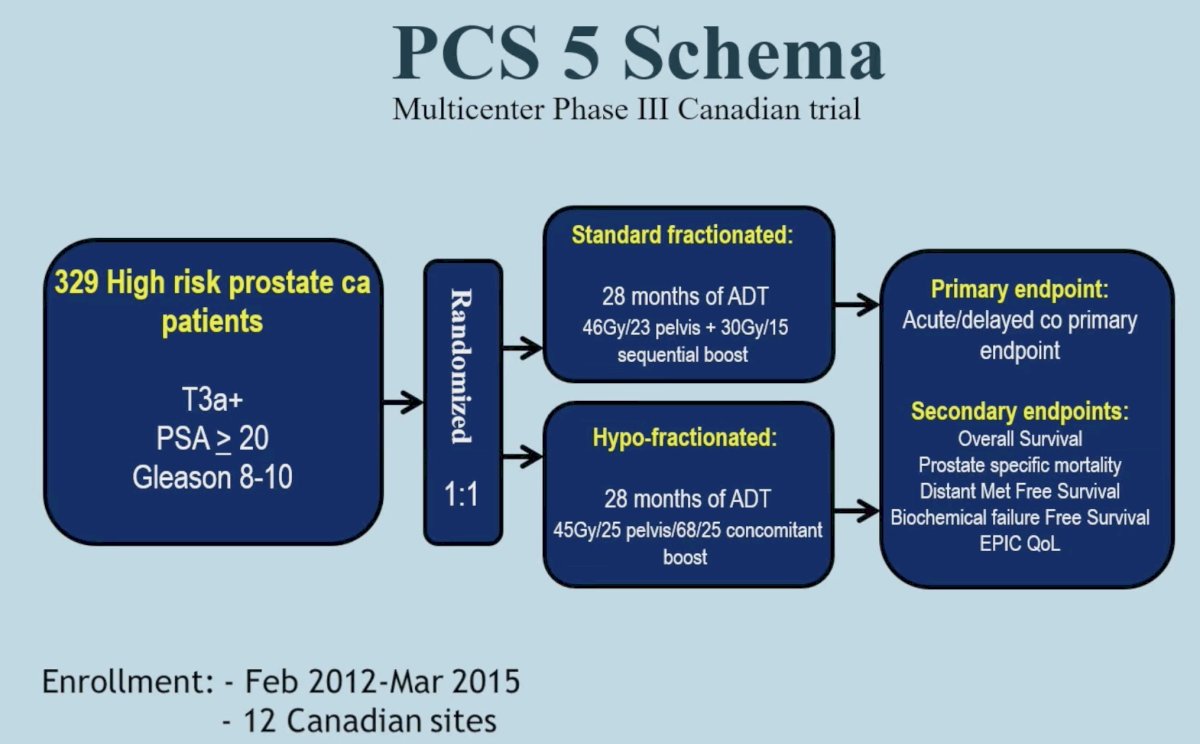
Dr. Niazi highlighted the ‘predecessor’ to the PCSVI trial, the PCSV trial, which is a Canadian multicenter, open-label, phase III randomized trial that included men with histologically proven, clinically localized prostate cancer with one or more high-risk features (cT3/T4, Gleason score ≥8, and/or PSA >20). All eligible patients received 28 months of ADT and were randomized 1:1 to :
- Conventionally fractionated radiotherapy (76 Gy/38 Fx to the prostate plus 46 Gy/23 Fx to the pelvic lymph nodes)
- Hypofractionation (68 Gy/25 Fx to the prostate plus 45 Gy/25 Fx to the pelvic lymph nodes)
This trial demonstrated that there were no differences in survival outcomes between hypo- and conventionally fractionated radiotherapy,1 establishing hypofractionated regimens as a standard of care option for high-risk prostate cancer patients.
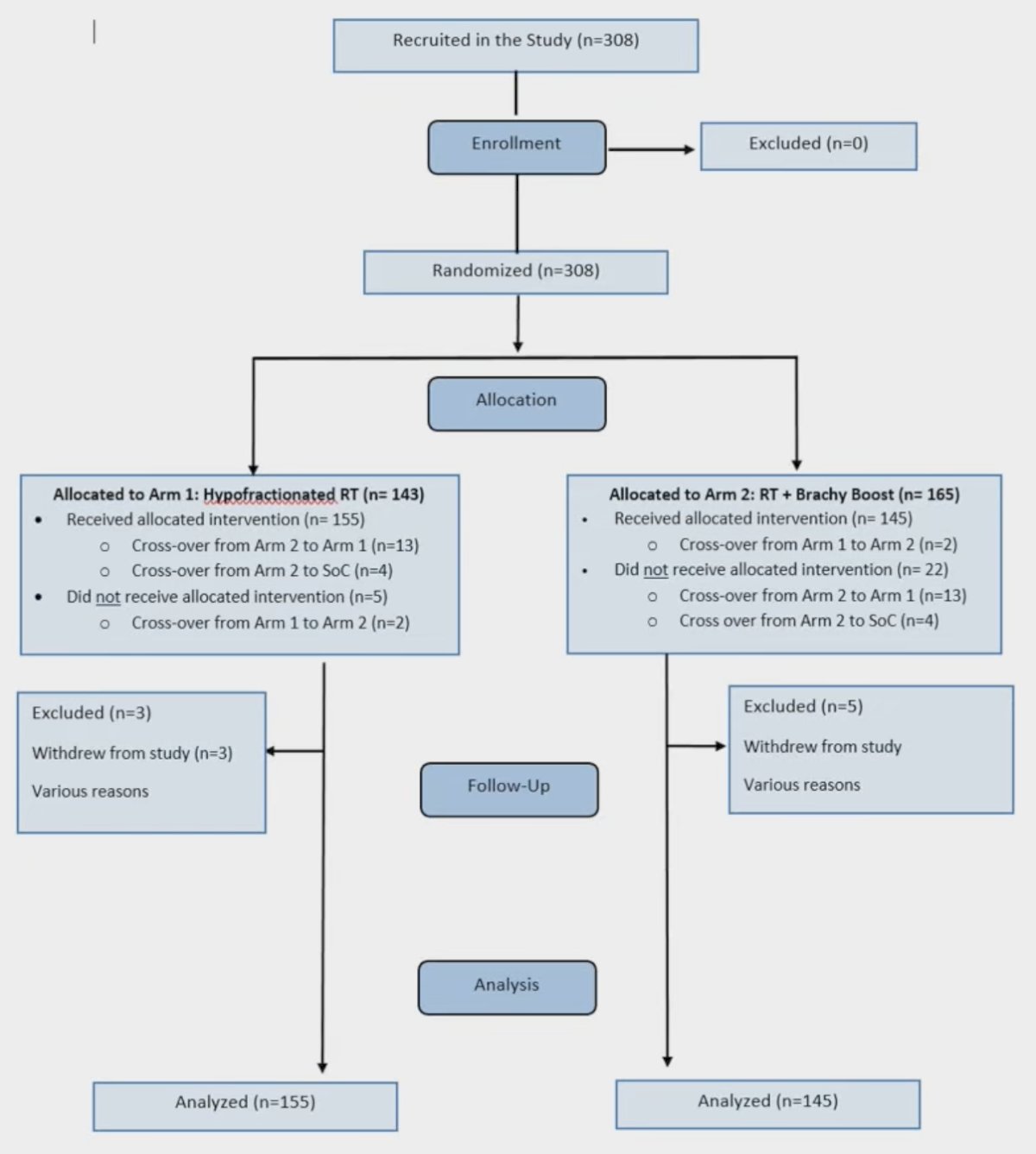
Conversely, the PCSVI trial is a multicenter, phase III trial conducted across 11 Canadian sites from January 2015 to June 2022 and included 308 high-risk, localized prostate cancer patients who received neoadjuvant, concurrent, and long-term ADT and were randomized 1:1 to:
- Arm 1 (n=143): Hypofractionated radiotherapy (68 Gy/25 Fx to the prostate + 45 Gy/25Fx to the pelvic lymph nodes)
- Arm 2 (n=165): External beam radiotherapy (EBRT; 46 Gy/23 Fx to pelvis) + brachytherapy boost (15 Gy HDR boost within 3 weeks of EBRT
The study flow chart is illustrated below:
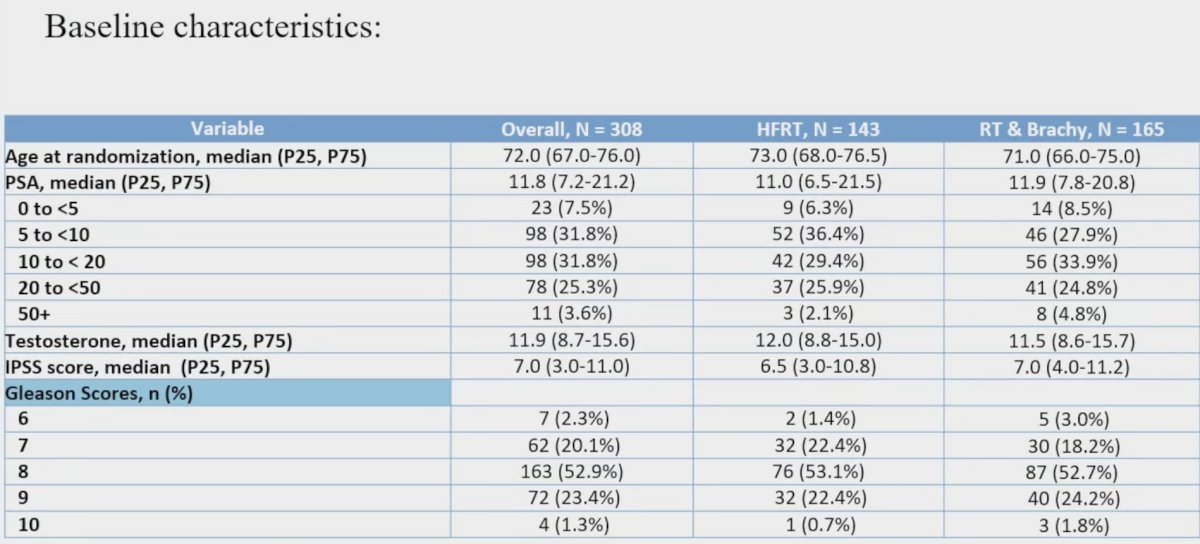
The baseline characteristics of the PCSVI cohort are summarized below. The median patient age was 72 years, median serum PSA level was 11.8 ng/ml, and nearly 80% had Gleason Score ≥8 disease.
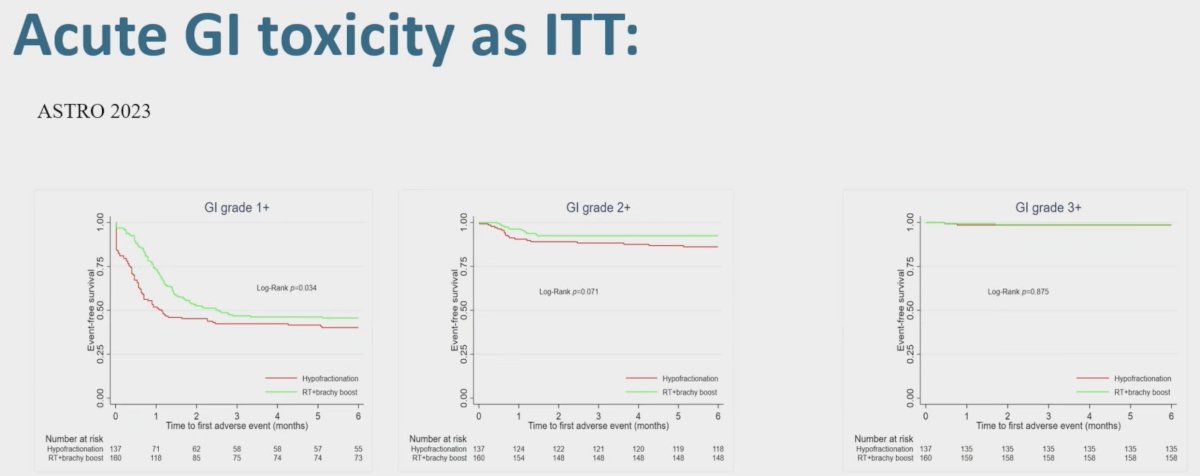
The acute gastrointestinal (GI) and genitourinary (GU) toxicity results were previously presented at ASTRO 2023.2 In summary, these demonstrated that radiotherapy + brachytherapy boost were associated with significantly reduced:
- GI Grade ≥1 toxicity in both the ‘intention to treat’ (ITT; p=0.034) and ‘assigned treatment’ (AT) comparisons (p=0.017)
- GU Grade ≥1 toxicity in both the ITT and AT comparisons (p<0.001 for both)
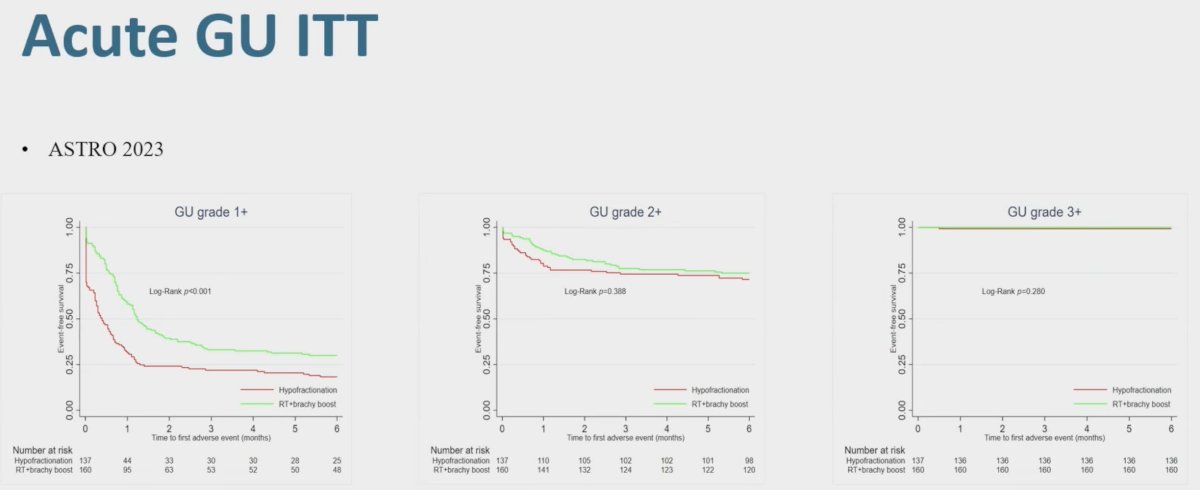
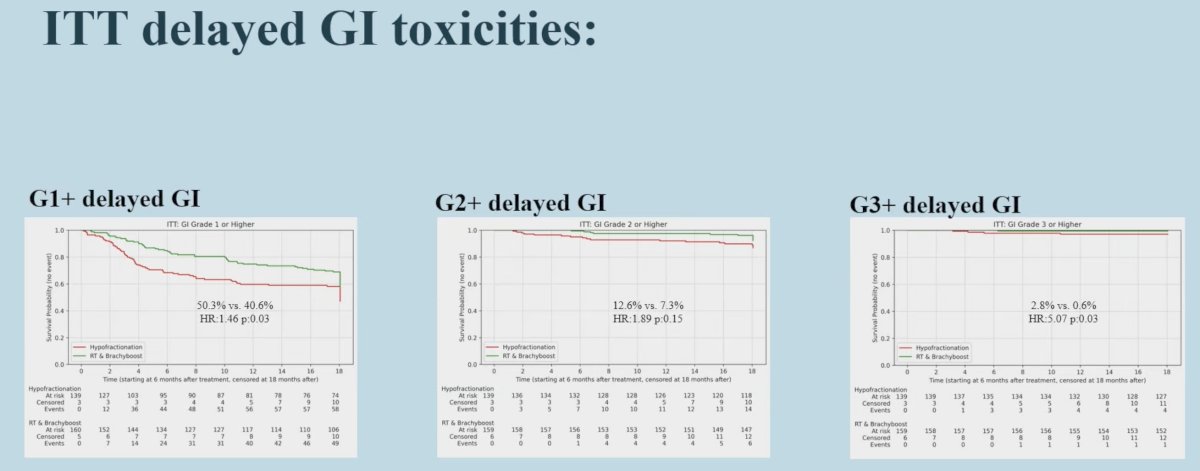
In this presentation, Dr. Niazi reported the delayed (6–24 months) GI and GU toxicity results. In the ITT comparison, patients in the hypofractionation arm had significantly higher rates of delayed GI:
- Grade ≥1 toxicities (HR: 1.5, p=0.03)
- Grade ≥3 toxicities (HR: 5.1, p=0.03)
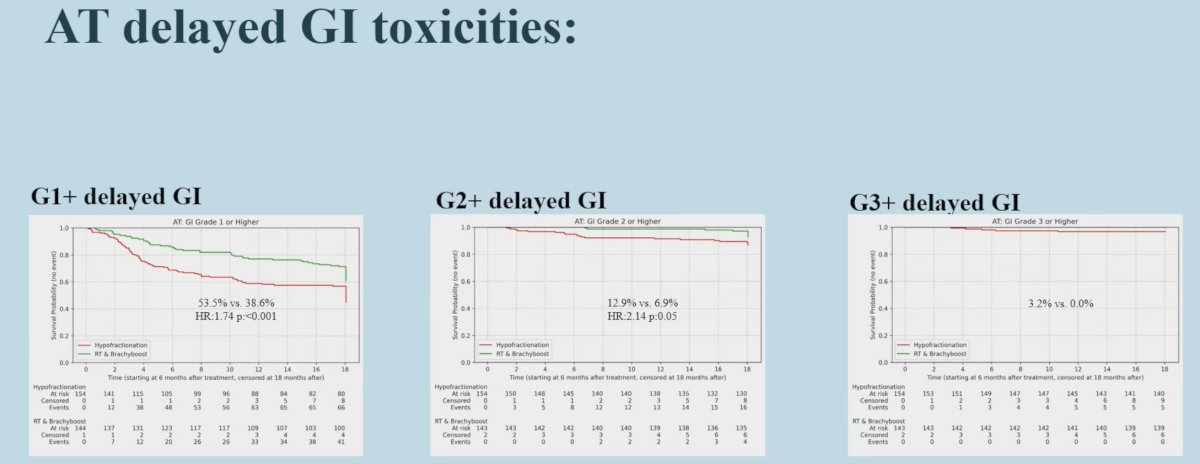
The AT delayed GI toxicities are summarized below:
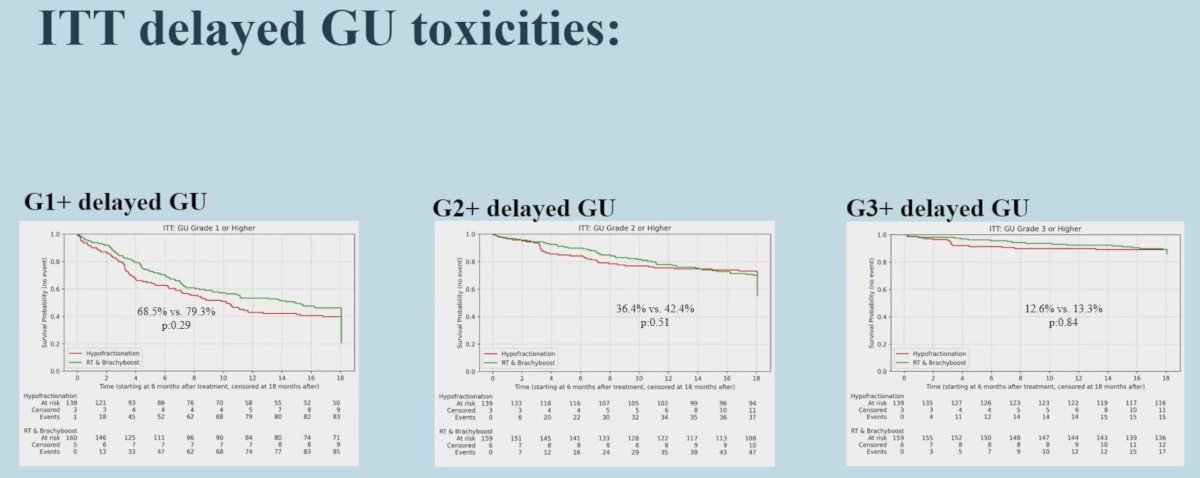
No significant differences were observed in delayed GU toxicities between the two treatment arms in the ITT comparison:
Dr. Niazi concluded as follows:
- In both the ITT and AT analyses, there were more frequent Grade ≥1 and Grade ≥2 delayed GI events in the hypofractionated radiotherapy arm
- In the AT analysis:
- Delayed Grade ≥1 GI events were significantly lower (p<0.01)
- Delayed Grade ≥2 events were 13% versus 7% (p=0.05)
- Adjusted for smoking, diabetes, and blood pressure:
- GI Grade ≥1 events were more frequent in the hypofractionated radiotherapy arm (HR: 1.74, p<0.001)
- GI Grade ≥2 events were similarly more frequent (HR: 2.14, p=0.05)
- There were no differences in Grade ≥1 or ≥2 delayed GU toxicity events between the two arms
Presented by: Tamim Niazi, MD, Associate Professor, Department of Oncology, Dvision of Radiation Oncology, McGill University, Montreal, QC
Written by: Rashid K. Sayyid, MD, MSc, Assistant Professor, Urologic Oncologist, Department of Urology at The University of Arizona and Banner University Medical Center – Tucson, AZ, @rksayyid on X during the 2025 American Society for Radiation Oncology (ASTRO) Annual Meeting, San Francisco, CA, September 28th – 30th, 2025
References:
- Niazi T, Nabid A, Malagon T, et al. Hypofractionated Dose Escalation Radiotherapy for High-Risk Prostate Cancer: the survival analysis of the Prostate Cancer Study-5 (PCS-5), a GROUQ-led phase III trial. Eur Urol. 2025; 87(3): 314-323.
- Niazi TM, Vincent F, Malagon T, et al. Phase III Study of Hypofractionated, Dose Escalation Radiotherapy vs. Conventional Pelvic Radiation Therapy followed by High Dose Rate Brachytherapy Boost for High Risk Adenocarcinoma of the Prostate (PCS VI): Acute Toxicity Results. Int J Rad Onc Biol Phys. 2023; S26.