

(UroToday.com) The 2026 American Society of Clinical Oncology Genitourinary (ASCO GU) cancers symposium held in San Francisco, CA, between February 26th and 28th, 2026, was host to the Poster Session A: Prostate Cancer. Dr. Samantha Webking presented Poster 399: An AI-digital pathology algorithm to predict outcomes in a cohort of men diagnosed with prostate cancer within a low-resource setting.
Dr. Webking focused on a major disparity in prostate cancer care: the limited access to advanced prognostic biomarkers in low- and middle-income countries. Notably, while genomic classifiers have improved risk stratification in high-resource settings, their implementation in many parts of the world remains constrained by cost and infrastructure. Dr. Webking highlighted the potential of a digital pathology-based multimodal artificial intelligence (MMAI) platform that leverages routine hematoxylin and eosin slides, offering a scalable and lower-cost alternative.
This retrospective study evaluated MMAI performance in a cohort of native African men with localized prostate cancer. Digitized biopsy slides were analyzed using deep learning to generate MMAI scores, which were integrated with clinical variables. Scores were assessed as both continuous and categorical variables using prespecified cutoffs. The primary endpoints were biochemical recurrence-free survival (BCRFS) and distant metastasis-free survival (DMFS), evaluated using Cox proportional hazards models and Harrell’s concordance index. In addition, transcriptomic profiling using HTG EdgeSeq and gene set enrichment analysis was performed to explore the underlying biology associated with MMAI risk groups.
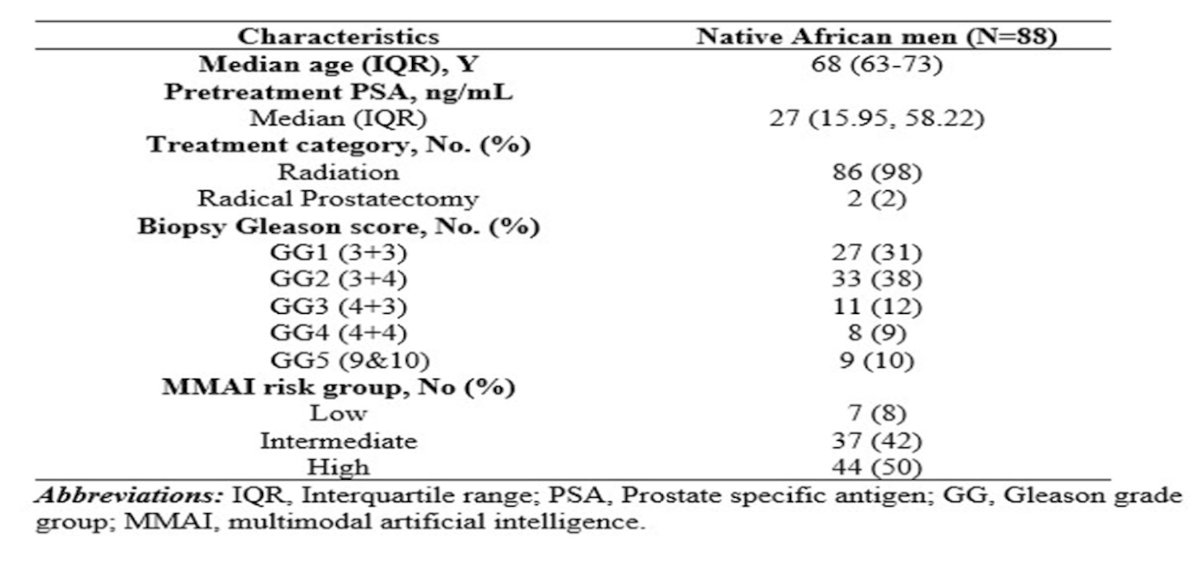
The final analytical cohort included 88 native African men with longitudinal follow-up. Median age was 68 years, and nearly all patients received radiation therapy as primary treatment. Median follow-up was 27 months.
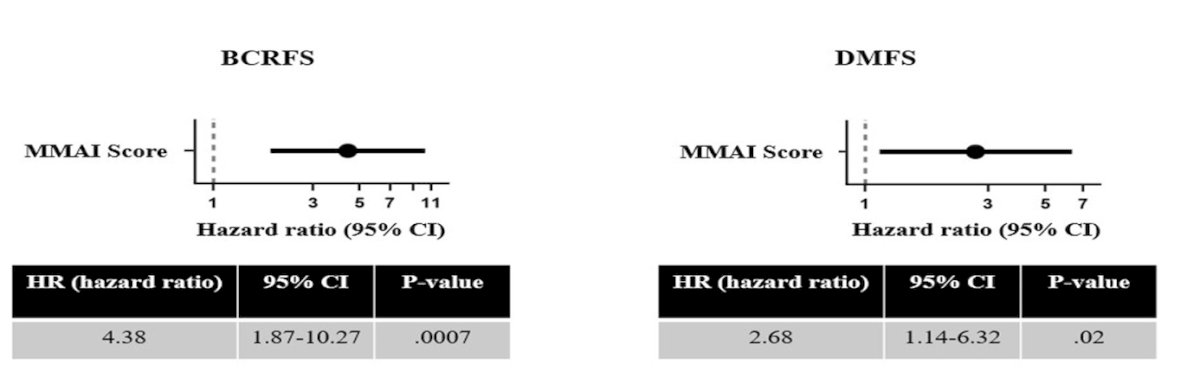
MMAI demonstrated strong prognostic discrimination. Each one standard deviation increase in MMAI score was associated with:
- A higher risk of biochemical recurrence (HR 4.38, C-index 0.84)
- A higher risk of distant metastasis (HR 2.68, C-index 0.86)
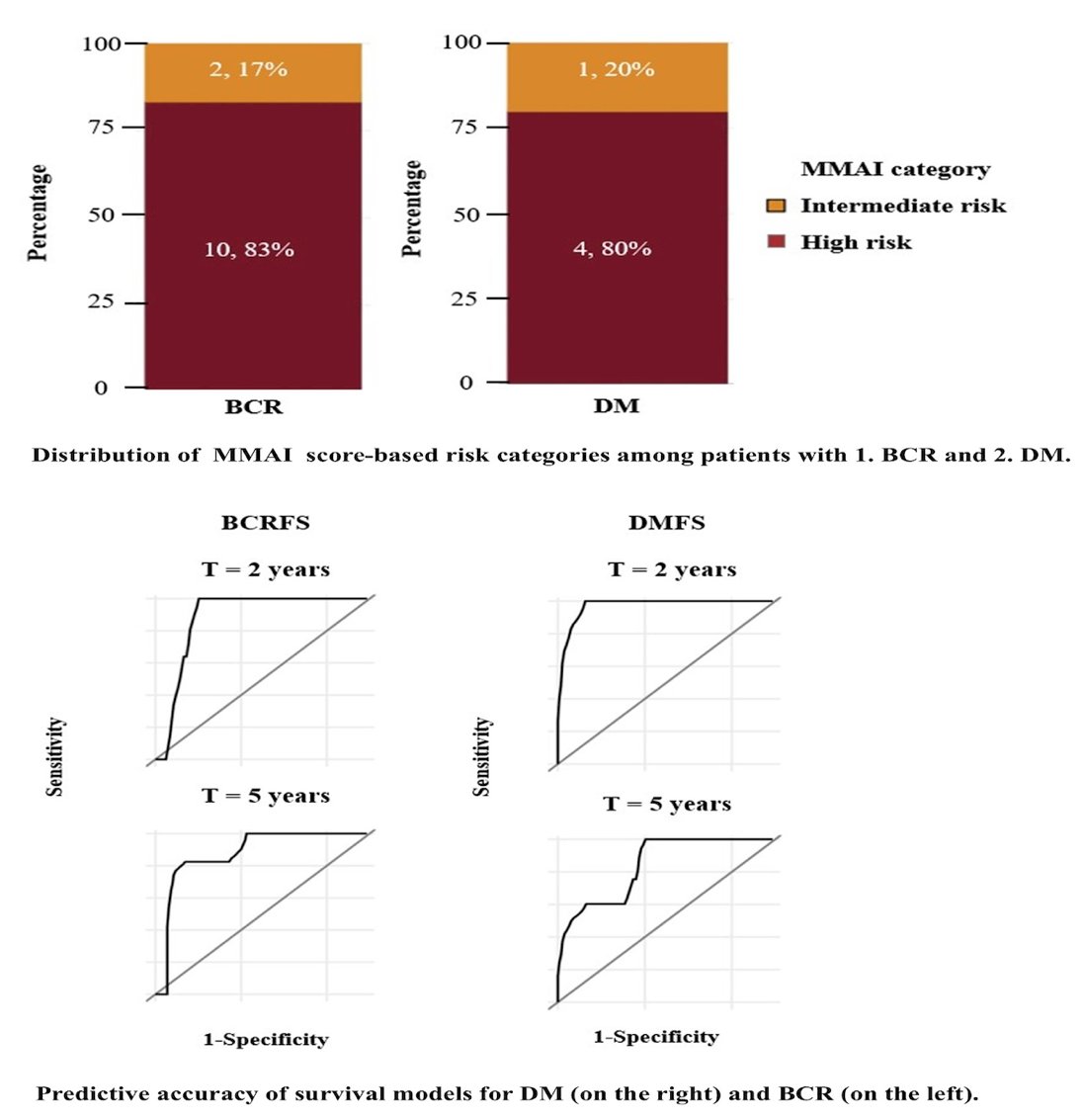
The MMAI score was strongly associated with adverse oncologic outcomes, with the majority of patients who developed biochemical recurrence or distant metastasis classified as high risk by MMAI. Specifically, 83% of patients with BCR and 80% of those with distant metastasis fell into the high-risk MMAI category. Discriminatory performance was supported by ROC analyses at 2 and 5 years, demonstrating consistent predictive accuracy for both BCR-free survival and distant metastasis–free survival, further reinforcing MMAI as a clinically relevant prognostic biomarker.
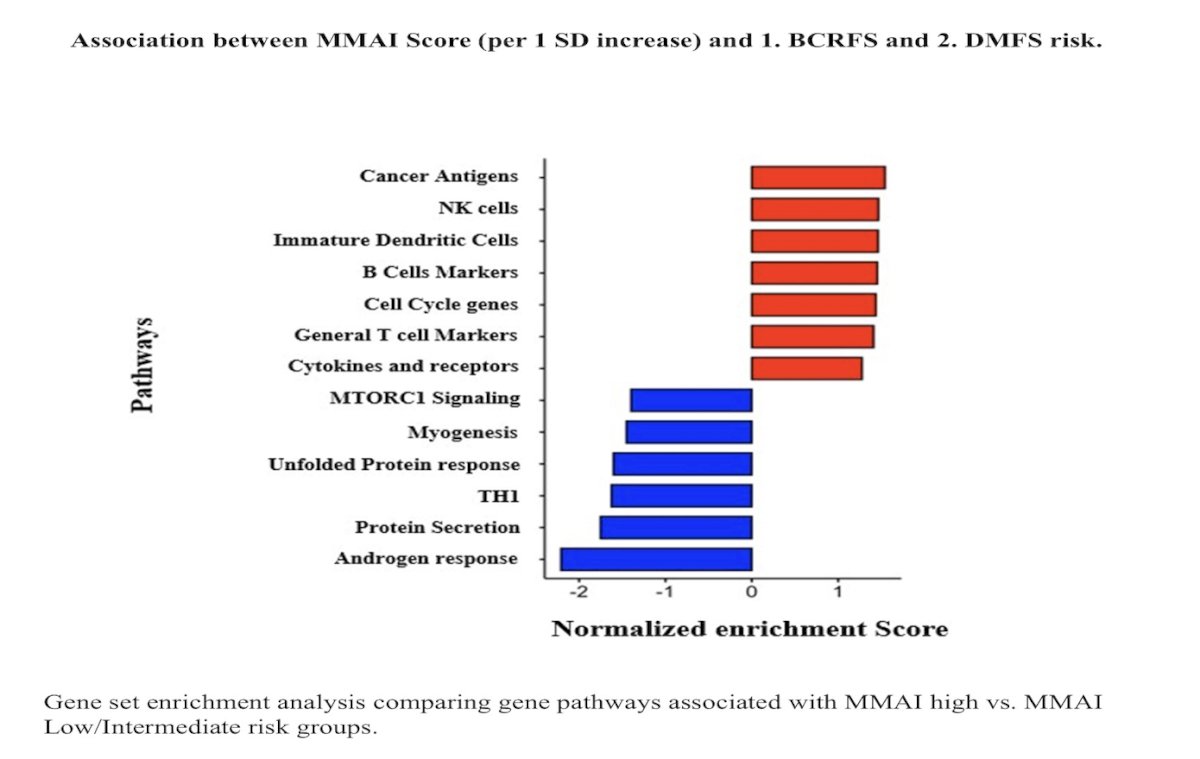
From a biological standpoint, higher MMAI scores were positively associated with immune-related transcriptional programs, including NK cell, B cell, and T cell signatures. In contrast, higher MMAI scores were negatively correlated with mTORC1 signaling, unfolded protein response, and androgen response pathways.
Dr. Webking concluded with several important implications:
- MMAI independently predicted both biochemical recurrence and distant metastasis in a native African prostate cancer cohort.
- The model demonstrated strong discriminatory performance for clinically meaningful endpoints.
- Because MMAI relies on routine H&E slides, it represents a scalable tool that can be deployed in resource-limited settings.
- AI-driven digital pathology platforms may help reduce global disparities in access to precision oncology.
Presented by: Samantha Webking, MD, Radiation Oncology Resident, Moffitt Cancer Center, Tampa, FL