

(UroToday.com) The 2026 American Society of Clinical Oncology Genitourinary (ASCO GU) cancers symposium held in San Francisco, CA, was host to the Trials in Progress Poster Session A: Prostate Cancer. Dr. Andrew Armstrong presented the trial in progress: TulmiSTAR-01: A phase I/II dose optimization study of tulmimetostat in combination with luxdegalutamide versus SOC in patients with progressive mCRPC.
Dr. Armstrong outlined the scientific rationale for targeting epigenetic resistance mechanisms in metastatic castration-resistant prostate cancer. He noted that enhancer of zeste homolog 2 (EZH2) has been implicated in mediating resistance to androgen receptor pathway inhibitors, providing the foundation for combining androgen receptor targeting with EZH2 inhibition.
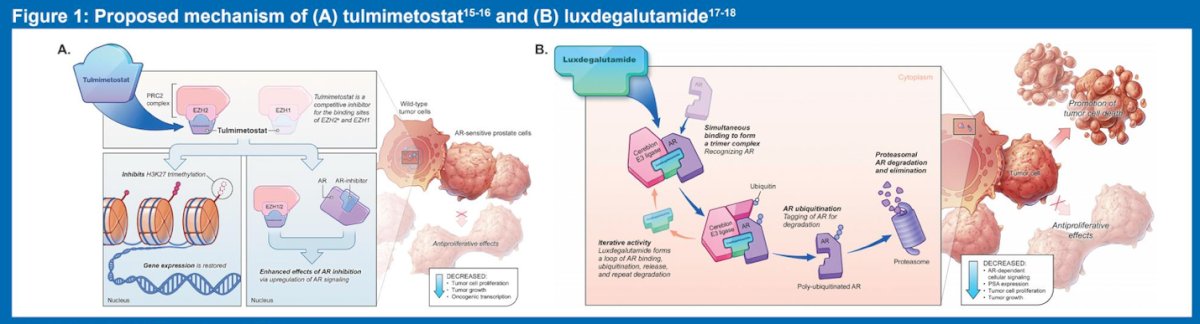
Tulmimetostat is an investigational, next-generation, oral dual inhibitor of EZH2 and EZH1. Luxdegalutamide is a proteolysis-targeting chimera (PROTAC) androgen receptor (AR) degrader that has demonstrated preliminary clinical activity (proposed mechanism of action shown below). This ongoing global phase I/II study is evaluating the combination of tulmimetostat and luxdegalutamide in patients with progressive metastatic castration-resistant prostate cancer (NCT07206056).
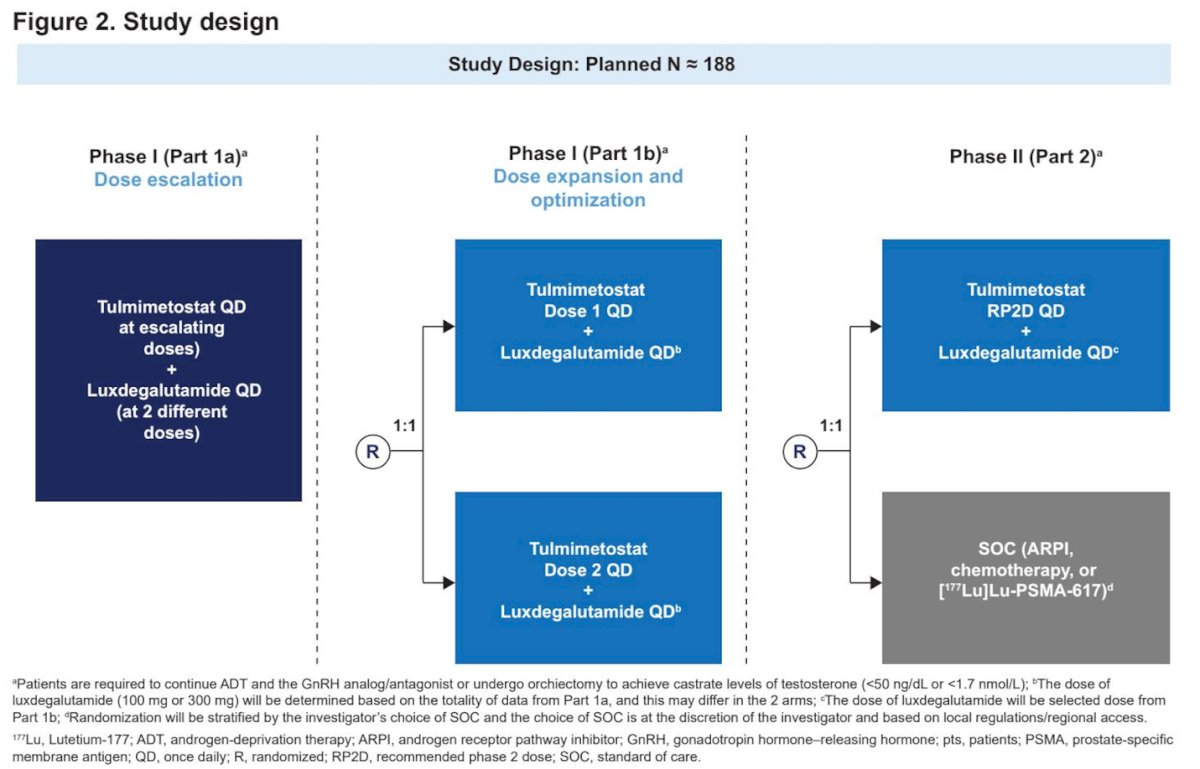
This two-part, multicenter, open-label study plans to enroll approximately 188 men aged 18 years or older with ECOG performance status 0–2 and a life expectancy of at least 6 months.
The phase I portion consists of two parts:
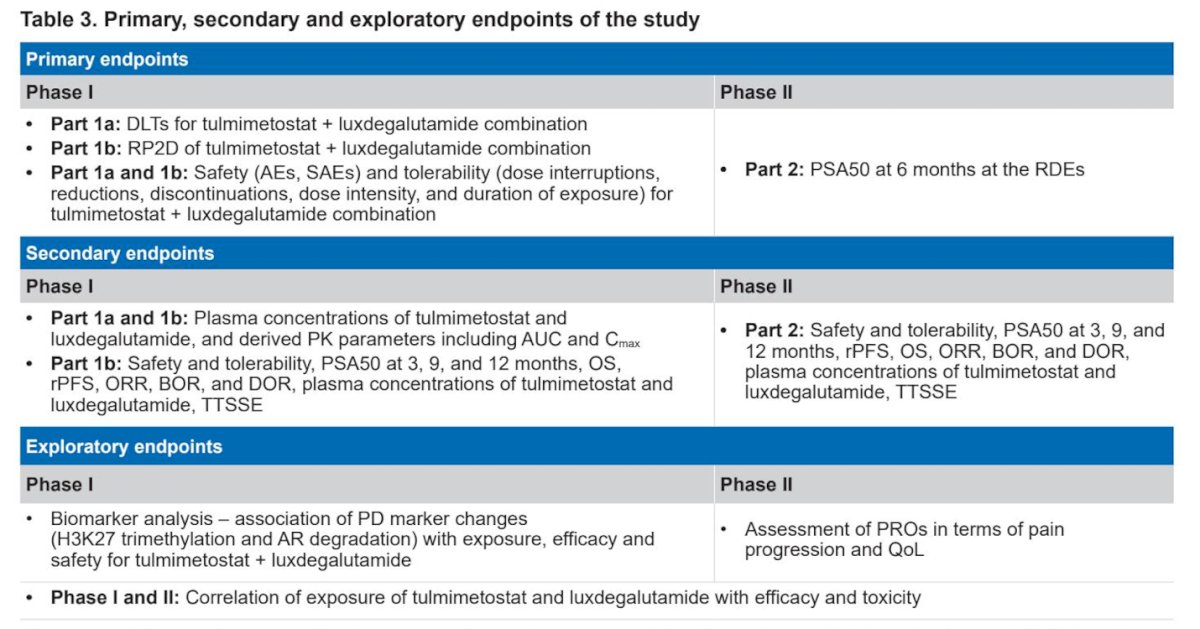
- Part Ia is a parallel dose-escalation cohort evaluating tulmimetostat once daily in combination with luxdegalutamide at 100 mg or 300 mg once daily. The primary objectives are to determine the recommended dose for expansion, safety, and tolerability, with pharmacokinetics as a secondary endpoint. Eighty-eight patients are planned for phase I.
- Part Ib is a randomized dose expansion and optimization phase. Patients will be randomized 1:1 to doses selected from part Ia and stratified by prior chemotherapy exposure in the metastatic castration-resistant setting. The primary endpoints include safety, tolerability, recommended phase II dose, and PSA50 response rate at 6 months. Secondary endpoints include pharmacokinetics, radiographic progression-free survival, overall survival, objective response rate, best overall response, duration of response, and time to symptomatic skeletal events.
Phase II will randomize approximately 100 taxane-naïve patients 1:1 to tulmimetostat at the recommended phase II dose plus luxdegalutamide at 100 mg or 300 mg daily versus standard of care. The primary endpoint is PSA50 response rate at 6 months. Secondary endpoints include safety, tolerability, pharmacokinetics, PSA50 rates at 3, 9, and 12 months, radiographic progression-free survival, overall survival, objective response rate, best overall response, duration of response, and time to symptomatic skeletal events.
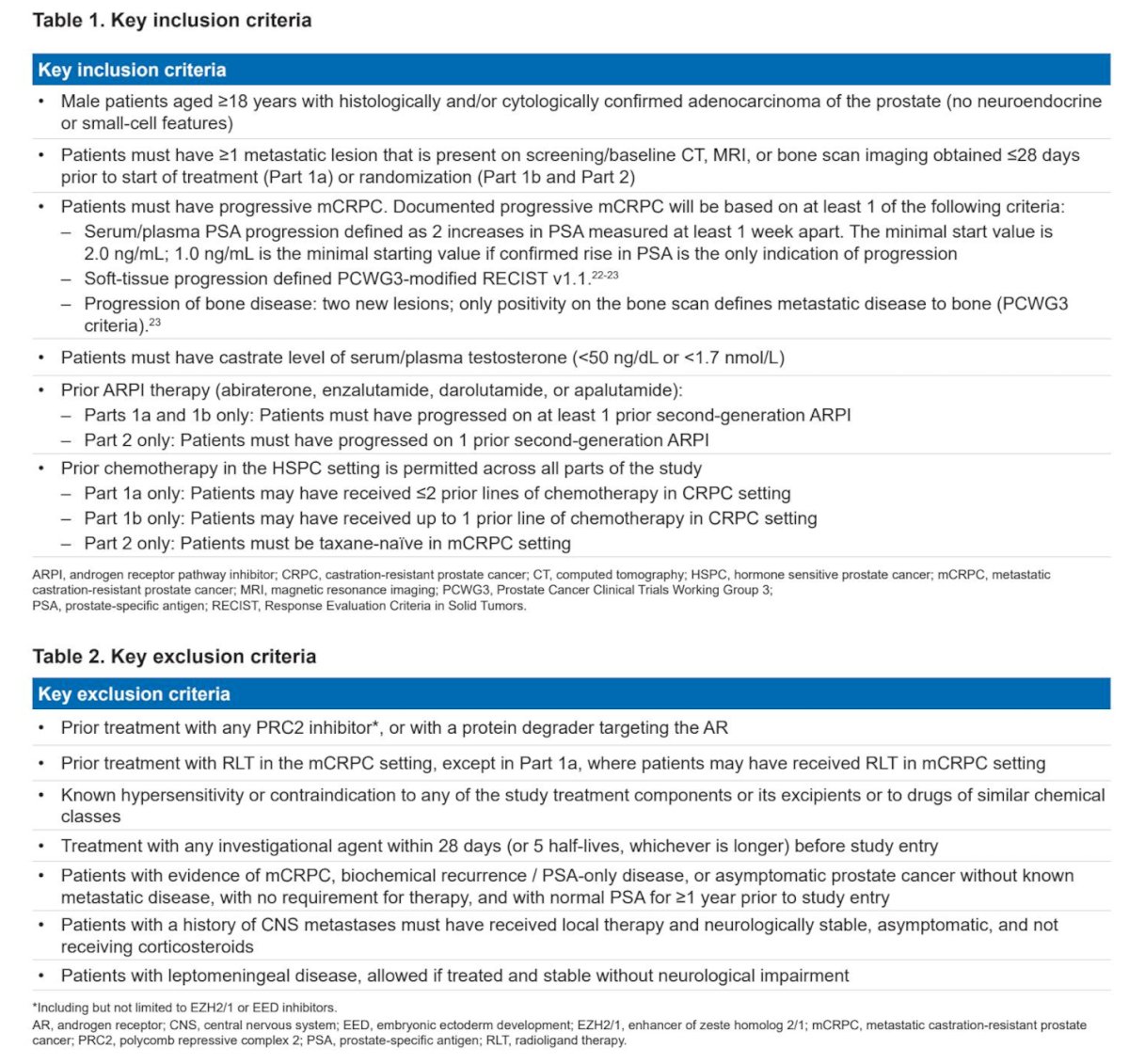
Key inclusion and exclusion criteria are summarized below. Notably, patients meeting any of the exclusion criteria are not eligible for enrollment in this study.
This study aims to determine whether dual epigenetic inhibition combined with androgen receptor degradation can meaningfully overcome ARPI resistance in metastatic castration-resistant prostate cancer. The primary, secondary and exploratory endpoints are different in Phase I and Phase II of the study and are outlined below.
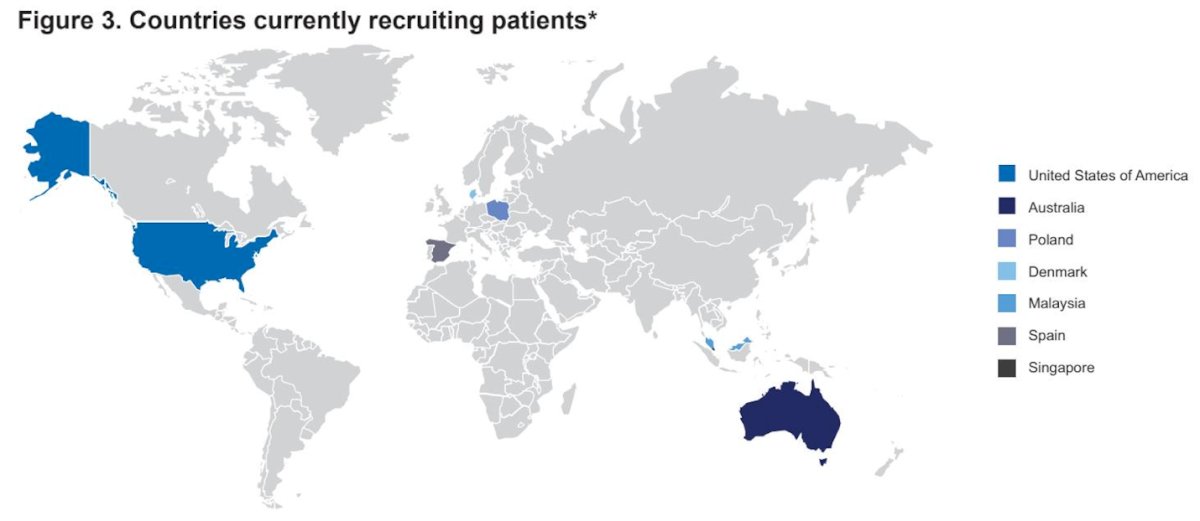
TulmiSTAR-01 is active and currently enrolling patients in the countries shown below.
Presented by: Andrew Armstrong, MD, MSc, Medical Oncologist, Professor of Medicine, Surgery, Pharmacology and Cancer Biology, Director of the Urologic Research, Duke Cancer Institute, Center for Prostate and Urologic Cancers, Durham, NC
Written by: Julian Chavarriaga, MD – Urologic Oncologist, Department of Urology at Penn State Health. @chavarriagaj on Twitter during the 2026 American Society of Clinical Oncology Genitourinary (ASCO GU) cancers symposium held in San Francisco, CA, between February 26th and 28th, 2026.