

(UroToday.com) The 2026 American Society of Clinical Oncology Genitourinary (ASCO GU) cancers symposium held in San Francisco, CA, was host to the Trials in Progress Poster Session A: Prostate Cancer. Dr. Adam Sharp presented the trial in progress: A phase 1/2, open-label, randomized, dose-finding and dose expansion study of gedatolisib in combination with darolutamide in mCRPC.
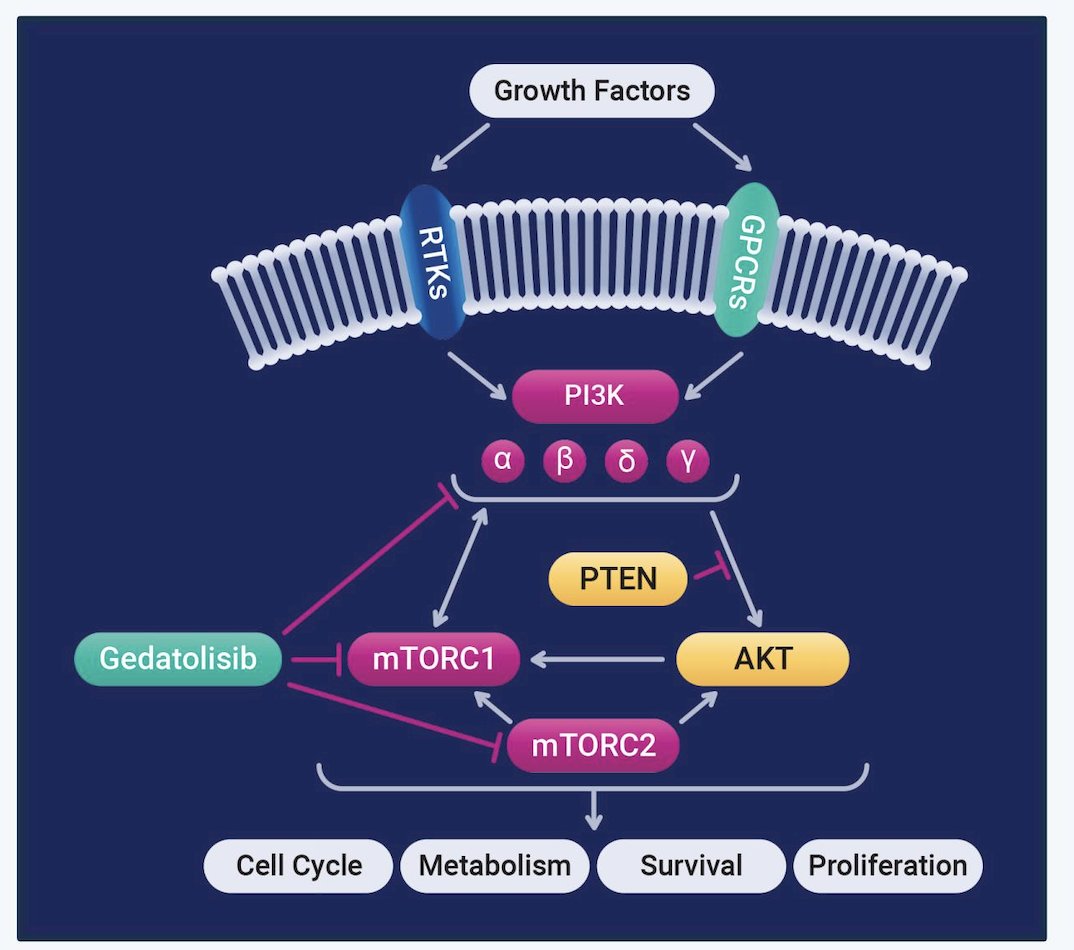
Dr. Sharp highlighted the biologic interplay between the androgen receptor and PI3K–AKT–mTOR pathways, which exhibit reciprocal negative feedback. Inhibition of one pathway can activate the other, providing a strong rationale for dual pathway targeting.
Dr. Sharp discussed the rationale for dual pathway inhibition in metastatic castration-resistant prostate cancer, noting that combined targeting of the PI3K/AKT/mTOR pathway with a PAM inhibitor plus an AR pathway inhibitor may produce synergistic antitumor effects. This strategy may be particularly relevant in patients who have progressed on prior ARPi therapy, as cross-talk between AR signaling and the PAM pathway is a recognized mechanism of resistance. Preliminary clinical data support this combinatorial approach.
Gedatolisib, a potent pan-PI3K and mTOR complex 1/2 inhibitor that broadly suppresses the PAM pathway, is currently being evaluated in combination with the ARPi darolutamide in an ongoing phase 1/2 study (CELC-G-201; NCT06190899).
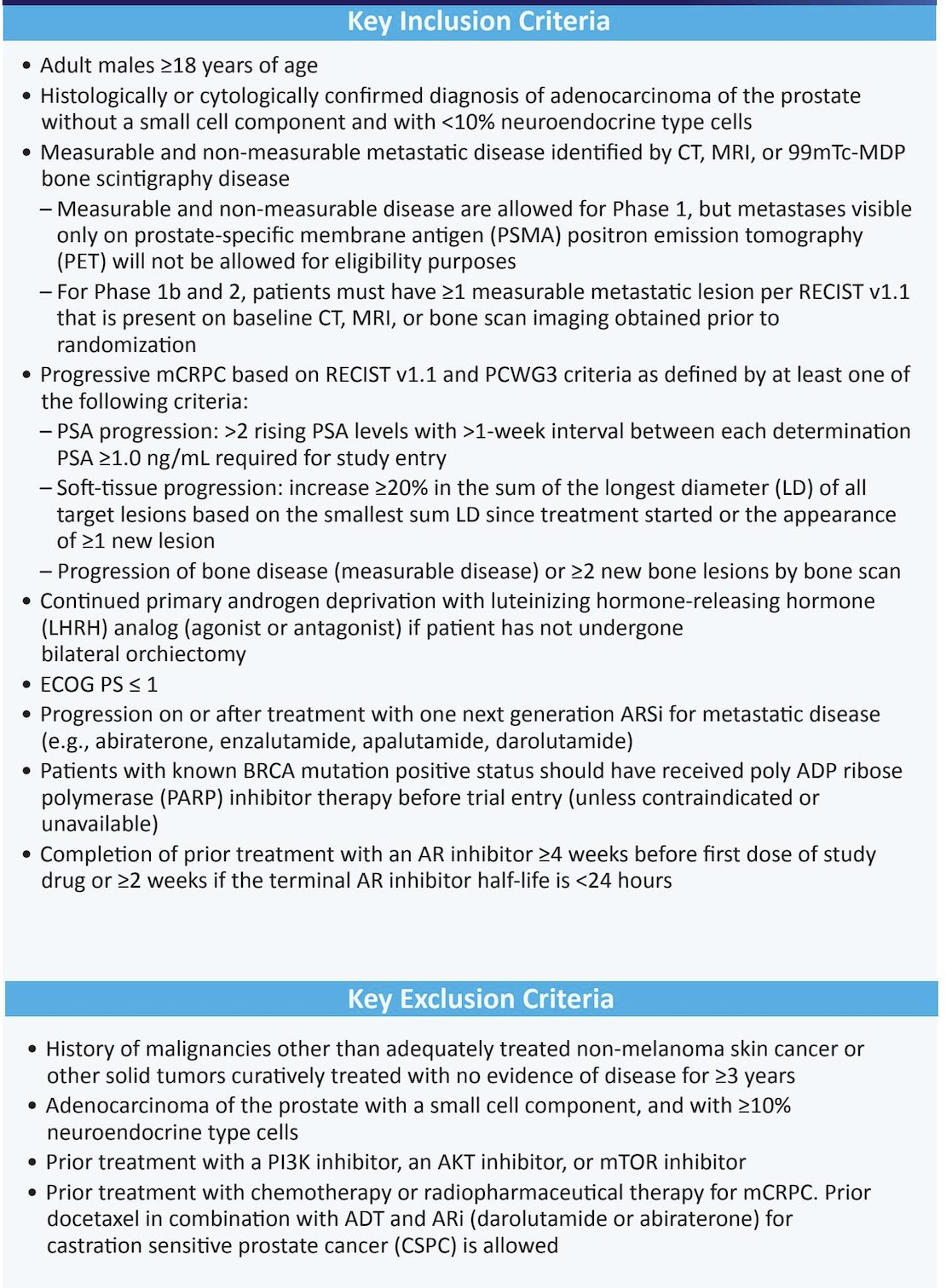
This open-label, multicenter phase I/II study enrolls men aged 18 years or older with progressive mCRPC following at least one next-generation ARPI, ECOG performance status 0–1, and measurable disease per RECIST 1.1 and PCWG3 criteria. Key exclusions include small cell or significant neuroendocrine histology, prior PI3K, AKT, or mTOR inhibitor exposure, prior chemotherapy or radiopharmaceutical therapy in the mCRPC setting, uncontrolled diabetes, or active CNS metastases. A detailed list of inclusion and exclusion criteria is provided below.
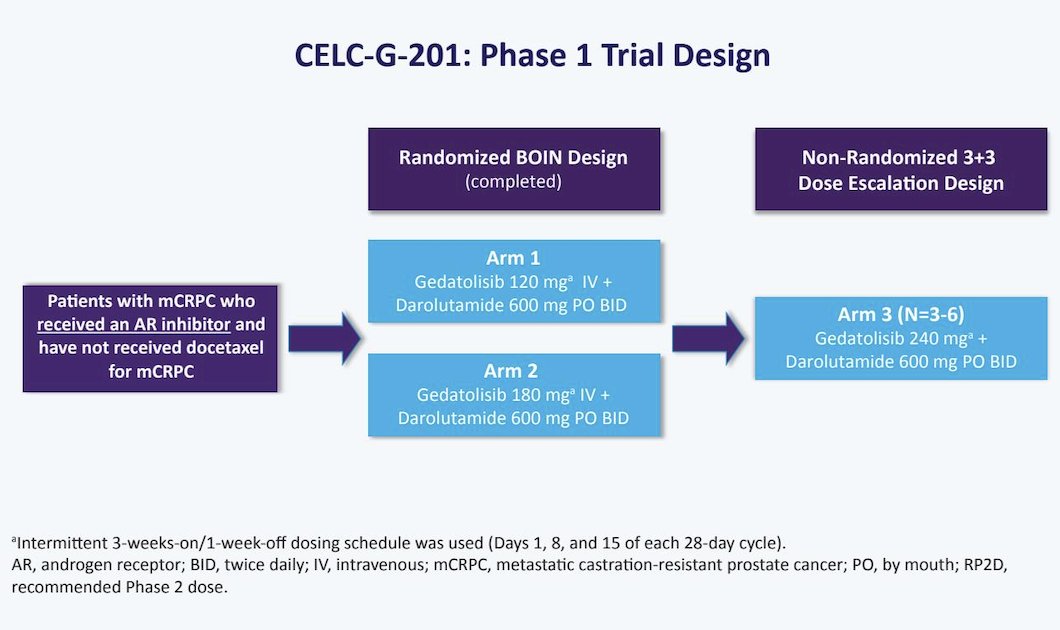
Phase I is designed to evaluate safety, tolerability, and determine the recommended phase II dose. An initial randomized portion enrolled 38 patients into two intermittent dosing arms of gedatolisib administered once weekly for three weeks on, one week off, combined with darolutamide 600 mg twice daily:
- Arm 1: gedatolisib 120 mg
- Arm 2: gedatolisib 180 mg
Subsequently, additional non-randomized 3+3 dose-escalation arms were added to further define dose and schedule:
- Arm 3: gedatolisib 240 mg
Primary objectives in phase I are to assess the safety and tolerability of gedatolisib in combination with darolutamide and to determine the recommended phase 2 dose in patients with mCRPC. Safety endpoints include the type, incidence, severity per CTCAE v5.0, seriousness, and relationship of adverse events and laboratory abnormalities to study treatment, as well as the incidence of dose-limiting toxicities. A BOIN utility score is incorporated to guide dose selection, integrating predefined toxicity criteria with 6-month radiographic progression-free survival outcomes. Secondary objectives include evaluation of pharmacokinetics and preliminary efficacy of the combination.
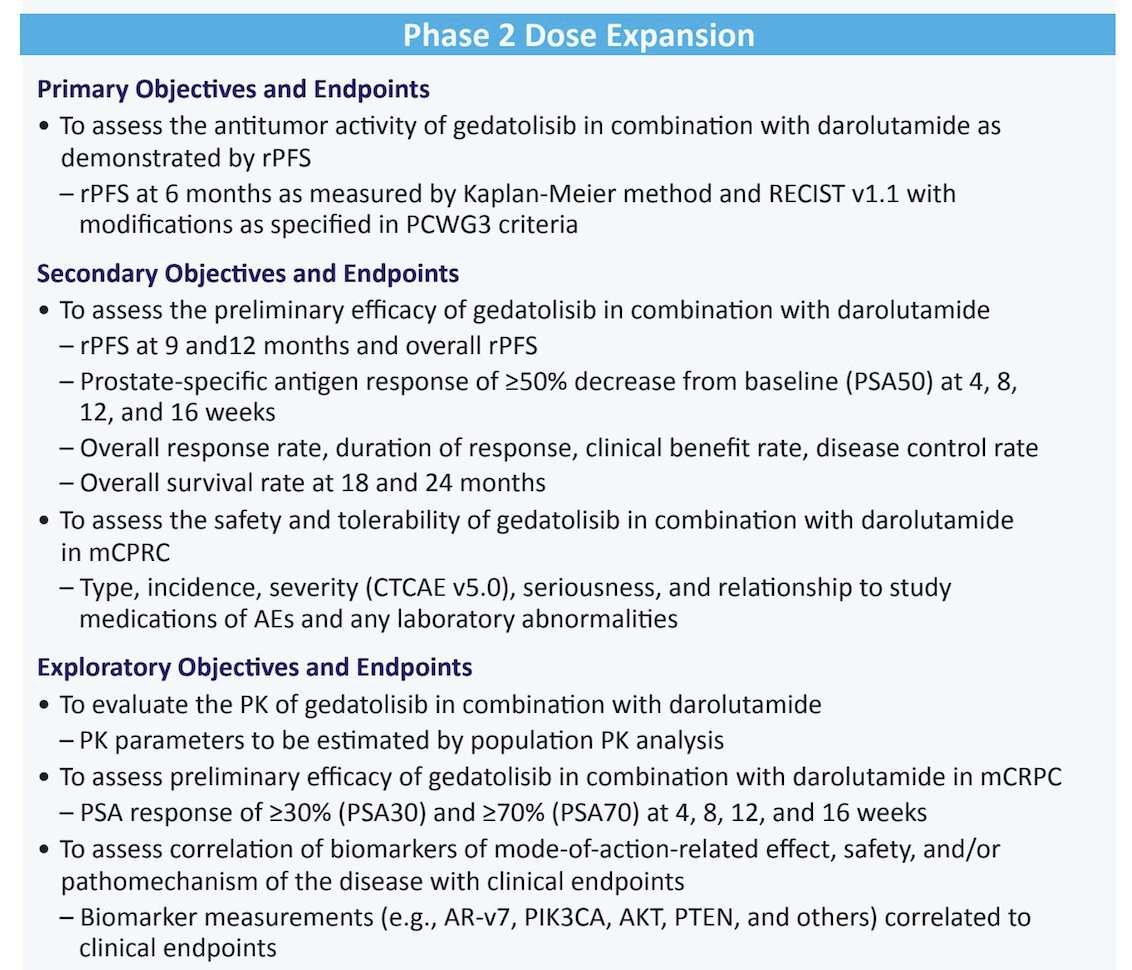
Phase II will enroll approximately 18 additional patients to achieve a total of about 30 patients treated at the selected recommended dose and schedule. The primary objective in phase II is to assess antitumor activity as measured by radiographic progression-free survival. Secondary and exploratory endpoints are shown in detail below.
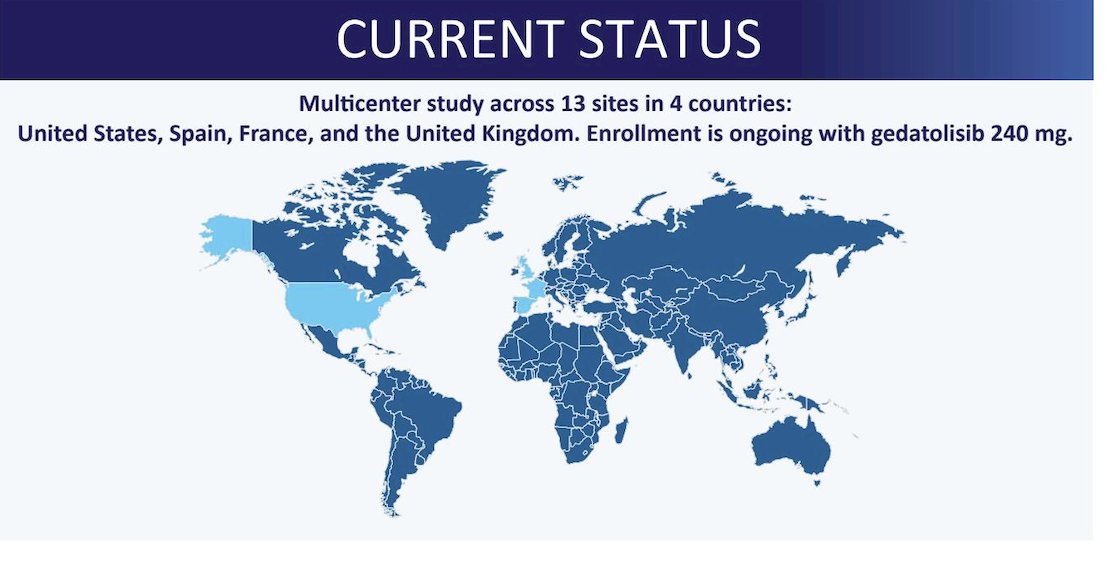
This study is currently enrolling across 13 sites in the United States, Spain, France, and the United Kingdom, aiming to determine whether combined PI3K–mTOR inhibition and androgen receptor blockade can meaningfully overcome ARPI resistance in metastatic castration-resistant prostate cancer.
Presented by: Adam Sharp, BSc BM PhD MRCP, Leader of the Translational Therapeutics Group and Honorary Consultant Medical Oncologist within the Prostate Cancer Targeted Therapies Group and Drug Development Unit at The Institute of Cancer Research and The Royal Marsden NHS Foundation Trust. London, U.K.
Written by: Julian Chavarriaga, MD – Urologic Oncologist, Department of Urology at Penn State Health. @chavarriagaj on Twitter during the 2026 American Society of Clinical Oncology Genitourinary (ASCO GU) cancers symposium held in San Francisco, CA, between February 26th and 28th, 2026.