

(UroToday.com) The 2026 ASCO GU Annual Symposium was host to a prostate cancer poster session. Olivia Stojak presented a study evaluating the clinical characteristics and survival outcomes in veterans with metastatic castration-resistant prostate cancer (mCRPC) receiving radium-223.
Radium-223 is an alpha-emitting radioisotope that targets bone metastases in metastatic castration-resistant prostate cancer (mCRPC). It improves survival and reduces skeletal-related events; however, real-world outcomes and predictors of benefit remain incompletely characterized. In particular, the impact of tumor suppressor gene (TSG) alterations on survival following radium-223 therapy remains unclear. Veterans represent a large, diverse national cohort, providing an important opportunity to evaluate real-world effectiveness and clinical outcomes in routine practice.
This was a retrospective cohort study of veterans with mCRPC treated with radium-223 through the Veterans Health Administration system.
Key methodological features included:
- Population: Veterans with mCRPC receiving radium-223
- Variables collected:
- Age, BMI, race
- Baseline PSA (within 3 months)
- Number of radium-223 doses
- Tumor suppressor gene alteration status (PTEN, TP53, RB1)
- Primary outcome:
- Overall survival from first radium-223 dose to death
- Statistical analyses:
- Kaplan-Meier survival estimates
- Cox proportional hazards modeling
- Subgroup analyses by TSG alteration status
A total of 661 veterans were included:
- Mean age: 73 years
- Mean BMI: 29
- Race distribution:
- 70% White
- 24% Black
- 6% other
- Median baseline PSA: 50 ng/mL
- Median number of radium-223 doses: 4
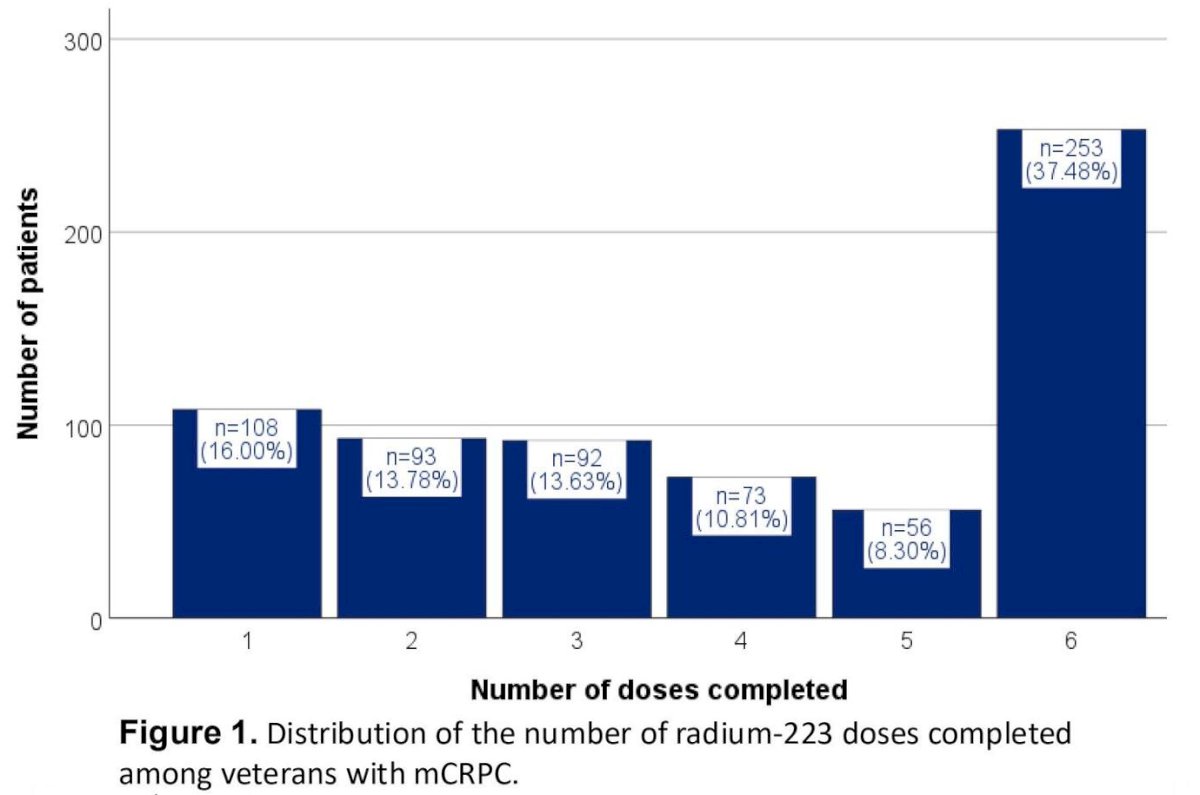
The distribution of completed radium-223 doses (Figure 1) demonstrated heterogeneous treatment exposure typical of real-world practice. 37.5% of patients completed all 6 doses.
Among the subset with available genomic data (n=185), 90 patients had tumor suppressor gene alterations.
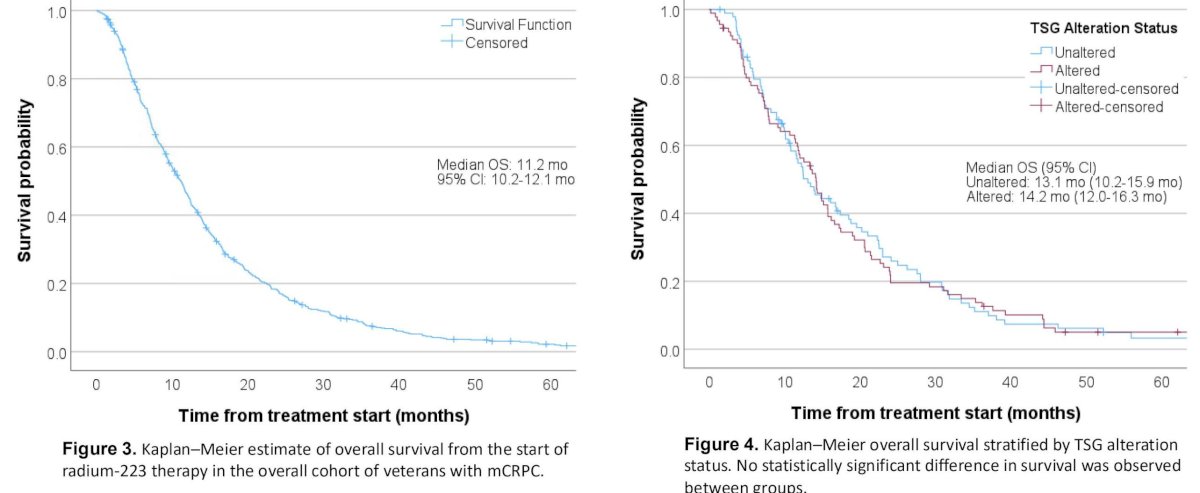
Kaplan-Meier analysis demonstrated a median overall survival of 11.2 months following initiation of radium-223.Multivariable Cox regression analysis showed that each 10-year increase in age was associated with a 19% higher mortality risk (HR 1.19, p=0.001).
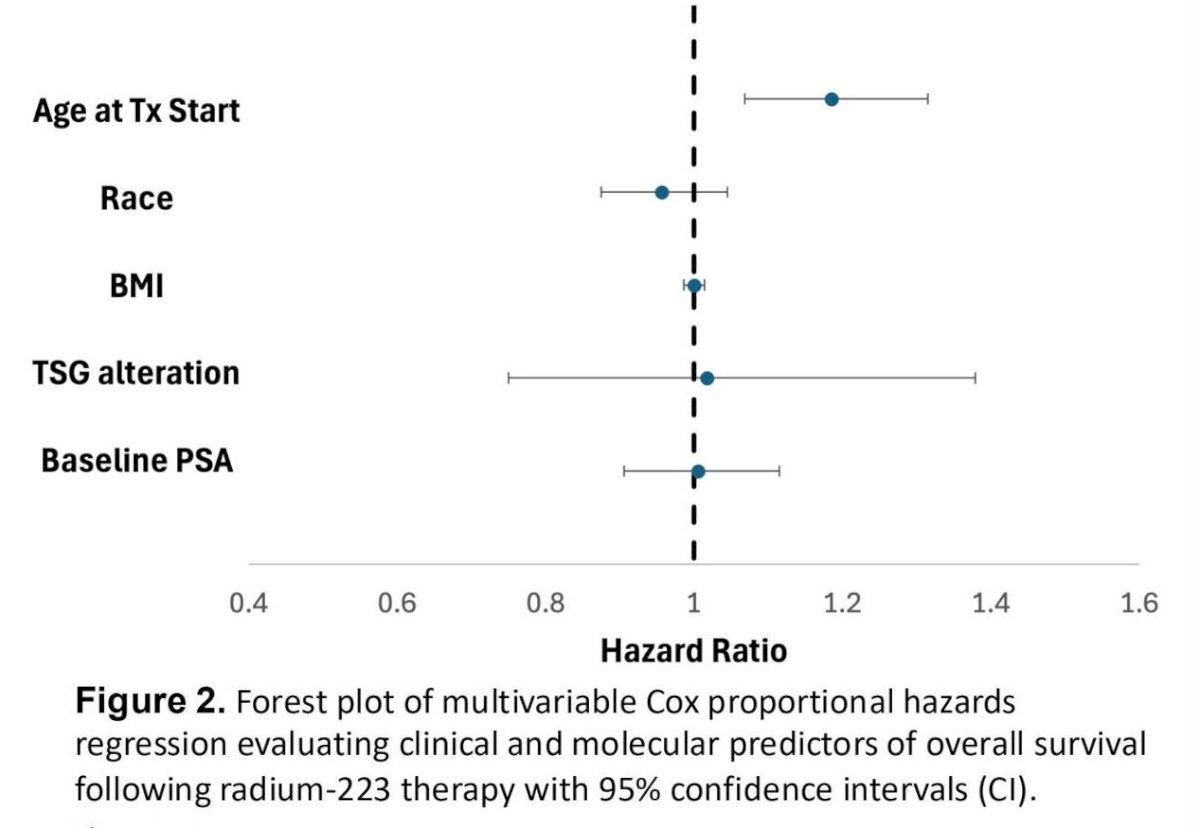
Significantly, race, BMI, baseline PSA, and TSG alterations were not significantly associated with overall survival.
Subgroup Kaplan-Meier analyses stratified by TSG status (Figure 4) demonstrated no statistically significant survival difference between patients with and without tumor suppressor gene alterations.
This analysis provides several clinically relevant observations:
- Median overall survival of 11.2 months aligns with expected real-world outcomes for radium-223 in mCRPC.
- Older age remains an important prognostic factor.
- Tumor suppressor gene alterations did not appear to significantly influence survival following radium-223.
- Outcomes were broadly consistent across demographic and genomic subgroups.
Together, these findings support the continued use of radium-223 across diverse patient populations while highlighting the need for improved predictive biomarkers.
The authors highlighted several areas warranting further investigation:
- Impact of prior systemic therapies on radium-223 outcomes.
- Role of metastatic disease burden as a predictive factor.
- PSA kinetics during therapy and early post-treatment PSA changes as response biomarkers.
Overall, this study reinforces that radium-223 remains an effective therapeutic option for appropriately selected patients with bone-predominant mCRPC in real-world clinical practice. The lack of association between tumor suppressor gene alterations and survival suggests that genomic alterations alone may not adequately predict response to radium-223, emphasizing the need for integrated clinical, biologic, and imaging biomarkers.
Presented by: Olivia Stojak, BS, Medical Student, St. Louis University School of Medicine, St Louis, MO, USA
Written by: Rashid K. Sayyid, MD, MSc, Assistant Professor, Urologic Oncologist, Department of Urology at The University of Arizona and Banner University Medical Center, Tucson, AZ – @rksayyid on X during the 2026 American Society of Clinical Oncology Genitourinary (ASCO GU) cancers symposium held in San Francisco, CA, between February 26th and 28th, 2026.