

(UroToday.com) The 2026 ASCO GU Annual Symposium was host to a prostate cancer poster session. Dr. Daniel George presented the results of a US-based quantitative survey evaluating the impact of caregiver support on improved shared decision-making in the treatment of metastatic prostate cancer.
Caregivers play a pivotal role for many patients with metastatic prostate cancer, providing emotional and physical support while helping guide medical management. However, the unmet needs of caregivers and how these needs affect treatment decision-making remain incompletely characterized. Given the increasing complexity of metastatic prostate cancer treatment — including ARPIs, chemotherapy, radioligand therapy, PARP inhibitors, and combination strategies — shared decision-making increasingly requires active caregiver participation.
Accordingly, this quantitative survey aimed to assess unmet caregiver needs, caregiving roles and responsibilities, emotional experiences, and perceptions of available resources among caregivers of US patients with prostate cancer.
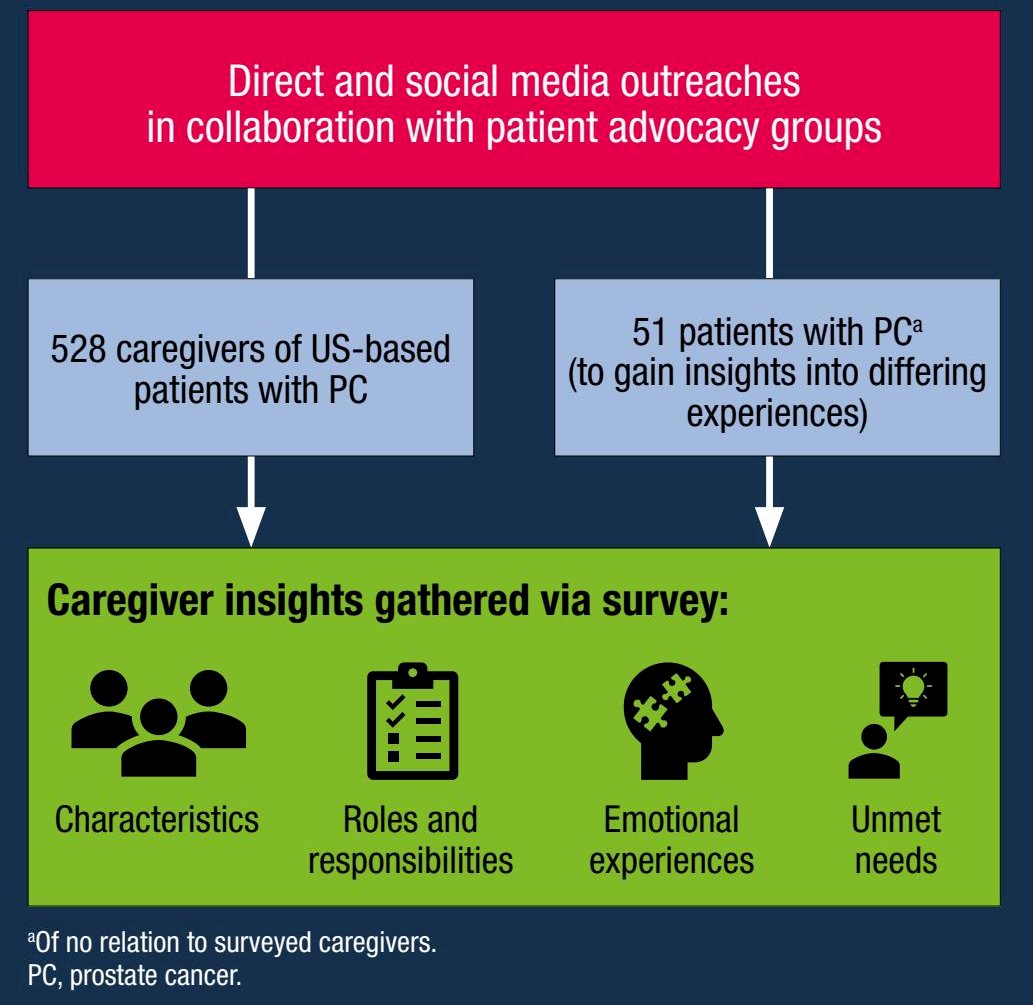
A 30-minute, 57-question online survey was developed by Bayer and administered anonymously by OptiBrand RX, a strategic market research firm, between June and July 2024. Recruitment was conducted through direct outreach and social media collaborations with patient advocacy groups.
The survey collected information on:
- caregiver demographics and characteristics
- caregiving roles and responsibilities
- emotional experiences and burden
- perceived adequacy of educational, financial, and social resources
- participation in treatment decision-making
A total of 230 caregivers of patients with metastatic prostate cancer completed the survey.
The key respondent characteristics were as follows:
- 53% White
- 54% male caregivers
- 77% identified as the primary caregiver
- 65% lived with the patient
These demographics reflect a caregiver population highly integrated into patients’ daily care and treatment decisions.
Caregivers reported substantial involvement across multiple domains of patient care:
- 82% attend doctor visits with patients
- 77% provide emotional support
- 73% help with medical management
- 67% actively participate in treatment decisions
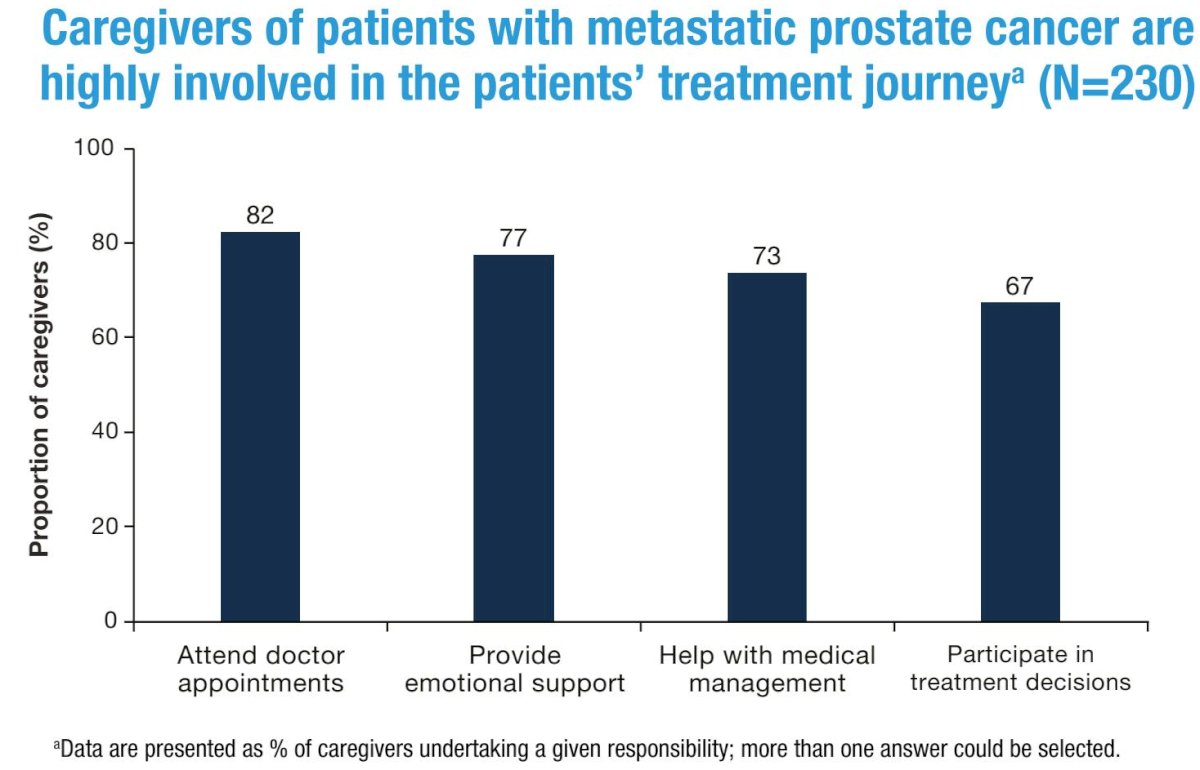
This clearly demonstrates that caregivers are not passive observers but active participants in oncology care delivery. Their high participation in clinic visits and decision-making underscores the importance of incorporating caregivers into counseling discussions, treatment planning, and educational interventions.
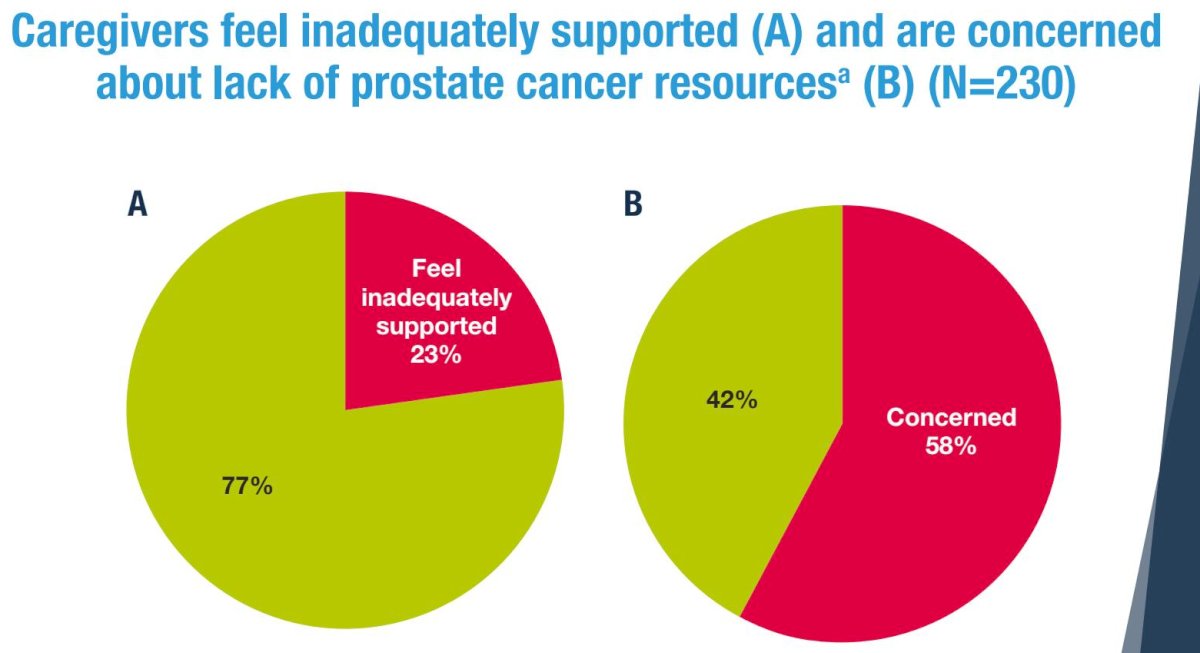
Despite high involvement, 23% of caregivers reported feeling inadequately supported and 58% expressed concern that the right prostate cancer resources may not exist.
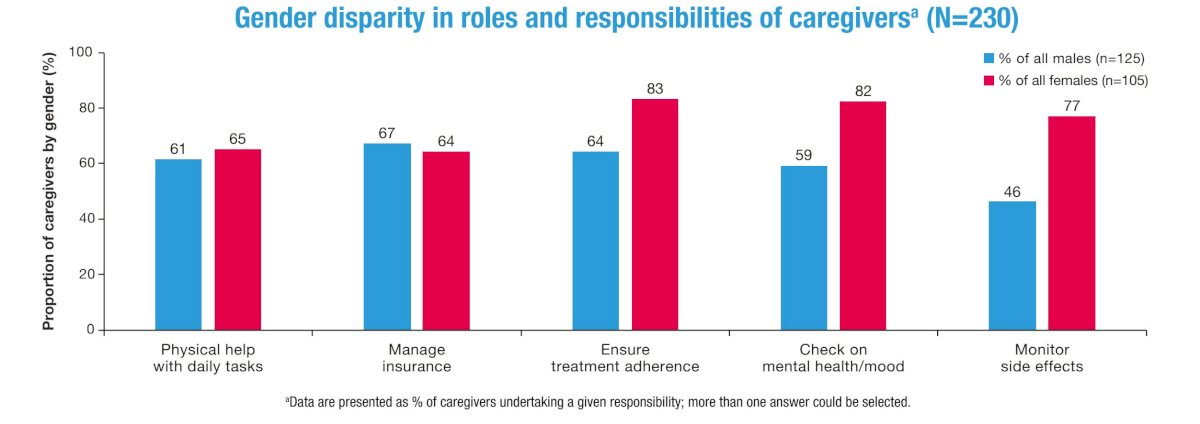
The survey identified notable gender differences in caregiving roles:
- Physical daily assistance: similar between men and women (~61–65%)
- Insurance management: slightly higher among male caregivers (~67%)
- Treatment adherence monitoring: higher among female caregivers (~83% vs ~64%)
- Emotional support/mental health monitoring: higher among female caregivers (~82% vs ~59%)
- Side-effect monitoring: substantially higher among female caregivers (~77% vs ~46%)
These data suggest that female caregivers may carry a disproportionate emotional and symptom-monitoring burden, whereas male caregivers may be more involved in logistical or administrative aspects of care This gendered distribution has important implications for designing targeted caregiver education programs, psychosocial interventions, and decision-support tools.
Dr. George summarized several key conclusions:
- Caregivers are essential but under-supported: Despite high involvement in treatment journeys, caregivers frequently report insufficient resources. This gap may directly affect treatment decision-making, adherence, and patient outcomes.
- Gender differences highlight support gaps: Differences in caregiving responsibilities and emotional experiences suggest that shared decision-making tools should be tailored to better engage male caregivers while ensuring adequate psychosocial support for female caregivers.
Presented by: Daniel J. George, MD, Professor of Medicine, Department of Medicine, Co-Chair, DCI Center for Prostate & Urologic Cancers; Director of Genitourinary Oncology at Duke Cancer Institute, Durham, NC
Written by: Rashid K. Sayyid, MD, MSc, Assistant Professor, Urologic Oncologist, Department of Urology at The University of Arizona and Banner University Medical Center, Tucson, AZ – @rksayyid on X during the 2026 American Society of Clinical Oncology Genitourinary (ASCO GU) cancers symposium held in San Francisco, CA, between February 26th and 28th, 2026.