

(UroToday.com) The 2026 ASCO GU Annual Symposium was host to a prostate cancer poster session. Dr. Rana McKay presented the results of a 6-months analysis of the OPTYX multicenter registry evaluating quality of life, adherence, and adverse events among patients with advanced prostate cancer treated with relugolix.
Androgen deprivation therapy (ADT) remains a key therapeutic strategy in the management of prostate cancer and is commonly used in combination with other systemic therapies. Relugolix, an oral gonadotropin-releasing hormone (GnRH) receptor antagonist, is an oral ADT approved by the US Food and Drug Administration for the treatment of advanced prostate cancer. In the pivotal phase 3 HERO trial, relugolix resulted in rapid and sustained testosterone suppression and was generally safe and well tolerated, with testosterone suppression observed as early as week 4 and maintained through 48 weeks.1 Despite these encouraging trial data, real-world information on quality of life, adherence, and safety remains limited. Accordingly, the objective of OPTYX was to supplement clinical trial findings with real-world data on QoL, adherence, and safety among patients treated with relugolix.
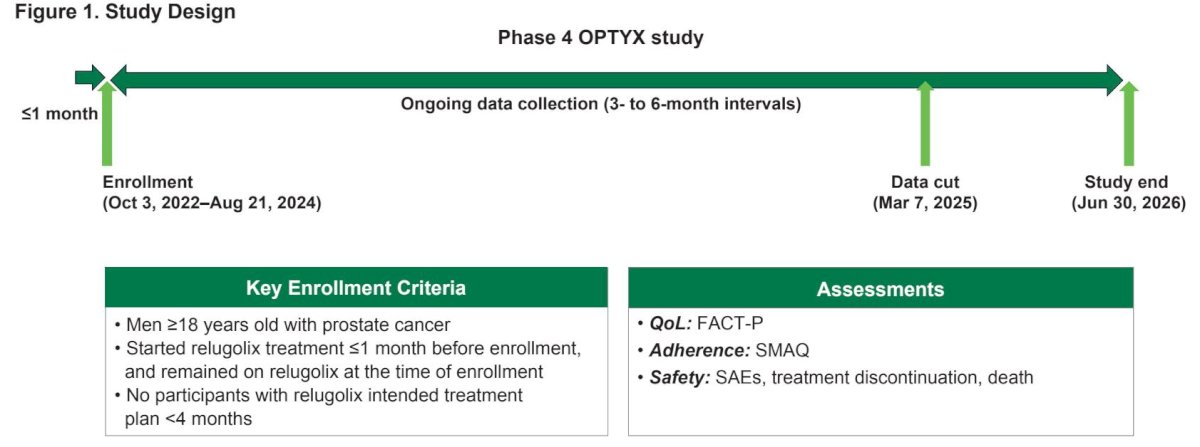
OPTYX is an ongoing prospective, multicenter, observational study (NCT05467176) of US patients with prostate cancer treated with relugolix as monotherapy or in combination with other systemic therapies in routine clinical practice (Figure 1). Relugolix monotherapy was defined as no record of any systemic prostate cancer therapy in the three months before enrollment. Combination therapy included relugolix administered alongside first- or second-generation androgen receptor pathway inhibitors, chemotherapy, PARP inhibitors, or immunotherapy; radiation therapy was permitted.
Participants were enrolled between October 3, 2022, and August 21, 2024, and will continue to be followed through June 30, 2026. Assessments included:
• Quality of life measured using the Functional Assessment of Cancer Therapy–Prostate (FACT-P) questionnaire
• Adherence measured using the 6-question Simplified Medication Adherence Questionnaire (SMAQ)
• Safety outcomes, including adverse events (AEs), serious adverse events (SAEs), treatment discontinuations, and deaths
FACT-P consists of 39 items assessing physical, social/family, emotional, and functional well-being, as well as a prostate cancer–specific subscale. Questionnaires were completed at baseline, 3 months, and 6 months. Safety was assessed from the first relugolix dose through study follow-up.
Statistical analyses were descriptive, with categorical variables summarized as counts and percentages and continuous variables summarized using means, medians, and standard deviations.
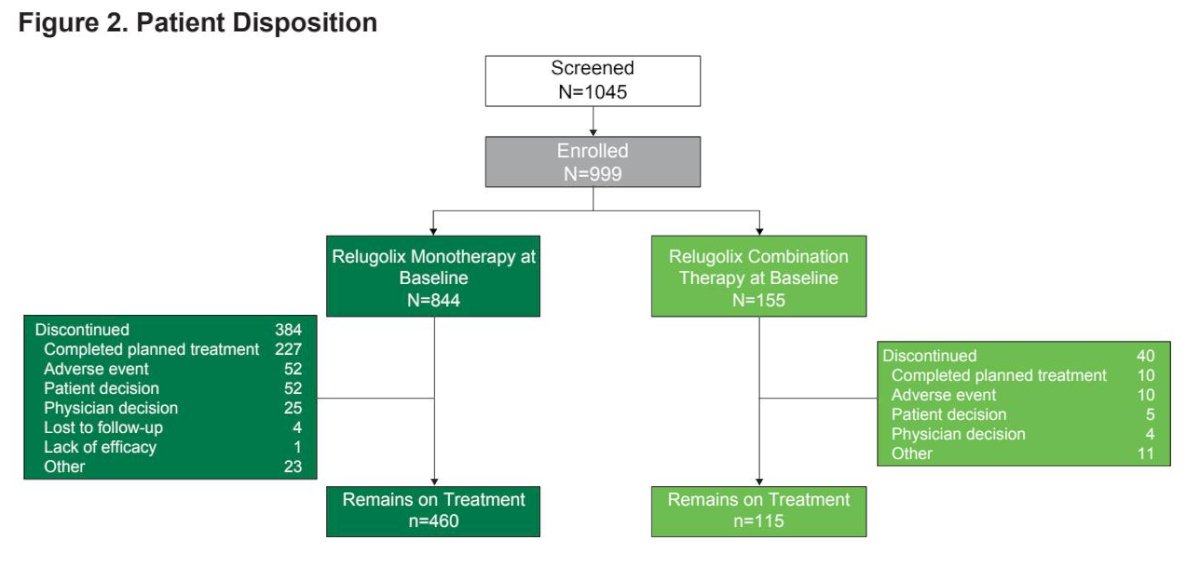
Between October 3, 2022, and August 21, 2024, a total of 1,045 patients were screened and 999 participants were enrolled. Of these, 844 patients (84.5%) initiated relugolix monotherapy, while 155 patients (15.5%) initiated relugolix in combination therapy. At data cutoff (March 7, 2025), the majority remained on relugolix treatment.
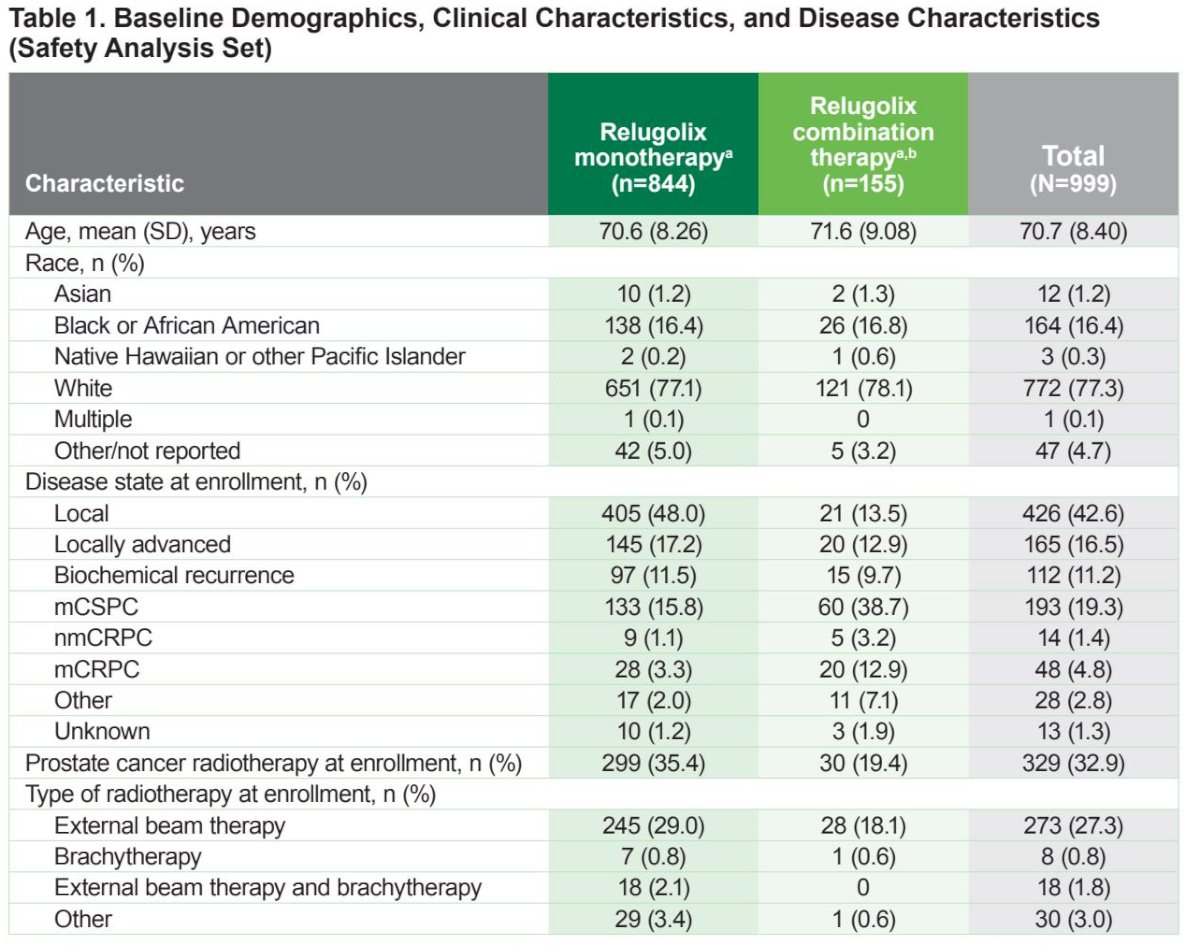
Baseline characteristics are summarized in Table 1. The mean age was approximately 71 years overall, with patients receiving monotherapy slightly younger than those receiving combination therapy. Approximately 73% of patients were White, and about 16% were Black or African American. Many patients had locally advanced, recurrent, or metastatic disease, and a meaningful proportion had baseline cardiovascular disease, reflecting real-world treatment populations.
Quality of life remained stable over time. Among patients receiving relugolix monotherapy, the mean FACT-P total score was 120.8 (SD 20.8) at baseline and 116.3 (SD 20.5) at 6 months. Similar stability was observed among combination therapy recipients (Figure 3A). FACT-P domain scores—including physical, emotional, social/family, functional well-being, and prostate cancer subscale scores—also remained stable over 6 months.
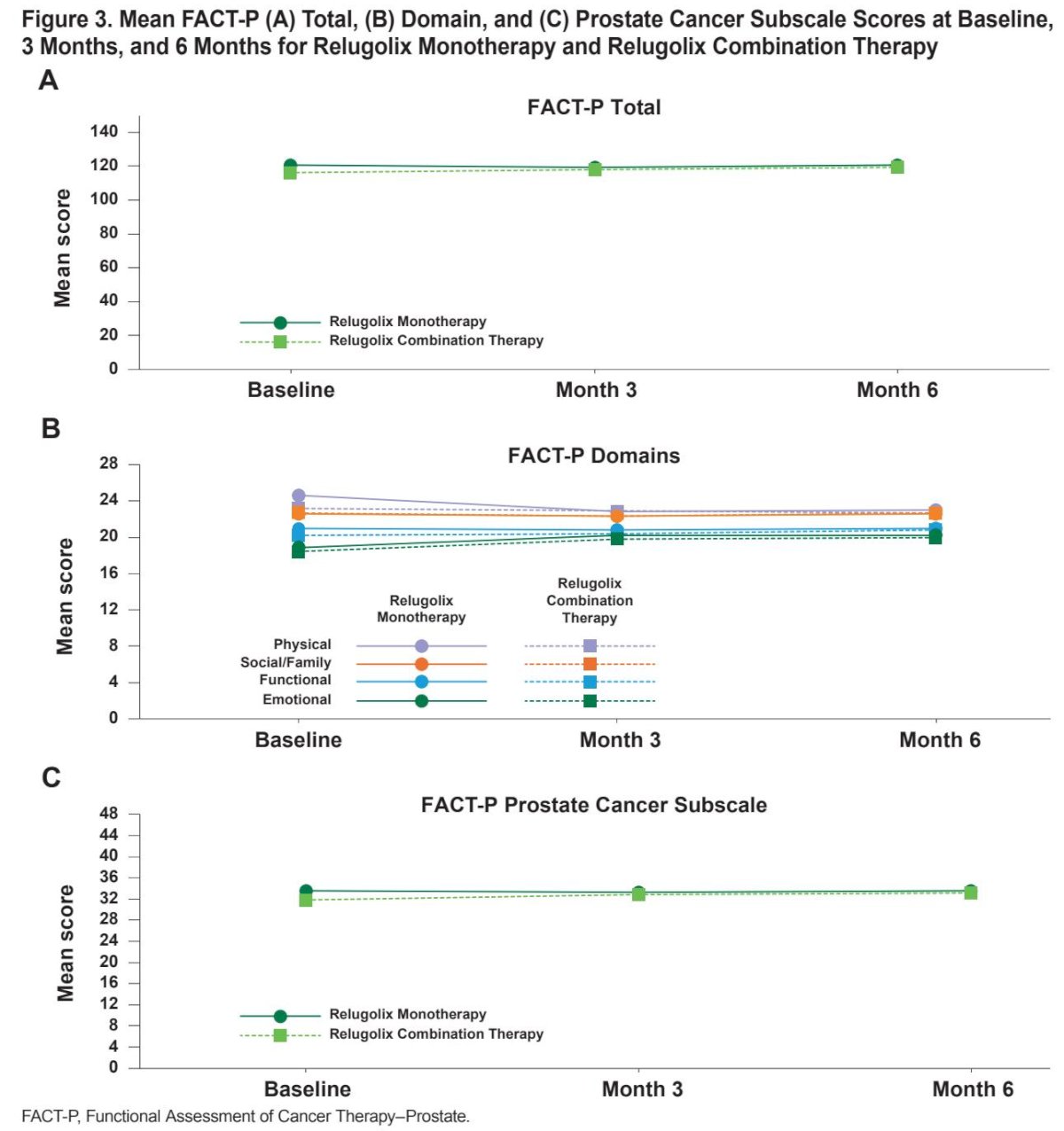
These findings suggest that initiation of relugolix, either alone or with other systemic therapies, does not adversely affect patient-reported quality of life during early treatment in routine clinical practice.
Adherence OutcomesMedication adherence was high. At 6 months:
- 95.7% of monotherapy patients reported always taking relugolix as prescribed
- 96.3% of combination therapy patients reported always taking relugolix as prescribed
Only a small proportion reported occasional missed doses, and most patients reported no missed doses during the preceding week. These results demonstrate excellent adherence with daily oral GnRH antagonist therapy in real-world practice.
Safety OutcomesSafety findings were reassuring overall. Any adverse event occurred in 39 patients (3.9%). Serious adverse events were observed in 9 patients (0.9%), most commonly anemia (0.4%) and acute myocardial infarction (0.3%). Treatment discontinuation due to AEs occurred in:
- 5.9% of monotherapy patients
- 7.1% of combination therapy patients
Two deaths were reported (0.2%). Importantly, no unexpected safety signals emerged compared with prior clinical trial data.
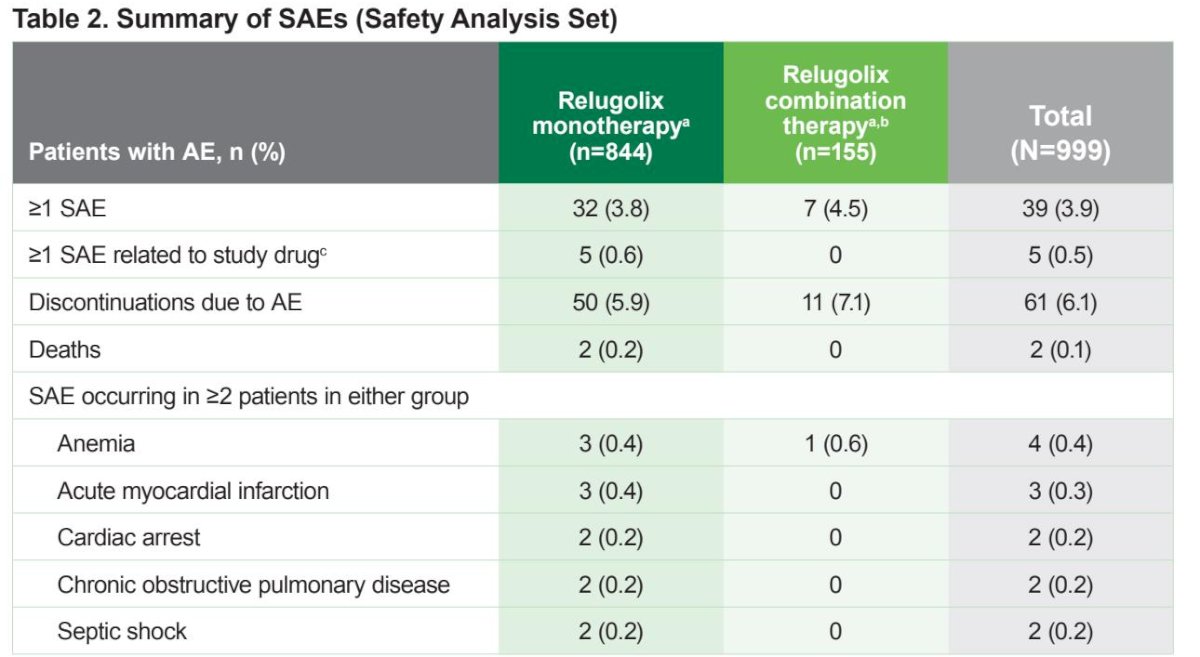
These early real-world data from the OPTYX registry reinforce the favorable tolerability profile of relugolix observed in clinical trials while providing important insight into patient-reported outcomes and adherence in routine practice.
Key clinical observations include:
• Stable quality of life across multiple domains
• Very high adherence rates despite daily oral therapy
• Low rates of serious adverse events
• Broad applicability across diverse patient populations
Dr. McKay concluded as follows:
- Real-world utilization of relugolix was associated with stable QoL, high treatment adherence, and a low rate of reported serious adverse events over the first 6 months
- Patients will continue to be followed for a longer-term analysis in this ongoing study
Presented by: Rana McKay, MD, Associate Professor of Medicine, Department of Medicine, University of California San Diego Moores Cancer Center, La Jolla, CA, USA
Written by: Rashid K. Sayyid, MD, MSc, Assistant Professor, Urologic Oncologist, Department of Urology at The University of Arizona and Banner University Medical Center, Tucson, AZ – @rksayyid on X during the 2026 American Society of Clinical Oncology Genitourinary (ASCO GU) cancers symposium held in San Francisco, CA, between February 26th and 28th, 2026.
References: