

(UroToday.com) The 2026 American Society of Clinical Oncology Genitourinary (ASCO GU) cancers symposium held in San Francisco, CA, was host to the Poster Session A: Prostate Cancer. Dr. Harikrishan H. Kunhiraman presented Poster 237: Obesity-associated epigenetic remodeling under ADT: Implications for cardiometabolic risk in prostate cancer.
Dr. Kunhiraman explored an increasingly relevant question in prostate cancer care: why do men with obesity appear to experience greater cardiometabolic toxicity with androgen deprivation therapy (ADT)?
He noted that while ADT remains foundational in prostate cancer management, it is associated with accelerated cardiometabolic complications, particularly in men with elevated BMI. The biologic underpinnings of this differential vulnerability remain poorly understood. This study hypothesized that obesity modifies chromatin accessibility responses to ADT, resulting in distinct transcriptional programs related to inflammation and metabolism.
Matched peripheral blood mononuclear cell samples collected before and during ADT from 11 men with prostate cancer were analyzed using bulk ATAC-seq. Differential chromatin accessibility was assessed with rigorous bioinformatic processing, and pathway enrichment was performed using MSigDB Hallmark gene sets and gene set enrichment analysis. Participants were stratified by BMI into lean (<25 kg/m²) and obese (≥30 kg/m²) groups.
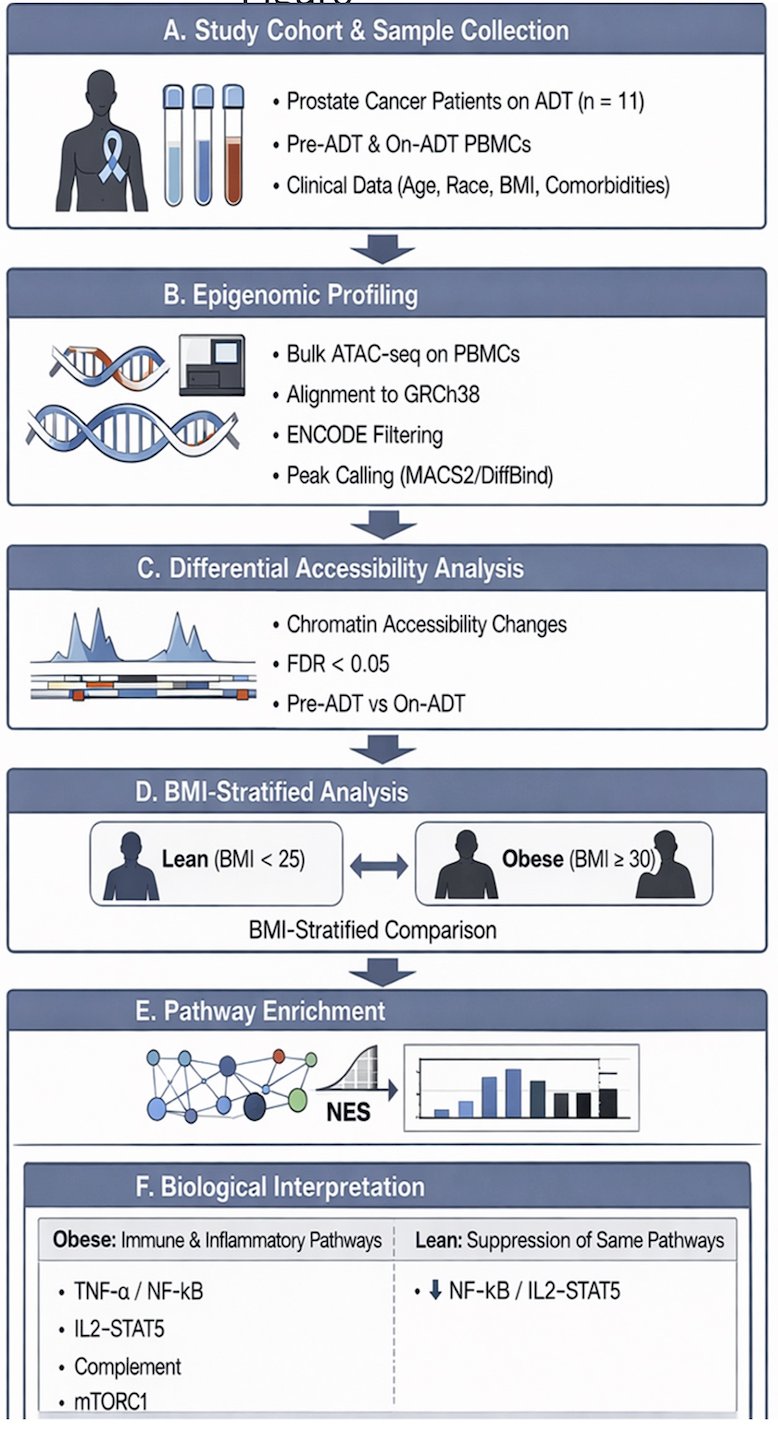
The median age of participants was 69 years, with substantial cardiometabolic comorbidity: 66% had hypertension, 50% diabetes, and 42% baseline cardiovascular disease. Most patients received combined ADT and radiation therapy.
While ADT induced widespread chromatin remodeling overall, no individual loci reached significance after false discovery rate correction. However, BMI-stratified analyses revealed strikingly divergent pathway-level responses.
In obese men, ADT was associated with upregulation of immune-metabolic and inflammatory pathways, including:
- TNF-α via NF-κB
- IL2–STAT5 signaling
- Complement
- Inflammatory response
- KRAS signaling
- mTORC1 signaling
- Hypoxia
- Interferon-γ response
In contrast, lean men demonstrated repression of many of these same pathways during ADT exposure, including TNF-α/NF-κB, IL2–STAT5 signaling, inflammatory response, KRAS signaling, and allograft rejection signatures.
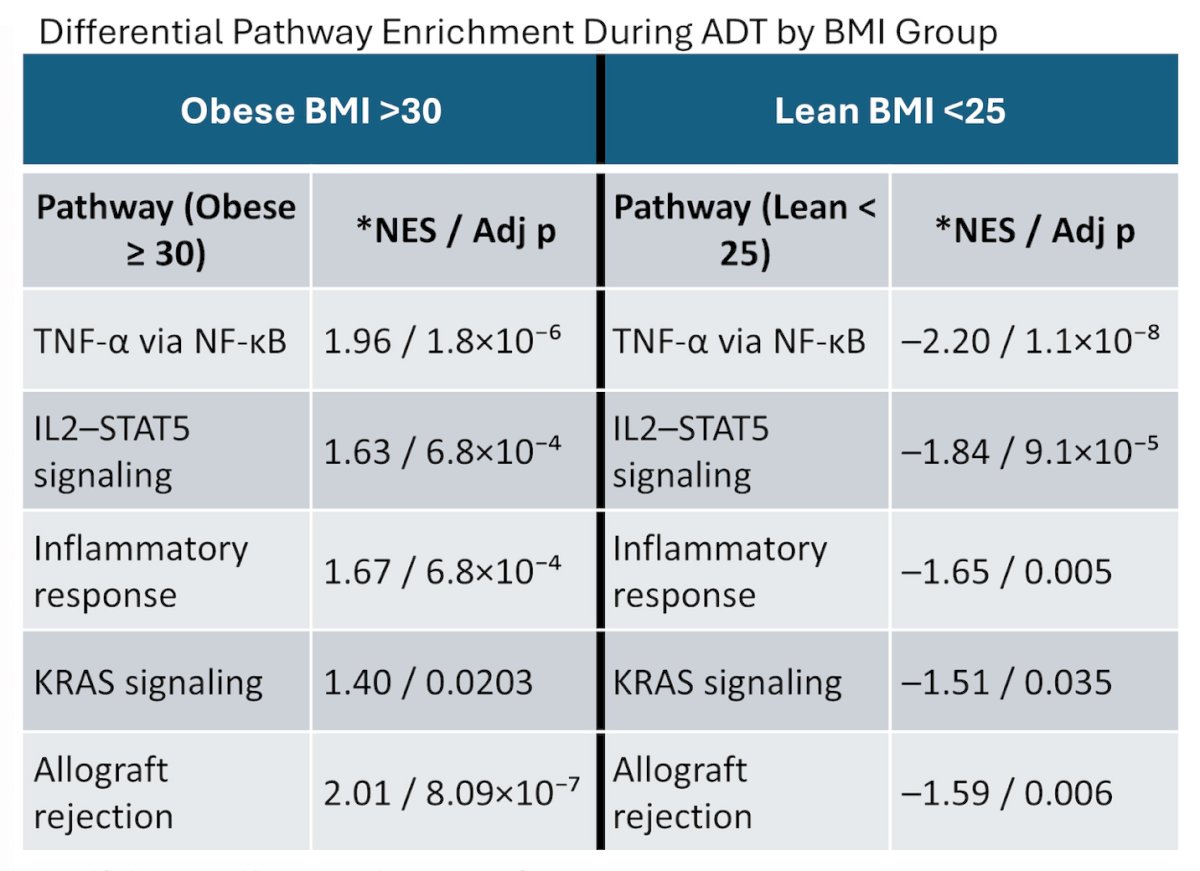
These findings suggest that ADT induces fundamentally different epigenetic and transcriptional responses depending on adiposity.
Dr. Kunhiraman concluded with several key observations:
- Obesity emerged as a strong biological effect modifier of ADT response, with coordinated pathway-level activation of immune–metabolic programs in obese patients and reciprocal suppression in lean patients, supporting a systems-level model of epigenetic remodeling.
- ADT did not produce reproducible locus-level chromatin accessibility changes after correction for multiple testing.
- Planned next steps include expanding analyses to larger and more diverse cohorts to validate these findings.
- Future efforts will aim to link identified epigenetic signatures with clinical cardiovascular outcomes to better define long-term risk and personalize therapy
Presented by: Harikrishan H. Kunhiraman, MBBS at Augusta University. Georgia, United States of America.
Written by: Julian Chavarriaga, MD – Urologic Oncologist, Department of Urology at Penn State Health. @chavarriagaj on Twitter during the 2026 American Society of Clinical Oncology Genitourinary (ASCO GU) cancers symposium held in San Francisco, CA, between February 26th and 28th, 2026.