

(UroToday.com) The 2026 American Society of Clinical Oncology Genitourinary (ASCO GU) cancers symposium held in San Francisco, CA, was host to the Poster Session A: Prostate Cancer. Dr. Aaron R. Hansen presented Poster 164: ProTACT: A first-in-human, phase 1 study evaluating the safety, tolerability, and anti-tumor activity of 225Ac-FL-020, an anti-PSMA radioconjugate in patients with mCRPC.
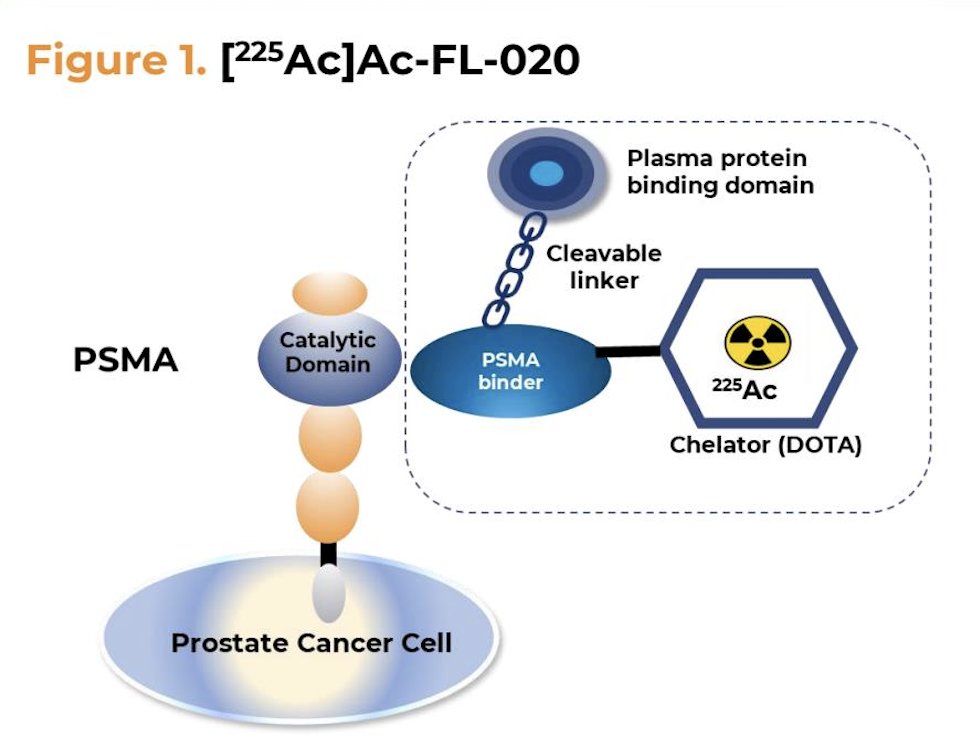
Dr. Hansen began by introducing [225Ac]Ac-FL-020 as a next-generation prostate-specific membrane antigen (PSMA) alpha radioconjugate developed using proprietary UniRDC linker-chelator technology designed to optimize biodistribution. The goal of this approach is to enhance tumor uptake while minimizing exposure to radiosensitive organs such as the salivary glands, potentially improving the therapeutic window compared to earlier alpha-emitting constructs, as illustrated below.
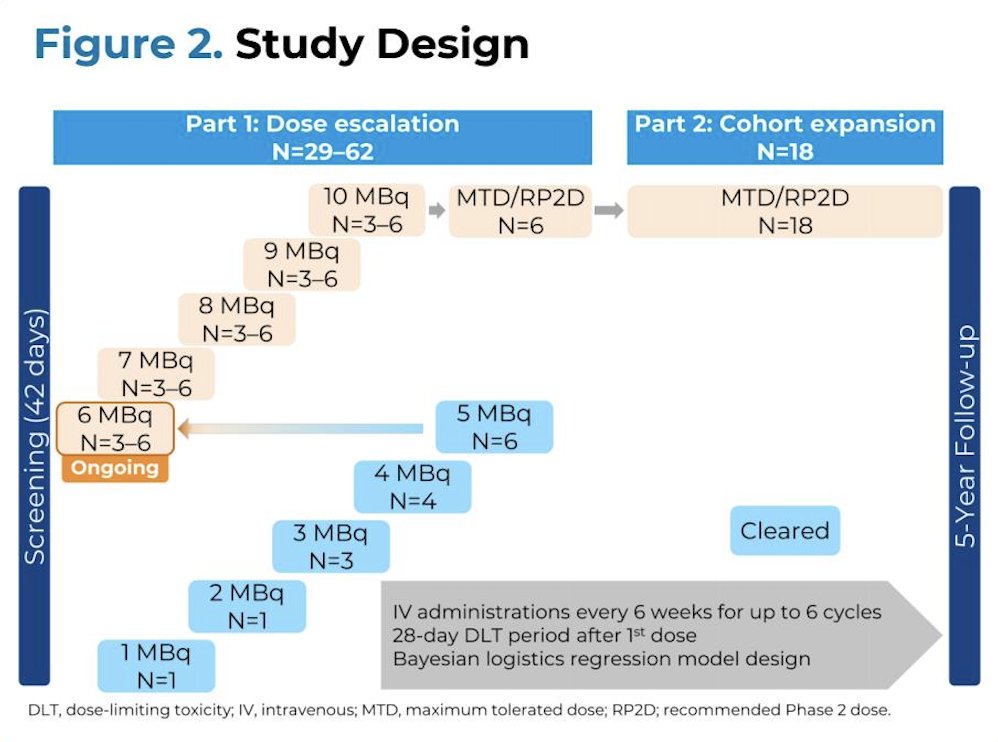
ProTACT is a Phase 1, open-label, multicenter study designed to evaluate the safety, tolerability, and preliminary antitumor activity of [225Ac]Ac-FL-020 in patients with advanced PSMA-positive mCRPC. The study includes two parts: a dose-escalation phase (Part 1) and a dose-expansion phase (Part 2).
Eligible patients must have histologically confirmed mCRPC with evidence of disease progression and at least one PSMA-positive lesion on PSMA PET/CT, defined as uptake higher than liver. Prior treatment with androgen receptor signaling inhibitors or CYP17 inhibitors and at least one taxane-based chemotherapy is required unless declined by the patient. Prior therapy with Lu-177 is permitted. Patients with extensive PSMA-negative disease are excluded.
Dose escalation in Part 1 is guided by a Bayesian logistic regression model with overdose control. Dose cohorts range from 1 to 10 MBq administered intravenously every six weeks for up to six cycles. The primary objective is to determine the maximum tolerated dose (MTD) and/or recommended Phase 2 dose (RP2D). Once the RP2D is established, an additional 18 patients will be enrolled in Part 2 to further characterize safety and explore early signals of efficacy. The study design is shown below.
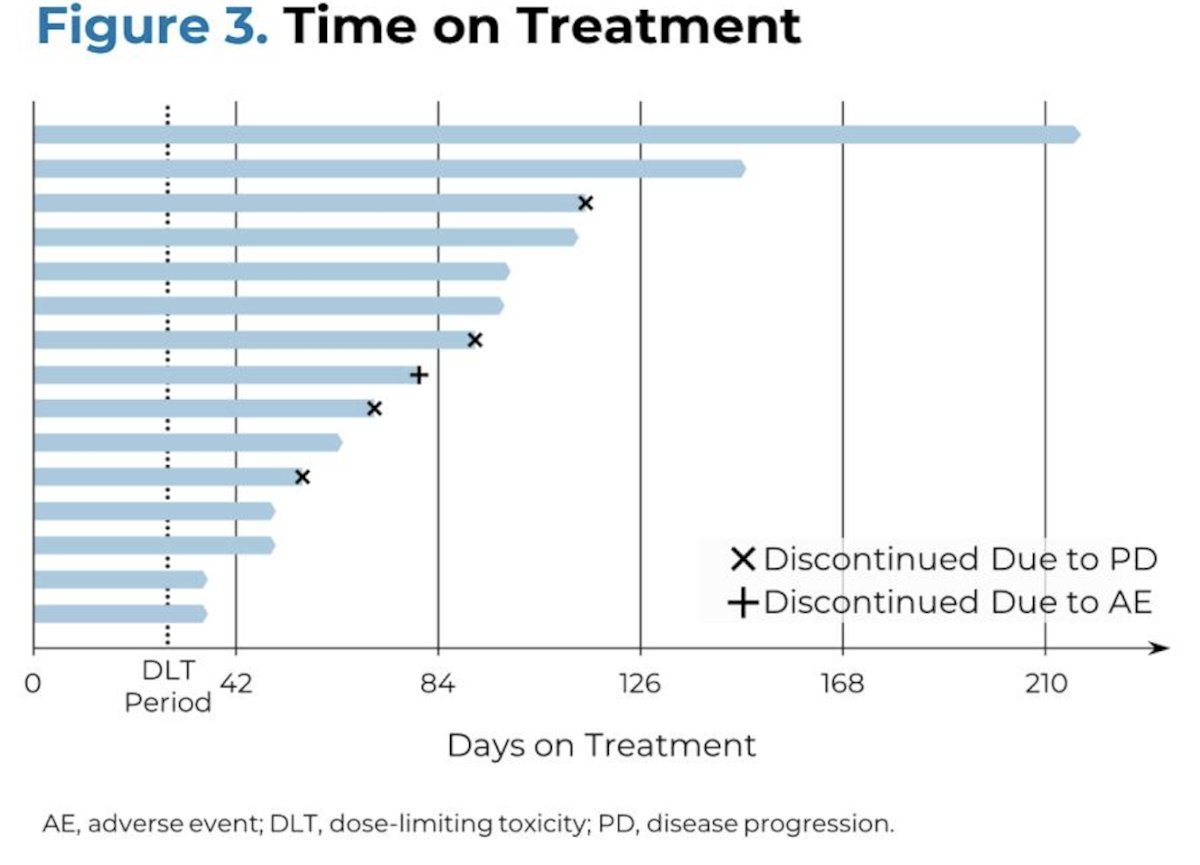
As of January 2, 2026, 15 patients had received [²²⁵Ac]Ac-FL-020 at doses up to 5 MBq per cycle. One patient treated at 2 MBq received 5 doses; one patient at 3 MBq received 4 doses; four patients (three at 3 MBq and one at 4 MBq) received 3 doses each; and four patients (one at 1 MBq, two at 4 MBq, and one at 5 MBq) received 2 doses each. No dose-limiting toxicities or significant renal or hematologic toxicities were observed. One patient treated at 3 MBq discontinued therapy due to grade 2 xerostomia, and no other patients discontinued treatment because of toxicity.
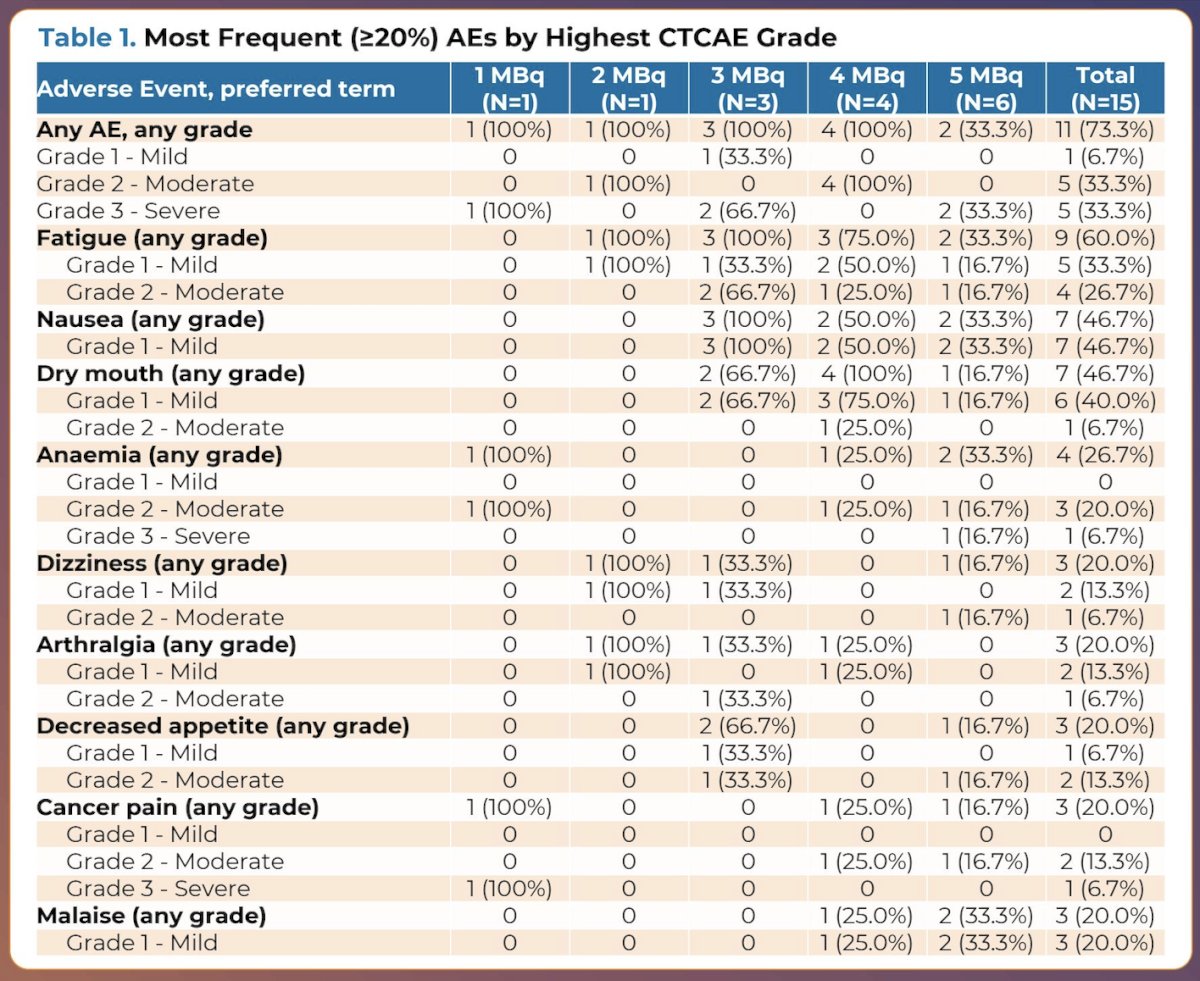
The frequency and severity of adverse events are summarized in Table 1. Grade ≥3 treatment-emergent adverse events occurred in 5 patients (33.3%), including hematuria, hydronephrosis, anemia, AST elevation, decreased platelet count, cancer pain, infectious exacerbation of asthma, and decreased lymphocyte count, each occurring in one patient (6.7%). With the exception of grade 3 lymphocyte count decrease, all grade ≥3 events were considered unrelated to [²²⁵Ac]Ac-FL-020. Serious adverse events were reported in 4 patients (26.7%), including hematuria, pyrexia, cancer pain, and infectious exacerbation of asthma (one patient each), all deemed unrelated to study treatment. Grade 1 dry mouth was reported in 6 patients. One patient treated at 4 MBq experienced grade 2 xerostomia along with early signs of disease progression, leading to treatment discontinuation. At the highest dose level (5 MBq), 1 of 6 patients reported dry mouth.
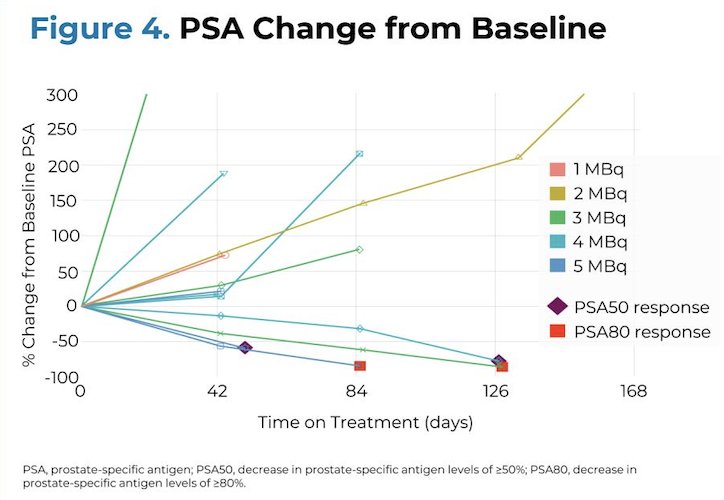
Dr. Hansen noted that as of February 2, 2026, early signs of antitumor activity were observed with [²²⁵Ac]Ac-FL-020. One patient treated at 3 MBq achieved both PSA50 and PSA80 responses after 2 and 3 cycles, respectively. At 4 MBq, one patient achieved a PSA50 response after 3 cycles. At 5 MBq, one patient achieved a PSA50 response after a single cycle, and another demonstrated PSA50 and PSA80 responses after 1 and 2 cycles, respectively. No radiographic responses were observed at this early timepoint.
Dr. Hansen concluded his presentation with the following key takeaways:
- [²²⁵Ac]Ac-FL-020 was well tolerated, with no dose-limiting toxicities or significant renal or hematologic toxicities observed.
- Except for one case of grade 3 lymphopenia, all treatment-related adverse events were grade 1–2 and manageable.
- Xerostomia was generally mild; one patient (6.7%) experienced grade 2 dry mouth leading to discontinuation.
- PSA responses were observed across dose levels of 3–5 MBq, with earlier and deeper responses seen at higher dose levels, suggesting dose-dependent antitumor activity.
- Based on the favorable safety profile and encouraging early efficacy signals, the Data Review Committee supported continued dose escalation, and the 6 MBq dose level has been fully enrolled.
Presented by: Aaron R. Hansen, BSc, MBBS, FRACP, Princess Margaret Cancer Centre, Toronto, Ontario, Canada
Written by: Julian Chavarriaga, MD – Urologic Oncologist, Department of Urology at Penn State Health. @chavarriagaj on Twitter during the 2026 American Society of Clinical Oncology Genitourinary (ASCO GU) cancers symposium held in San Francisco, CA, between February 26th and 28th, 2026.