

(UroToday.com) The 2026 ASCO GU Annual Symposium hosted a prostate cancer poster session. Dr. Saby George presented the results of an analysis of the global REASSURE study evaluating real-world characteristics of long-term survivors with metastatic castration-resistant prostate cancer (mCRPC) who were treated with radium-223.
Radium-223 is an alpha-emitting radiopharmaceutical approved for the treatment of mCRPC patients with bone metastases, based on the results of the ALSYMPCA trial.1 The ongoing global REASSURE study represents one of the largest prospective observational datasets assessing long-term safety and survival outcomes associated with radium-223 in routine clinical practice, with extended follow-up approaching seven years. This analysis specifically sought to characterize patients achieving long-term survival, defined as overall survival (OS) ≥2 years following radium-223 initiation.
A total of 1,472 patients with mCRPC and bone metastases treated with radium-223 between 2014 and 2017 were included globally. Using a two-year survival landmark, investigators compared demographic, clinical, and treatment characteristics between patients with OS ≥2 years versus those with OS <2 years. The study outcomes included fracture rates, incidence of second primary malignancies (SPMs), and OS. Of note, the data collection period was shorter for those with OS <2 years. Dr. George noted that comparisons for Ra-223 doses, fractures, SPMs, and OS should thus be interpreted accordingly. Multivariate logistic regression landmark analysis was used to identify factors associated with OS ≥2 years. The model only included patients still on-study at 6 months in both groups.
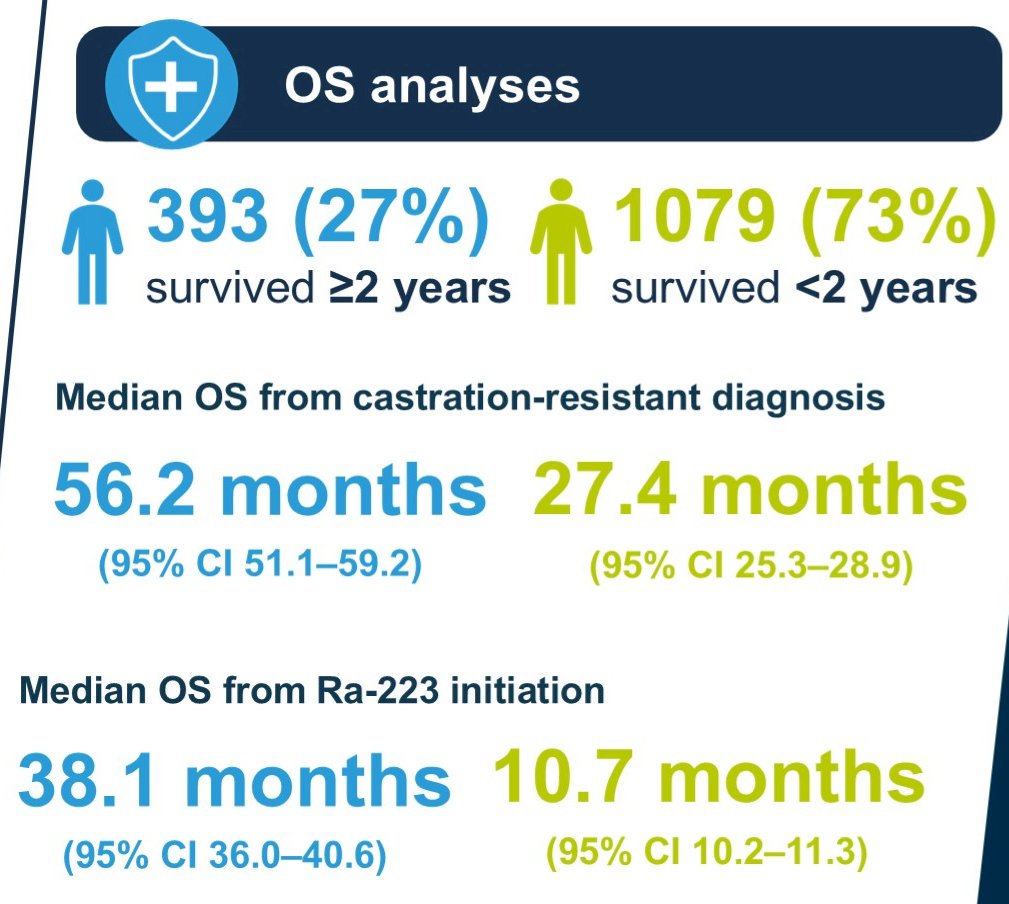
In the overall cohort, 393 patients (27%) survived ≥2 years following radium-223 initiation, while 1,079 patients (73%) had OS <2 years. Median overall survival from castration-resistant disease diagnosis was substantially longer among long-term survivors (56.2 months, 95% CI 51.1–59.2) compared with those surviving <2 years (27.4 months, 95% CI 25.3–28.9). Similarly, median OS from radium-223 initiation was 38.1 months (95% CI 36.0–40.6) among long-term survivors versus 10.7 months (95% CI 10.2–11.3) among those with shorter survival.
Baseline clinical characteristics differed between groups. Patients achieving OS ≥2 years tended to initiate radium-223 earlier in the disease course, with shorter median time from development of castration-resistant disease to study entry (9.2 vs 13.5 months). They were also more likely to have ECOG performance status 0–1 (87% vs 77%) and lower disease burden, including fewer patients with >20 bone metastases (17% vs 26%).
Laboratory parameters also differed. Long-term survivors had lower baseline alkaline phosphatase (median 94 vs 158 U/L), lower lactate dehydrogenase (214 vs 294 U/L), and lower PSA levels at radium-223 initiation (22 vs 89 ng/mL). These findings collectively suggest that markers of lower disease burden and better performance status were associated with improved long-term outcomes.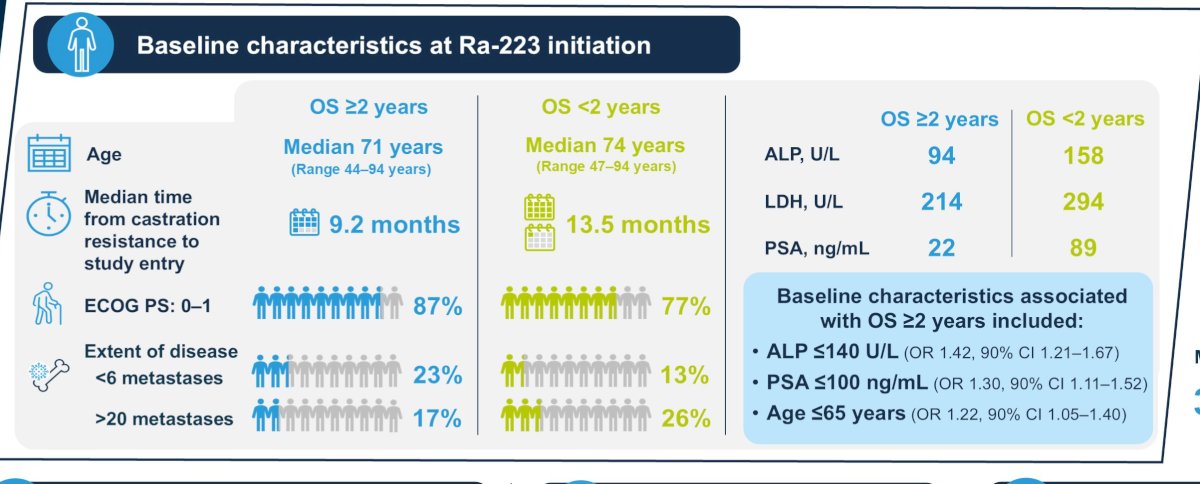
Treatment patterns further differentiated the cohorts. Absence of prior androgen receptor pathway inhibitor therapy (OR 1.86, 90% CI 1.52–2.27) and absence of prior taxane chemotherapy (OR 1.53, 90% CI 1.20–1.96) were independently associated with longer survival from radium-223 initiation. Notably, receiving at least five doses of radium-223 emerged as one of the strongest predictors of long-term survival (OR 2.01, 90% CI 1.65–2.44), with completion rates markedly higher among long-term survivors (92% vs 48%).
Fracture incidence was relatively low overall but higher among long-term survivors (16% vs 7%), likely reflecting longer exposure time at risk. Prior or concomitant use of bone-protecting agents was common (~53%) and was not significantly associated with survival outcomes (OR 1.13, 90% CI 1.00–1.27). Rates of second primary malignancies remained low, occurring in approximately 4% of long-term survivors compared with 1% among those with shorter survival, with most cases occurring more than 12 months following radium-223 initiation.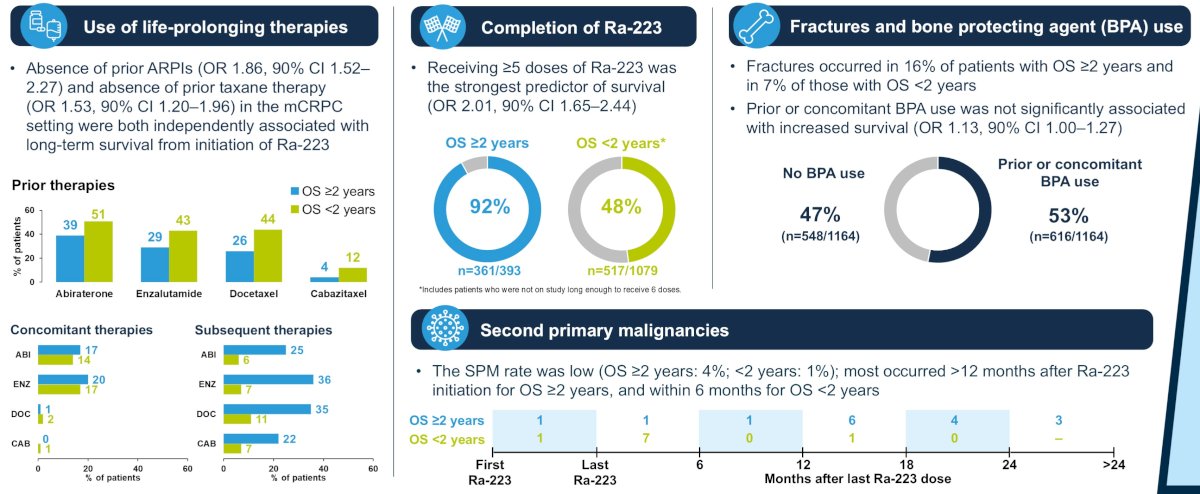
Dr. George concluded as follows:
- Patients who lived ≥2 years after initiating radium-223 had prognostically favorable characteristics at baseline, with a lack of prior therapy for mCRPC associated with a greater likelihood of long-term survival
- Notably, more of these patients received subsequent life-prolonging therapies
- Completion of ≥5 cycles of radium-223 was one of the strongest independent predictors for survival beyond 2 years, controlling for all other variables
- Incidence of fractures and second primary malignancies remained low; however, those surviving ≥2 years collectively had more, suggesting an increased cumulative risk, likely due to increased time at risk
- These data confirm that the odds of survival in advanced disease rely on early intervention (with better baseline characteristics), completion of therapy, and sequencing that permits several lines of life-prolonging therapy
Presented by: Saby George, MD, FACP, Professor of Oncology and Urology, Roswell Park Comprehensive Cancer Center, Buffalo, NY, USA
Written by: Rashid K. Sayyid, MD, MSc, Assistant Professor, Urologic Oncologist, Department of Urology at The University of Arizona and Banner University Medical Center, Tucson, AZ – @rksayyid on X during the 2026 ASCO GU Annual Symposium, San Francisco, CA, February 26th–28th, 2026
Reference:- Parker C, Nilsson S, Heinrich D, et al. Alpha emitter radium-223 and survival in metastatic prostate cancer. N Engl J Med 2013;369(3):213-223.