

(UroToday.com) The 2026 ASCO GU Annual Symposium was host to a prostate cancer poster session. Dr. Brian Helfand presented the results of an intra-patient contemporaneous comparison of 18F-piflufolastat and 18F-flotufolastat urinary radioactivity and local and pelvic region detection rates in men with low PSA biochemical recurrences following radical prostatectomy.
Prostate-specific membrane antigen (PSMA) PET radiopharmaceuticals are widely used in prostate cancer imaging; however, high urinary radioactivity from renally cleared agents may obscure tumors in the prostate bed and peri-ureteric regions. This phase 4 multicenter prospective intra-patient study compared urinary radioactivity and detection rates between two 18F-labeled PSMA PET tracers, 18F-piflufolastat and 18F-flotufolastat, in men with low PSA biochemical recurrence following radical prostatectomy.
This study included men meeting the following eligibility criteria:
- Low PSA (≤0.5 ng/ml) biochemical recurrences ≥6 months following radical prostatectomy
- Undetectable PSA post-operatively
- Scheduled for standard-of-care 18F-piflufolastat
Patients first underwent 18F-piflufolastat PET/CT approximately 60 minutes after injection, followed 1–10 days later by 18F-flotufolastat PET/CT, also approximately 60 minutes post injection, on the same scanner. The primary endpoint was the paired difference in urinary bladder radioactivity measured by mean standardized uptake value (SUVmean) between 18F-piflufolastat PET and 18F-flotufolastat PET. The secondary endpoints included patient-level detection rates (overall and stratified by baseline PSA), as well as region-level detection rates in the prostate bed and pelvic lymph nodes. PET scans were interpreted by two blinded independent readers, with a third reader resolving discordances.
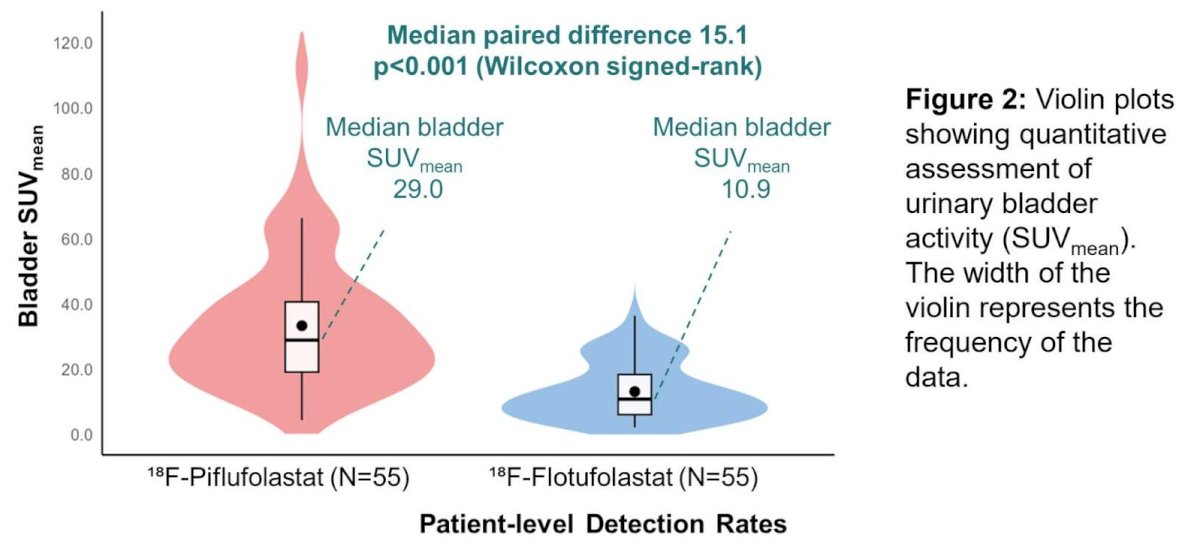
The study included 55 patients (mean age: 68 years, range: 39–83 years) with evaluable, paired scans. The mean PSA was 0.28 ng/mL (range: 0.09–0.50 ng/ml). The median paired difference in bladder SUVmean was significantly higher with 18F-piflufolastat, indicating greater urinary bladder activity compared with 18F-flotufolastat. Overall, 18F-flotufolastat demonstrated lower bladder SUVmean in 96% of patients.
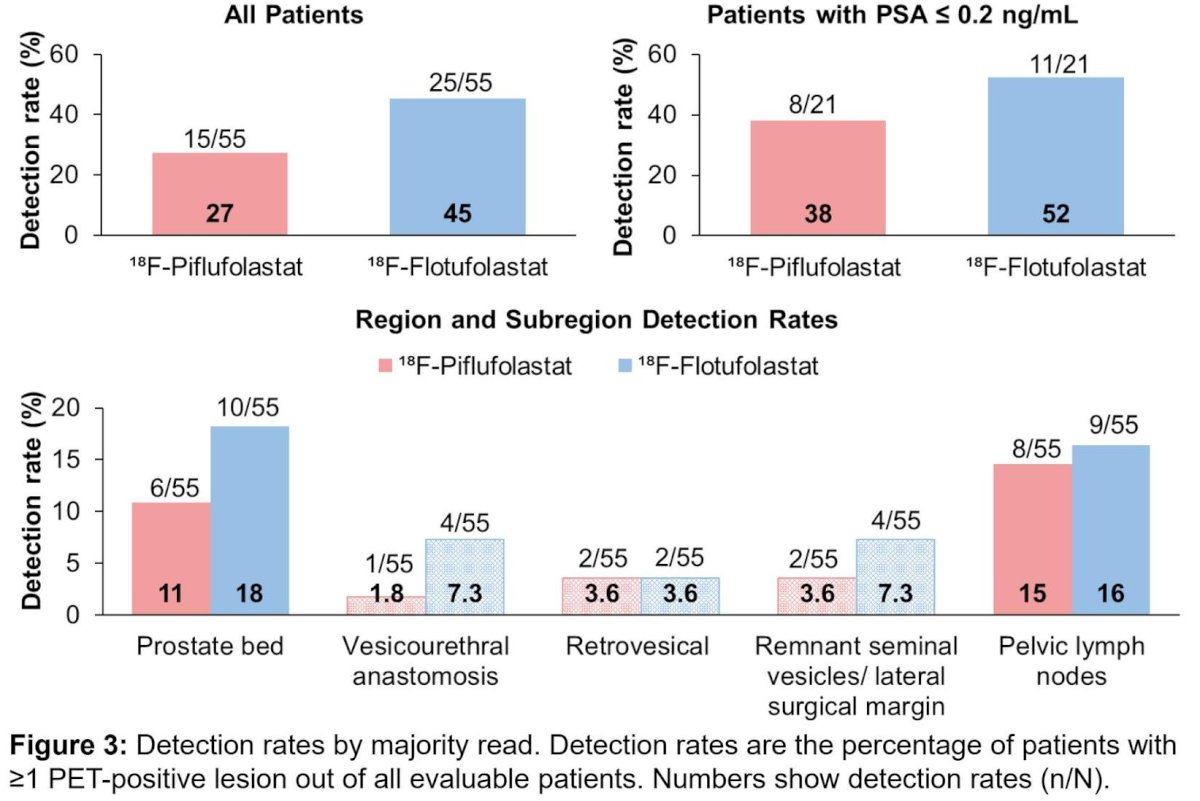
Detection analyses favored 18F-flotufolastat. The overall patient-level detection rates were 45% with 18F-flotufolastat versus 27% with 18F-piflufolastat. Among patients with PSA ≤0.2 ng/mL, the corresponding detection rates were 52% versus 38%, respectively. Region-level analyses similarly suggested improved lesion visualization with 18F-flotufolastat, particularly in regions adjacent to the bladder where urinary activity may obscure disease (example: prostate bed 18% versus 11%; vesicourethral anastomosis: 7.3% versus 1.8%).
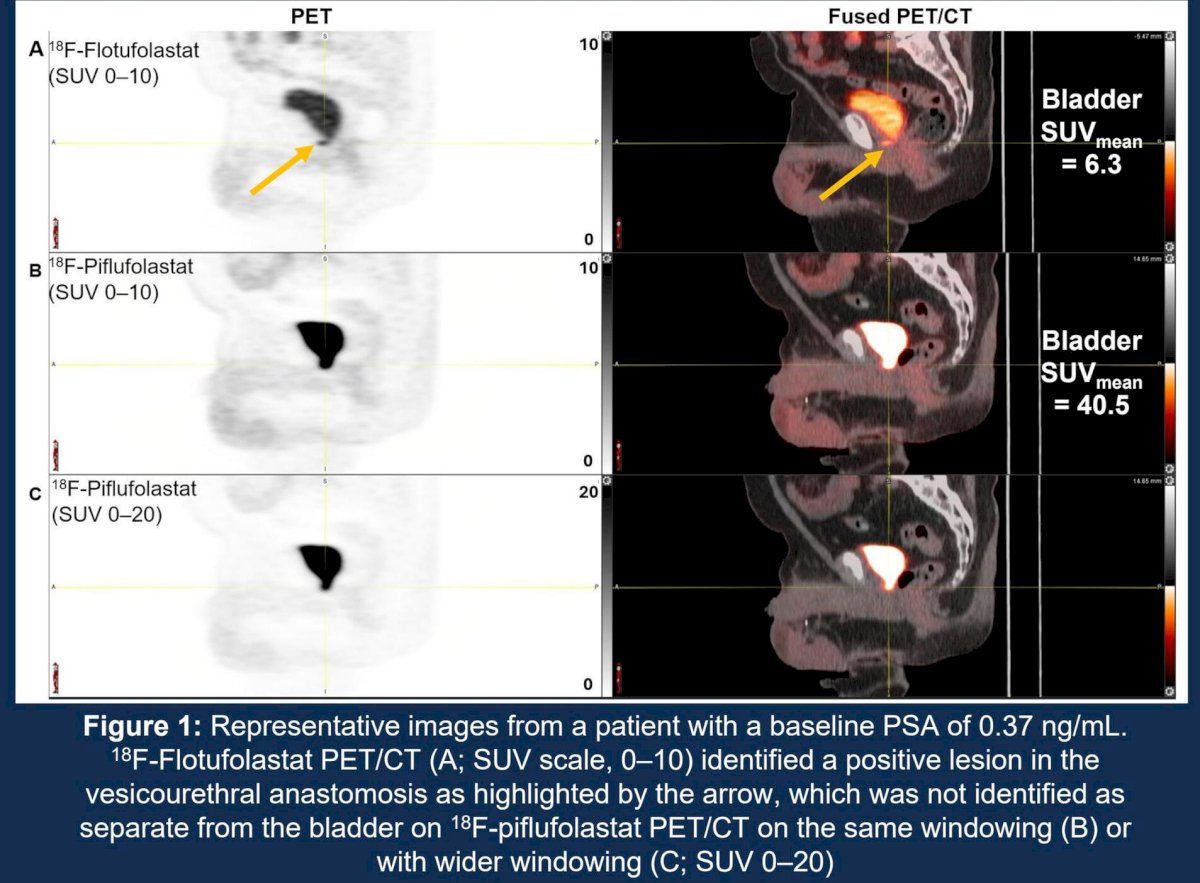
Representative imaging below demonstrated clearer lesion visualization near the vesicourethral anastomosis with 18F-flotufolastat compared with 18F-piflufolastat. The investigators noted that the reduced urinary radioactivity may improve image assessment in pelvic regions close to the bladder.
Overall, this intra-patient prospective study demonstrates significantly lower urinary bladder radioactivity with 18F-flotufolastat compared with 18F-piflufolastat, with higher detection rates observed in men with low PSA biochemical recurrence after prostatectomy. These findings suggest potential advantages of reduced urinary activity for lesion detection in anatomically challenging pelvic regions, although further clinical validation is warranted.
Presented by: Brian T. Helfand, MD, PhD, Associate Professor, Department of Urology, NorthShore University HealthSystem, Evanston, IL, USA
Written by: Rashid K. Sayyid, MD, MSc, Assistant Professor, Urologic Oncologist, Department of Urology at The University of Arizona and Banner University Medical Center, Tucson, AZ – @rksayyid on X during the 2026 Genitourinary (GU) American Society of Clinical Oncology (ASCO) Annual Meeting, San Francisco, CA, Thurs, Feb 26 – Sat, Feb 28, 2026.