

(UroToday.com) The 2026 GU ASCO annual meeting featured a prostate cancer session and a presentation by Dr. Jose Mauricio Mota discussing Daro-PET, a phase 2 trial of darolutamide to enhance PSMA expression in patients with localized prostate cancer. PSMA PET/CT improves prostate cancer detection and guides PSMA-targeted therapies. Preclinical data suggest that androgen receptor pathway inhibitors may transiently upregulate PSMA expression in the metastatic setting, but prospective evidence in localized disease is lacking.
Daro-PET was a single-arm, Simon’s two-stage phase 2 trial of men ≥18 years with localized prostate adenocarcinoma, no metastasis on CT/MRI or bone scan, and scheduled for prostatectomy. Patients had a baseline PSMA PET/CT, received darolutamide 600 mg twice daily for 7 days, then a second PSMA PET/CT. The primary endpoint was the proportion with ≥20% SUVmax increase in the intention-to-treat set. Secondary endpoints were changes in tumor volume, SUVmean, total lesion PSMA, new metastases, and safety, plus per-protocol analyses (radiotracer dose 4.0 ± 1.0 mCi, ≤30% variation). Sample size assumed 80% power, one-sided α = 0.05. If ≥3 patients met the primary endpoint, the regimen would be considered worthy of further study.
Between July 2023 and March 2025, 16 patients were enrolled, with a median age of 61 (IQR 55–70) years, 56% had ISUP grade 4+ prostate cancer, 62.5% had cT3 disease, and the median PSA was 10.01 ng/mL (IQR 6.41–11.24):
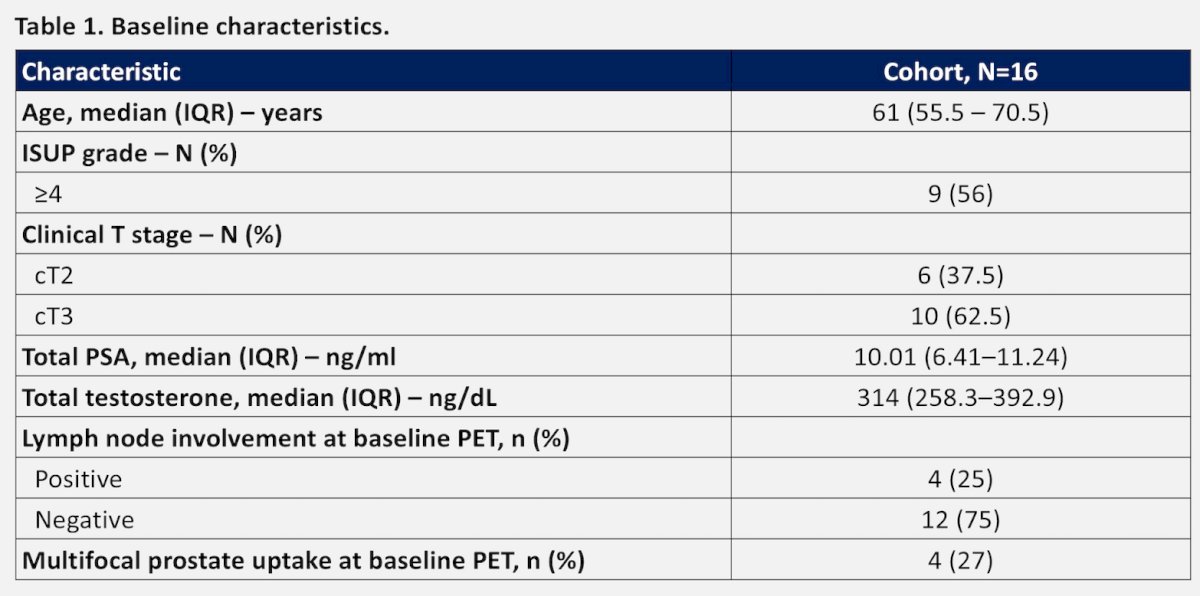
Baseline PSMA PET/CT showed nodal involvement in 4 patients and multifocal prostate uptake in 4 patients. No adverse events were reported, and all patients completed treatment. In the intention-to-treat population, 5 patients (31%) had any SUVmax increase after darolutamide, with 3 patients (18.8%; 90% CI 5.3–41.7) meeting the primary endpoint, with SUVmax increases of 36.5–62%: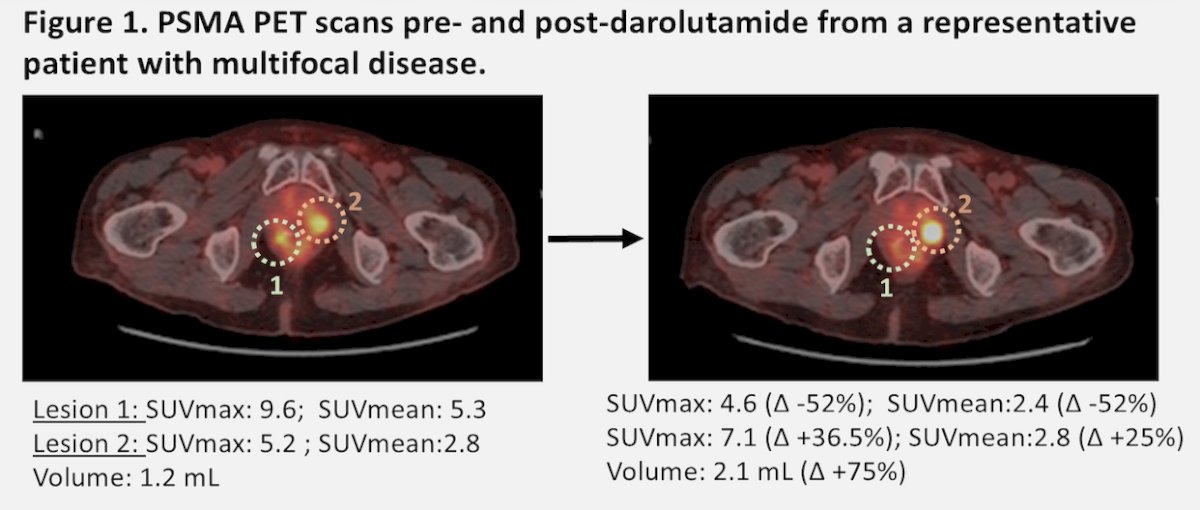
Results were similar in the per-protocol population (n = 14), with 5 patients (36%) having any SUVmax increase and 3 patients (21%) with an SUVmax ≥20% increase. Seven patients (50%; 90% CI 26.4-73.6) showed increased tumor volume (range: 6.2% to 98.6%), and SUVmean and total lesion PSMA increased in 3 patients (21.4%). There were no new pelvic or extrapelvic metastases detected after darolutamide treatment. Three patients had 2 prostate uptake foci, with heterogeneous changes in PSMA uptake after darolutamide: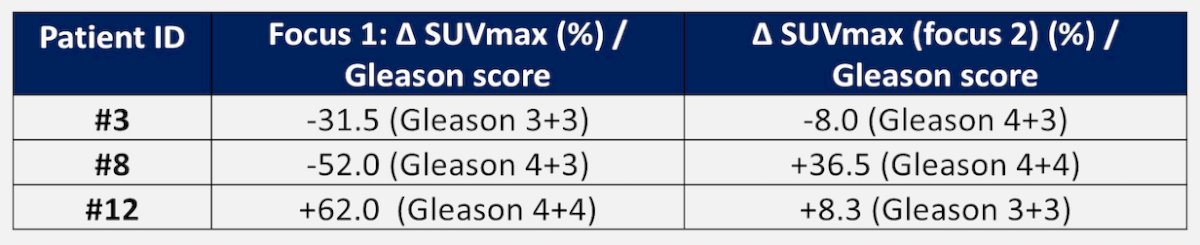
Dr. Mota concluded his presentation discussing Daro-PET with the following take-home points:
- A 7-day course of darolutamide increased PSMA expression in a subset of men with high-risk localized prostate cancer
- These findings support further evaluation of androgen receptor pathway inhibitors to improve the performance of PSMA PET/CT and PSMA-targeted therapies
Presented by: Jose Mauricio Mota, MD, PhD, Institute of Cancer of Sao Paulo, University of Sao Paulo, Sao Paulo, Brazil
Written by: Zachary Klaassen, MD, MSc – Urologic Oncologist, Associate Professor of Urology, Georgia Cancer Center, Wellstar MCG Health, @zklaassen_md on Twitter during the 2026 Genitourinary (GU) American Society of Clinical Oncology (ASCO) Annual Meeting, San Francisco, CA, Thurs, Feb 26 – Sat, Feb 28, 2026.