

(UroToday.com) The 2026 GU ASCO annual meeting featured a testicular cancer session and a presentation by Dr. Ben Tran discussing the initial results from CLIMATE, a prospective cohort study assessing the clinical utility of miR-371a-3p as a marker of minimal residual disease in clinical stage 1 testicular germ cell tumors. Active surveillance remains a preferred option for clinical stage 1 (CS1) testicular germ cell tumor, although adjuvant chemotherapy is considered for patients at high risk, but results in unnecessary treatment and toxicity for the majority of patients.
Improved biomarkers to identify very high-risk patients are needed, allowing clinicians to minimize treatment while maximizing outcomes. Circulating miR-371 has high sensitivity and specificity for testicular germ cell tumors, and as a marker of minimal residual disease post-orchiectomy, is a promising biomarker for predicting recurrence. The initial results from CLIMATE examine the discriminatory accuracy of baseline post-orchiectomy miR-371 in predicting recurrence in patients with CS1 testicular germ cell tumors undergoing active surveillance.
Patients from 12 sites in Australia and New Zealand, ≥18 years of age, with histologically confirmed CS1 testicular germ cell tumor, no evidence of metastases, and planned for active surveillance, were enrolled ≤6 weeks post-orchiectomy. Plasma and serum were collected at baseline (≤6 weeks post-orchiectomy) and every 3 months for 24 months and at recurrence. Clinical and outcome data were recorded in iTestis, Australia’s testicular germ cell tumor registry. miR-371 was assessed using a quantitative PCR assay based upon published methodology and deemed detectable if the mean of triplicate quantitative PCR Ct was ≤40:1
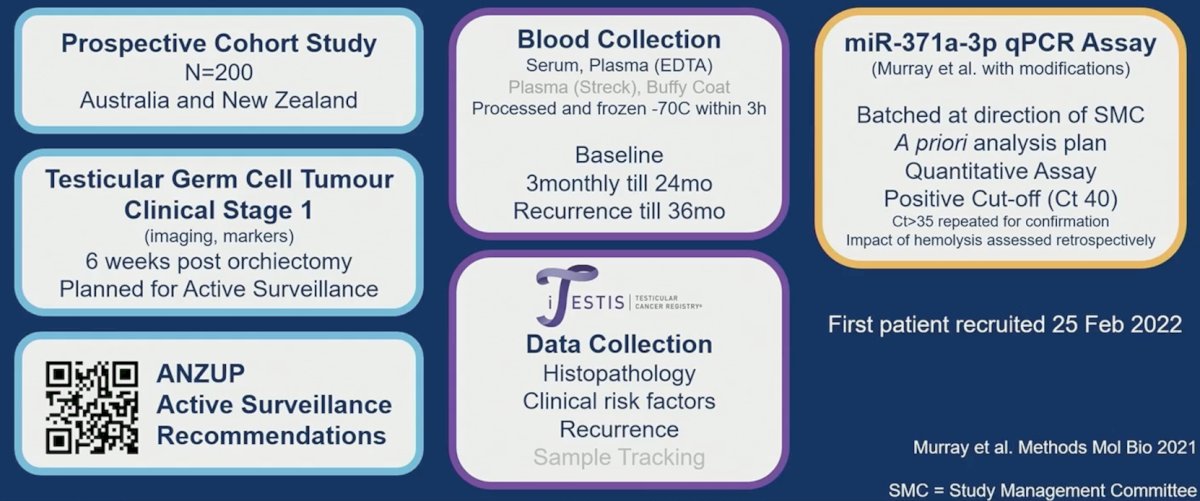
The primary objective was to determine the positive predictive value of baseline post-orchiectomy miR-371 in predicting recurrence, and secondary objectives were to compare the performance of serum versus plasma miR-371 and to collaborate with other studies (AGCT1531 and SWOG1823).
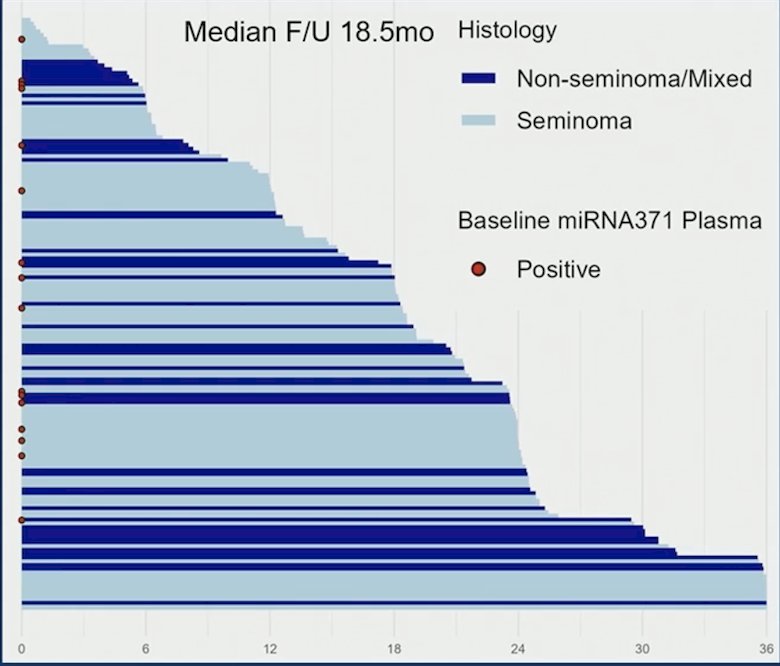
CLIMATE enrolled 200 patients from 2021 to 2025, with a median age of 33 years (range: 22-78). There were 196 patients who had assays run on baseline samples prior to data cutoff and were included in this analysis. Orchiectomy histology included 117 (60%) pure seminoma and 79 (40%) non-seminoma. With a median follow-up of 18.9 months, there were 40 (20%) recurrences, with a median time to recurrence of 4.2 months (range: 1.1-17.7). miR-371 was detected at baseline in 42 (21%) plasma and 34 (17%) serum samples. Assays using plasma performed better than serum (AUC 0.77 versus 0.69) and were reported hereafter:
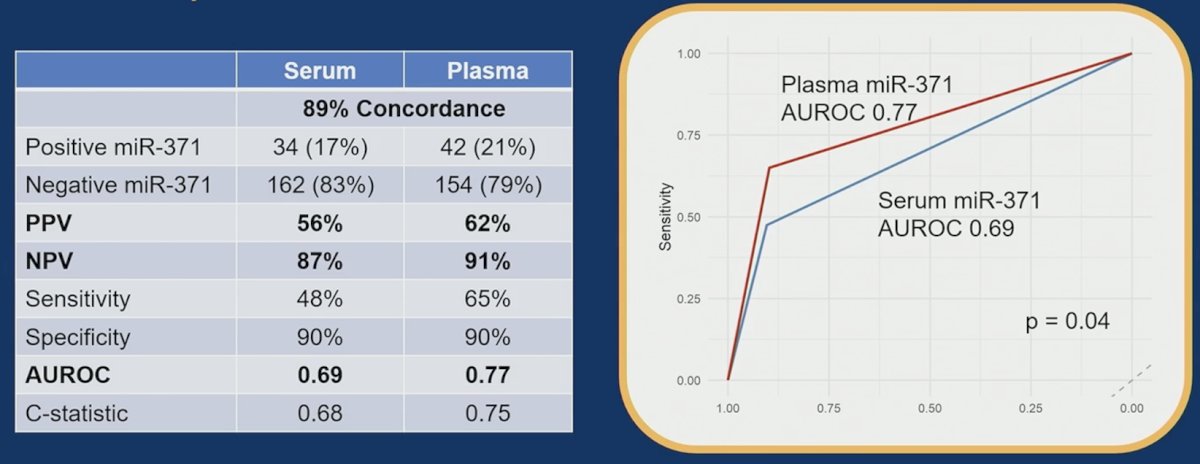
In predicting recurrence, baseline miR-371 demonstrated a positive predictive value 62%, negative predictive value 91%. Detectable baseline miR-371 was associated with significantly poorer recurrence-free survival compared to undetectable miR-371 (HR 10.3, 95% CI 5.3 – 19.8; p < 0.001; 24-month recurrence-free survival 32% versus 89%):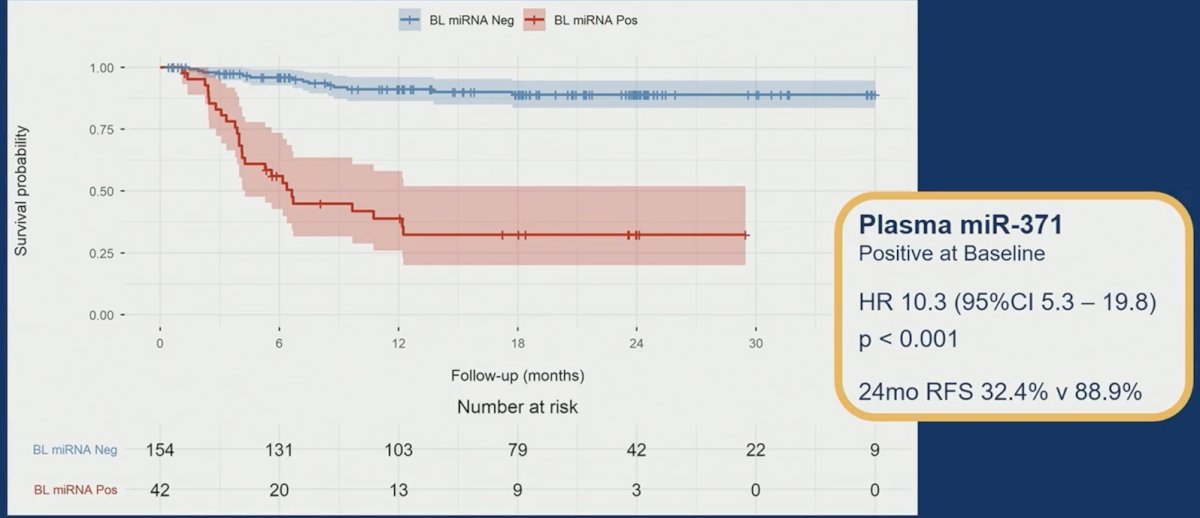
Among recurrences (n = 40), there were 14 (35%) cases of plasma miR-371 negative at baseline and subsequently developed recurrence with a median time to recurrence of 6.9 months:
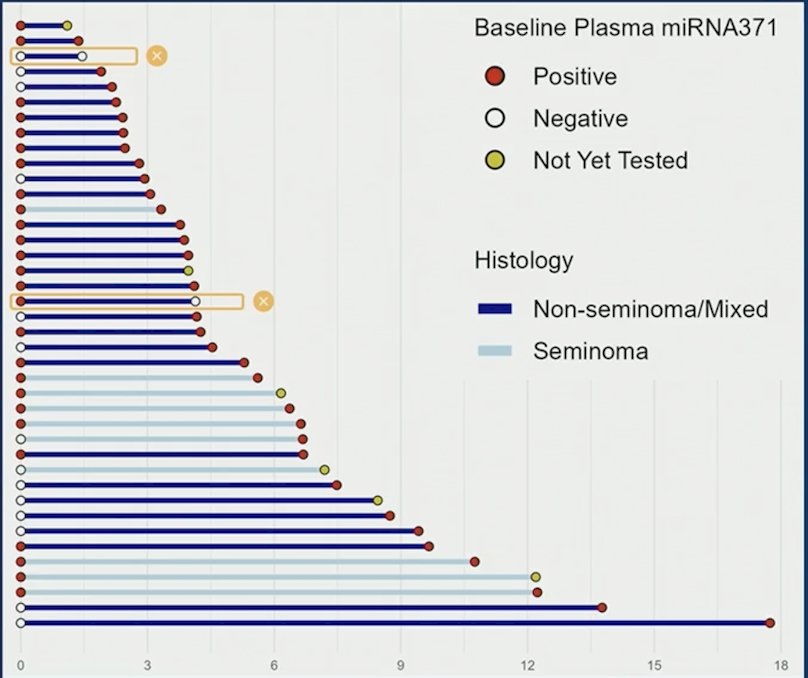
Among non-recurrences (n = 156), there were 16 (10%) baseline plasma miR-371 positive cases with no recurrences:
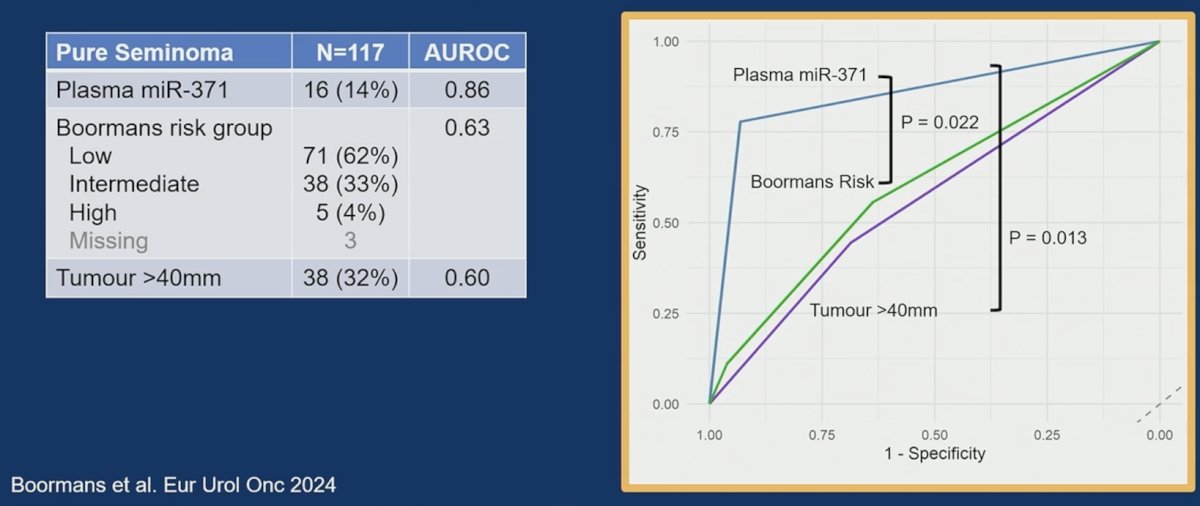
Additionally, miR-371 outperformed existing biomarkers for predicting recurrence. For seminoma, with 10 (8%) recurrences and a median follow-up of 18.4 months, miR-371 had superior discriminatory accuracy for recurrence compared to tumour size >4cm (AUC 0.86 versus 0.57, p = 0.02) and Boorman risk group (AUC 0.86 versus 0.61, p = 0.03):
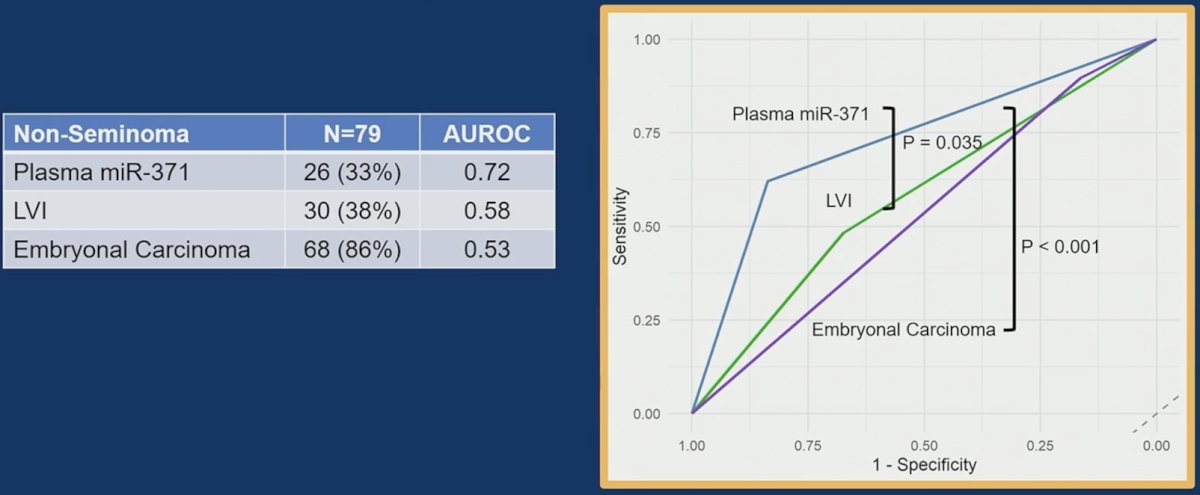
For non-seminoma, with 30 (38%) recurrences and a median follow-up of 20.8 months, miR-371 had superior discriminatory accuracy for recurrence compared to the presence of lymphovascular invasion (AUC 0.73 versus 0.58, p = 0.035), or embryonal carcinoma (AUC 0.73 versus 0.53, p < 0.001):
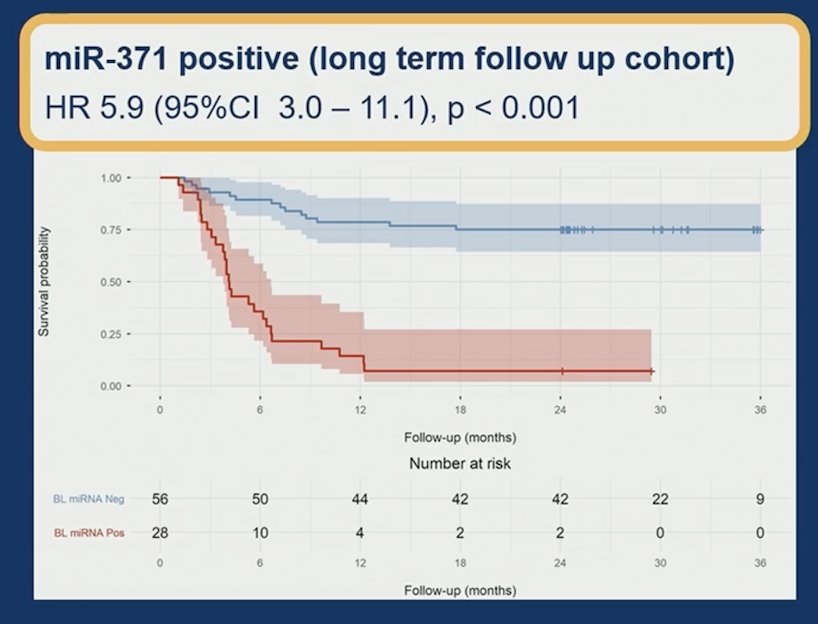
Sensitivity analysis of 84 (43%) patients with recurrence or > 24-month follow-up supported high discriminatory accuracy of miR-371 (AUC 0.80, positive predictive value 93%, negative predictive value 75%) and significant difference in recurrence-free survival (HR 5.9, 95% CI 3.0-11.1; p < 0.001):
Dr. Tran noted several limitations of the CLIMATE study:
- Small cohort (n = 200)
- This is an interim analysis with short follow-up (median 18.9 months)
- Shorter than expected time to recurrence:
- Seminoma: median 6.7 months (versus 14-15 months)
- Non-seminoma: median 4.0 months (versus 5-6 months)
- This assessment focused on baseline sample data
- Await final analysis with complete follow-up (including serial samples)
- Validation through collaboration with AGCT1531 and SWOG1823
Dr. Tran concluded his presentation discussing the initial results from CLIMATE with the following take-home points:
- In stage 1 testicular cancer, post-orchiectomy miR-371 is a marker of minimal residual disease, identifying those at very high risk of recurrence
- Post-orchiectomy miR-371 is superior to existing biomarkers for recurrence
- Post-orchiectomy miR-371 has the potential to optimize patient selection for adjuvant chemotherapy
Presented by: Ben Tran, MD, Peter MacCallum Cancer Centre, Melbourne, Australia
Reference:
- Murray MJ, Halsall DJ, Hook CE, et al. Identification of microRNAs from the miR-371~373 and miR-302 clusters as potential serum biomarkers of malignant germ cell tumors. Am J Clin Pathol. 2011 Jan;135(1):119-125