

(UroToday.com) The 2026 GU ASCO annual meeting featured a kidney cancer session and a presentation by Dr. Taigo Kato discussing preliminary results from the MONSTAR-SCREEN-3 study assessing ultra-sensitive whole-genome sequencing-based molecular residual disease detection in resectable renal carcinoma cells (RCC).
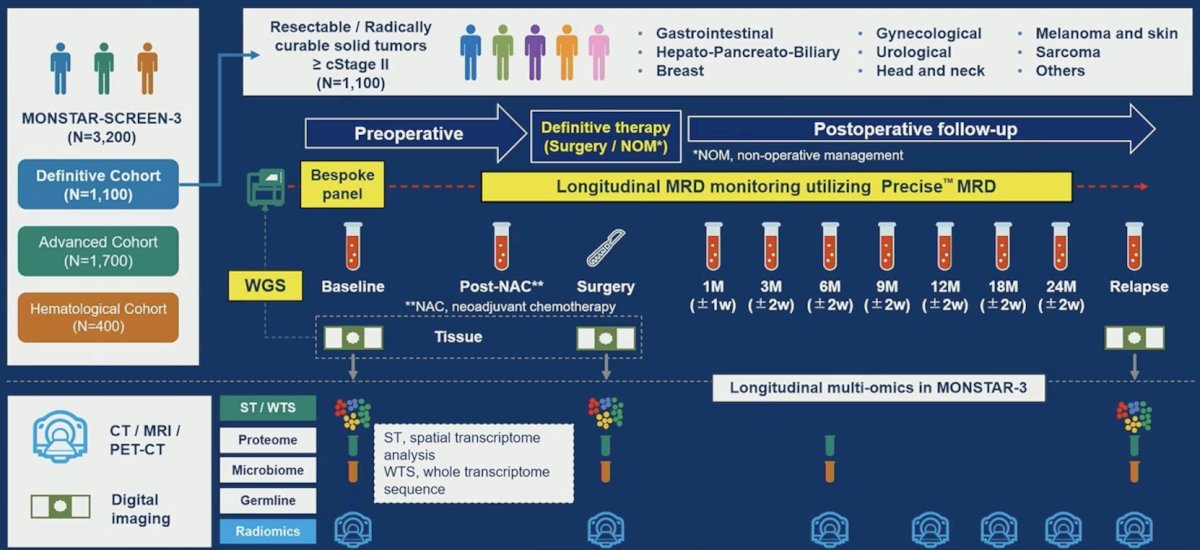
ctDNA-based molecular residual disease detection has shown promise across various malignancies, yet limited data exist for RCC, a traditionally low-shedding tumor type. Whole-exome sequencing-based approaches often lack sufficient sensitivity for effective molecular residual disease surveillance in RCC. Previously, the CIRCULATE-Japan GALAXY study demonstrated that ctDNA-based minimal residual disease detection significantly correlates with recurrence risk and predicts the benefit of adjuvant chemotherapy with resectable colorectal cancer. The prospective, multicenter MONSTAR-SCREEN-3 study evaluates an ultra-sensitive whole genome sequencing-based molecular residual disease assay in patients with resectable solid tumors undergoing curative-intent therapy. At ASCO GU 2026, Dr. Kato reported preliminary results from patients with resectable RCC enrolled in the definitive cohort (target n = 1,100). The study schema for MONSTAR-SCREEN-3 is as follows:
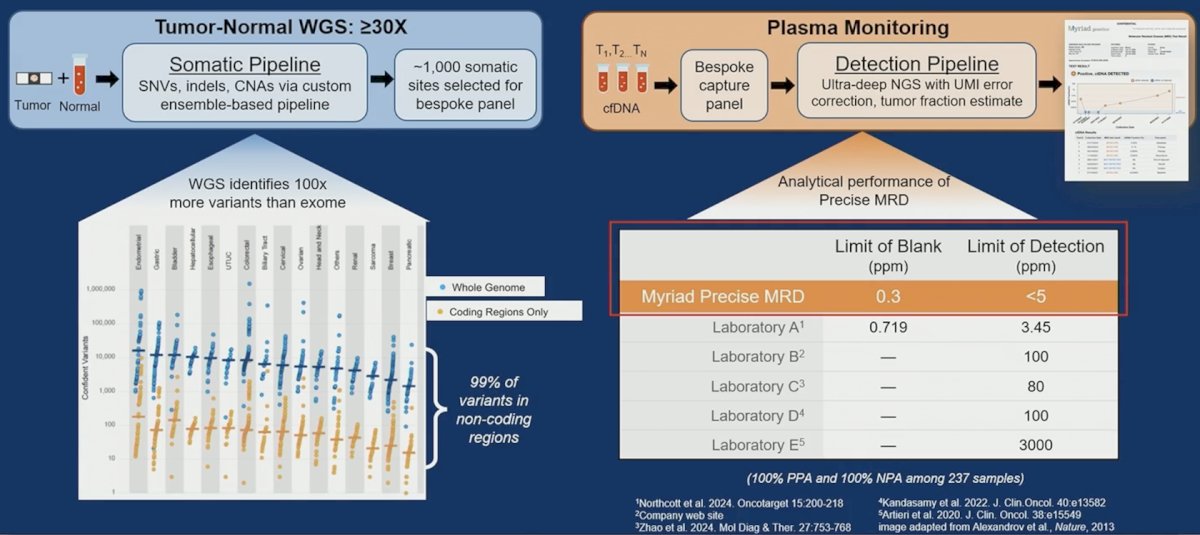
Personalized ctDNA panels were generated using a whole-genome sequencing-based tumor-informed platform (Myriad Genetics), incorporating up to 1,000 tumor-specific variants identified through whole-genome sequencing of matched tumor tissue. Serial plasma samples were collected at baseline, 1 month post-surgery, quarterly during the first year, and biannually thereafter for up to two years:
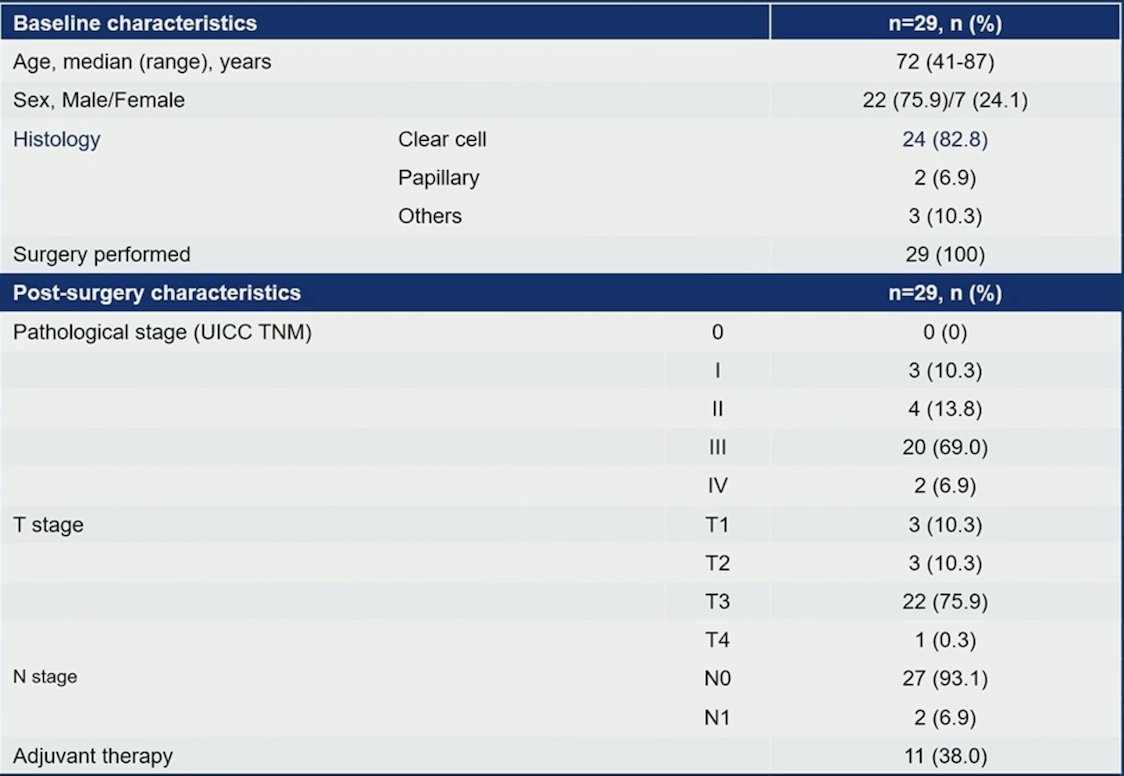
As of September 2025, 29 patients with resectable RCC were enrolled, with molecular residual disease results being available for 54 samples. The median age was 72 years (range: 41-87), with male predominance (75.9%). Clinical staging distribution included Stage I (10.3%), Stage II (13.8%), Stage III (69.0%), and Stage IV (6.9%):
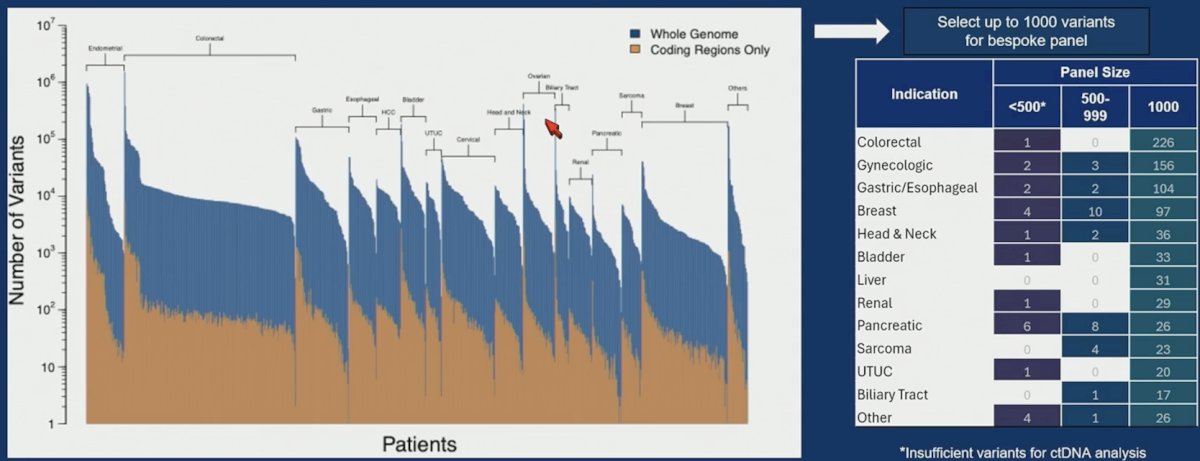
All patients underwent upfront radical nephrectomy. Personalized panel creation succeeded in 100% of patients, identifying a median of 4,054 highly confident tumor-specific alterations per patient (range: 902-7712), yielding bespoke panels containing 518-1,000 alterations.
The assay demonstrated 100% baseline ctDNA detection, with 44.8% (13/29) detected at ultra-sensitive levels (tumor fraction <100 parts per million [ppm]; minimum detection: 12.0 ppm):
![The assay demonstrated 100% baseline ctDNA detection, with 44.8% (13/29) detected at ultra-sensitive levels (tumor fraction <100 parts per million [ppm]; minimum detection: 12.0 ppm):](/images/com-doc-importer/249-asco-gu-2026/asco-gu-2026-ultra-sensitive-whole-genome-sequencing-based-molecular-residual-disease-detection-in-resectable-rcc-preliminary-results-from-the-monstar-screen-3-study/image-4.jpg)
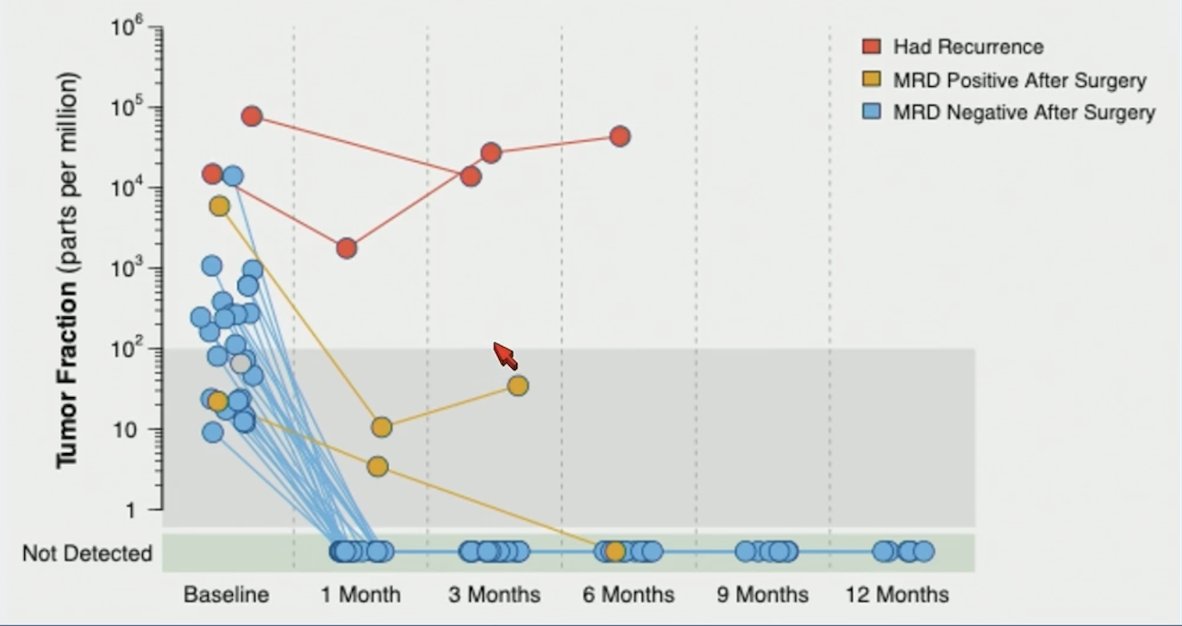
This study found that ctDNA stratifies patients at risk of recurrence: there were 25 patients that became minimal residual disease negative after surgery and have remained negative, and 4 patients who were minimal residual disease positive after surgery, with 2 recurring locally:
Dr. Kato concluded his presentation discussing preliminary results from the MONSTAR-SCREEN-3 study with the following take-home points:
- MONSTAR-SCREEN-3 successfully implemented tumor informed whole genome sequencing-based ctDNA assay for molecular residual disease detection across a diverse spectrum of tumor types, including renal cell carcinoma
- This study demonstrated robust detection capabilities with 100% baseline sensitivity and 11.1% molecular residual disease positivity at 1-month post-surgery, with 50.0% of positive cases detected at ultra-sensitive levels
- Patients with recurrence had persistently ctDNA-positive after the radical surgery. The investigators will continue carefully following patients with ctDNA-positive at ultra-sensitive levels
- ctDNA levels were associated with stage, size, and nodal status
- Additional validation with extended follow-up and an expanded cohort is necessary to confirm these promising initial findings
Presented by: Taigo Kato, MD, PhD, The University of Osaka Graduate School of Medicine, Osaka, Japan
Related content: Whole-Genome Sequencing-Based MRD Detection Under Study in Resectable Renal Cell Carcinoma - Taigo Kato