

(UroToday.com) The 2026 GU ASCO annual meeting featured a kidney cancer session and a presentation by Dr. Robert J. Motzer discussing results from the open-label phase 3 LITESPARK-011 study assessing belzutifan + lenvatinib versus cabozantinib for advanced RCC after anti-PD-(L)1 therapy. Currently, there is no globally accepted standard of care for advanced RCC after immunotherapy. VEGFR-TKIs are often leveraged in this setting, but were primarily tested in phase 3 studies prior to PD-(L)1 inhibitors becoming standard of care in earlier lines of therapy. The phase 3 LITESPARK-011 study investigates belzutifan + lenvatinib versus cabozantinib in patients with advanced RCC progressing after anti–PD-(L)1 therapy in the first line, second line, or adjuvant setting.
Eligible patients were ≥18 years old with advanced clear cell RCC that progressed on or after first line or second line anti–PD-(L)1 therapy or ≤6 months of last dose of adjuvant anti–PD-(L)1 therapy. Patients were randomized 1:1 to belzutifan 120 mg + lenvatinib 20 mg QD versus cabozantinib 60 mg QD:
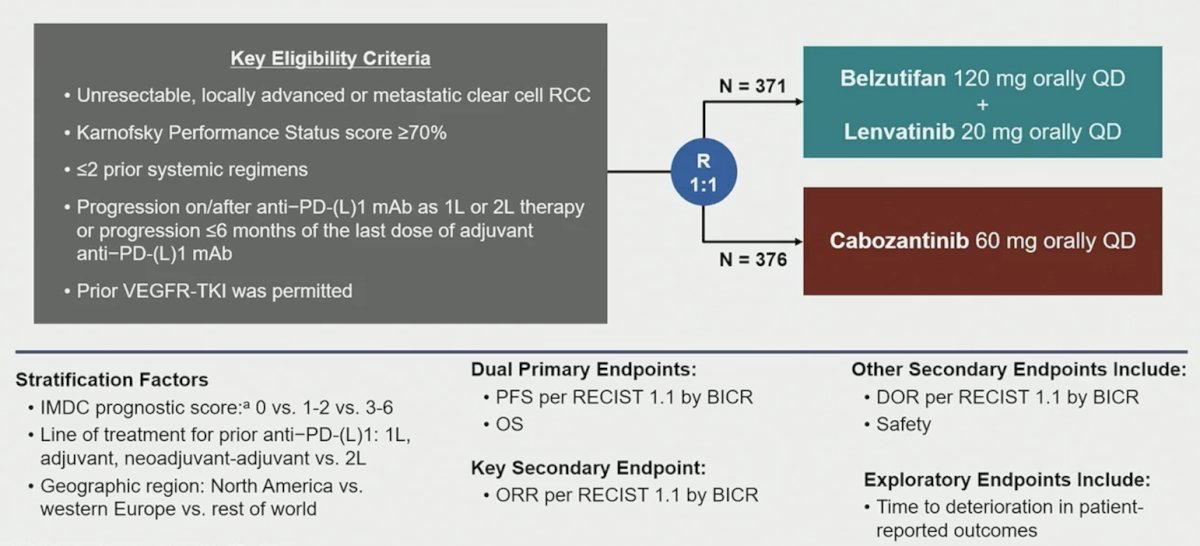
The dual primary endpoints were progression free survival by blinded independent central review per RECIST 1.1 and overall survival. Secondary endpoints included objective response rate (key secondary endpoint) and duration of response by blinded independent central review per RECIST 1.1, and safety. Results are reported for the first (data cutoff Jun 26, 2024) and second (data cutoff Apr 9, 2025) interim analysis.
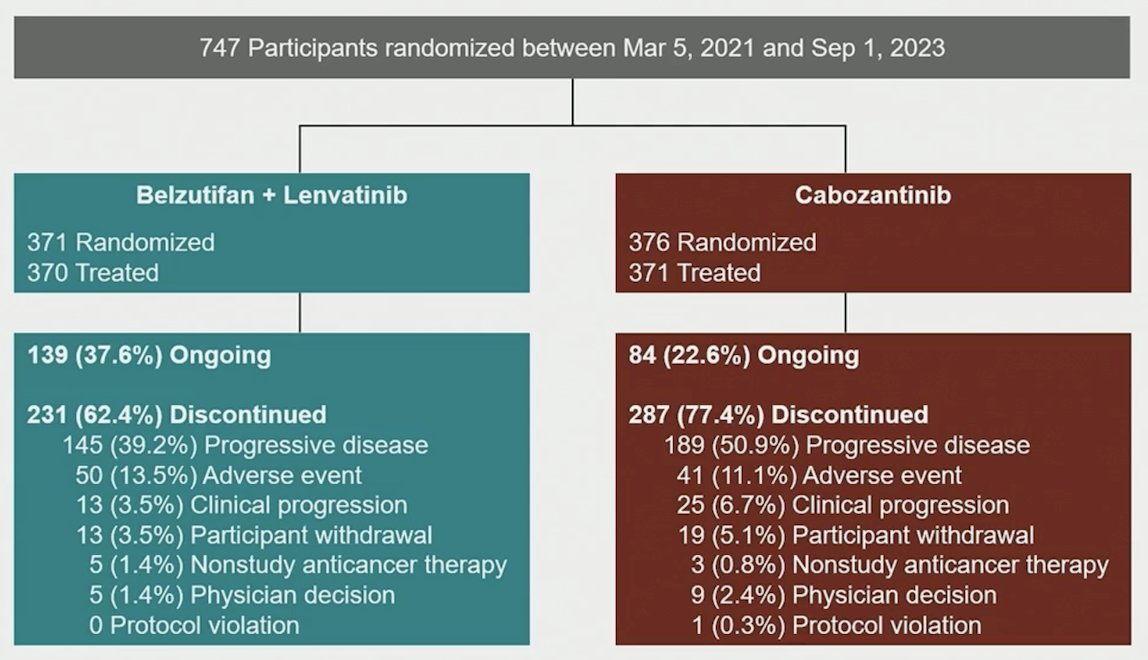
There were 747 patients randomized to belzutifan + lenvatinib (n = 371) or cabozantinib (n = 376), with a median follow-up of 19.6 months (range: 9.9–39.8) at the first interim analysis, and 29.0 months (range: 19.3–49.2) at the second interim analysis. The patient disposition is noted in the following figure:
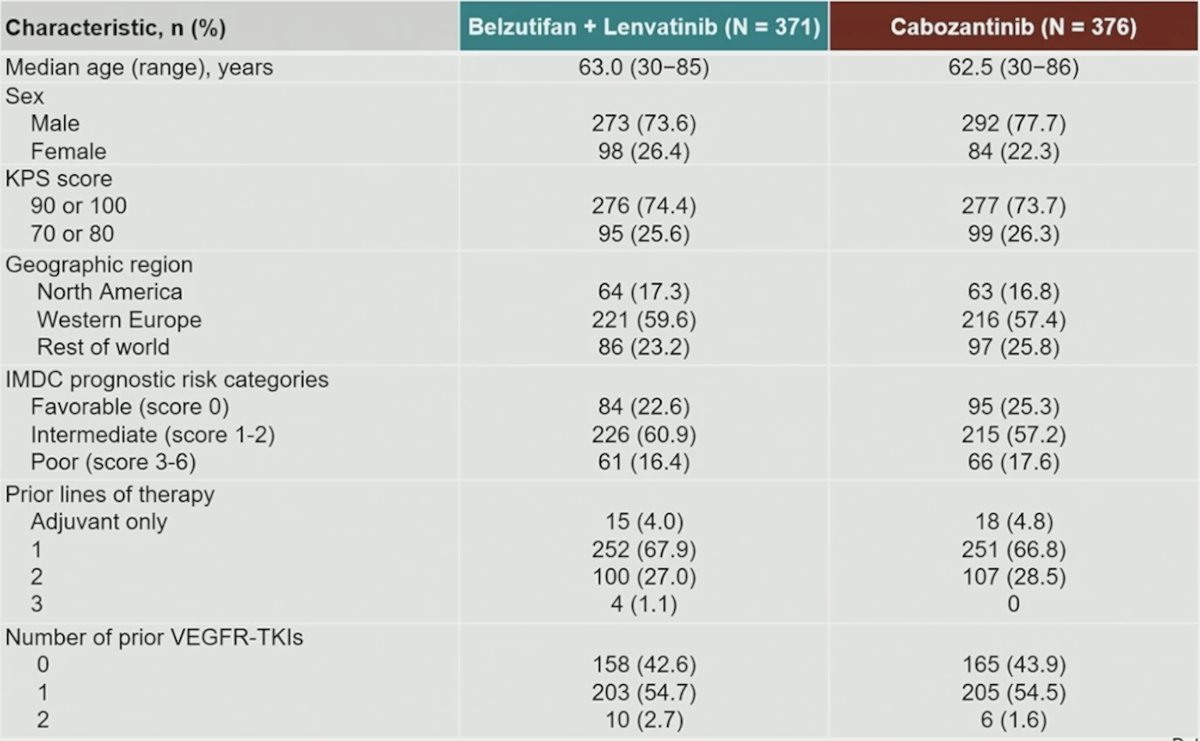
Approximately 2/3 of patients had previously received one prior line of therapy, with ~27% having two prior lines of therapy. The baseline characteristics were otherwise well balanced between the two groups:
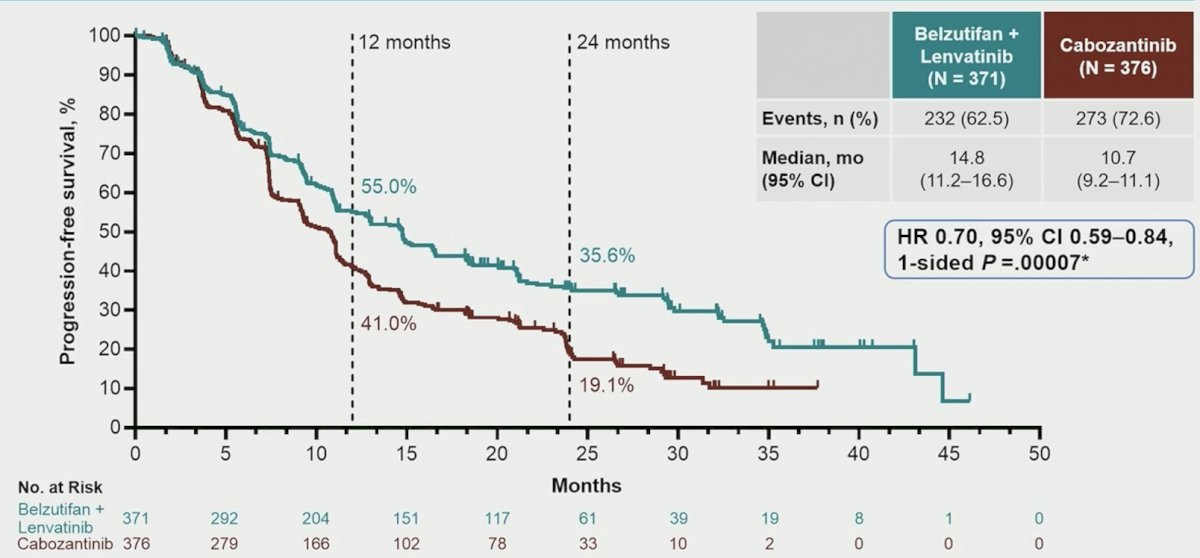
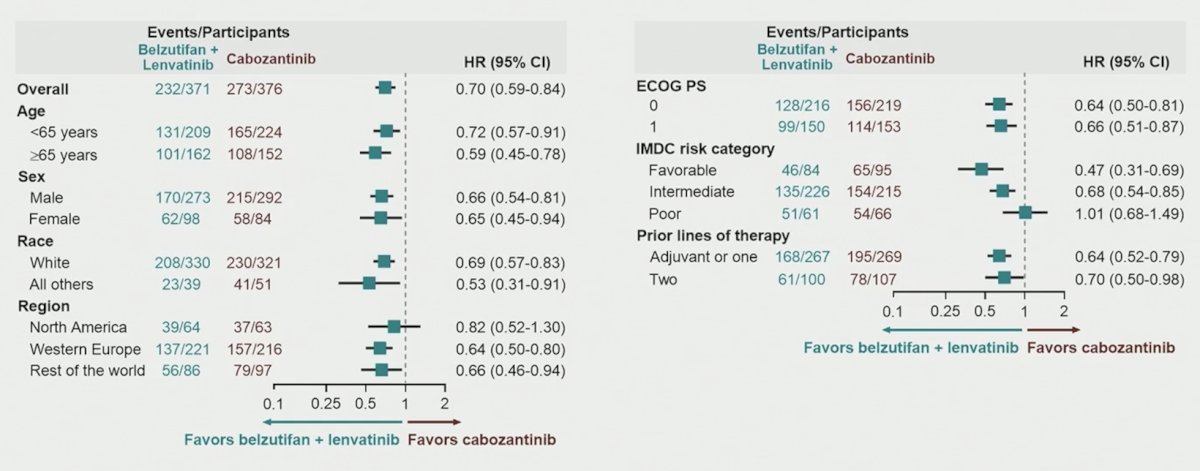
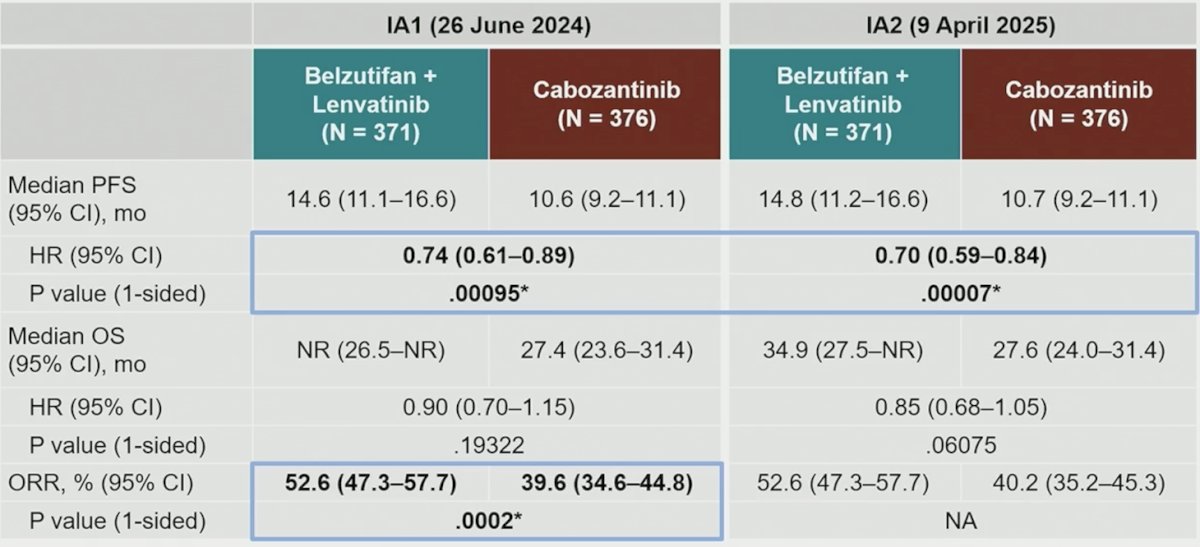
Belzutifan + lenvatinib had a median progression free survival of 14.8 months versus 10.7 months for cabozantinib, which was statistically significant (HR 0.70, 95% CI 0.59-0.84):
The progression free survival benefit for belzutifan + lenvatinib was notable in key subgroups:
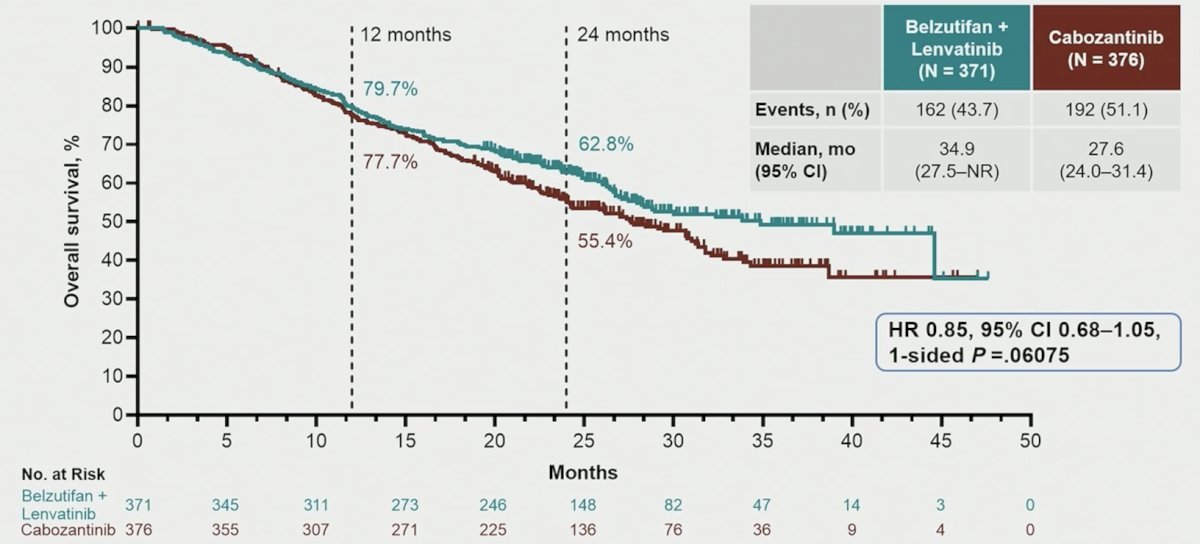
At the time of the second interim analysis, the median overall survival was 34.9 months for belzutifan + lenvatinib versus 27.6 months in the cabozantinib arm (HR 0.85, 95% CI 0.68-1.05):
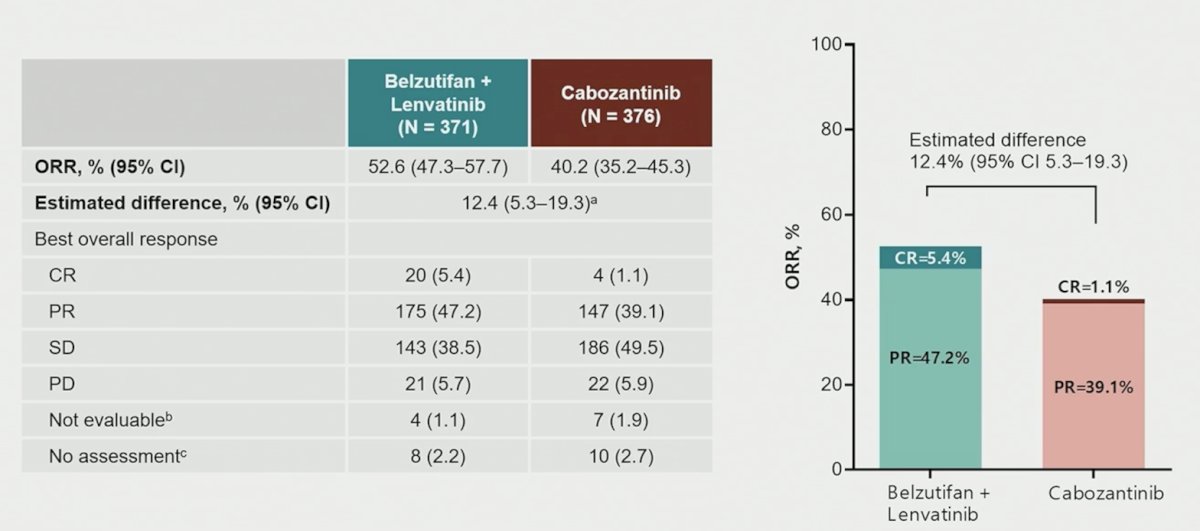
Additional follow-up is ongoing for overall survival. The objective response rate for belzutifan + lenvatinib was 52.6% (including 5.4% complete response) versus 40.2% (including 1.1% complete response) for cabozantinib:
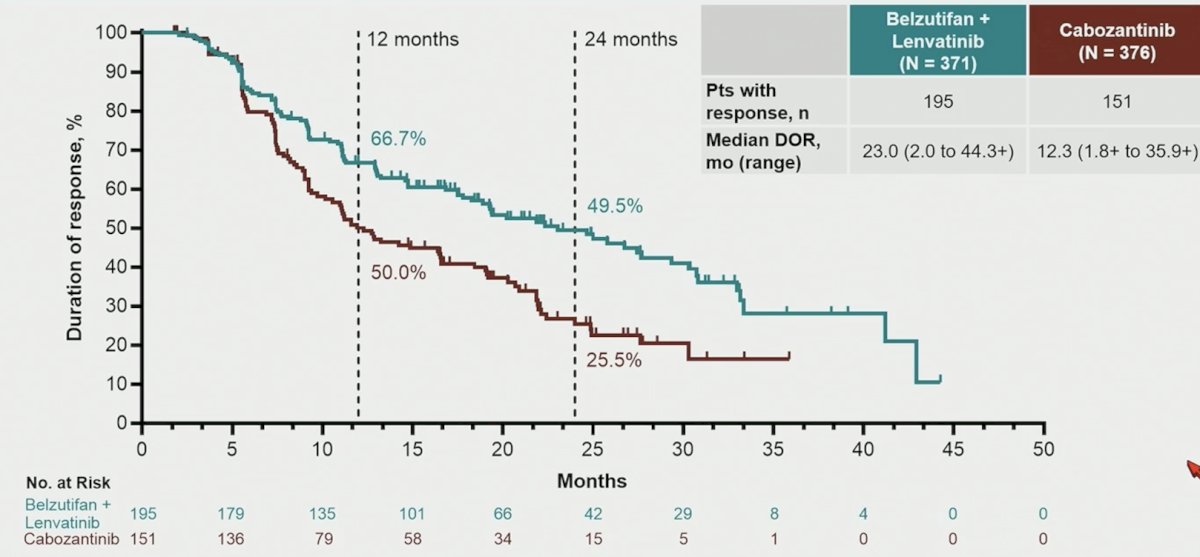
The median duration of response was 23.0 months (range: 2.0–44.3+) with belzutifan + lenvatinib versus 12.3 months (range: 1.8+–35.9+) with cabozantinib at second interim analysis:
A summary of the efficacy results for the first and second interim analysis is highlighted in the following table:
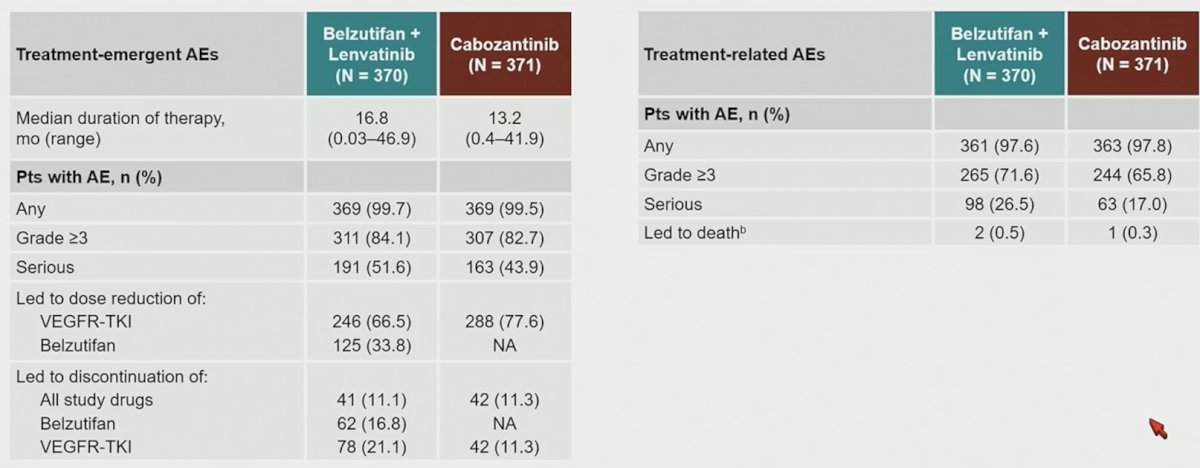
Grade ≥3 treatment emergent adverse events occurred in 84.1% of patients with belzutifan + lenvatinib and 82.7% with cabozantinib, and treatment emergent adverse events led to death in 5.4% of patients (2 were treatment-related: 1 each thrombotic microangiopathy and pneumonitis) and 3.2% of patients (1 was treatment-related: hemoptysis), respectively.
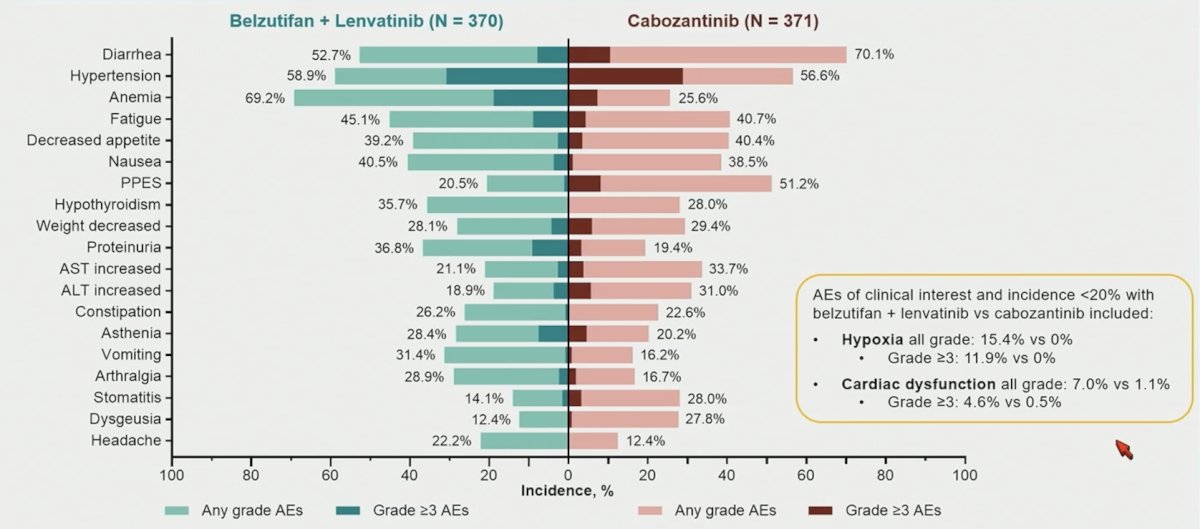
The most common treatment emergent adverse event in the belzutifan + lenvatinib arm was anemia (69.2%) and was diarrhea (70.1%) in the cabozantinib arm:
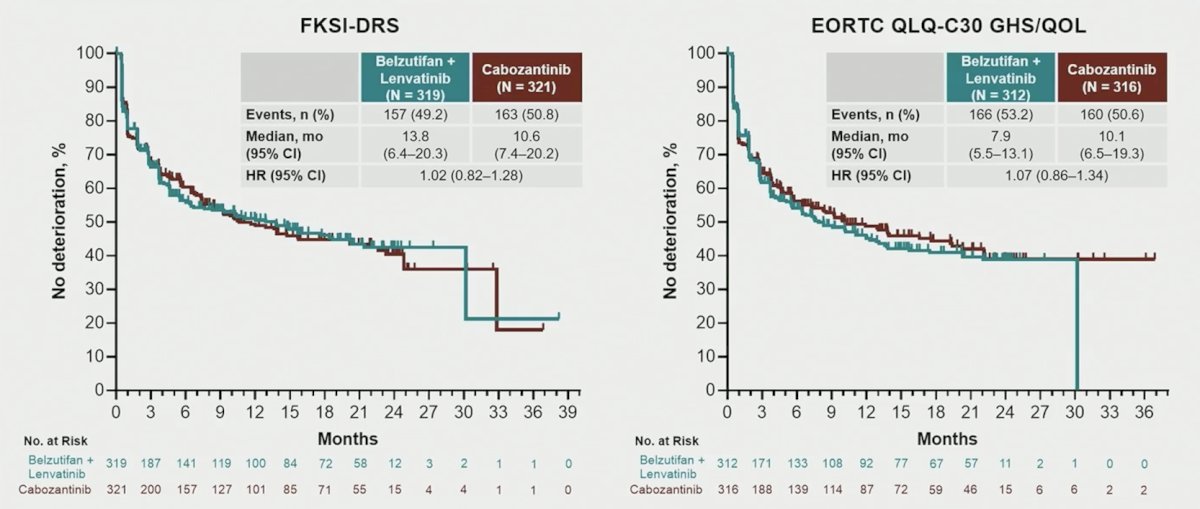
As an exploratory analysis, there was no difference in time to deterioration in patient reported outcomes as captured by FKSI-DRS (HR 1.02, 95% CI 0.82-1.28) and EORTC QLQ-C30 GHS/QOL (HR 1.07, 95% CI 0.86-1.34):
Dr. Motzer concluded his presentation discussing results from the open-label phase 3 LITESPARK-011 study assessing belzutifan + lenvatinib versus cabozantinib for advanced RCC after anti-PD-(L)1 therapy with the following take-home points:
- Belzutifan + lenvatinib demonstrated superior progression free survival and objective response rate versus cabozantinib in participants with advanced clear cell RCC following anti–PD-(L)1 therapy
- Overall survival favored belzutifan + lenvatinib, but did not reach statistical significance, and will be tested further at final analysis
- The safety profile of belzutifan + lenvatinib was generally consistent with the profiles of the individual drugs
- Time to worsening in disease-specific symptoms and quality of life were similar between belzutifan + lenvatinib versus cabozantinib
- LITESPARK-011 is the first phase 3 study of a HIF-2α inhibitor plus a VEGFR-TKI, and the first phase 3 study in RCC in the post–PD-(L)1 setting to show improved outcomes versus a contemporary VEGFR-TKI
- Belzutifan + lenvatinib addresses an unmet clinical need and represents a potential new treatment option for patients with RCC that progressed after anti–PD-(L)1 therapy
Presented by: Robert J. Motzer, MD, Memorial Sloan Kettering Cancer Center, New York, NY
Written by: Zachary Klaassen, MD, MSc – Urologic Oncologist, Associate Professor of Urology, Georgia Cancer Center, Wellstar MCG Health, @zklaassen_md on Twitter during the 2026 American Society of Clinical Oncology Genitourinary (ASCO GU) cancers symposium held in San Francisco, CA, between February 26th and 28th, 2026.