

(UroToday.com) The 2026 GU ASCO annual meeting featured a kidney cancer session and a presentation by Dr. Axel S. Merseburger discussing the final analysis of the prospective AVION study assessing real-world effectiveness and safety of first line avelumab + axitinib in patients with advanced RCC. In the JAVELIN Renal 101 phase 3 trial, first line avelumab + axitinib significantly prolonged progression free survival and increased the objective response rate versus sunitinib in patients with advanced RCC, with an acceptable safety profile.1 At the final analysis, the 12- and 24-month overall survival rates for avelumab + axitinib were 85.7% and 68.8%, respectively.2 The AVION study evaluated patients with advanced RCC receiving first line avelumab + axitinib in routine clinical practice in various European countries. Results from the primary analysis showed the real-world effectiveness and acceptable safety of avelumab + axitinib in a heterogeneous population, and at ASCO GU 2026, Dr. Merseburger and colleagues reported the final analysis.
AVION (NCT04941768) was a prospective non-interventional study of patients with advanced RCC treated with first line avelumab + axitinib in Germany, Greece, Belgium, or Russia. Patients were observed for 24 months:
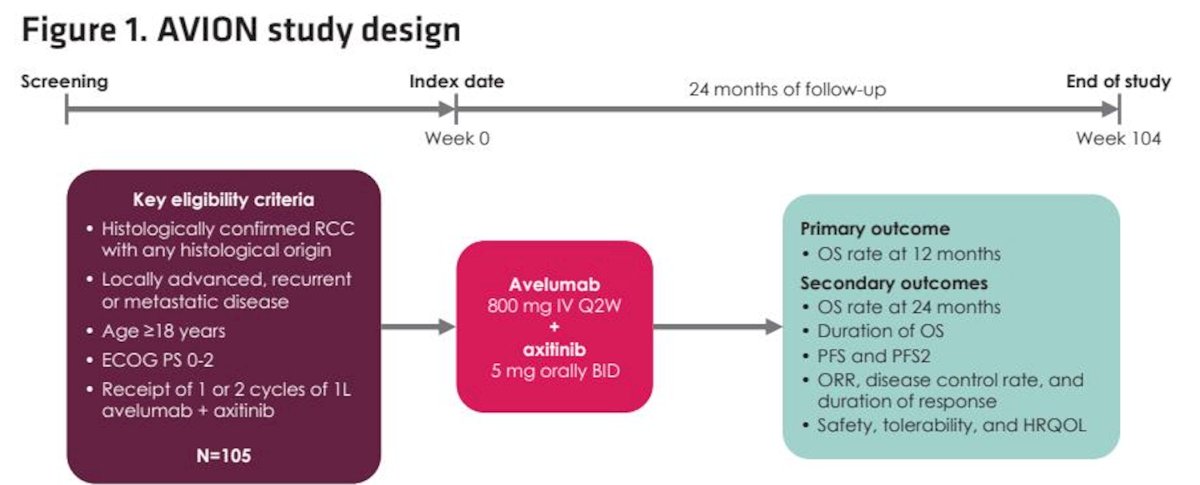
The primary objective was overall survival rate at 12 months, and secondary objectives included overall survival rate at 24 months, median overall survival and progression free survival, objective response rate, duration of response, safety, and health related quality of life (NCCN/NFKSI-19).
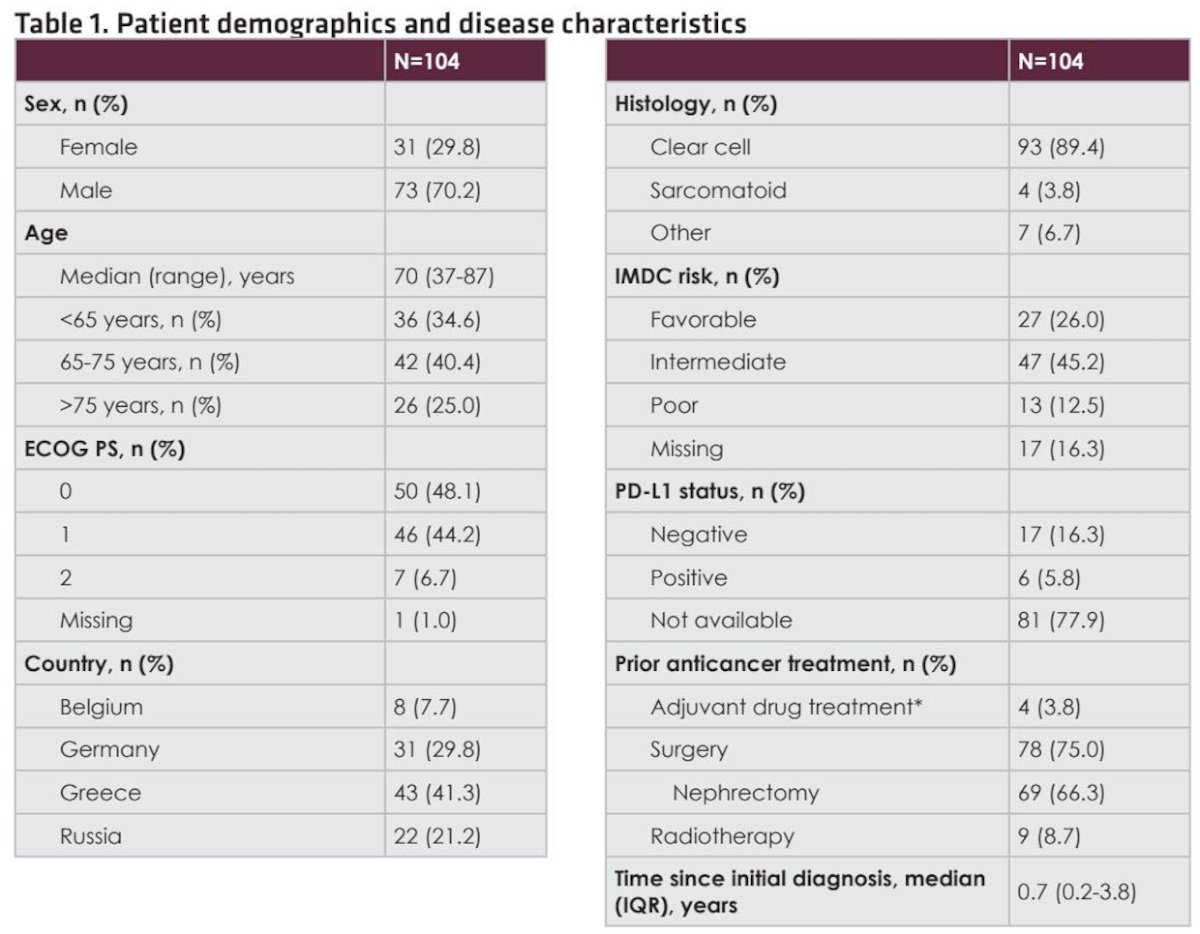
By the data cutoff (July 23, 2025), 104 patients were included, with a median age of 70 years (range: 37-87) and 70.2% participants were male. IMDC risk group was favorable, intermediate, poor, or not reported in 26.0%, 45.2%, 12.5%, and 16.3%, respectively. Tumor histology was clear cell, sarcomatoid, and other in 89.4%, 3.8%, and 6.7%, respectively:
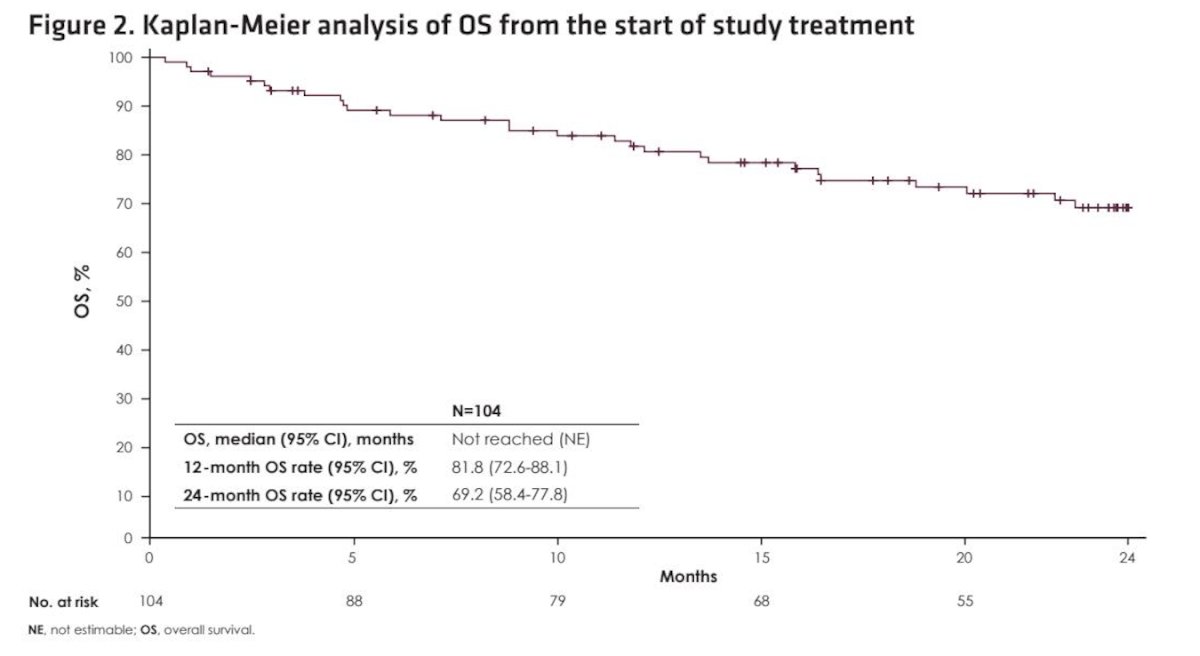
The median duration of avelumab + axitinib treatment was 9.8 and 8.8 months, respectively. In AVION, the median overall survival was not reached (95% CI, not estimable [NE]-NE), and 12- and 24-month overall survival rates were 81.8% (95% CI 72.6%-88.1%) and 69.2% (95% CI 58.4%-77.8%), respectively:
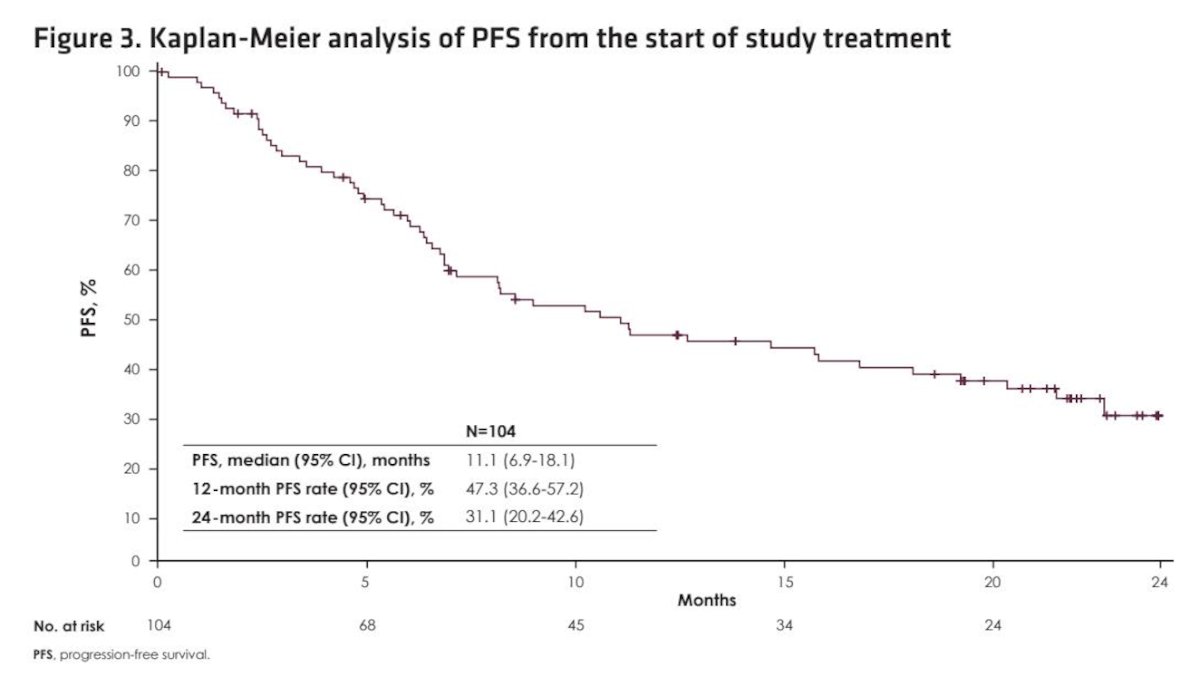
The median progression free survival was 11.1 months (95% CI, 6.9-18.1), and 12- and 24-month progression free survival rates were 47.3% (95% CI 36.6%-57.2%) and 31.1% (95% CI 20.2%-42.6%), respectively:
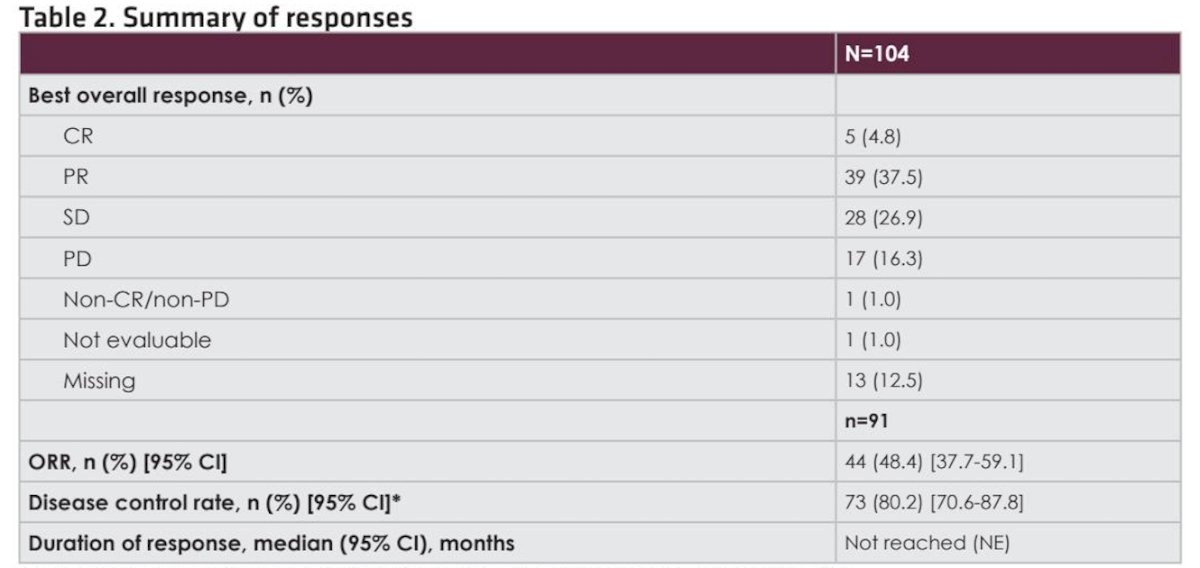
In patients evaluable for response (n = 91), the objective response rate was 48.4% (95% CI, 37.7-59.1), disease control rate was 80.2% (95% CI, 70.6-87.8), and the median duration of response was not reached (95% CI, NE; range, 0-23.9 months):
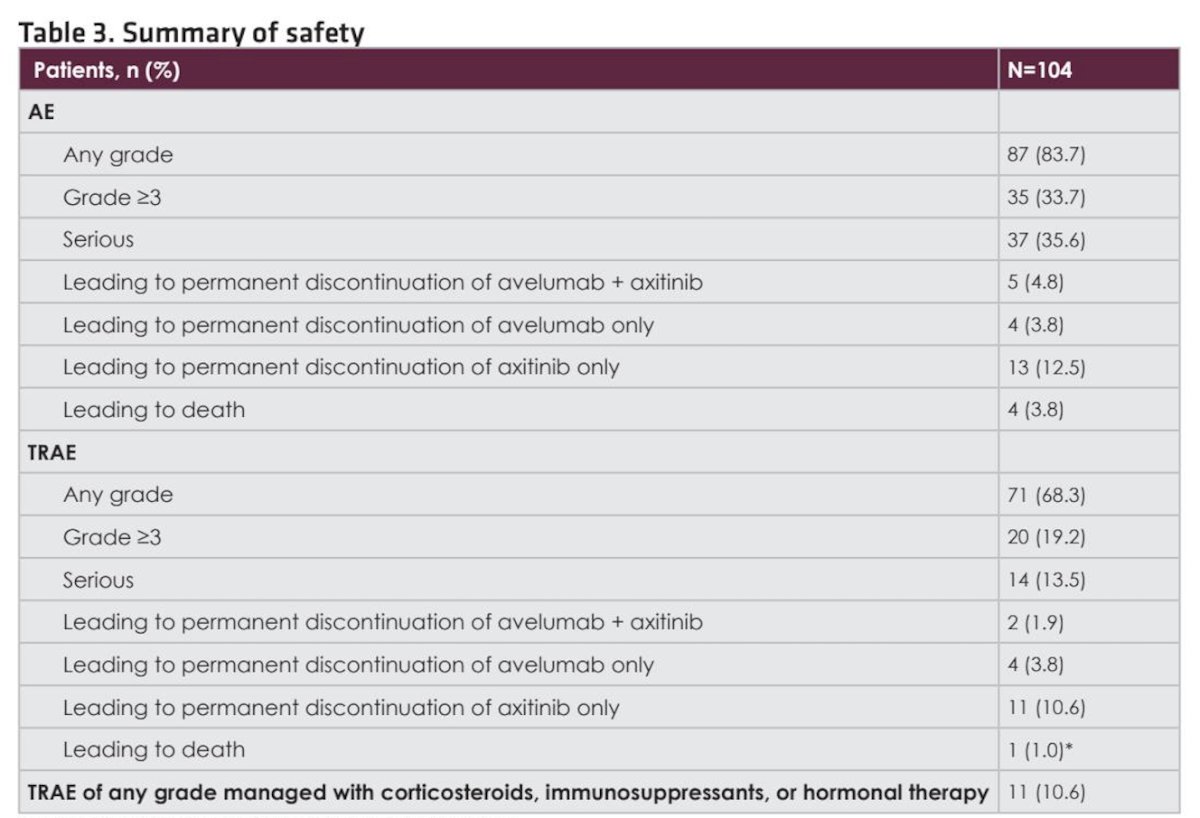
Treatment related adverse events of any grade occurred in 68.3% and were grade ≥3 in 19.2% and serious in 13.5%. Treatment related adverse events led to permanent discontinuation of avelumab only in 3.8%, axitinib only in 10.6%, and avelumab + axitinib in 1.9% of patients:
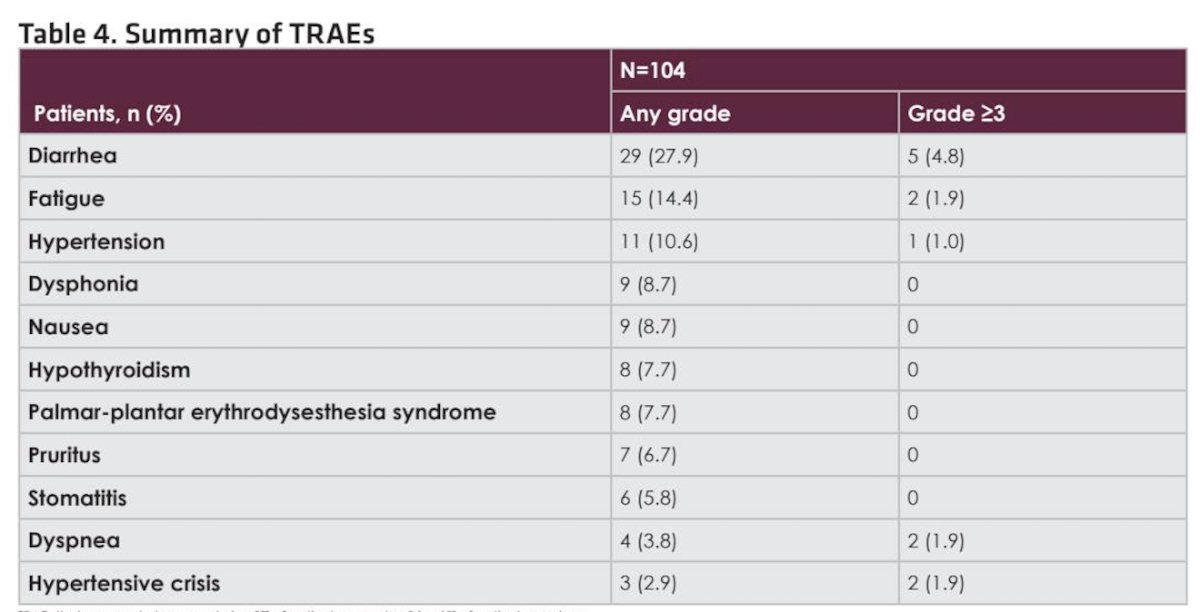
The most common treatment related adverse events of any grade were diarrhea (27.9%), fatigue (14.4%), hypertension (10.6%), dysphonia (8.7%), and nausea (8.6%); the most common grade ≥3 treatment related adverse event was diarrhea (4.8%):
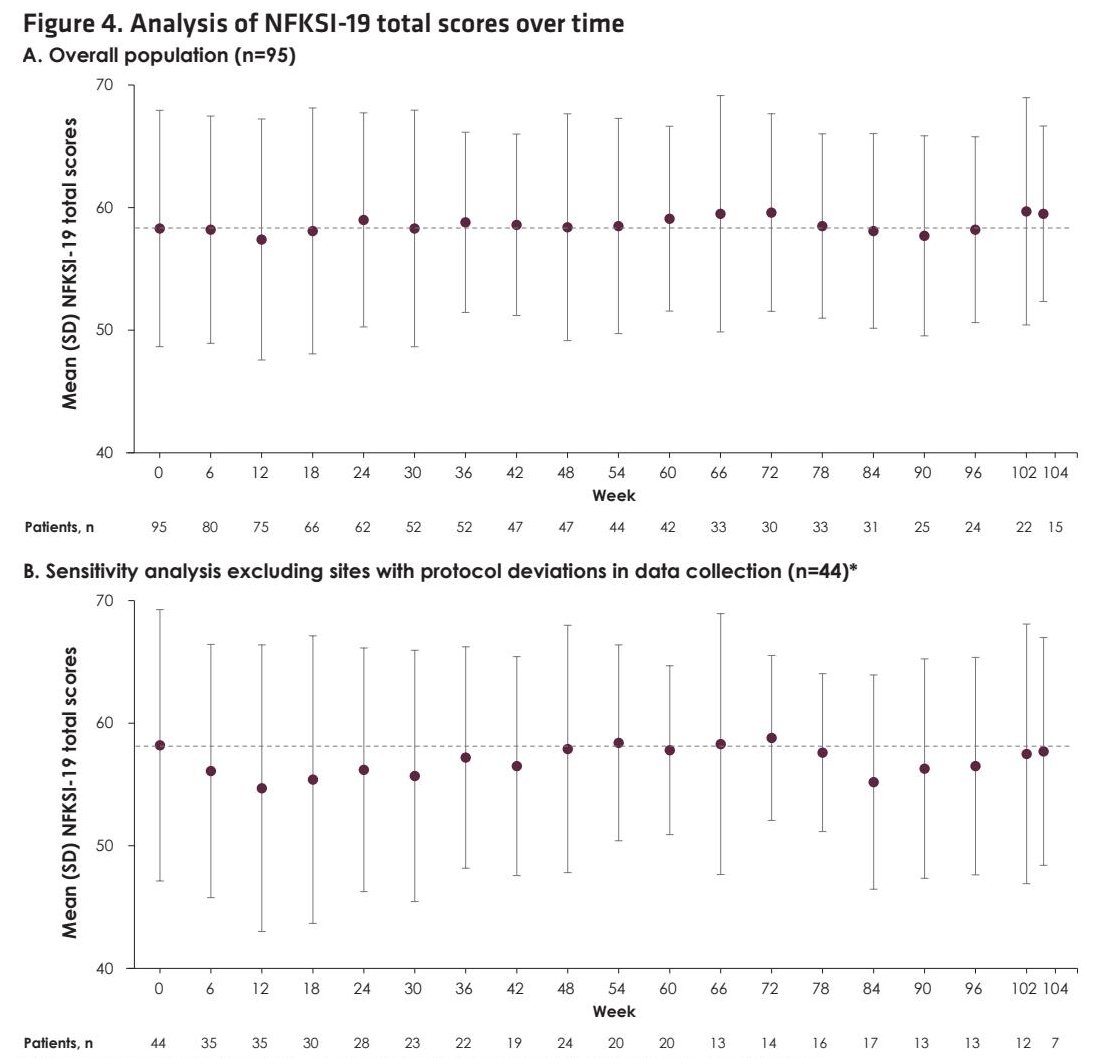
Health related quality of life scores were generally stable during treatment, including total score and subscales:
Dr. Merseburger concluded his presentation discussing the final analysis of the prospective AVION study with the following take-home points:
- The final analysis of AVION, a prospective non-interventional study performed in several countries (Belgium, Germany, Greece, and Russia), demonstrates the real-world effectiveness and acceptable safety profile of first line avelumab + axitinib treatment in patients with advanced RCC
- Median overall survival was not reached, and the 24-month overall survival rate was 69.2%
- Median progression free survival was 11.1 months, and the objective response rate was 48.4%
- Grade ≥3 treatment related adverse events occurred in 19.2% of patients, and led to permanent discontinuation of avelumab + axitinib in 2 patients (1.9%)
- Health related quality of life scores were generally stable across the study period
- Results are consistent with data from the JAVELIN Renal 101 phase 3 trial and other real-world studies of avelumab + axitinib in advanced RCC
- Overall, these findings provide further support for administering first line avelumab + axitinib treatment in patients with advanced RCC in routine clinical practice
Presented by: Axel S. Merseburger, MD, PhD, University Hospital Schleswig-Holstein, Luebeck, Germany
Written by: Zachary Klaassen, MD, MSc – Urologic Oncologist, Associate Professor of Urology, Georgia Cancer Center, Wellstar MCG Health, @zklaassen_md on Twitter during the 2026 Genitourinary (GU) American Society of Clinical Oncology (ASCO) Annual Meeting, San Francisco, CA, Thurs, Feb 26 – Sat, Feb 28, 2026.
References:
- Motzer RJ, Penkov K, Haanen J, et al. Avelumab plus axitinib versus sunitinib for Advanced Renal-Cell Carcinoma. N Engl J Med 2019;380(12):1103-1115.
- Choueiri TK, Motzer RJ, Rini BI, et al. Updated efficacy results from the JAVELIN Renal 101 trial: first-line avelumab plus axitinib versus sunitinib in patients with advanced renal cell carcinoma. Ann Oncol 2020 Apr 25;S0923-7534.