

(UroToday.com) The 2026 GU ASCO annual meeting featured a urothelial carcinoma trials in progress session and a presentation by Dr. Elena Sevillano discussing SASN-SPARING, a phase 2 trial of sasanlimab maintenance as a bladder sparing option after neoadjuvant chemotherapy in patients with muscle-invasive bladder cancer. Muscle-invasive bladder cancer is an aggressive malignancy with a high risk of progression, representing a major therapeutic challenge.
Adaptive bladder-sparing strategies, which rely on restaging to guide treatment decisions, are being adopted for muscle-invasive bladder cancer management, demonstrating effective disease control while avoiding radical cystectomy-associated morbidities. This study aims to evaluate a bladder-sparing approach using sasanlimab, a PD-1 inhibitor, as maintenance treatment in patients who achieve a clinical response following neoadjuvant cisplatin-based chemotherapy.
The SASAN-SPARING (HM-8788561) trial is a single-arm, multicenter, phase 2 clinical study that evaluates the efficacy and safety of sasanlimab as maintenance treatment following neoadjuvant cisplatin-based chemotherapy in patients (aged ≥18 years) with treatment-naïve, localized muscle-invasive bladder cancer who are candidates to receive neoadjuvant chemotherapy followed by radical cystectomy. The study follows an adaptive treatment strategy, where patients receive four cycles of neoadjuvant chemotherapy consisting of cisplatin (70 mg/m2, day 1) and gemcitabine (1,000 mg/m2, days 1 and 8) every three weeks. Following chemotherapy, patients are restaged. Those achieving a clinical response (defined as cT0/Ta/T1/Tis, normal cytology, and negative imaging) are eligible for bladder preservation and receive sasanlimab (300 mg) subcutaneously every 4 weeks for up to 12 cycles, whereas non-responders (≥cT2) undergo radical cystectomy. During maintenance, patients are restaged every 12 weeks. In case of progression or loss of response, radical cystectomy may be considered at the physician’s discretion:

The primary endpoint is the bladder-intact overall survival at 12 months after the first dose of sasanlimab. Secondary endpoints include clinical response rate, disease-free survival, overall survival, safety, and patient-reported outcomes. The study integrates a comprehensive biomarker program, including whole-genome sequencing of tumor tissue and plasma, the use of ctDNA in plasma and urine for tumor assessment and molecular dynamics, and gut microbiome profiling. Correlative analyses aim to refine patient selection and generate hypotheses for future adaptive treatment strategies:
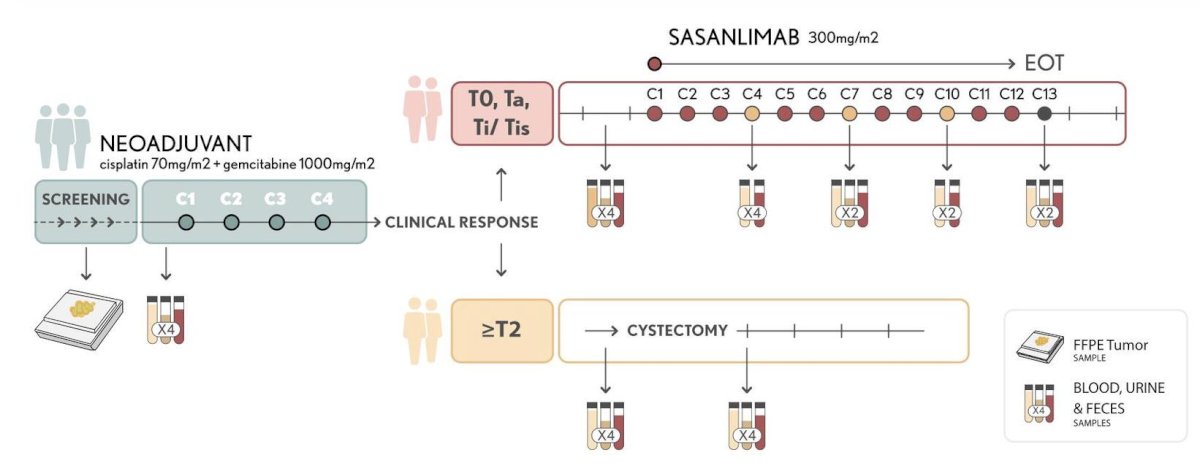
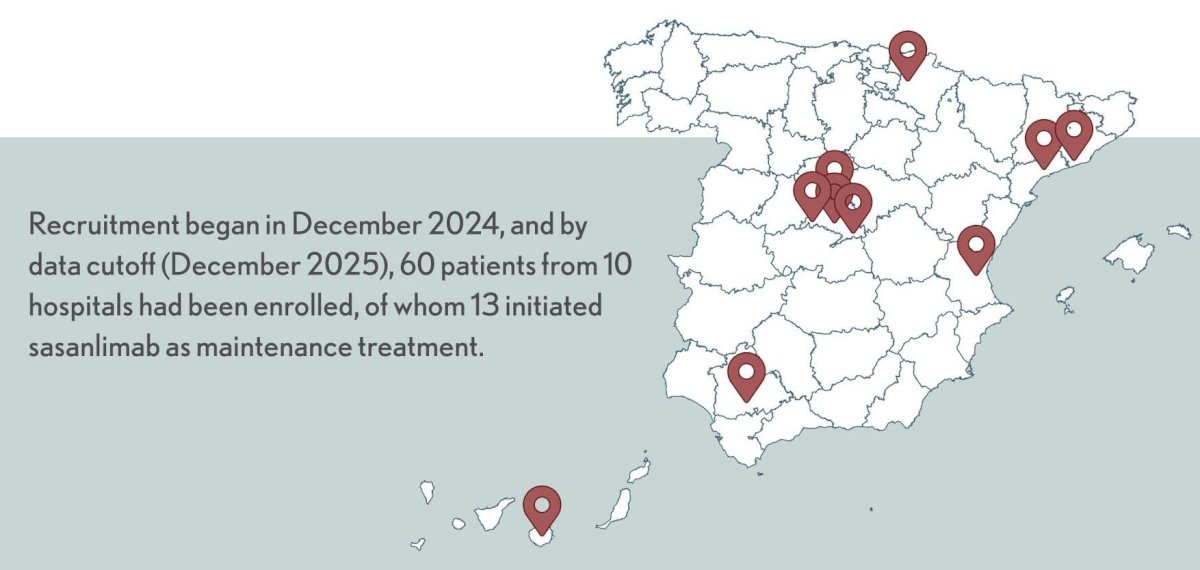
A total of 70 patients are planned for enrollment, assuming a 12-month bladder intact overall survival of 81% (H0) and an increase with sasanlimab up to 93% (H1) (one-arm survival test; α = 0.05, β= 0.8). Recruitment started in December 2024, and at the data cutoff (December 2025), 60 patients had been enrolled, of whom 13 initiated sasanlimab maintenance therapy:
Presented by: Elena Sevillano, Centro Integral Oncológico Clara Campal, Hospital Universitario Sanchinarro, HM Hospitales, Madrid, Spain
Written by: Zachary Klaassen, MD, MSc – Urologic Oncologist, Associate Professor of Urology, Georgia Cancer Center, Wellstar MCG Health, @zklaassen_md on Twitter during the 2026 Genitourinary (GU) American Society of Clinical Oncology (ASCO) Annual Meeting, San Francisco, CA, Thurs, Feb 26 – Sat, Feb 28, 2026.