

(UroToday.com) The 2026 GU ASCO annual meeting featured a urothelial carcinoma trials in progress session and a presentation by Dr. Thomas Powles discussing IZABRIGHT-Bladder01, a randomized, open-label, phase 2/3 trial of izalontamab brengitecan (BL-B01D1), an EGFR x HER3 bispecific antibody drug conjugate, versus platinum-based chemotherapy for patients with advanced urothelial cancer and disease progression on or after immunotherapy. While antibody drug conjugate + immunotherapy has been transformative as first-line therapy for advanced urothelial carcinoma, treatment options are limited for patients who progress on or after standard-of-care immunotherapy-based therapies.
Izalontamab brengitecan is a potentially first-in-class antibody drug conjugate composed of an EGFR x HER3 bispecific antibody, conjugated to a novel topo I inhibitor payload (Ed-04) via a stable tetrapeptide-based cleavable linker. Izalontamab brengitecan induces tumor cell death via the cytotoxic Ed-04 payload, antibody-dependent cellular cytotoxicity, and inhibition of EGFR and HER3 signaling (both highly expressed in urothelial carcinoma). Early-phase study data showed promising antitumor activity and a manageable safety profile in heavily pretreated locally advanced/metastatic tumors, including urothelial carcinoma. This global, randomized, open-label, phase 2/3 trial evaluates the efficacy and safety of izalontamab brengitecan versus platinum based chemotherapy (gemcitabine + cisplatin or carboplatin) in patients with advanced urothelial carcinoma who progressed on or after anti–PD-(L)1-based therapy.
Key inclusion criteria include: (i) adults with histologically/cytologically confirmed advanced transitional cell carcinoma (renal pelvis, ureter, bladder, or urethra), (ii) ECOG performance status 0–1, (iii) measurable disease per RECIST v1.1, (iv) progression or recurrence on or after anti–PD-(L)1-based therapy, and (v) a tumor biopsy collected within 5 years. Patients must be eligible for a platinum-based chemotherapy regimen with cisplatin or carboplatin and have a ≥ 12-month platinum-free interval. Key exclusions include prior treatment with EGFR and/or HER3-targeted antibody drug conjugates, and topo I inhibitors and/or > 2 prior systemic regimens in any setting:

The study comprises 2 parts: phase 2 (dose optimization) and phase 3 (efficacy and safety at the recommended phase 3 dose). In phase 2, ~90 patients will be randomized 1:1:1 to izalontamab brengitecan dose 1 or 2 IV on days 1 and 8 every 3 weeks (D1D8 Q3W) in 21-day cycles, or platinum based chemotherapy (cisplatin 70 mg/m2 IV D1 Q3W or carboplatin AUC 4.5 or 5.0 IV D1 Q3W + gemcitabine 1000 mg/m2 D1D8 Q3W) for up to 6 cycles:

The phase 2 primary endpoint is to determine the recommended phase 3 dose (based on safety, efficacy, and pharmacokinetics/pharmacodynamics). Secondary endpoints include objective response rate, duration of response, and progression-free survival (each per RECIST v1.1 by investigator), overall survival, and pharmacokinetics. In phase 3, ~380 patients will be randomized 1:1 to izalontamab brengitecan at the recommended phase 3 dose or platinum-based chemotherapy. Treatment continues until progression / unacceptable toxicity (platinum-based chemotherapy limited to 6 cycles). Phase 3 dual primary endpoints are overall survival and progression-free survival per RECIST v1.1 by blinded independent central review. Secondary endpoints include objective response rate, duration of response (each per RECIST v1.1 by blinded independent central review), and time to definitive deterioration (per EORTC QLQ-C30). Further, health-related quality of life is exploratory. Enrollment in this trial is ongoing (ClinicalTrials.gov: NCT07106762), with ~160 sites planned in 23 countries: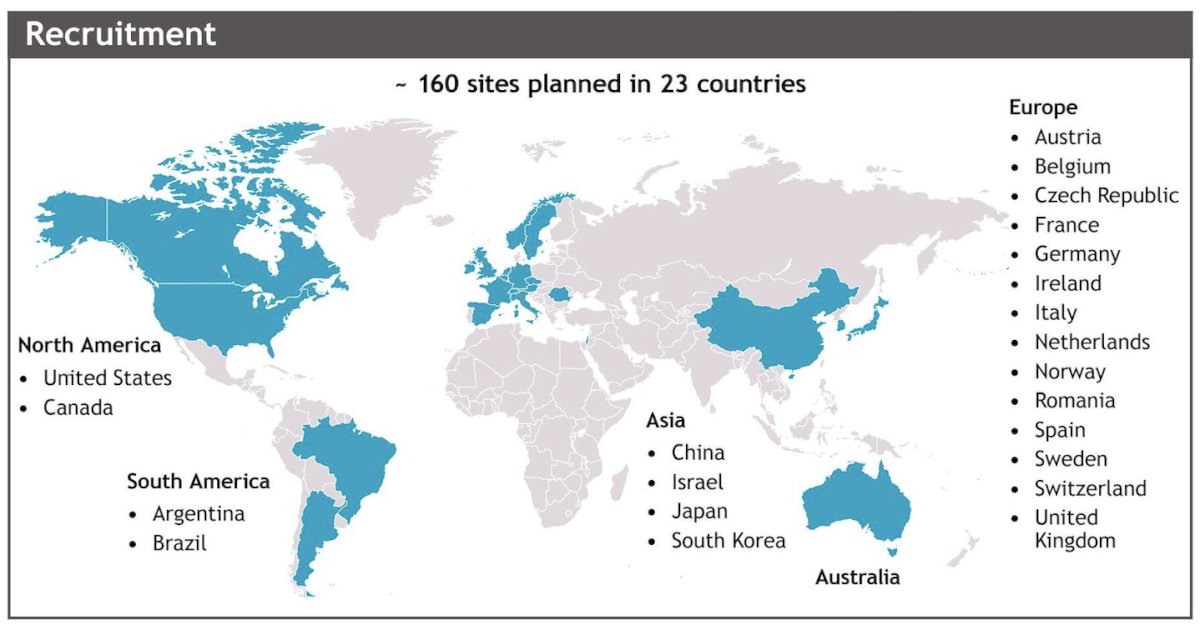
Presented by: Thomas Powles, MBBS, MRCP, MD, Professor of Genitourinary Oncology, Director, Barts Cancer Institute, Cancer Research UK Experimental Cancer Medicine Centre, Queen Mary University of London, London, United Kingdom
Written by: Zachary Klaassen, MD, MSc – Urologic Oncologist, Associate Professor of Urology, Georgia Cancer Center, Wellstar MCG Health, @zklaassen_md on Twitter during the 2026 Genitourinary (GU) American Society of Clinical Oncology (ASCO) Annual Meeting, San Francisco, CA, Thurs, Feb 26 – Sat, Feb 28, 2026.