

(UroToday.com) The 2026 GU ASCO annual meeting featured a urothelial carcinoma session and a presentation by Dr. Matthew Galsky discussing an exploratory biomarker analysis of the phase 3 CREST trial assessing sasanlimab + BCG in BCG-naïve, high risk non muscle invasive bladder cancer. The primary analysis of the phase 3 CREST trial, evaluating sasanlimab, a PD-1 inhibitor, combined with BCG induction and maintenance showed statistically significant and clinically meaningful improvement in event free survival versus BCG induction and maintenance alone in patients with BCG-naive high risk, non muscle invasive bladder cancer.1 A trend toward improved event free survival was noted in patients with high PD-L1 expression treated with sasanlimab and BCG induction and maintenance. At ASCO GU 2026, Dr. Galsky and colleagues presented additional exploratory analyses examining associations between tumor microenvironment related features and response to sasanlimab plus BCG induction and maintenance.
The trial design for CREST is as follows:

Pre-treatment tumor biopsies were assessed for CD8+ T-cell infiltration by immunohistochemistry (n = 609), tumor mutational burden by whole exome sequencing (n = 543), and gene expression by whole transcriptome sequencing (n = 534). Exploratory analyses were performed correlating these features with event free survival using Cox proportional hazards models.
Neither baseline tumor-infiltrating CD8⁺ T cells nor tumor mutational burden was associated with improved event free survival with sasanlimab in combination with BCG induction and maintenance versus BCG induction and maintenance alone:
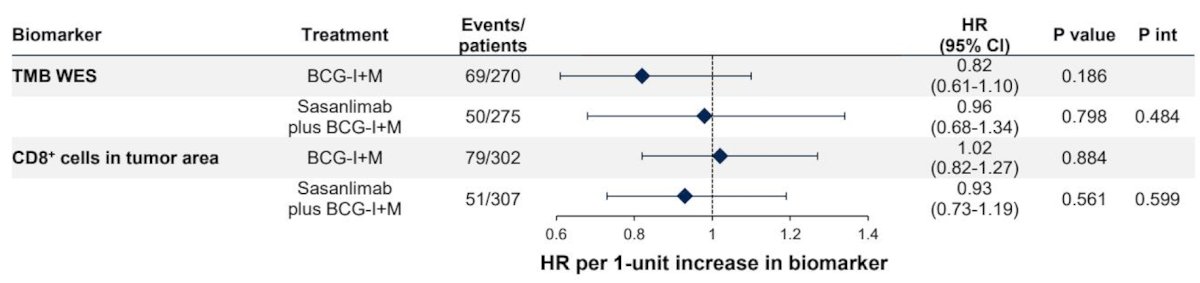
This observation, coupled with our previously reported PD-L1 data (Powles, ASCO, 2025), suggested that single biomarkers may not adequately reflect the complexity of the tumor microenvironment, and the investigators therefore focused on transcriptomic analyses. Transcriptomic profiling revealed that inflammatory and immune signatures (effector and inhibitory signatures) were associated with inferior event free survival in the BCG monotherapy arm, but not in the sasanlimab + BCG induction and maintenance arm:
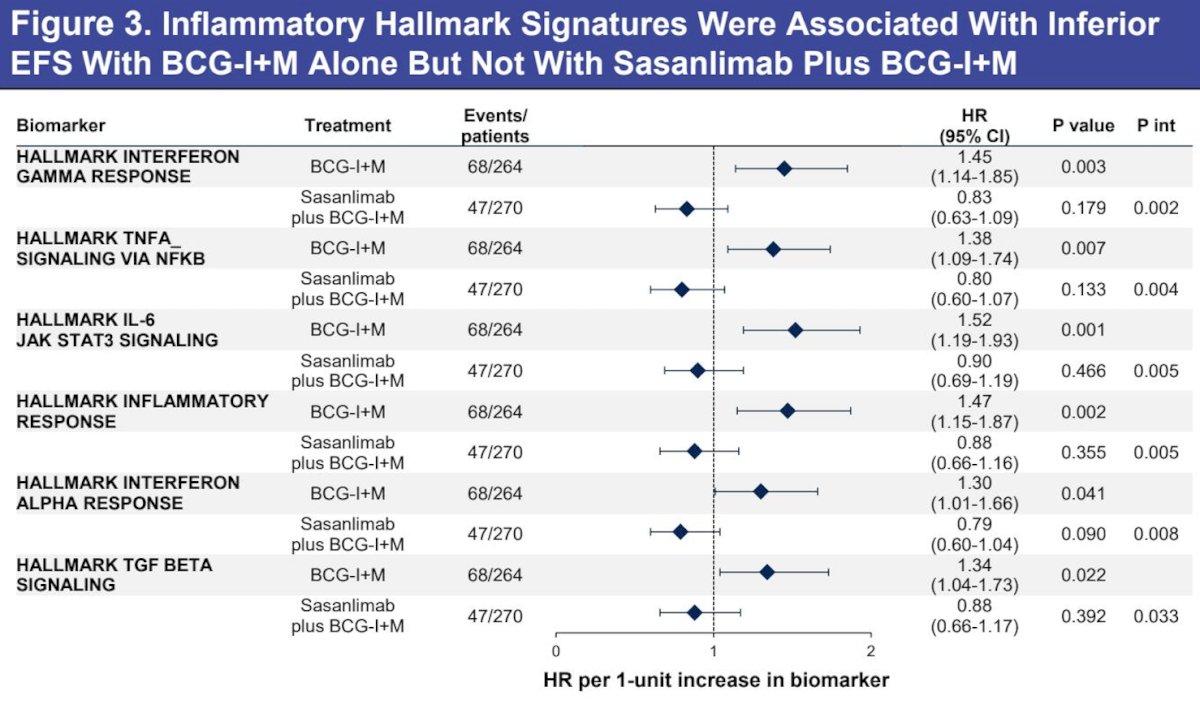
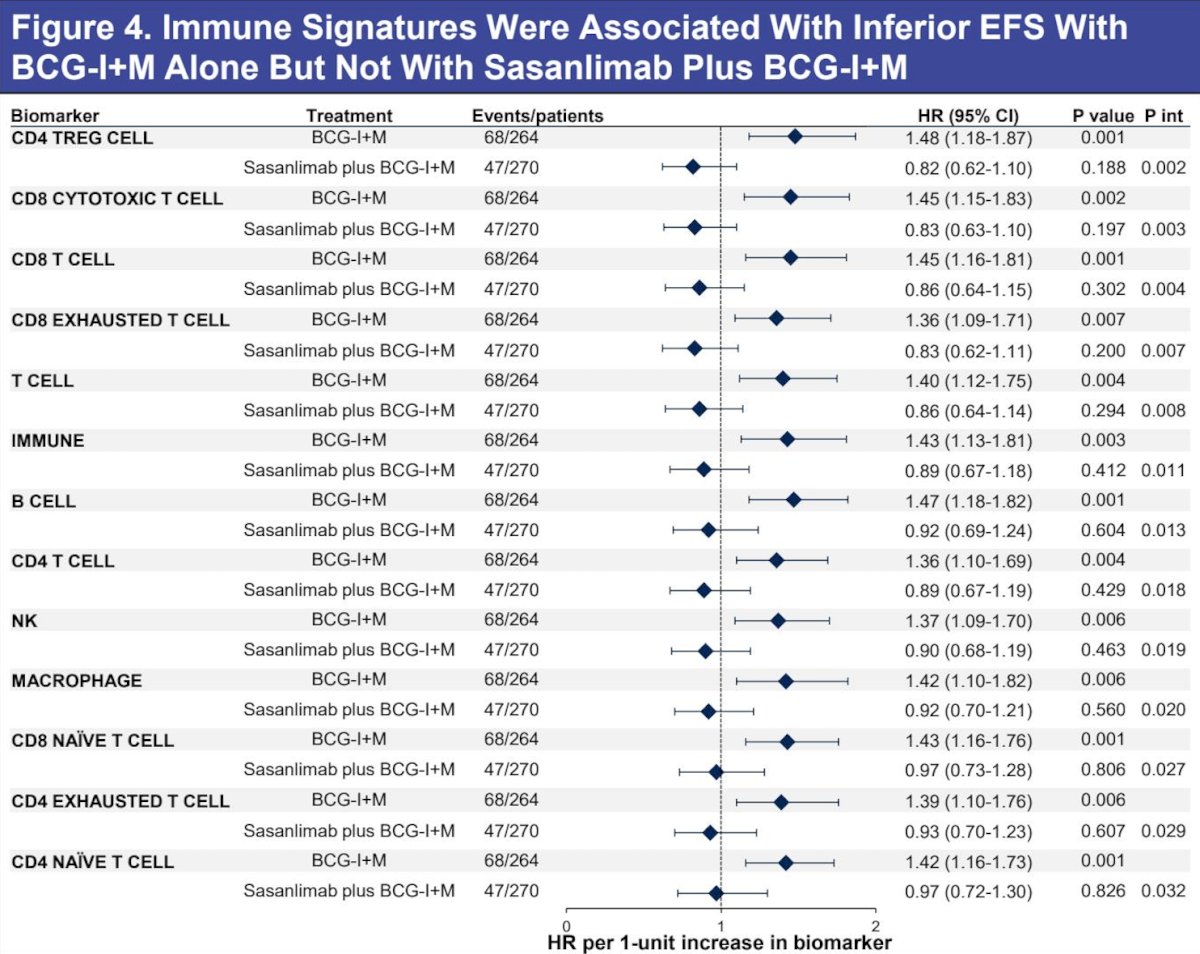
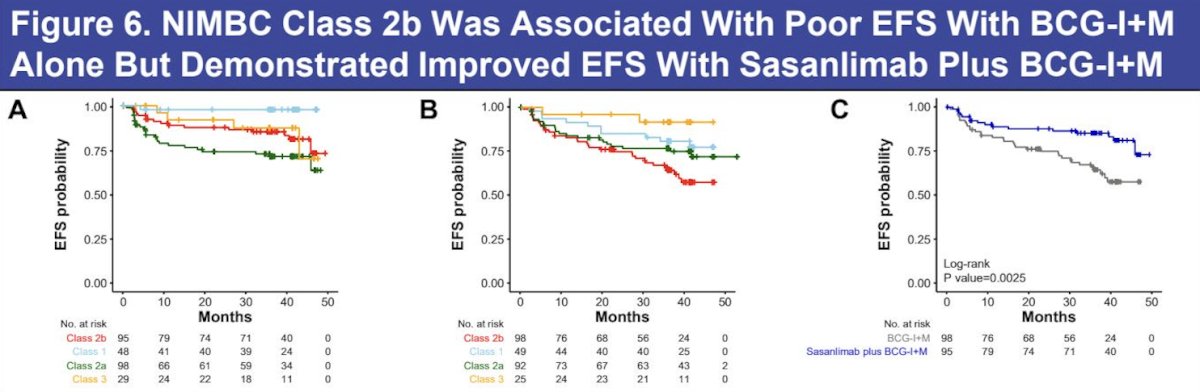
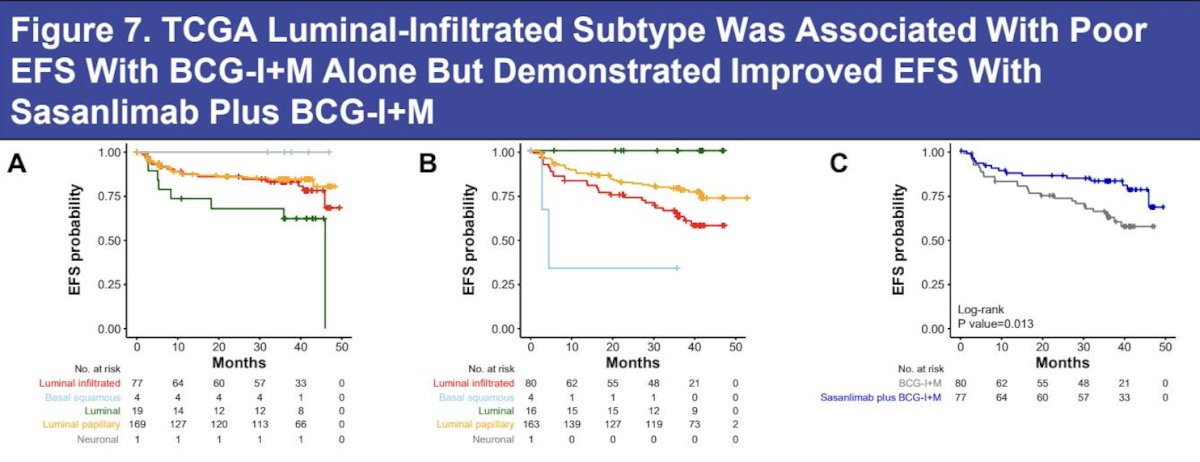
Consistent with these findings, bladder cancer transcriptomic subtypes known to be heavily immune infiltrated, such as NMIBC class 2b and TCGA luminal infiltrated, were associated with poor event free survival with BCG induction and maintenance but demonstrated improved event free survival with sasanlimab + BCG induction and maintenance (HR 0.41, 95% CI 0.23-0.75, p < 0.01; HR 0.46, 95% CI 0.25-0.86, p = 0.01, respectively):
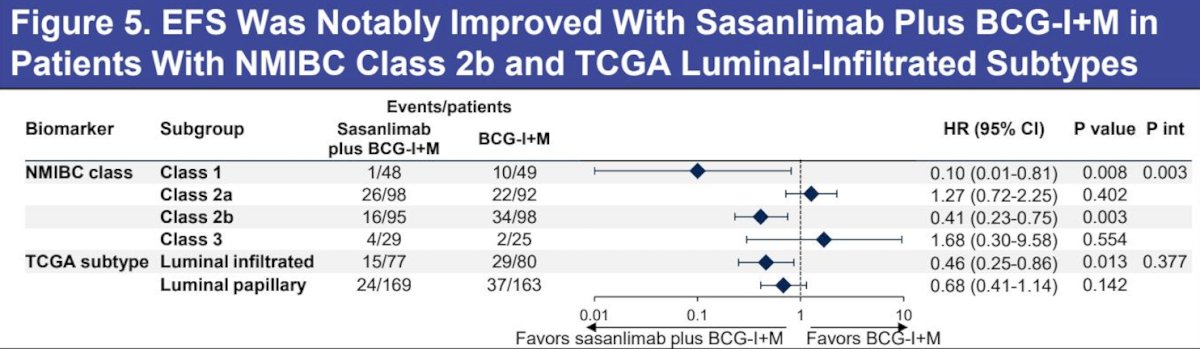
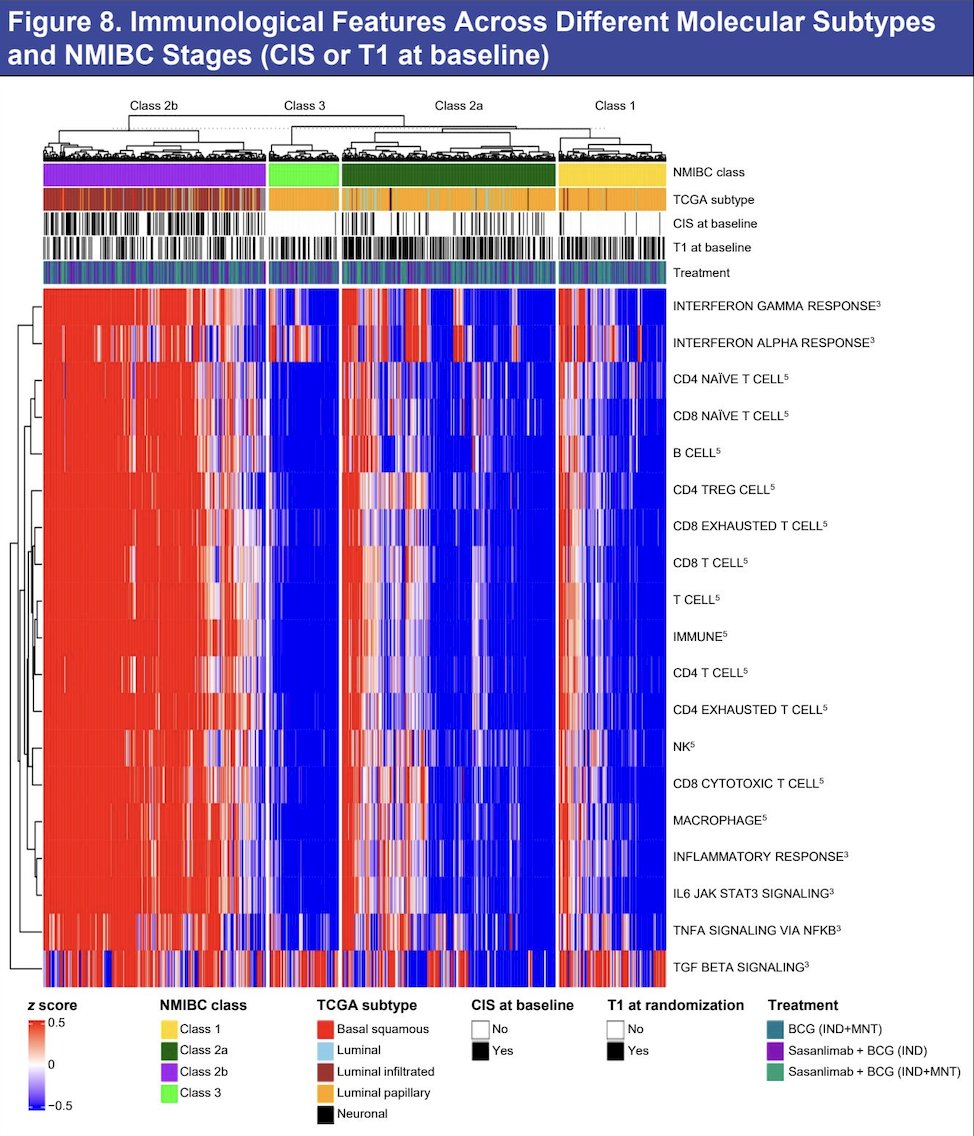
Importantly, such immunobiological features were present in subsets of tumors across non muscle invasive bladder cancer stages, underscoring that stage alone does not reflect the biological heterogeneity captured by transcriptomic profiling:
Dr. Galsky concluded his presentation discussing an exploratory biomarker analysis of the phase 3 CREST trial with the following take-home points:
- Baseline CD8⁺ T-cell infiltration and tumor mutational burden were not associated with improved event free survival in either the sasanlimab + BCG induction and maintenance arm or the BCG induction and maintenance arm
- Patients with non muscle invasive bladder cancer with tumor microenvironments that exhibited high immune infiltration at baseline demonstrated poor outcomes in the BCG induction and maintenance alone arm, but not in the sasanlimab + BCG induction and maintenance arm
- The combination of sasanlimab + BCG induction and maintenance has the potential to address a critical unmet need in the management of patients with high risk non muscle invasive bladder cancer, including patients with molecular subgroups (ie. NMIBC class 2b, TCGA luminal infiltrated) that are associated with poor outcomes with BCG induction and maintenance alone
- Inflammatory and immune signatures (effector and inhibitory) were present in subsets of tumors across non muscle invasive bladder cancer stages, underscoring that stage alone does not reflect the biological heterogeneity captured by transcriptomic profiling
Presented by: Matthew D. Galsky, MD, Tisch Cancer Institute, Icahn School of Medicine at Mount Sinai, New York, NY
Written by: Zachary Klaassen, MD, MSc – Urologic Oncologist, Associate Professor of Urology, Georgia Cancer Center, Wellstar MCG Health, @zklaassen_md on Twitter during the 2026 American Society of Clinical Oncology Genitourinary (ASCO GU) cancers symposium held in San Francisco, CA, between February 26th and 28th, 2026.
References: