

(UroToday.com) The 2026 ASCO GU Annual Symposium featured a trials-in-progress session highlighting ongoing studies in advanced urothelial carcinoma. Dr. Matthew Galsky presented the study design of TROPION-Urothelial03, an ongoing phase 2/3 global, multicenter, randomized, open-label trial evaluating datopotamab deruxtecan (Dato-DXd) in combination with platinum chemotherapy versus gemcitabine plus platinum chemotherapy in patients with locally advanced or metastatic urothelial carcinoma (la/mUC) whose disease has progressed on or after treatment with enfortumab vedotin plus pembrolizumab.
Although first-line (1L) therapy with the antibody–drug conjugate (ADC) enfortumab vedotin (EV) plus pembrolizumab has improved outcomes for patients with locally advanced or metastatic urothelial carcinoma (la/mUC),1-4 approximately half of patients experience disease progression within two years of initiating treatment.1,5 While there is limited evidence to guide the optimal selection of second-line therapies in patients progressing on or after EV plus pembrolizumab, current treatment options post-EV include platinum-based chemotherapy3—which has demonstrated modest efficacy in studies to date (complete response, 2–9%; median duration of response, 3.8 months; median progression-free survival, 3.4–4.4 months; median overall survival, 8.0–12.0 months).6,7
Trophoblast cell surface antigen 2 (TROP2) is a glycoprotein highly expressed in several epithelial tumors, including urothelial carcinoma.8,9 Datopotamab deruxtecan (Dato-DXd) is a TROP2-directed antibody–drug conjugate composed of a humanized monoclonal antibody, a tetrapeptide-based cleavable linker, and a topoisomerase I inhibitor payload (DXd), designed to induce efficient tumor-cell death and reduce systemic exposure to the cytotoxic payload.10
Dato-DXd has demonstrated durable efficacy and a manageable safety profile in patients with la/mUC both as monotherapy (TROPION-PanTumor01; NCT03401385) and in combination with immunotherapy (TROPION-PanTumor03; NCT05489211).11,12 These findings provide the rationale to evaluate Dato-DXd plus platinum chemotherapy as a second-line therapeutic strategy in patients with urothelial carcinoma whose disease has progressed on or after EV plus pembrolizumab.13
TROPION-Urothelial03 (NCT07129993) is therefore designed to evaluate the efficacy and safety of Dato-DXd plus platinum chemotherapy compared with gemcitabine plus platinum chemotherapy in patients with la/mUC with disease progression on or after EV plus pembrolizumab.
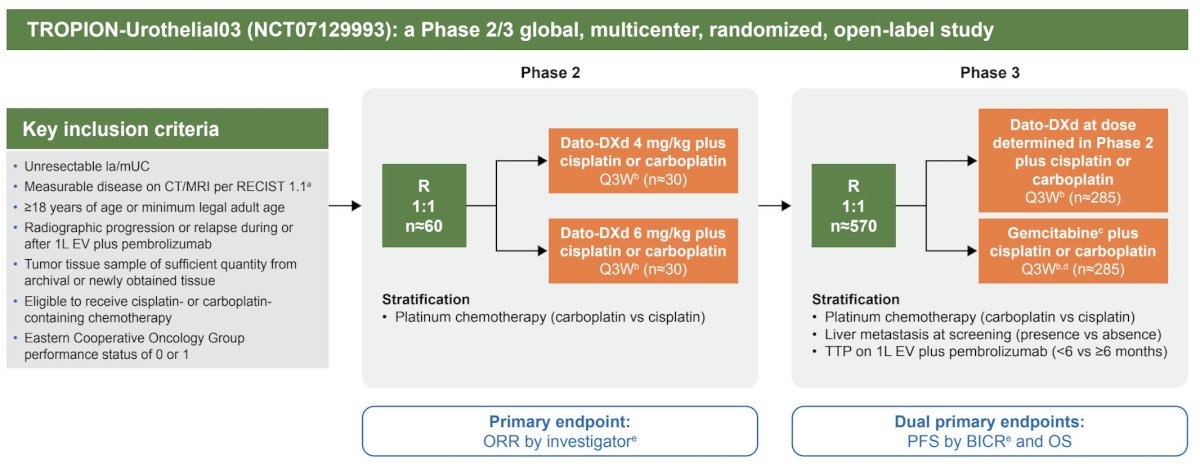
The study consists of two sequential phases. In the phase 2 portion, approximately 60 patients will be randomized 1:1 to receive either:
- Dato-DXd 4 mg/kg plus cisplatin or carboplatin every 3 weeks
- Dato-DXd 6 mg/kg plus cisplatin or carboplatin every 3 weeks
- Randomization is stratified by the type of platinum chemotherapy (cisplatin versus carboplatin).
- The primary endpoint of the phase 2 portion is objective response rate (ORR) by investigator assessment.
In the phase 3 portion, approximately 570 patients will be randomized 1:1 to receive:
- Dato-DXd at the dose determined in phase 2 plus cisplatin or carboplatin every 3 weeks
- Gemcitabine plus cisplatin or carboplatin every 3 weeks
- Randomization will be stratified by:
- Type of platinum chemotherapy (cisplatin versus carboplatin)
- Presence versus absence of liver metastases at screening
- Time to progression on EV plus pembrolizumab (≤6 months vs >6 months)
- Randomization will be stratified by:
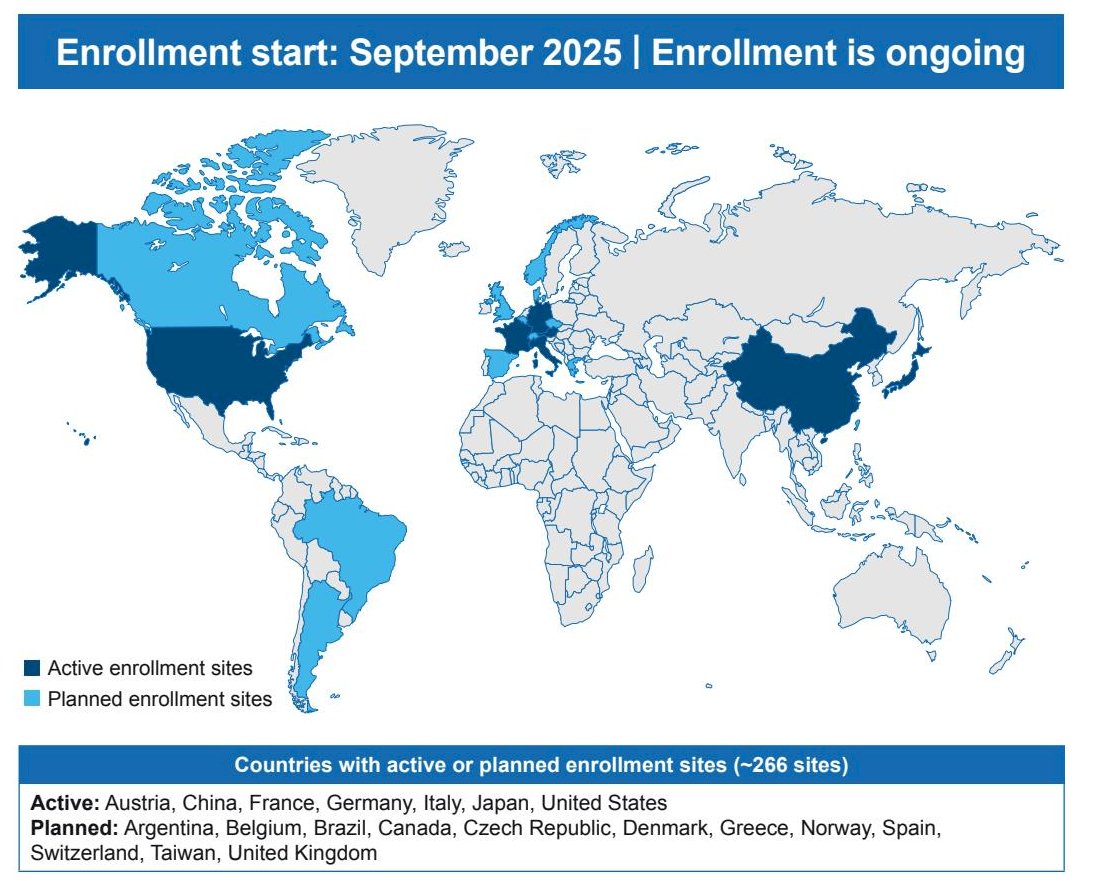
The dual primary endpoints for the phase 3 portion are radiographic progression-free survival (PFS) assessed by blinded independent central review and overall survival (OS). Key secondary endpoints include:
- Objective response rate (ORR)
- Duration of response (DOR)
- Disease control rate (DCR)
- Time to response (TTR)
- Safety and tolerability
- Immunogenicity of Dato-DXd
- Patient-reported outcomes
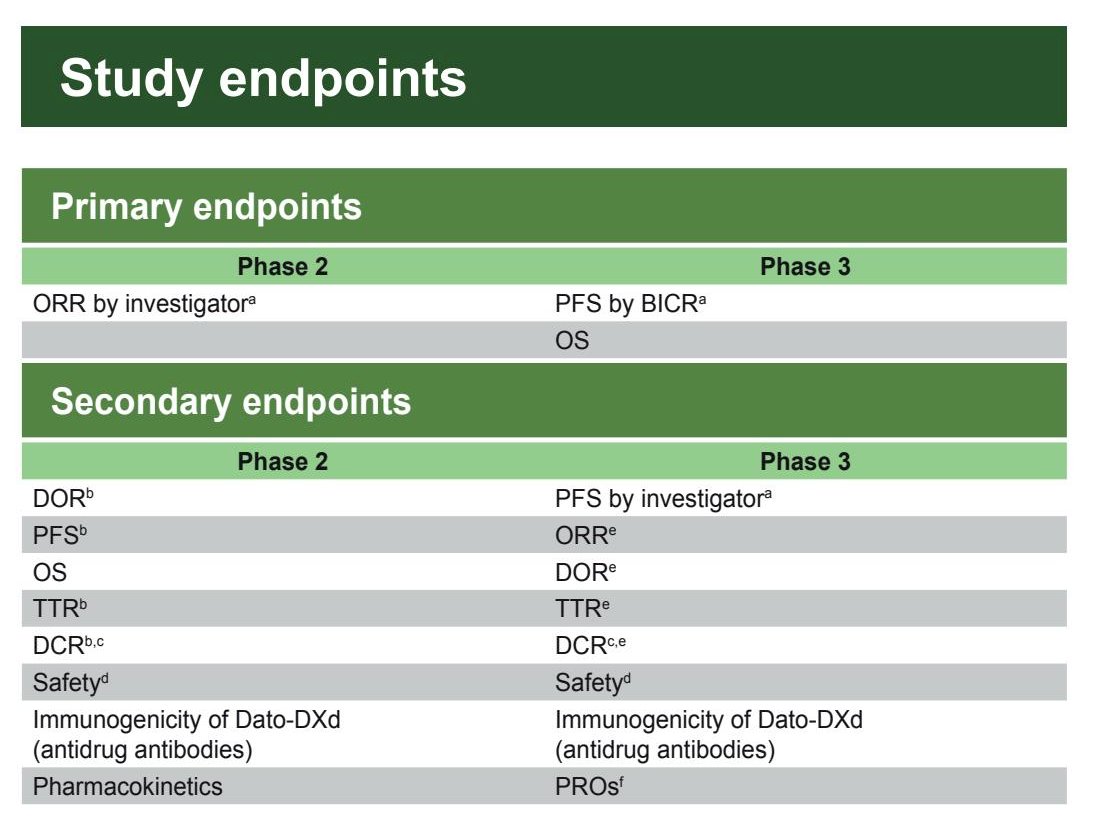
The key eligibility criteria are as follows:
Inclusion- Adults ≥18 years with histologically or cytologically confirmed unresectable la/mUC
- Radiographic disease progression during or after EV plus pembrolizumab
- Measurable disease per RECIST v1.1
- ECOG performance status of 0 or 1
- Eligibility to receive cisplatin- or carboplatin-containing chemotherapy
- Prior systemic therapy other than EV plus pembrolizumab for la/mUC
- Prior treatment with TROP2-directed ADCs
- Prior brain radiotherapy within 2 weeks or stereotactic radiotherapy within 4 weeks of randomization
- Active or untreated central nervous system metastases
- Clinically significant pulmonary compromise
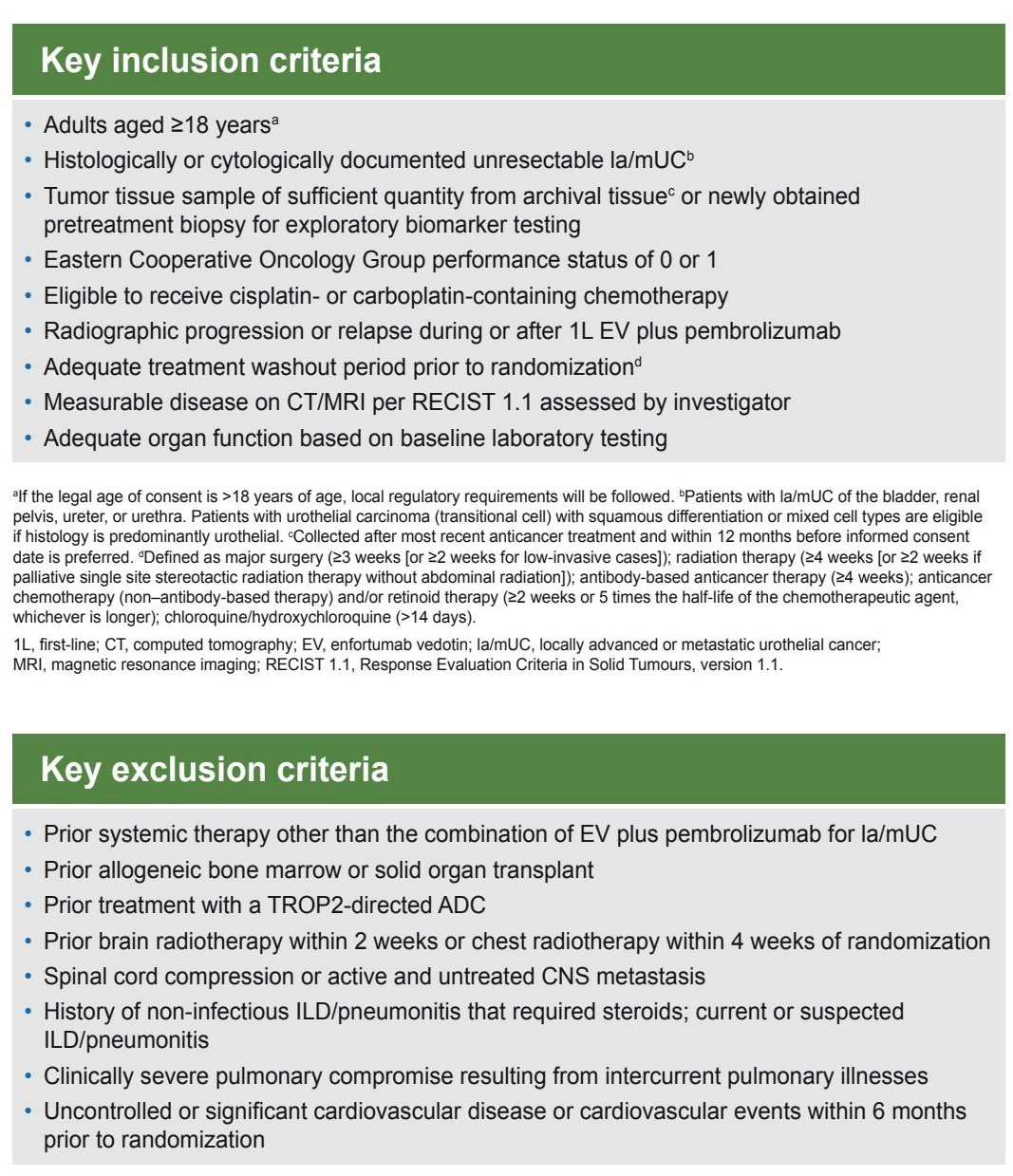
Enrollment for TROPION-Urothelial03 began in September 2025 and is ongoing. The study is being conducted globally across approximately 266 sites in multiple regions, including North America, Europe, Asia, and Australia.
Presented by: Matthew Galsky, MD, Professor of Medicine, Hematology and Medical Oncology, Director of Genitourinary Medical Oncology, Co-Director of the Center of Excellence for Bladder Cancer at The Tisch Cancer Institute, and Associate Director for Translational Research at The Tisch Cancer Institute, New York, NY
Written by: Rashid K. Sayyid, MD, MSc, Assistant Professor, Urologic Oncologist, Department of Urology at The University of Arizona and Banner University Medical Center, Tucson, AZ – @rksayyid on X during the 2026 American Society of Clinical Oncology Genitourinary (ASCO GU) cancers symposium held in San Francisco, CA, between February 26th and 28th, 2026.
References:
- Powles T, Rosenberg JE, Sonpavde GP, et al. Enfortumab vedotin plus pembrolizumab in previously untreated advanced urothelial carcinoma. N Engl J Med. 2024;390:875–888.
- Friedlander TW, Milowsky MI, Bilen MA, et al. Sacituzumab govitecan in metastatic urothelial carcinoma after platinum-based chemotherapy and checkpoint inhibitor therapy. J Clin Oncol. 2021;39:4528.
- Flaig TW, Spiess PE, Agarwal N, et al. NCCN Guidelines insights: bladder cancer, updates in the management of advanced urothelial carcinoma. J Natl Compr Canc Netw. 2024;22:216–225.
- Stecca CE, Galsky MD, Sonpavde GP, et al. Antibody–drug conjugates in urothelial carcinoma: current evidence and emerging therapies. Can Urol Assoc J. 2024;18:379–390.
- Jang A, Brown JR. Datopotamab deruxtecan: a TROP2-directed antibody–drug conjugate for cancer therapy. Explor Target Antitumor Ther. 2025;6:1002307.
- Sternschuss M, Galsky MD, Powles T, et al. Datopotamab deruxtecan in advanced solid tumors: emerging clinical evidence. J Clin Oncol. 2025;43:4573–4573.
- Kim J, Sonpavde GP, Galsky MD, et al. Targeting TROP2 in urothelial carcinoma: rationale and therapeutic strategies. J Clin Oncol. 2025;43:785–785.
- Lombardi P, Bardia A, Modi S, et al. TROP2-directed antibody–drug conjugates in solid tumors: mechanisms and clinical development. Cancers (Basel). 2023;15:1744.
- Chou J, Shyr CR, Wang C, et al. TROP2 as a therapeutic target in urothelial carcinoma. Eur Urol Oncol. 2022;5:714–718.
- Okajima D, Yasuda S, Maejima T, et al. Datopotamab deruxtecan (DS-1062a), a TROP2-directed antibody–drug conjugate, demonstrates potent antitumor activity in preclinical models. Mol Cancer Ther. 2021;20:2329–2340.
- Meric-Bernstam F, Galsky MD, Powles T, et al. Datopotamab deruxtecan in advanced urothelial carcinoma: preliminary results from the TROPION-Urothelial01 study. Oral presentation at the American Society of Clinical Oncology Genitourinary Cancers Symposium; February 13–15, 2025; San Francisco, CA, USA. Presentation 663.
- Rha SY, Powles T, Loriot Y, et al. Datopotamab deruxtecan in advanced urothelial carcinoma: updated clinical results. Oral presentation at the European Society for Medical Oncology Congress; October 17–21, 2025; Berlin, Germany. Presentation 3072MO.
- ClinicalTrials.gov. A study of datopotamab deruxtecan plus platinum chemotherapy versus gemcitabine plus platinum chemotherapy in advanced urothelial carcinoma (TROPION-Urothelial03). Available from: https://clinicaltrials.gov/study/NCT07129993. Accessed February 28, 2026.