

(UroToday.com) The 2026 GU ASCO annual meeting featured a urothelial carcinoma session and a presentation by Dr. Andrea Necchi discussing the final results from SunRISe-2 assessing gemcitabine intravesical system in combination with cetrelimab versus chemoradiotherapy in muscle invasive bladder cancer. Bladder sparing is an important therapeutic goal in muscle invasive bladder cancer; however, currently, definitive treatment for localized muscle invasive bladder cancer is chemoradiotherapy or radical cystectomy with neoadjuvant chemotherapy. Gemcitabine intravesical system (previously TAR-200), approved for BCG-unresponsive non-muscle invasive bladder cancer with carcinoma in situ, is an intravesical drug-releasing system designed for sustained delivery of gemcitabine in the bladder. Cetrelimab is an investigational IgG4 anti–PD-1 antibody. Neoadjuvant gemcitabine intravesical system + cetrelimab demonstrated activity in the randomized phase 2 SunRISe-4 study of cisplatin-ineligible patients with muscle invasive bladder cancer. At ASCO GU 2026, Dr. Necchi and colleagues reported the final analysis of SunRISE-2, an open-label, randomized, phase 3 superiority study.
Patients who were ≥18 years of age with cT2-T4a, N0, M0 muscle invasive bladder cancer and declined or were ineligible for radical cystectomy were randomized 1:1 to gemcitabine intravesical system + intravenous cetrelimab (arm 1) or concurrent chemoradiotherapy (cisplatin or gemcitabine + radiotherapy, 64 or 55 Gy; arm 2). In arm 1, patients received gemcitabine intravesical system every 3 weeks (Q3W) for 18 weeks, followed by Q12W until W144 and cetrelimab Q3W until W78. In arm 2, patients received chemoradiotherapy for up to 6.5 weeks:
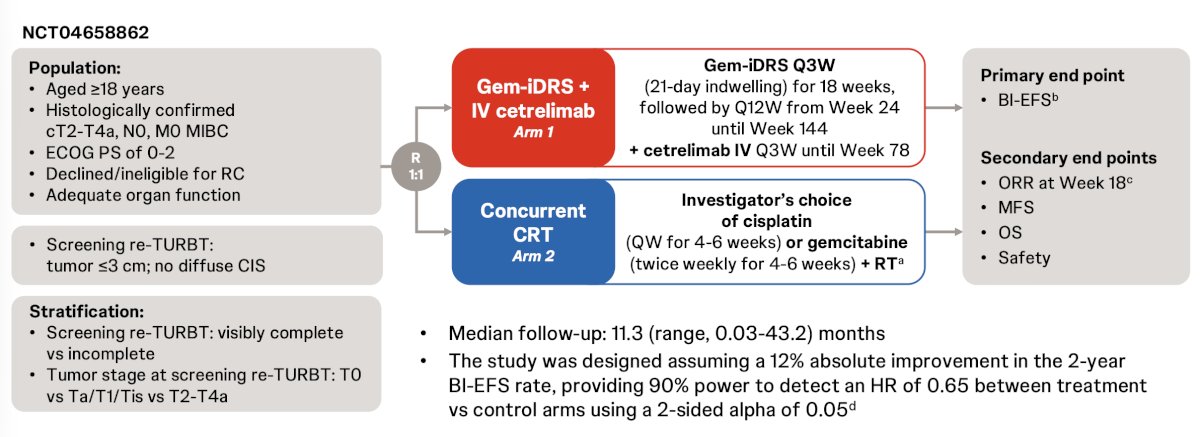
The primary endpoint was bladder intact event free survival (defined as time to muscle-invasive or distant relapse, radical cystectomy, or death). Secondary end points included overall response (using biopsy and CT/MRI) at week 18, metastasis free survival, overall survival, and safety. The study met the prespecified futility criteria, and the final analysis was conducted after data collection was complete.
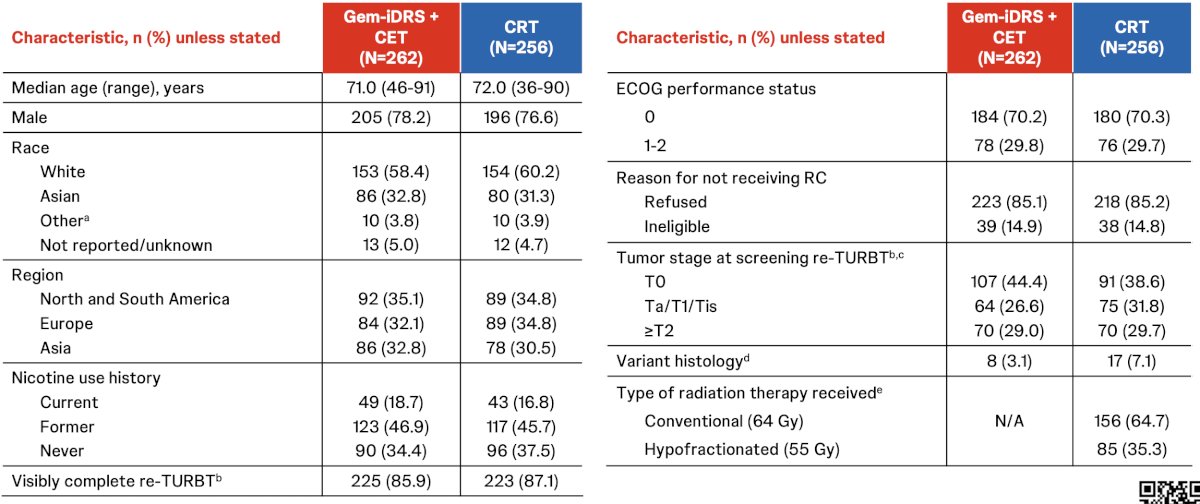
At the July 7, 2025, data cutoff, 518 patients were randomized (arm 1, n = 262; arm 2, n = 256), with a median follow-up of 11.3 months. The demographics and baseline characteristics were balanced across the treatment arms:
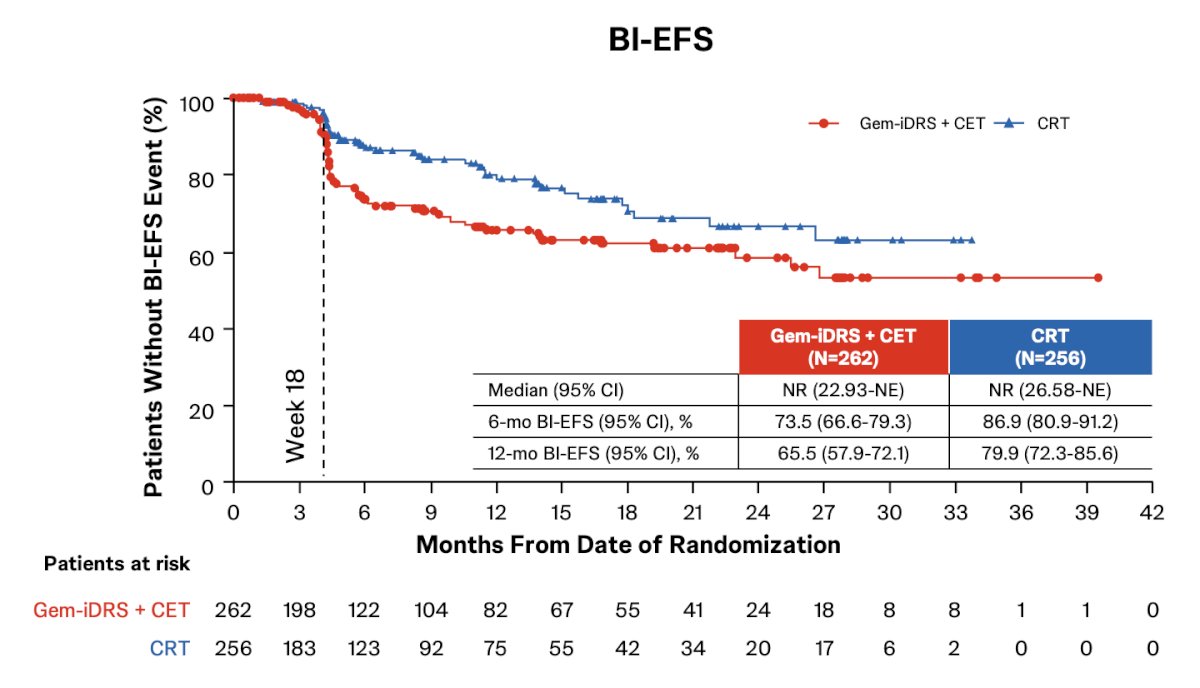
Gemcitabine intravesical system + cetrelimab did not show superior bladder intact event free survival over chemoradiotherapy (HR 1.71, 95% CI 1.16-2.53). The 24-month rates were 58.5% versus 66.5%, respectively:
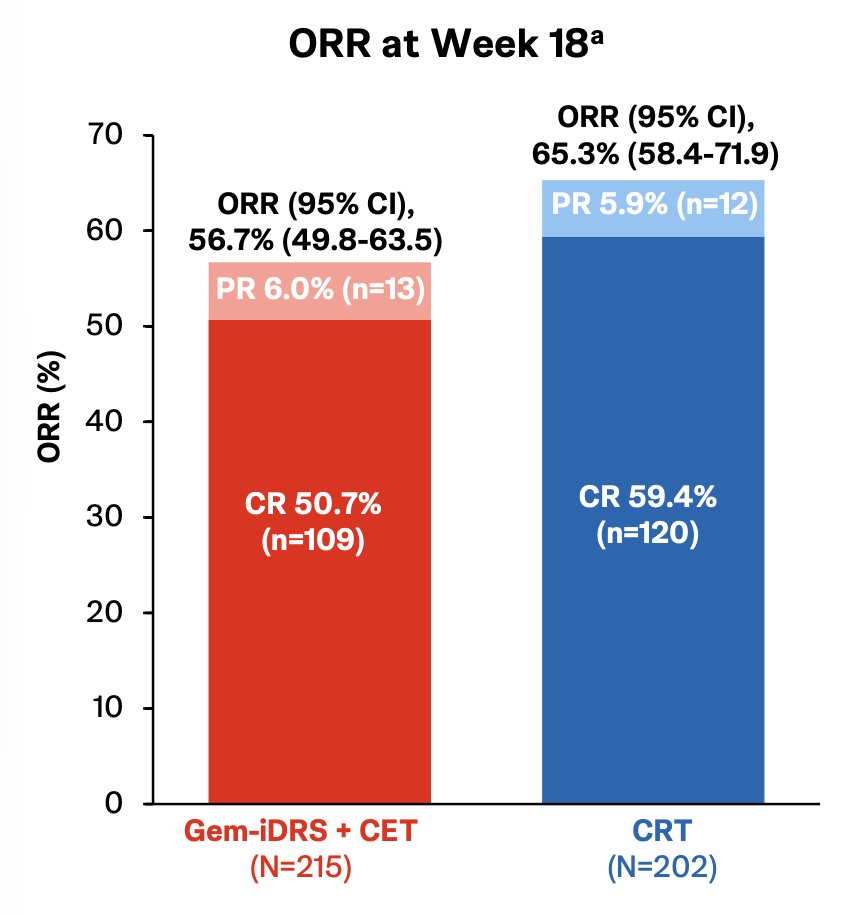
At week 18, the overall response rate was 56.7% in arm 1 and 65.3% in arm 2, including 50.7% of patients in arm 1 having a complete response and 59.4% of patients in arm 2.
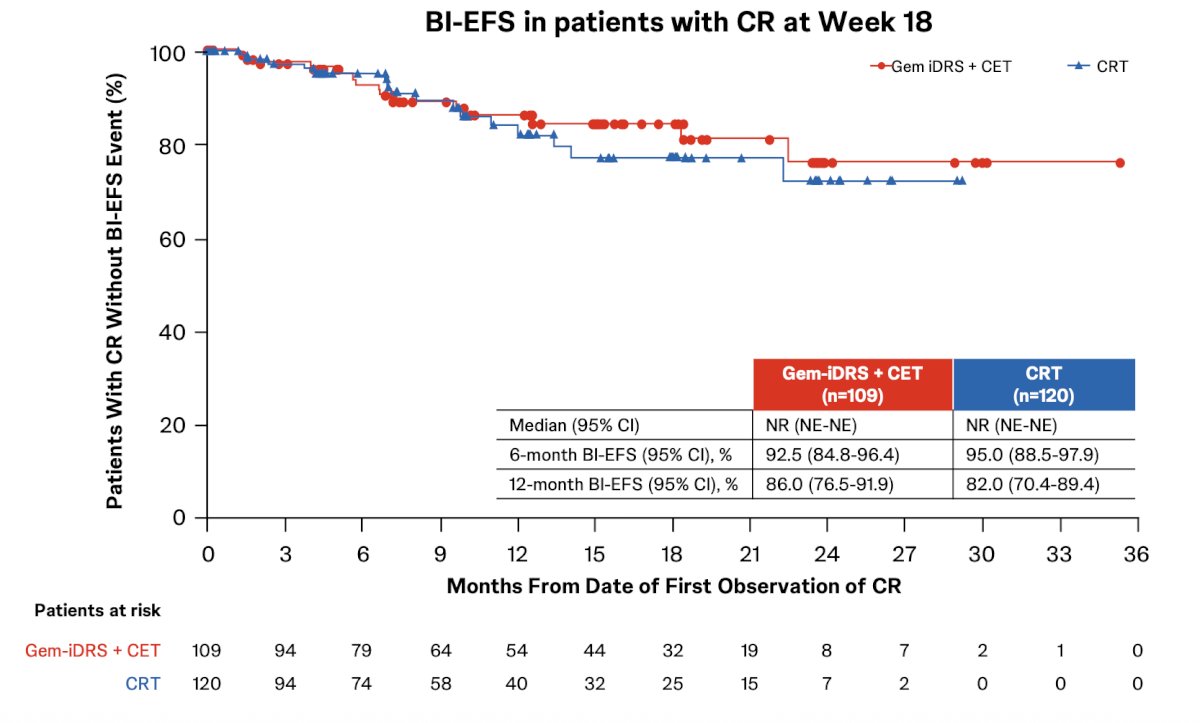
In patients who achieved complete response at week 18, the 24-month bladder intact event free survival rates were 76.2% and 72.0% in arms 1 and 2:
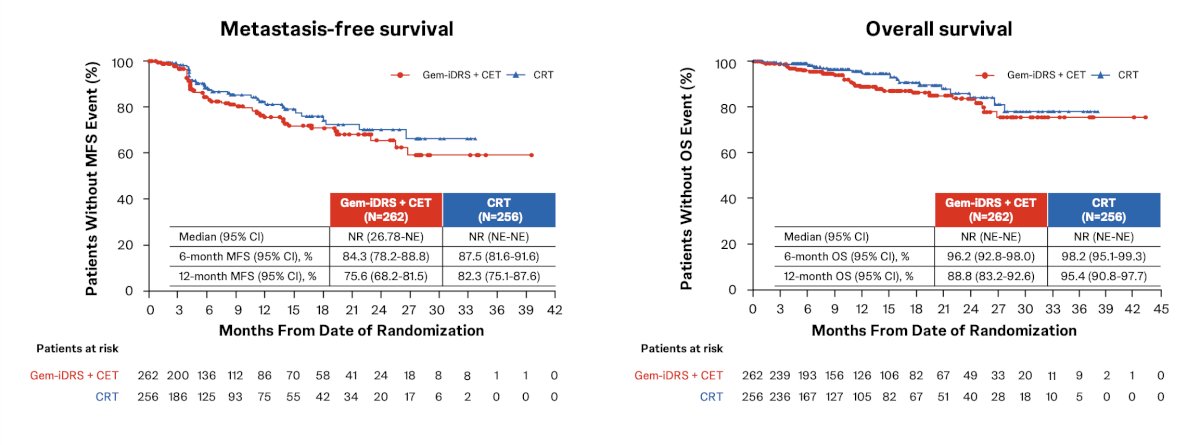
Moreover, gemcitabine intravesical system + cetrelimab did not show superior metastasis free survival or overall survival compared with chemoradiotherapy:
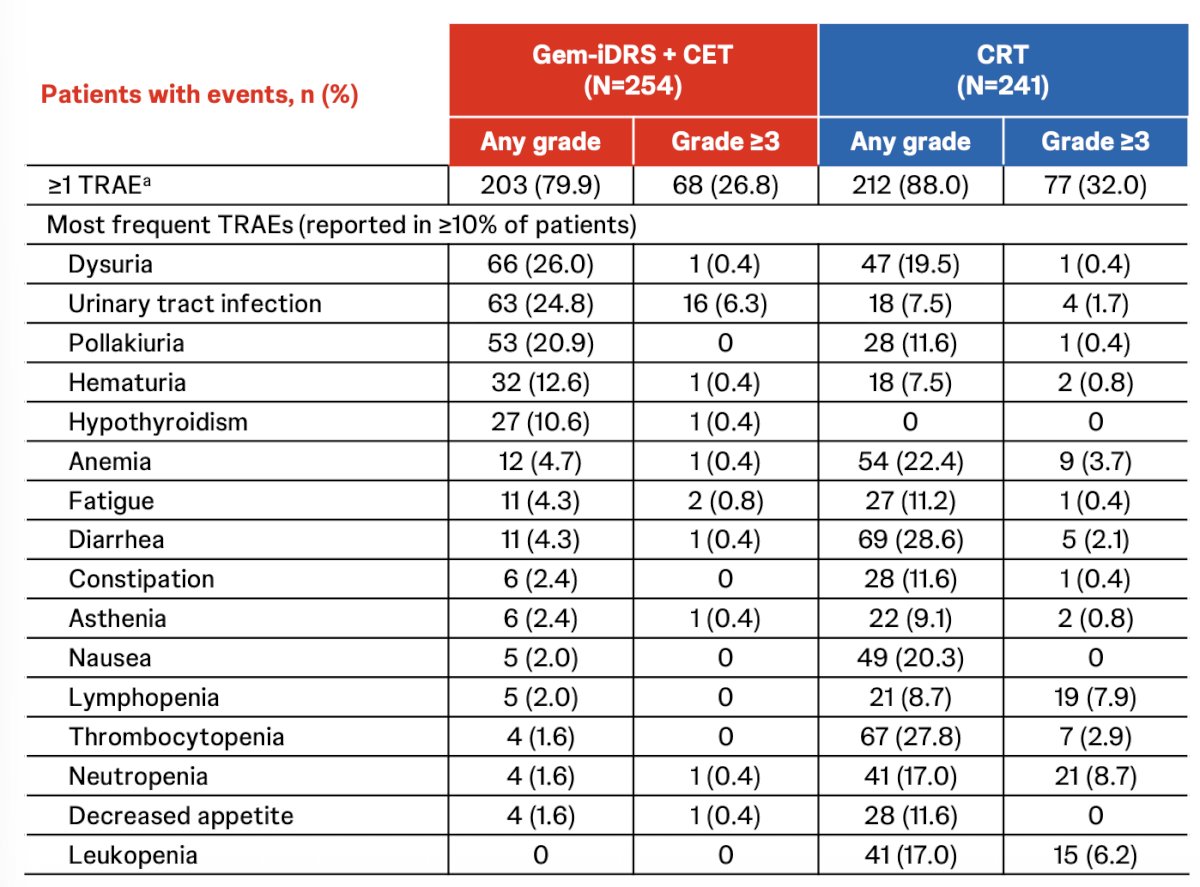
The incidence of any grade and grade ≥3 treatment related adverse events is shown in the following table. The most common grade ≥3 treatment related adverse event was urinary tract infection (6.3%) in arm 1 and neutropenia (8.7%) in arm 2:
The median duration of exposure was 18.2 (range: 1-151) weeks for gemcitabine intravesical system, 22.7 (0-82) weeks for cetrelimab, and 6.4 (0-15) weeks for chemoradiotherapy. Treatment related adverse events discontinuation was observed in 15.0% of patients treated with gemcitabine intravesical system + cetrelimab compared to 9.5% of those treated with chemoradiotherapy. There was no treatment related death in arm 1 and one death in arm 2.
Dr. Necchi concluded his presentation discussing the final results from SunRISe-2 with the following take-home points:
- The SunRISe-2 trial was stopped early for futility based on the week 18 objective response rate assessment, and the totality of efficacy data included bladder intact event free survival, metastasis free survival, and overall survival
- The complete response rate achieved in the gemcitabine intravesical system + cetrelimab arm is notable, given the lack of a systemic cytotoxic agent utilized in that arm
- Bladder intact event free survival in participants with week 18 complete responses was comparable between the two arms (>80% at 12 months in both arms)
- There were no unexpected safety findings in either arm
Presented by: Andrea Necchi, MD, IRCCS San Raffaele Hospital, Comprehensive Cancer Center, Milan, Italy
Written by: Zachary Klaassen, MD, MSc – Urologic Oncologist, Associate Professor of Urology, Georgia Cancer Center, Wellstar MCG Health, @zklaassen_md on Twitter during the 2026 American Society of Clinical Oncology Genitourinary (ASCO GU) cancers symposium held in San Francisco, CA, between February 26th and 28th, 2026.
Related content: Phase III SunRISe-2 Trial Compares Gem-iDRS and Cetrelimab to Chemoradiation for MIBC Bladder Preservation - Andrea Necchi