

(UroToday.com) The 2026 American Society of Clinical Oncology Genitourinary (ASCO GU) cancers symposium held in San Francisco, CA, between February 26th and 28th, 2026, was host to the Poster Session B: Prostate Cancer and Urothelial Carcinoma. Dr. Ruchika Talwar presented the poster: Patient experiences with UGN-102 for recurrence of low-grade, intermediate-risk non-muscle invasive bladder cancer (LG-IR-NMIBC): Insights for shared decision making.
Dr. Talwar emphasized that recurrent low-grade intermediate-risk NMIBC is a chronic and relapsing disease, where treatment decisions often balance efficacy with quality of life and procedural burden. While TURBT remains a common approach, UGN-102, a recently FDA-approved reverse thermal hydrogel containing 75 mg mitomycin, offers a non-surgical alternative. She underscored the importance of understanding patient experience to guide shared decision making.
The ENVISION study (NCT05243550) evaluated patient-reported outcomes using the EORTC-QLQ-NMIBC24 instrument in patients with biopsy-confirmed recurrent LG-IR-NMIBC who had at least one prior NMIBC episode.1 Patients received six once-weekly outpatient intravesical instillations of UGN-102. In addition, 32 US-based participants completed prospective semi-structured phone interviews comparing their prior TURBT experience at enrollment with their experience on UGN-102 at 3 months. The study design is illustrated below:
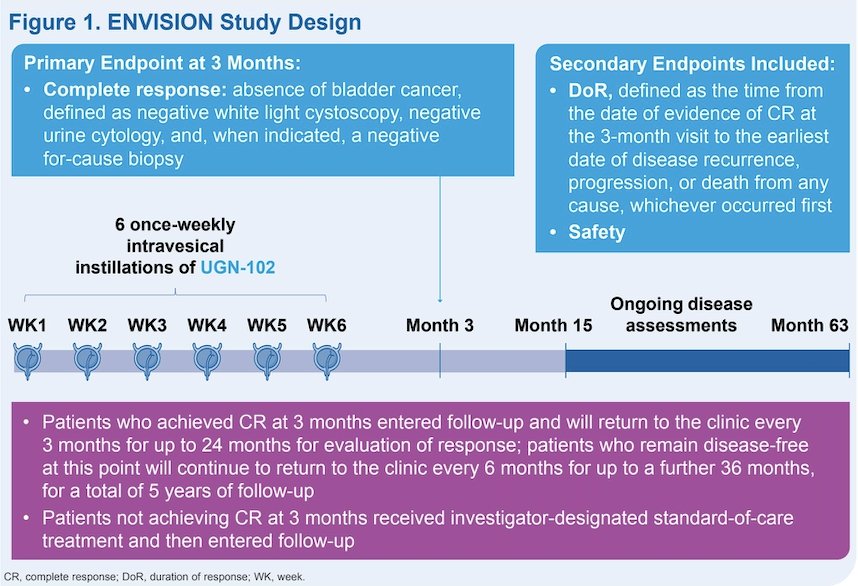
A total of 240 patients were enrolled, and 232 patients with previous NMIBC were included. Notably, 95% completed all six instillations of UGN-102.
At both 3 and 12 months, mean changes from baseline in domains including malaise, intravesical treatment issues, risk of contaminating a partner, sexual problems, and sexual function did not reach minimal clinically important difference thresholds, indicating overall stability in quality-of-life measures.
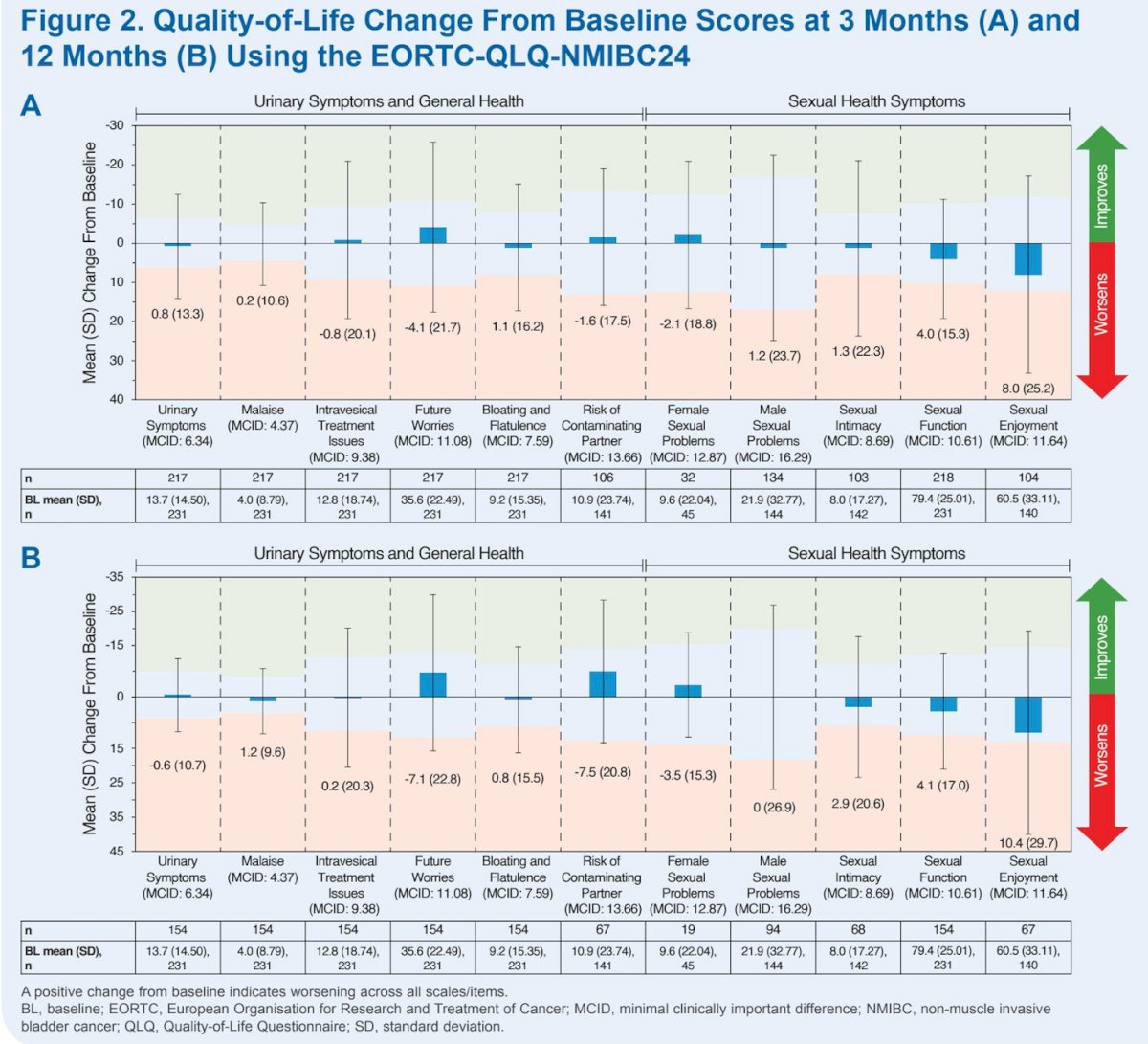
The qualitative phone interviews provided additional context. Patients reported greater interference with routines and responsibilities after TURBT compared with UGN-102. Urinary symptoms were perceived as similar between approaches, but patients expressed more concern about bleeding with TURBT. Most described UGN-102 as less invasive, less painful, and less time-consuming overall, and indicated they would recommend it over surgery. A smaller subset preferred TURBT because it is completed in a single day rather than requiring six weekly instillations.
Dr. Talwar concluded with several key points:
- UGN-102 maintained stable quality-of-life scores across validated NMIBC24 domains.
- Most patients preferred UGN-102 over repeat surgical resection due to its less invasive profile.
- Some patients favored TURBT for its one-day convenience, highlighting individual trade-offs.
- These findings support shared decision-making in recurrent LG-IR-NMIBC, helping clinicians and patients weigh convenience against invasiveness when selecting therapy.
Presented by: Ruchika Talwar, MD, Assistant Professor, Department of Urology, Vanderbilt University Medical Center, Nashville, TN
Related content:Patient-Reported Outcomes and Qualitative Insights Inform Shared Decision-Making for Mitomycin Intravesical Solution - Ruchika Talwar