

(UroToday.com) The 2025 American Society of Clinical Oncology Genitourinary (ASCO GU) cancers symposium held in San Francisco, CA was host to the Poster Session A: Prostate Cancer. Dr. Hannah McManus presented Abstract 65: Relationship between undetectable PSA nadir and outcomes for patients with metastatic hormone-sensitive prostate cancer (mHSPC) in IRONMAN, the International Registry for Men with Advanced Prostate Cancer.
Treatment intensification with an androgen receptor pathway inhibitor (ARPI) and/or docetaxel combined with androgen deprivation therapy (ADT) has shown improved outcomes for patients with metastatic hormone-sensitive prostate cancer (mHSPC) in several clinical trials. Achieving an undetectable PSA nadir has been linked to better clinical outcomes; however, real-world data comparing different treatment regimens are limited. The International Registry for Men with Advanced Prostate Cancer (IRONMAN) is a prospective cohort study focusing on patients with newly diagnosed mHSPC and castration-resistant prostate cancer (CRPC). In this, Dr. McManus and colleagues evaluated PSA response and outcomes for patients with mHSPC who received various first-line treatment regimens in the IRONMAN registry.
The study included all patients with mHSPC who were enrolled in the IRONMAN registry between January 2017 and August 2023. This registry included patients from the United States, Canada, Spain, and England.
The investigators evaluated PSA response and outcomes for patients treated with three different regimens:
- Androgen deprivation therapy (ADT) monotherapy
- ADT + androgen receptor pathway inhibitor (ARPI)
- ADT + docetaxel.
Patients receiving triplet therapy (ADT + ARPI + docetaxel) were excluded from the analysis due to small numbers and limited follow-up in the IRONMAN registry.
Undetectable PSA nadir, defined as <0.2 ng/mL, was assessed at 6 and 12 months after the start of treatment. Relapse was defined by any of the following criteria: PSA progression (≥25% increase from nadir and an absolute increase >2 ng/mL), treatment change due to a new metastasis location, or a change to a neuroendocrine prostate cancer regimen.
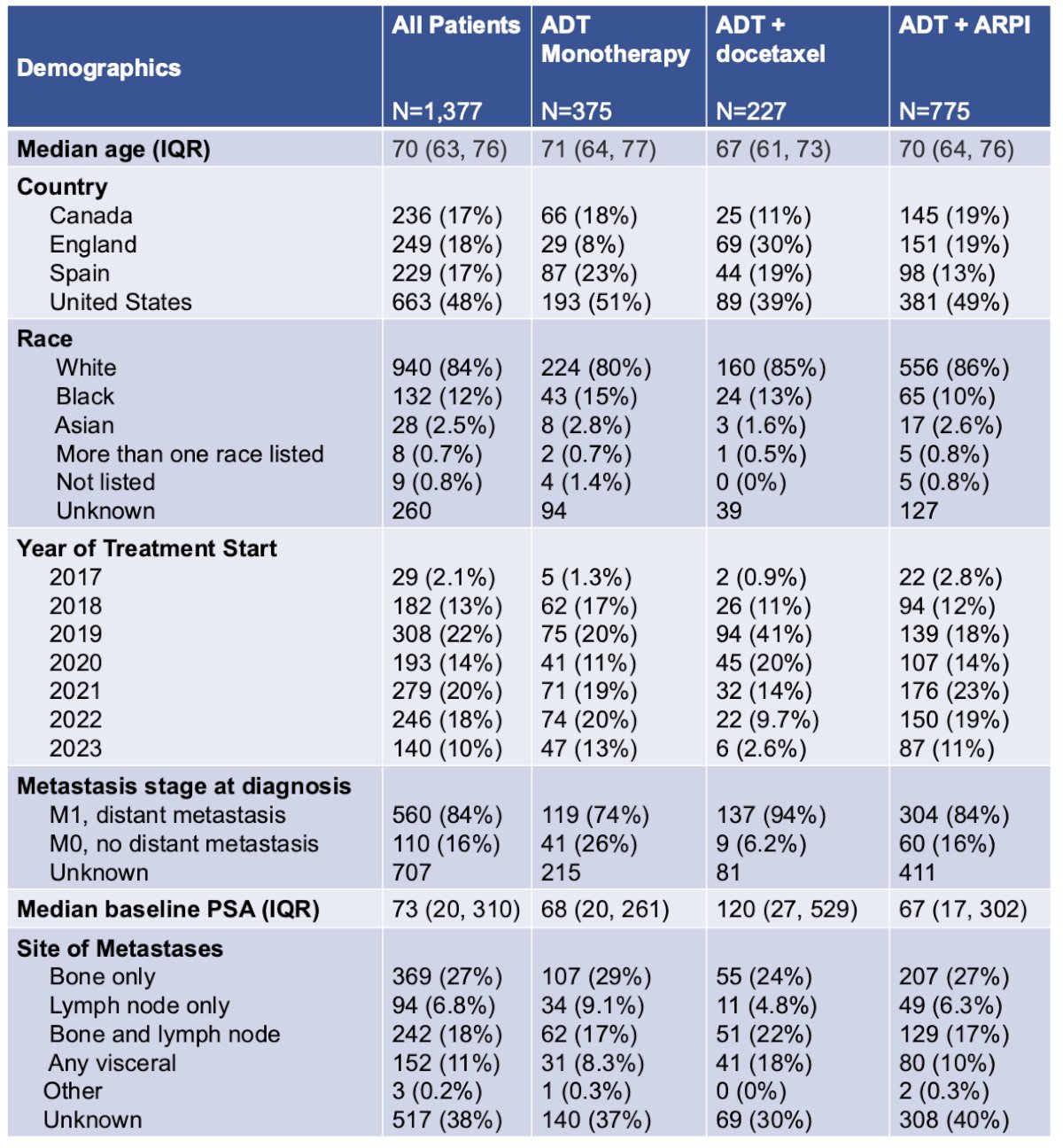
A total of 1,377 patients were included in this analysis. Baseline patient characteristics are summarized in the table below. Notably, patients treated with ADT + Docetaxel had a higher proportion of M1 disease (94%), a higher median baseline PSA (120 ng/mL), and higher rates of visceral metastases (18%).
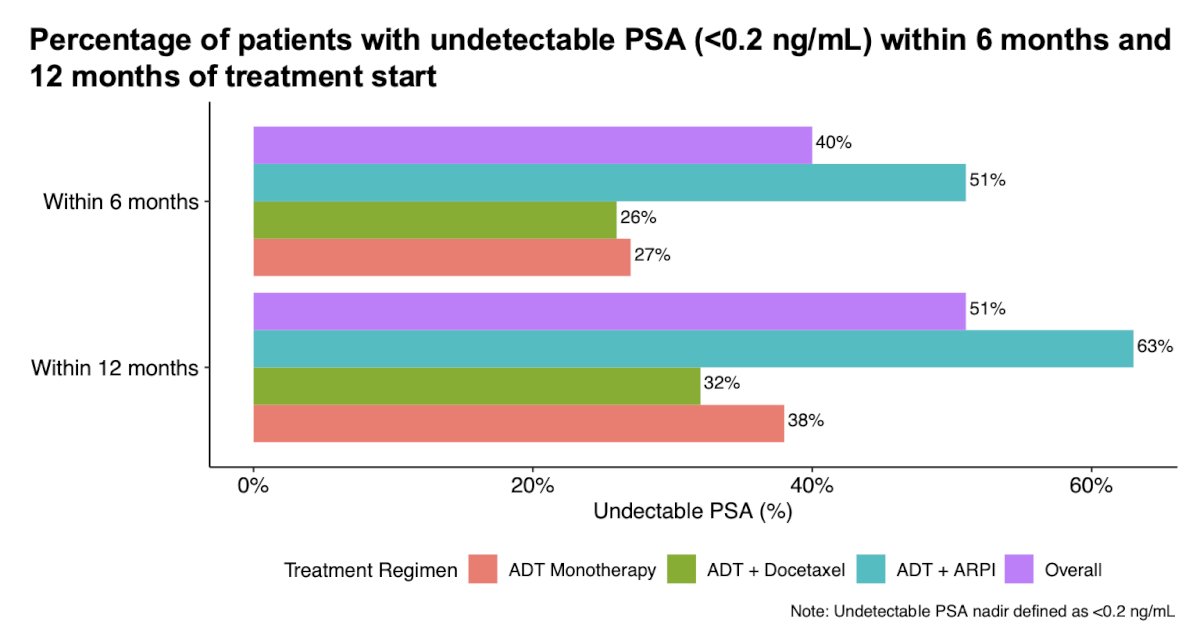
The percentage of patients with an undetectable PSA (<0.2 ng/mL) at 6 and 12 months varied significantly between treatment groups. Overall, a higher percentage of patients treated with ADT + ARPI achieved an undetectable PSA at 6 months (51%) and at 12 months (63%), as illustrated below.
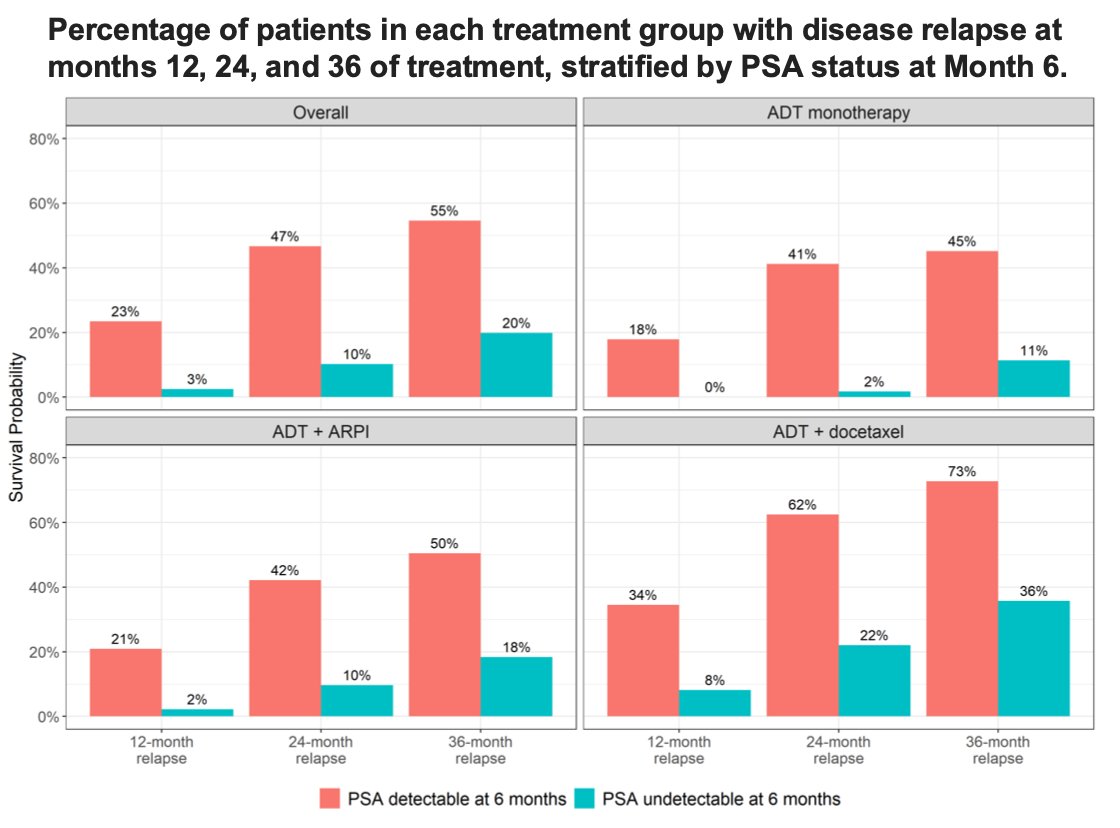
With a median follow-up of 18 months, 291 patients (21%) experienced disease relapse, and 19% experienced PSA progression. The percentage of patients with disease relapse at 12, 24, and 36 months was lower across all treatment groups in those who achieved an undetectable PSA at 6 months, as shown below.
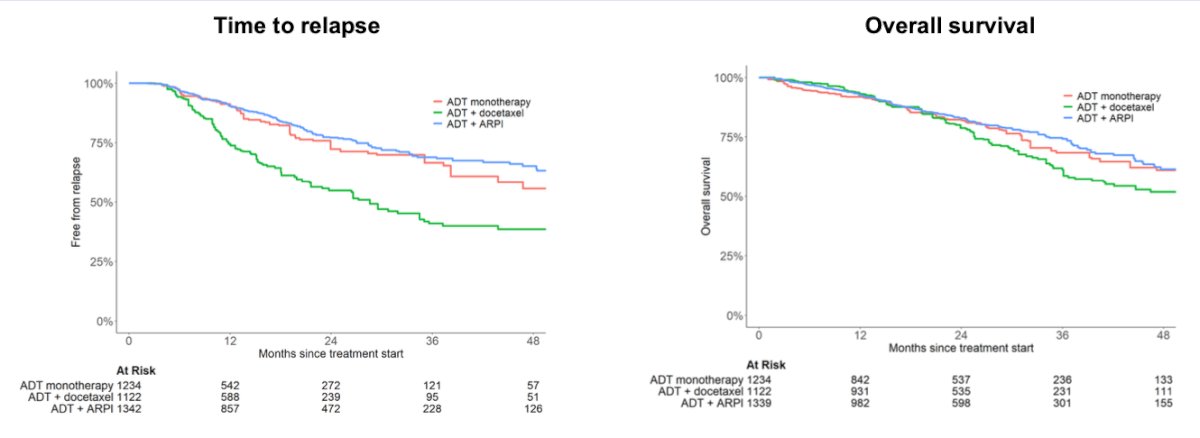
For the time to relapse and overall survival analysis, the investigators used propensity weighting to balance variables that might influence treatment decisions. These factors included site of metastases, time from diagnosis to treatment start, baseline PSA, year of treatment start, and race. Relapse-free survival appeared to be lower in patients treated with ADT+Docetaxel compared to the other two treatment groups; however, there were no significant differences in overall survival between the three treatment groups.
Dr. McManus concluded her presentation with the following message:
- In this non-randomized, real-world registry, patients with mHSPC who achieved PSA nadir <0.2 ng/mL within 6 months of treatment had a lower relapse rate than patients who did not, regardless of treatment choice.
Presented by: Hannah McManus, MD, Medical Oncologist, Department of Medicine, Duke Cancer Institute, Duke University School of Medicine.
Written by: Julian Chavarriaga, MD – Urologic Oncologist at Cancer Treatment and Research Center (CTIC) via Society of Urologic Oncology (SUO) Fellow at The University of Toronto. @chavarriagaj on Twitter during the 2025 Genitourinary (GU) American Society of Clinical Oncology (ASCO) Annual Meeting, San Francisco, CA, Thurs, Feb 13 – Sat, Feb 15, 2025.
Related content: PSA Nadir Predicts Outcomes in Metastatic Hormone-Sensitive Prostate Cancer Patients - Hannah McManus