

(UroToday.com) The 2025 GU ASCO annual meeting featured a prostate cancer session and a presentation by Dr. Rana McKay discussing a systematic review assessing the effectiveness of radium-223 in men with metastatic castration-resistant prostate cancer (mCRPC). Radium-223 has been approved for men with mCRPC with bone metastases since 2013 based on the phase 3 ALSYMPCA trial.1 However, as the treatment landscape has significantly changed in the last decade, with the addition of new treatment options including androgen receptor pathway inhibitors, chemotherapy, PARP inhibitors, and radioligand therapy, a comprehensive understanding of radium-223's real-world outcomes could inform on treatment choice in routine clinical practice. This systematic literature review aimed to fill this gap by summarizing the real-world effectiveness and safety in men with mCRPC treated with radium-223.
Electronic databases (PubMed, Embase, the Cochrane Library, trial registers) and the past-two years of relevant conferences were searched systematically for real-world observational studies examining outcomes of radium-223 in men with mCRPC published between March 4, 2014 and March 4, 2024. Study results of interest included radium-223 treatment pattern, real-world overall survival and progression free survival, pain response, change in alkaline phosphatase (ALP) or PSA, and safety outcomes (any or grade 3+ skeletal-related events, myelosuppressive adverse events). Studies with fewer than 100 participants or the following types of studies were excluded: randomized controlled trials, case reports, reviews, genetic studies, surveys, and consensus reports. Two stages of screening were undertaken: first-pass screening of abstracts and second pass screening of full test articles to confirm inclusion, with disagreements resolved through consensus or discussion with a third reviewer.
From 1,085 citations identified, 48 studies with 15,368 men with mCRPC met inclusion criteria. Most studies were retrospective cohorts (n = 39) from Europe (n = 22) and North America (n = 18), with sample size ranging from 104 to 1,628:

The median age mostly ranged from 65 to 76, and 10 studies reported tumor burden and included ≥ 25% of cohort with 20+ metastases. Over 50% of the radium-223 cohort received prior chemotherapy in 23 studies, and 50% received prior androgen receptor pathway inhibitors in 22 studies. Most studies in North America and Europe reported ≥ 55% and 64% completion of ≥ 5 cycles of radium-223, respectively:
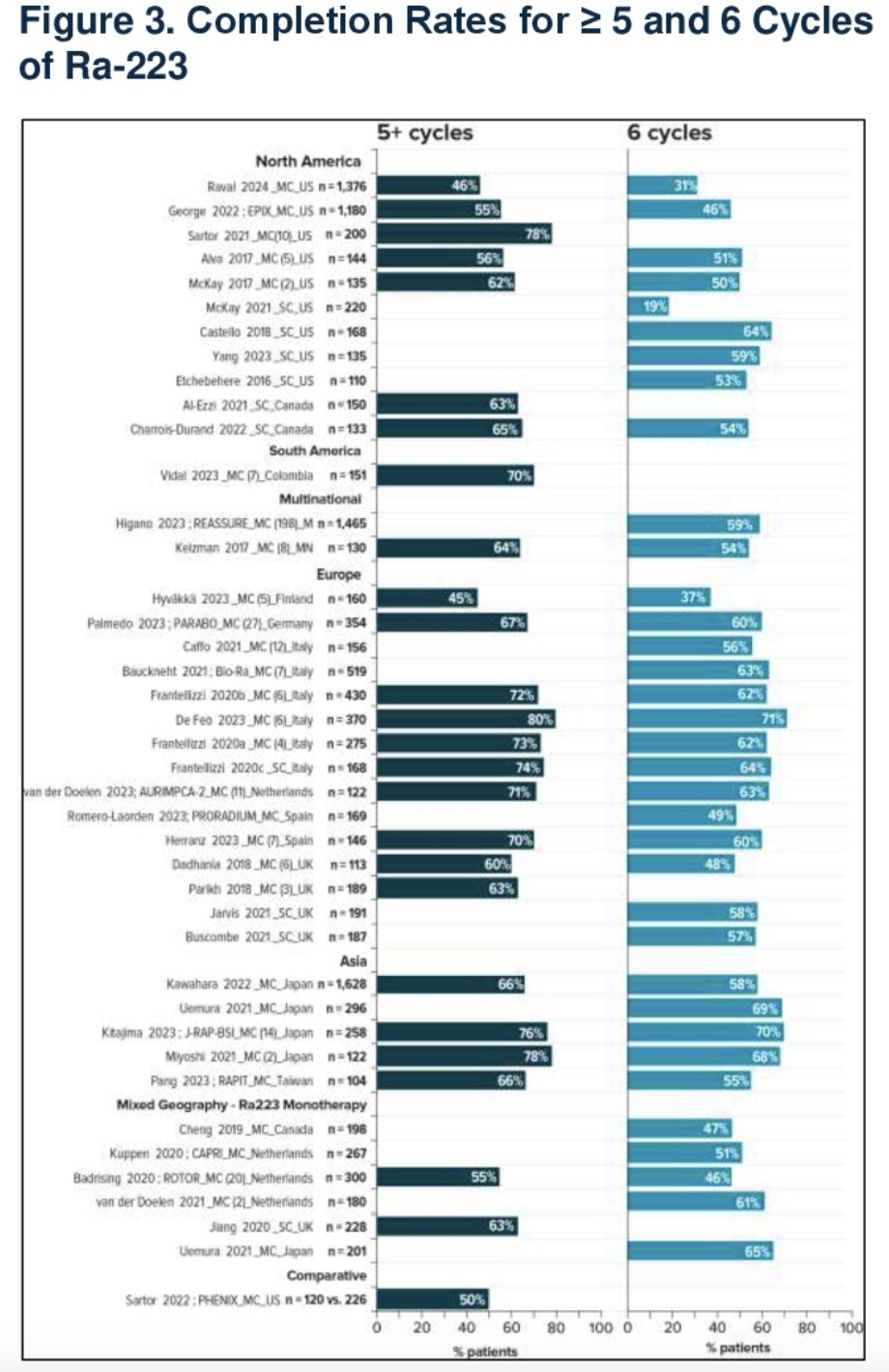
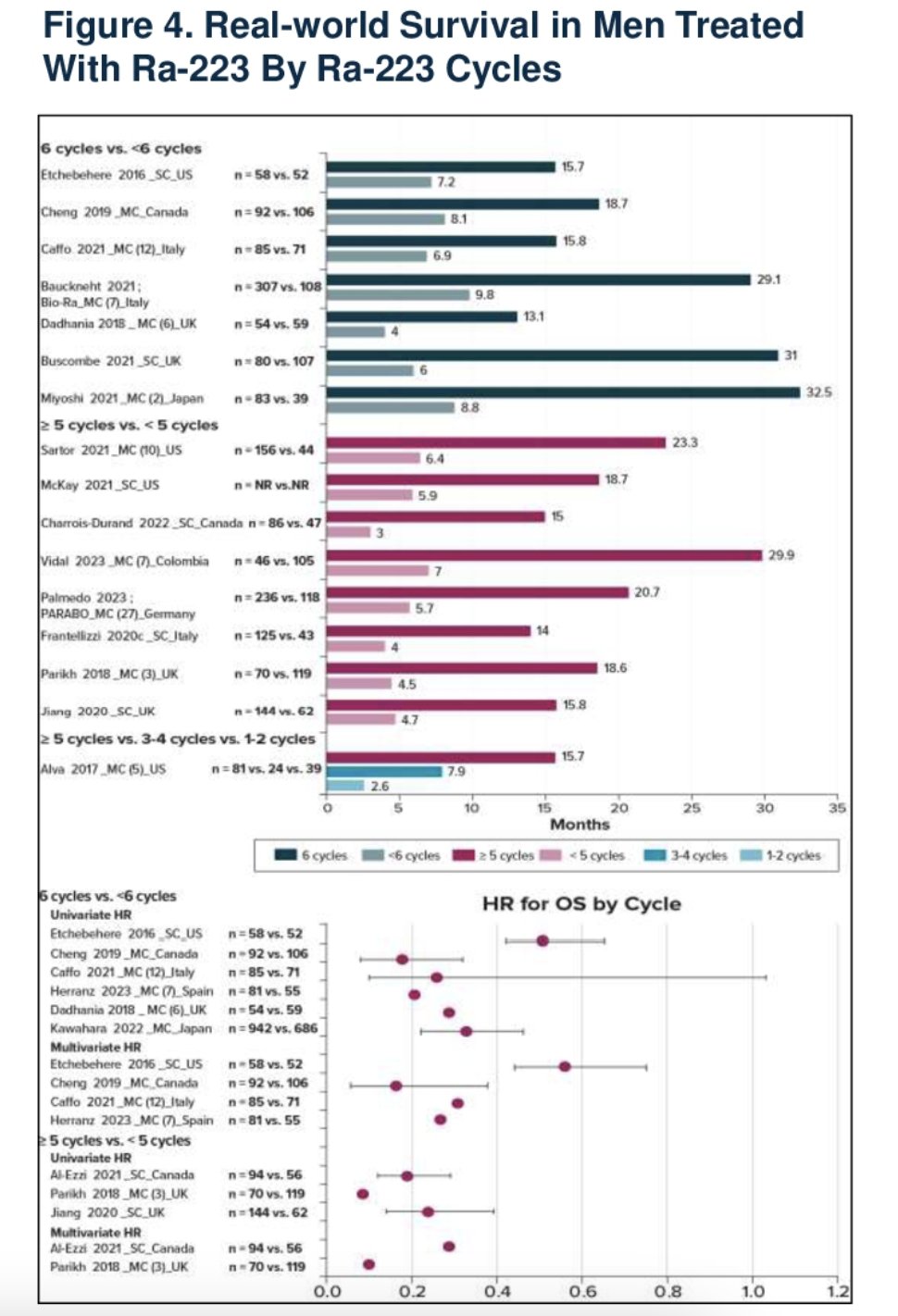
Earlier line, no prior chemotherapy or immunotherapy, hemoglobin and neutrophils within lower standard limit were key factors associated with completion of ≥5 cycles of radium-223. The median real-world overall survival varied widely from 9 to 23.5 months with two exceptions and nearly a third of studies reporting 15 months or longer. Completion of ≥ 5 cycles was associated with a 2 to 5-fold increase in the median real-world overall survival:
Progression free survival ranged from 4.3 to 7.3 months with a median of 2 prior lines in the 7 studies reporting. There were 12 studies reporting pain outcomes, demonstrating a reduction in pain with varying magnitude. >= 66% reported decline in the ALP from baseline in all studies reporting ALP outcome, and >=20% reported any reduction in PSA from baseline in most studies. Of 13 studies reporting grade 3+ myelosuppression, incidence varied from 1-22%. Out of 14 studies reporting fractures, the incidence was <10% in most studies (n = 12) with trends toward lower rates with bone health agent use. The risk of bias of included studies was generally moderate overall. Most had a clear focus, acceptable recruitment methods, accurately measured outcomes, and believable results that tended to match available evidence. Failure to take confounding factors in the study design and/or analysis into account was observed in 18 studies:

Dr. McKay noted two key limitations of this analysis:
- Inconsistencies in/no reporting the use of radium-223 by line of therapy or combination therapy with enzalutamide, limited the ability to summarize outcomes by these groups
- Prior treatment and conditions may serve as key confounders but were not reported consistently, limiting the interpretation of the study findings and limited the use of a formal meta-analysis
Dr. McKay concluded her presentation discussing a systematic review assessing the effectiveness of radium-223 in men with mCRPC with the following take-home points:
- This is the most up-to-date and comprehensive review of the effectiveness and safety of radium-223 in a modern era with more widespread use of androgen receptor pathway inhibitors post the landmark ALSYMPCA trial for radium-223
- These findings highlight the survival benefits of early use of radium-223 with the completion of 5 or more cycles, along with a favorable safety profile and low rates of fracture when guideline recommended bone health agents are used
Presented by: Rana R. McKay, MD, Department of Medicine, University of California San Diego, San Diego, CA
Written by: Zachary Klaassen, MD, MSc – Urologic Oncologist, Associate Professor of Urology, Georgia Cancer Center, Wellstar MCG Health, @zklaassen_md on Twitter during the 2025 Genitourinary (GU) American Society of Clinical Oncology (ASCO) Annual Meeting, San Francisco, CA, Thurs, Feb 13 – Sat, Feb 15, 2025.
Related content: Systematic Review of Real-World Outcomes of Radium-223 in mCRPC Treatment - Rana McKay
References:
- Parker C, Nilsson S, Heinrich D, et al. Alpha emitter radium-223 and survival in metastatic prostate cancer. N Engl J Med 2013;369(3):213-223.