

(UroToday.com) The 2025 GU ASCO annual meeting featured a prostate cancer session and a presentation by Dr. Rebecca Hassoun discussing PSA response to 177Lu-PSMA-617 in patients experiencing xerostomia and ocular dryness in metastatic castration resistant prostate cancer (mCRPC).
177Lu-PSMA-617 therapy can cause dry mouth and/or eyes, given that PSMA is expressed in salivary and lacrimal glands. As such, at the GU ASCO 2025 annual meeting, Dr. Hassoun and colleagues reported results of their evaluation of PSA response in patients with mCRPC receiving 177Lu-PSMA-617 who experienced dry mouth/eyes.
The Indiana University Prostate Cancer database was queried for patients with mCRPC who were treated with 177Lu-PSMA-617 (November 2022 – October 2024), and adverse events were documented throughout the course of treatment. Included patients received at least two doses of 177Lu-PSMA-617. PSA30 and PSA50 responses were analyzed among subgroups of patients who had presence/absence of xerostomia and ocular dryness.
Overall, 144 patients with mCRPC were treated with 177Lu-PSMA-617. The median age was 74 (range: 53 to 91), 126 patients had metastatic disease in bone, 80 in pelvic lymph nodes, 27 in the lungs, 20 in the liver, and 5 in the brain. There were 58 patients that had one prior androgen receptor pathway inhibitor, and 86 patients had received ≥2 prior androgen receptor pathway inhibitors. There were 28 patients that had no prior taxane chemotherapy regimen, and 116 patients had at least one prior taxane. There were 23 patients in the cohort that had received a prior PARP inhibitor: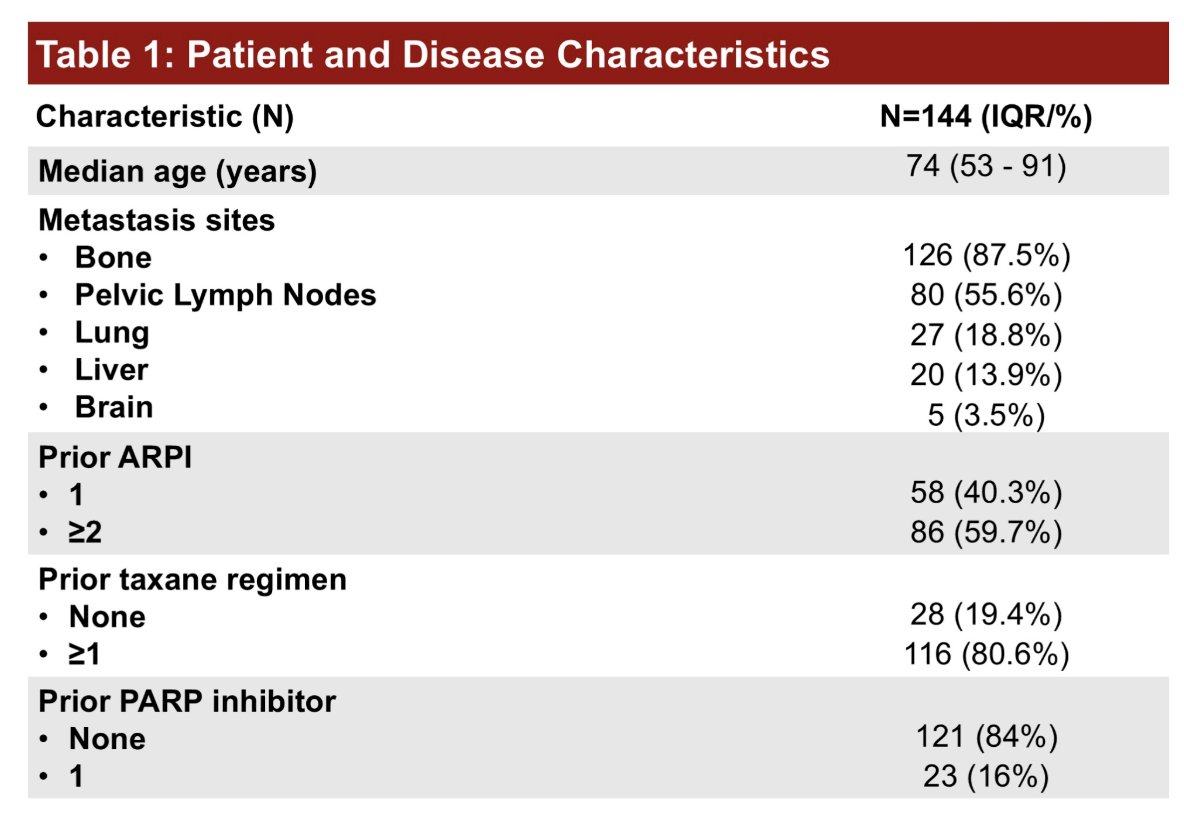
The median follow-up from the start of 177Lu-PSMA-617 was 9.77 months (1.38-26.9), over which 62 (43.1%) patients experienced dry mouth, 15 (10.4%) experienced dry eyes, and 13 (9%) experienced both. Among these patients, 92 (63.9%) patients achieved a PSA30 respons,e and 81 (56.3%) achieved a PSA50 response: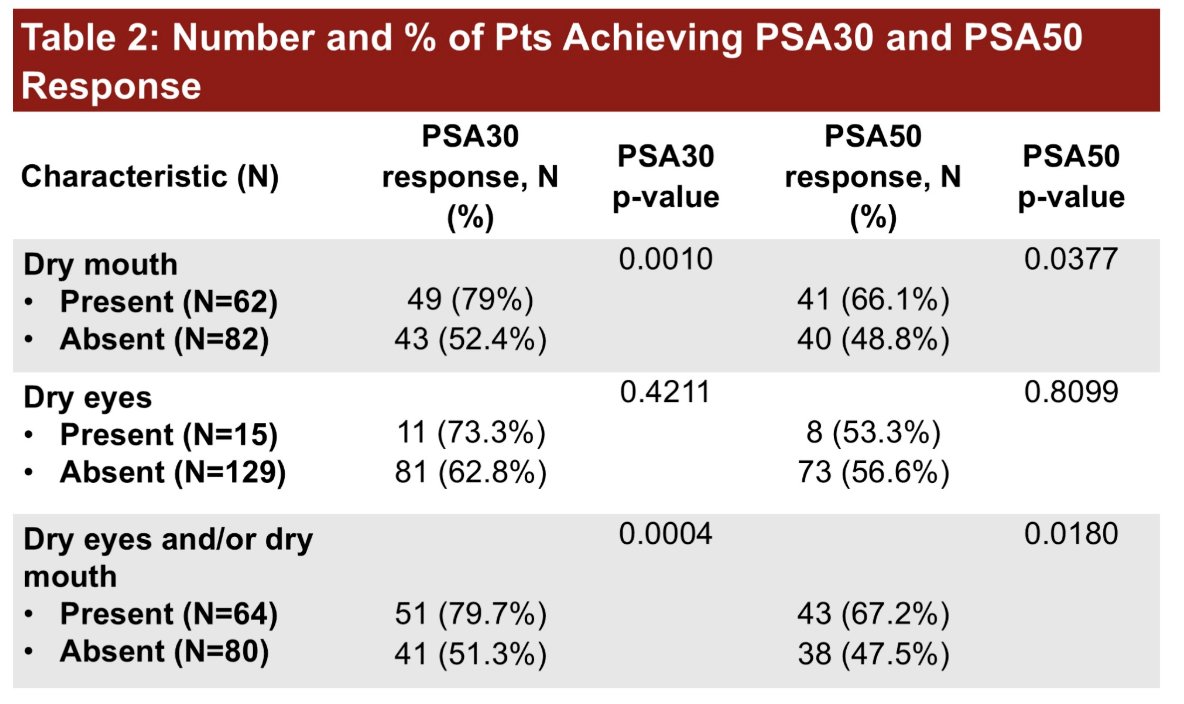
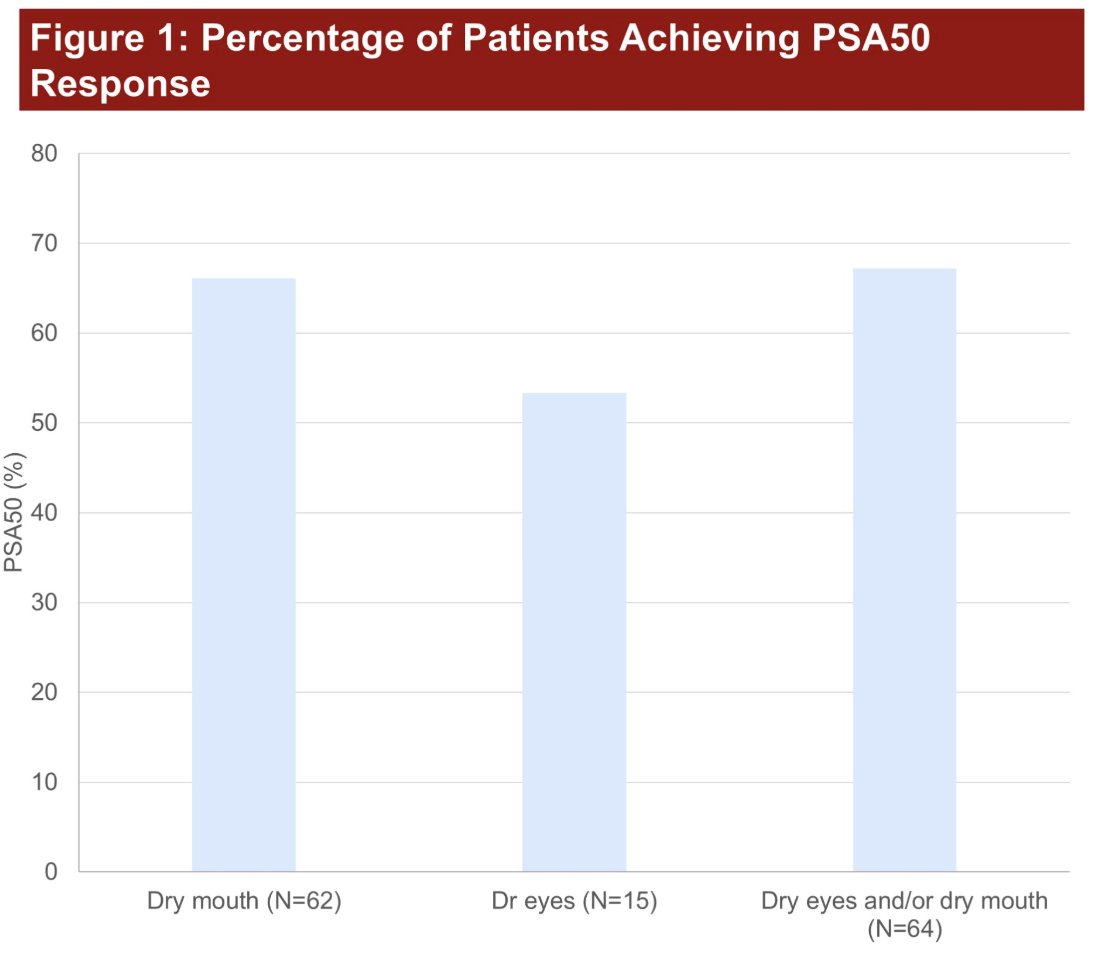
Dr. Hassoun concluded her presentation discussing PSA response to 177Lu-PSMA-617 in patients experiencing xerostomia and ocular dryness in mCRPC by emphasizing that patients with mCRPC treated with 177Lu-PSMA-617 who reported dry mouth were more likely to experience PSA responses.
Presented by: Rebecca Hassoun, MD, Indiana University Health Melvin and Bren Simon Comprehensive Cancer Center, Indianapolis, IN
Written by: Zachary Klaassen, MD, MSc – Urologic Oncologist, Associate Professor of Urology, Georgia Cancer Center, Wellstar MCG Health, @zklaassen_md on Twitter during the 2025 Genitourinary (GU) American Society of Clinical Oncology (ASCO) Annual Meeting, San Francisco, CA, Thurs, Feb 13 – Sat, Feb 15, 2025.