

(UroToday.com) The 2025 American Society of Clinical Oncology Genitourinary (ASCO GU) cancers symposium held in San Francisco, CA was host to Poster Session A: Prostate Cancer. Dr. Daniel George presented Abstract 63: Patient characteristics and overall survival with lutetium (Lu177) vipivotide tetraxetan (177Lu-PSMA-617): A real-world analysis of early adopters.
Prostate cancer is the second most common cancer in men worldwide, with 209,010 new cases estimated in the USA in 2024. Metastatic prostate cancer has a poor prognosis, with a 5-year survival rate of 36.6%, which drops further to 15% in patients with metastatic castration-resistant prostate cancer (mCRPC).
177Lu-PSMA-617 is a prostate-specific membrane antigen (PSMA)-targeting radioligand therapy approved for the treatment of metastatic castration-resistant prostate cancer (mCRPC). It received FDA approval in March 2022 for adult patients with PSMA-positive mCRPC who had previously received both an androgen receptor pathway inhibitor (ARPI) and taxane-based chemotherapy, based on the results of the VISION and TheraP trials.1,2 However, outside of clinical trials, real-world evidence on the effectiveness of ¹⁷⁷Lu-PSMA-617 remains limited. The investigators aimed to evaluate patient characteristics and overall survival in a large real-world cohort of patients with mCRPC treated with ¹⁷⁷Lu-PSMA-617
This retrospective, observational study utilized IQVIA PharMetrics Plus claims data from July 1, 2013, to December 31, 2023, incorporating linked social determinants of health and mortality data to determine the month and year of death. Adult men with mCRPC who received ¹⁷⁷Lu-PSMA-617 were identified and included in the study. The first administration of ¹⁷⁷Lu-PSMA-617 served as the index date. Overall survival (OS) was measured from the start of treatment until death or the end of available follow-up and was analyzed using Kaplan–Meier methods

The analysis included 643 patients, all of whom received ¹⁷⁷Lu-PSMA-617 after FDA approval. The patient attrition is shown below.

Most patients were ≥65 years old (67%) with a median age of 69 years. Most patients were treated with Medicare (39%) and self-pay/cash (38%) as the most common payment sources. The majority had multiple comorbidities and metastatic disease, with one (35.1%) or two (34.8%) metastatic sites. Bone metastases were most common (90.4%), while 44.2% had visceral metastases, primarily in the liver (12.1%). Notably, A total of 296/643 patients had received either an ARPI or taxane prior to¹⁷⁷Lu-PSMA, which differs from the VISION study where patients were required to have prior treatment with both an ARPI and taxane.

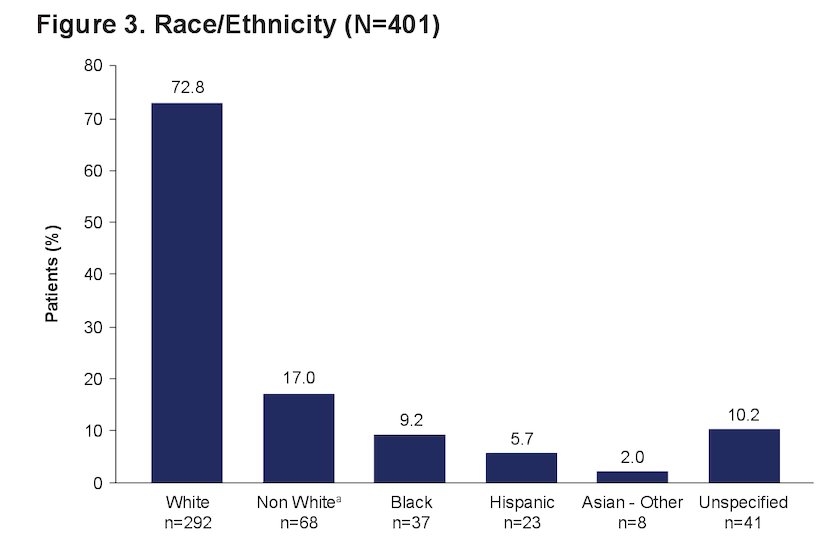
White patients comprised the largest proportion (72.8%), followed by Black (9.2%), Hispanic (5.7%), and Asian patients (2%).
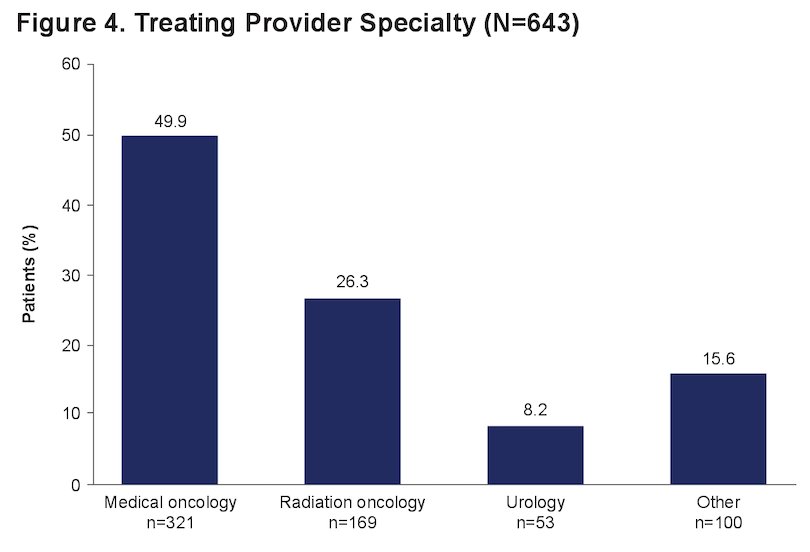
Most patients (50%) were treated by medical oncologists, 26.3% managed by radiation oncologists and only 8% managed by urologists.
The median overall survival from the start of ¹⁷⁷Lu-PSMA-617 therapy was 15.3 months (95% CI: 14.6–16.3), with 137 of 643 patients (21.3%) having died at the time of analysis. Subgroup analysis showed, no major differences by provider specialty, metastatic site, number of metastatic sites, race, or age.

Dr. George concluded his presentation with the following key takeaways:
- This is the first large-scale study reporting overall survival with ¹⁷⁷Lu-PSMA-617 in clinical practice.
- The observed overall survival with ¹⁷⁷Lu-PSMA-617 (median: 15.3 months) was consistent with findings from the VISION Phase III trial (median: 15.3 months)
- ¹⁷⁷Lu-PSMA-617 demonstrated similar survival outcomes across different patient subgroups.
Presented by: Daniel J. George, MD, Medical Oncologist, Department of Medicine, Duke Cancer Institute, Duke University School of Medicine.
Written by: Julian Chavarriaga, MD – Urologic Oncologist at Cancer Treatment and Research Center (CTIC) via Society of Urologic Oncology (SUO) Fellow at The University of Toronto. @chavarriagaj on Twitter during the 2025 Genitourinary (GU) American Society of Clinical Oncology (ASCO) Annual Meeting, San Francisco, CA, Thurs, Feb 13 – Sat, Feb 15, 2025.
References:- Sartor O, de Bono J, Chi KN, Fizazi K, Herrmann K, Rahbar K, Tagawa ST, Nordquist LT, Vaishampayan N, El-Haddad G, Park CH, Beer TM, Armour A, Pérez-Contreras WJ, DeSilvio M, Kpamegan E, Gericke G, Messmann RA, Morris MJ, Krause BJ; VISION Investigators. Lutetium-177-PSMA-617 for Metastatic Castration-Resistant Prostate Cancer. N Engl J Med. 2021 Sep 16;385(12):1091-1103. doi: 10.1056/NEJMoa2107322. Epub 2021 Jun 23. PMID: 34161051; PMCID: PMC8446332.
- Hofman MS, Emmett L, Sandhu S, Iravani A, Buteau JP, Joshua AM, Goh JC, Pattison DA, Tan TH, Kirkwood ID, Ng S, Francis RJ, Gedye C, Rutherford NK, Weickhardt A, Scott AM, Lee ST, Kwan EM, Azad AA, Ramdave S, Redfern AD, Macdonald W, Guminski A, Hsiao E, Chua W, Lin P, Zhang AY, Stockler MR, Williams SG, Martin AJ, Davis ID; TheraP Trial Investigators and the Australian and New Zealand Urogenital and Prostate Cancer Trials Group. Overall survival with [177Lu]Lu-PSMA-617 versus cabazitaxel in metastatic castration-resistant prostate cancer (TheraP): secondary outcomes of a randomised, open-label, phase 2 trial. Lancet Oncol. 2024 Jan;25(1):99-107. doi: 10.1016/S1470-2045(23)00529-6. Epub 2023 Nov 30. PMID: 38043558.