

(UroToday.com) The 2025 American Society of Clinical Oncology (ASCO) Genitourinary (GU) Annual Symposium held in San Francisco, CA was host to a prostate cancer poster session. Dr. Mathilde Beaufils presented the results of a multicentric analysis evaluating PET imaging for metastatic castration sensitive prostate cancer (mCSPC) patients who have a PSA response following systemic therapy.
Dr. Beaufils noted that the landscape of mCSPC treatment has evolved over the last decade with the addition of androgen receptor pathway inhibitors (ARPI; i.e., apalutamide, enzalutamide, abiraterone acetate, darolutamide) to ADT, improving survival outcomes. While treatment intensification in this setting is strongly recommended given the documented survival benefits, this raises the question as to which patients (and when) should receive subsequent treatment deintensification. Incorporating novel biomarkers, including novel imaging modalities, is potentially key in this setting.
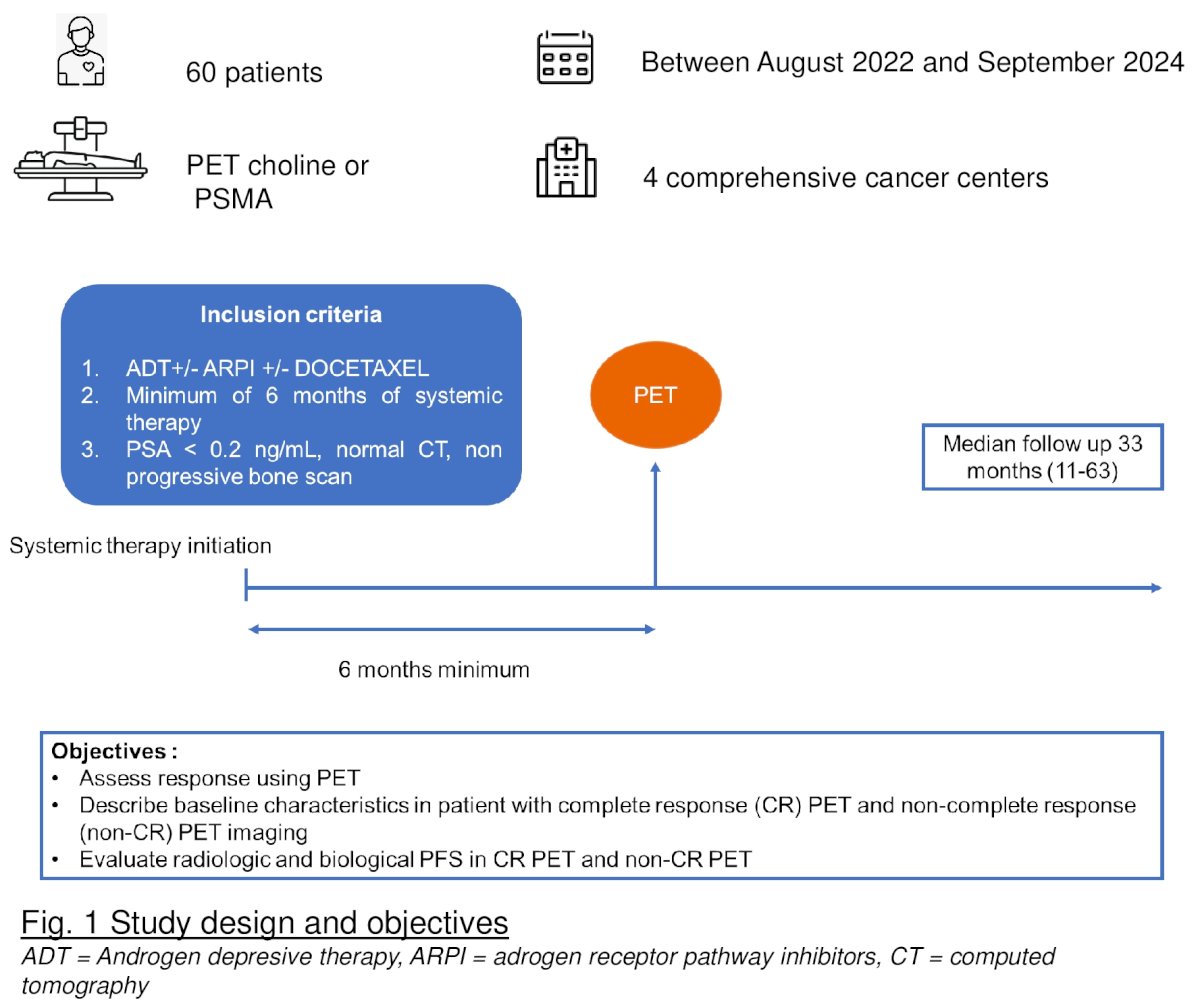
Currently, PET imaging is not recommended for the routine surveillance of mCSPC patients receiving systemic therapy, but could be useful to monitor and predict treatment responses. Accordingly, Dr. Beuafils and colleagues conducted a multicentric, observational study aimed at evaluating PET imaging and PSA responses in mCSPC patients receiving systemic therapy.
This study included 60 mCSPC patients who received ≥6 months of systemic therapy (ADT +/- ARPI +/- docetaxel) who achieved a PSA response, defined as <0.2 ng/ml, and had a normal CT scan, non-progressive disease on bone scan, and had PSMA PET imaging findings available (PET choline or PSMA). The study objectives were to:
- Assess response using PET
- Describe baseline characteristics in patients with PET complete (CR) and non-complete responders (non-CR)
- Evaluate radiographic and biologic PFS in PET CR and non-CR patients
Overall, 80% of patients had a complete response to PET (PET choline: 83%, PET PSMA: 16%). The median time between treatment initiation and PET was 17 months.
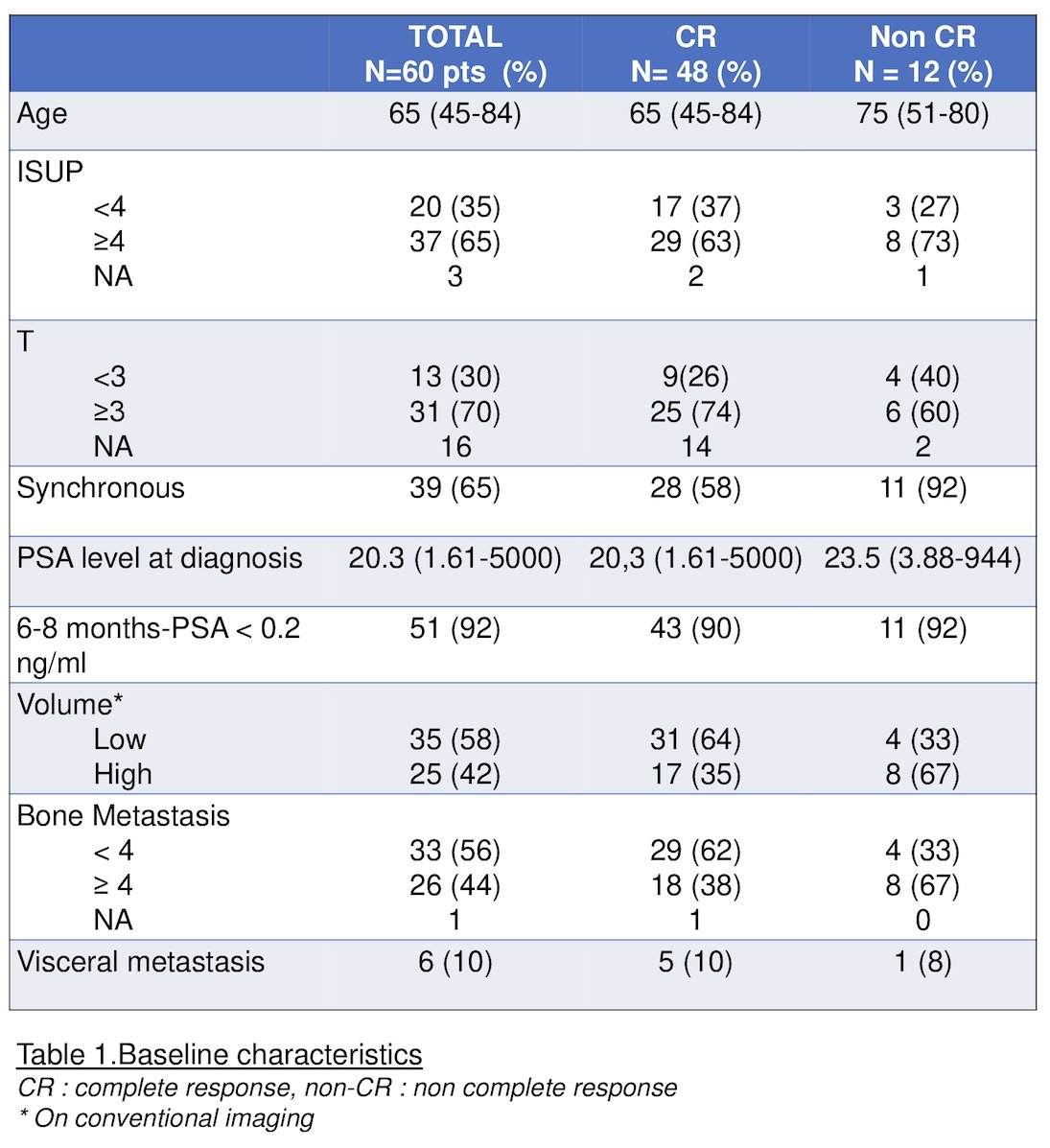
The baseline patient characteristics are summarized below. The median patient age was 65 years. 65% of patients ISUP Grade Group ≥4 disease and synchronous metastases. The median PSA at diagnosis was 20.3 ng/mL. 10% of patients had visceral metastases. A complete response was observed in 48/60 patients.
Compared to complete responders, non-complete responders had higher volume disease (high volume: 67% versus 35%), particularly bone metastatic disease (≥4 bone lesions: 67% versus 38%), and were more likely to have had metastases at presentation (i.e., synchronous; 92% versus 58%).
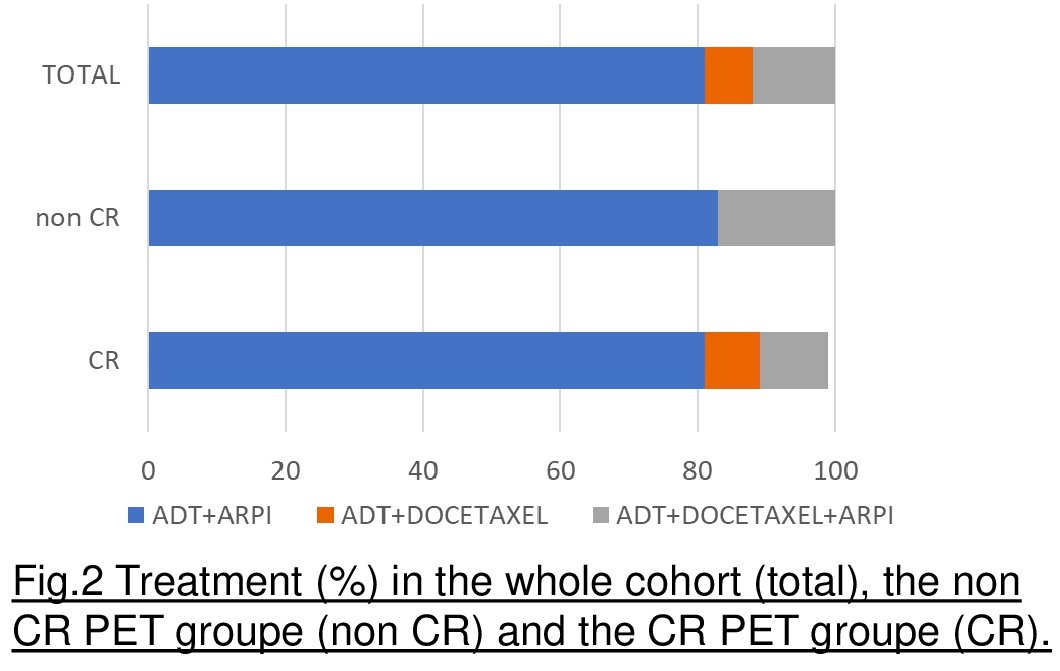
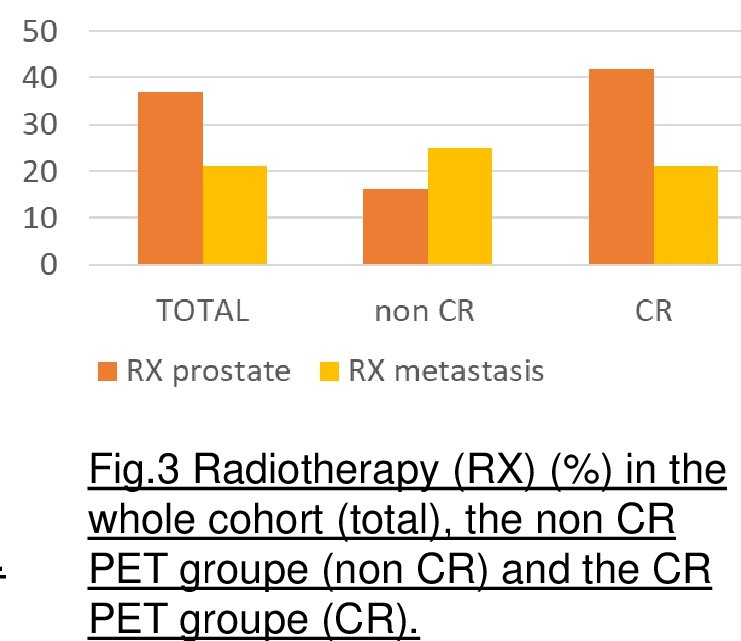
Patients were treated with ADT + ARPI in 81% of cases, ADT + docetaxel in 7%, and triplet therapy in 12% of cases. Patients had prostate radiotherapy in 39% and metastasis-directed therapy to metastatic bone lesions in 19%.
The median time between treatment initiation and PET imaging was 17 months, and the corresponding time between achieving a PSA <0.2 ng/ml and PET imaging was 12 months. There were no differences in overall (i.e., biologic) survival between CR and non-CR patients (p=0.43). As expected, radiologic PFS favored the PET CR group (p=0.03).
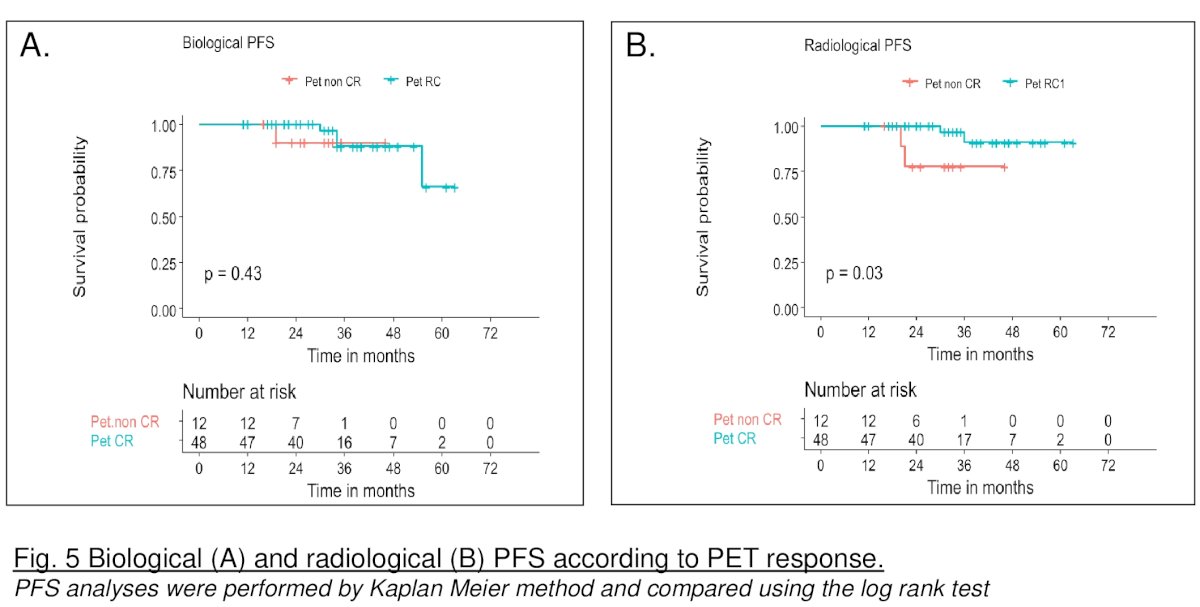
The patient characteristics of patients with progressive (n=6) versus non-progressive disease (n=54) are illustrated below:
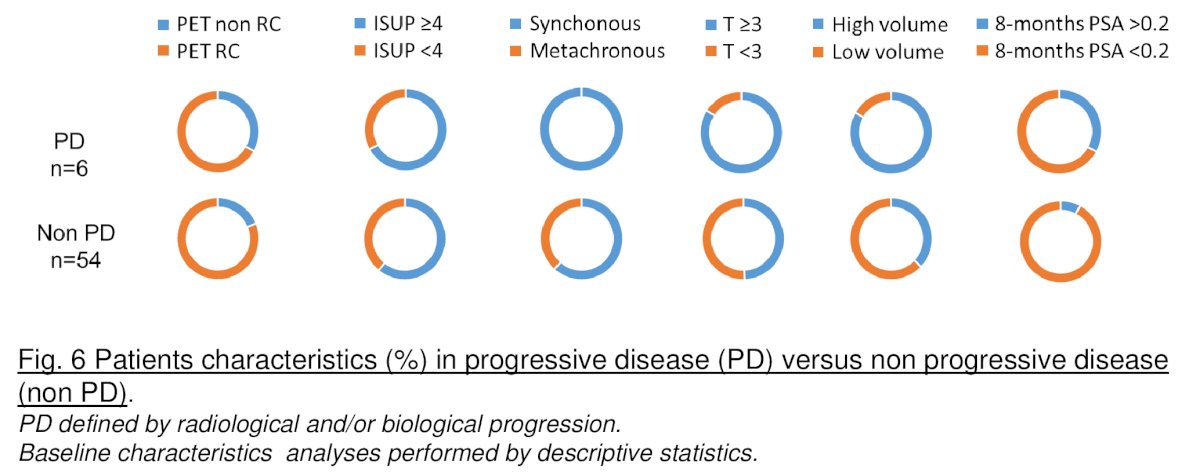
Those with non-progressive disease were more likely to have a PET CR, ISUP Grade Group <4 disease, metachronous presentation, ≤cT2 disease, low-volume disease, and 8 months PSA <0.2 ng/ml.
Dr. Beaufils concluded her presentation by noting that among mCSPC patients treated with ADT +/- an ARPI +/- docetaxel and who had a serum PSA level <0.2 ng/ml, an 81% complete response is observed when PSMA PET imaging is performed. Although routine PSMA PET imaging is not recommended in this setting, this additional information could be an additional surrogate measure to identify patients who may benefit from further treatment intensification or deintensification in this setting.
Presented by: Mathilde Beaufils, Institut Paoli-Calmettes, Marseille, France
Written by: Rashid K. Sayyid, MD, MSc – Robotic Urologic Oncology Fellow at The University of Southern California, @rksayyid on Twitter during the 2025 Genitourinary (GU) American Society of Clinical Oncology (ASCO) Annual Meeting, San Francisco, CA, Thurs, Feb 13 – Sat, Feb 15, 2025.