

(UroToday.com) The 2025 GU ASCO annual meeting featured a kidney cancer session and a presentation by Dr. Cristiane Bergerot discussing the development of FKSI-23, a new bespoke health-related quality of life questionnaire for the advanced and adjuvant setting in renal cell carcinoma (RCC). RCC is the 8th most common cancer, with 330,000 cases and over 100,000 deaths annually from metastatic disease. VEGF inhibitors, immune checkpoint inhibitors, and combination therapies have transformed RCC care, with adjuvant pembrolizumab now an option for high risk localized RCC. However, existing health-related quality of life measures may not fully capture the experiences of patients with localized and advanced RCC. This study aimed to develop a validated, patient-centered health-related quality of life metric by incorporating insights from patients, advocates, and clinical experts for both localized and advanced RCC. Dr. Bergerot and colleagues previously developed a questionnaire for advanced RCC, and in this study they integrated it into the FKSI-19 model and create a new questionnaire.
This was a prospective, international (United States, Europe, Brazil) study developed from August 2022 to October 2024. A four-phase approach was used, adhering to the guidelines for developing new measures:
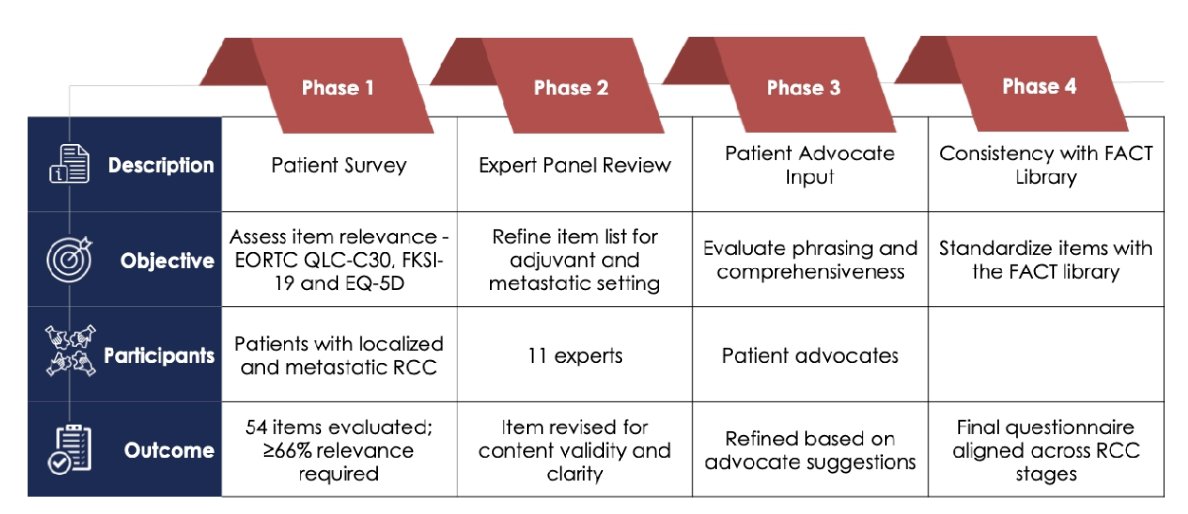
Previous work in advanced RCC assessed item relevance from established health-related quality of life measures (FKSI-19, EORTC QLQ-C30, EQ-5D), refined through patient feedback and expert review. This phase expanded to include localized RCC in the adjuvant setting. In Phase 1, patients with localized RCC rated the relevance of 54 items from the metastatic cohort. Phase 2 included a panel of 11 experts refining the adjuvant-specific items. Phase 3 gathered feedback from patient advocates, and Phase 4 further refined the items by harmonizing them with the FACT library for consistency across RCC stages.
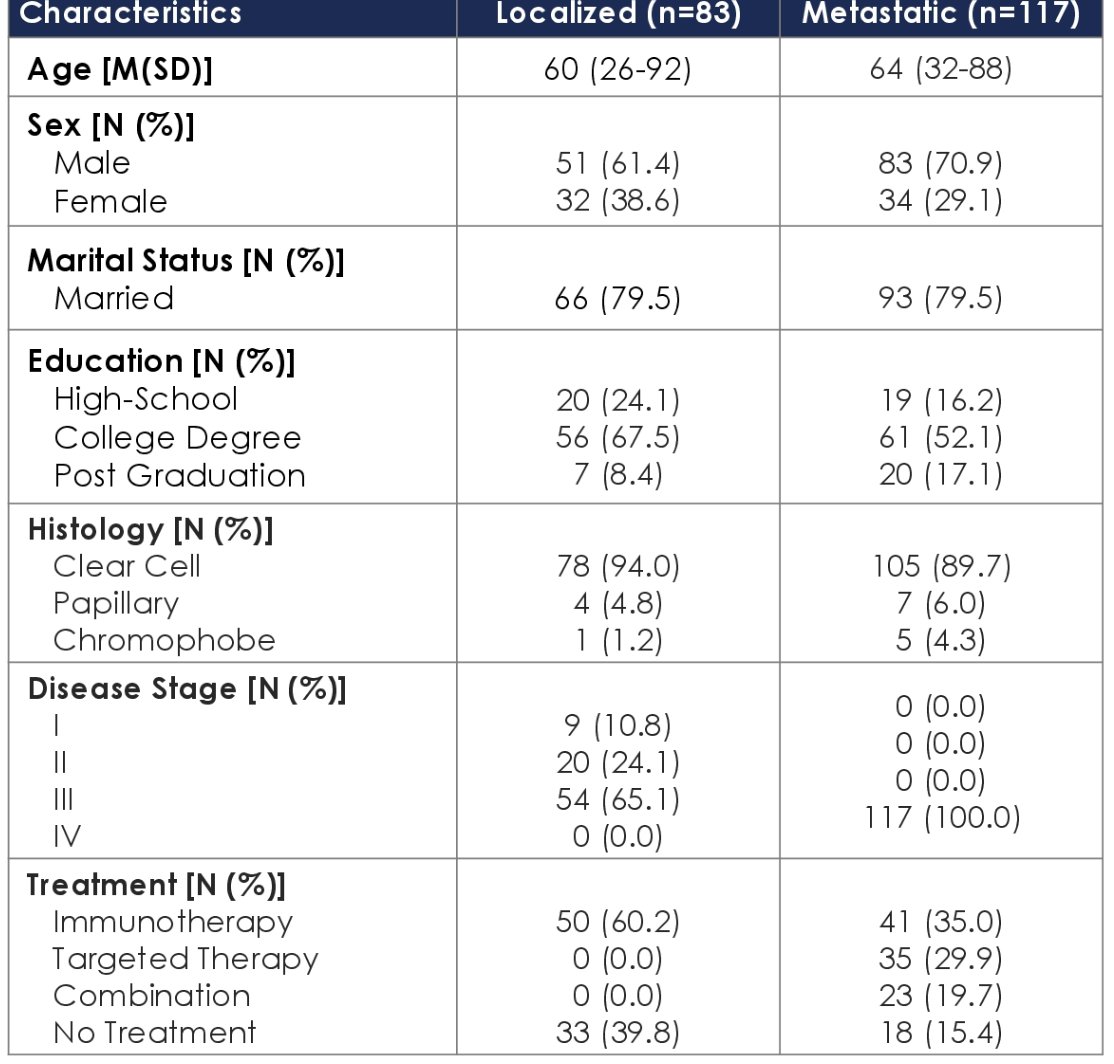
Patient characteristics of the 200 patients included in the study are highlighted in the following table:
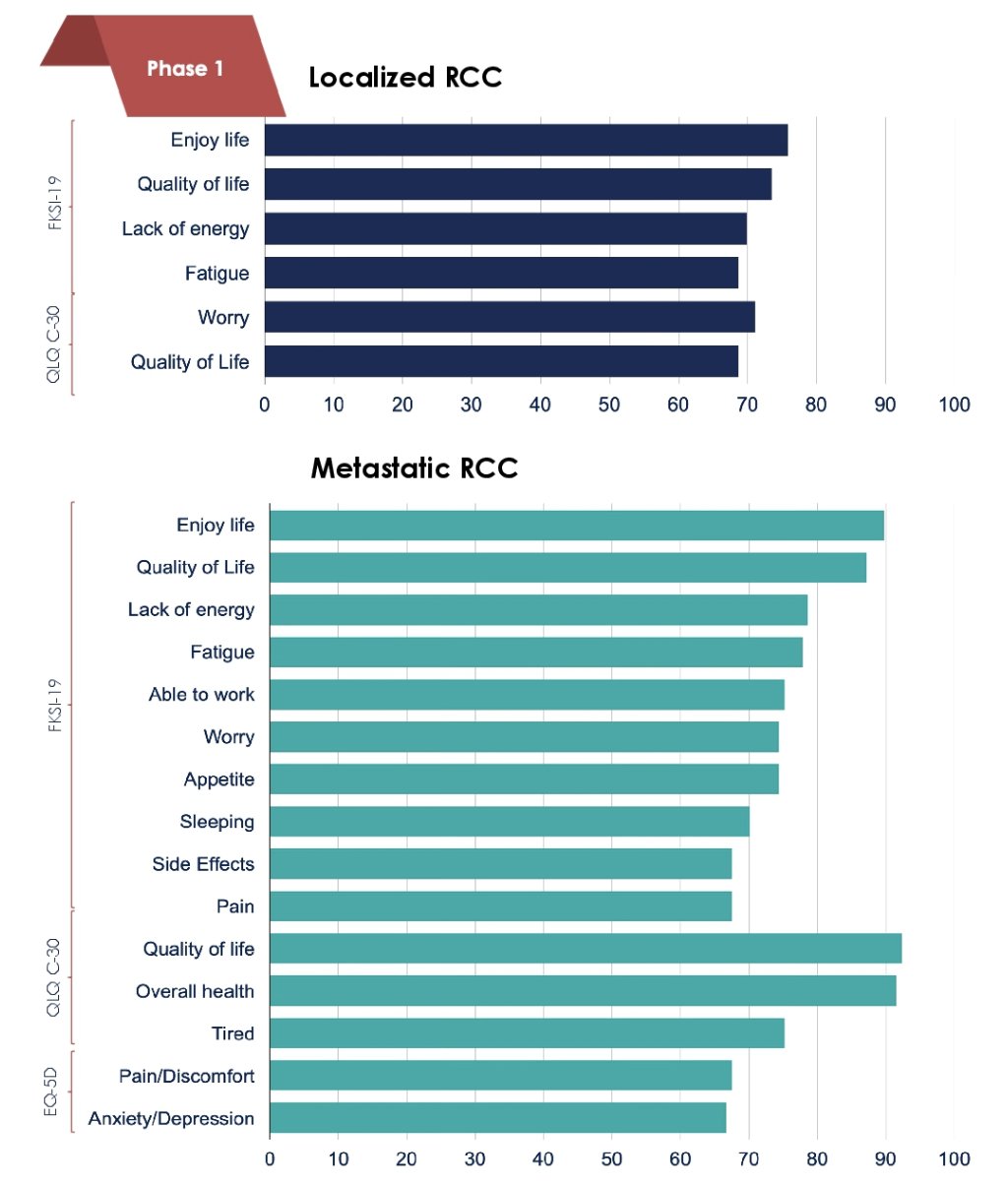
In Phase 1, 6 of 54 items were rated as most relevant by patients with localized RCC:
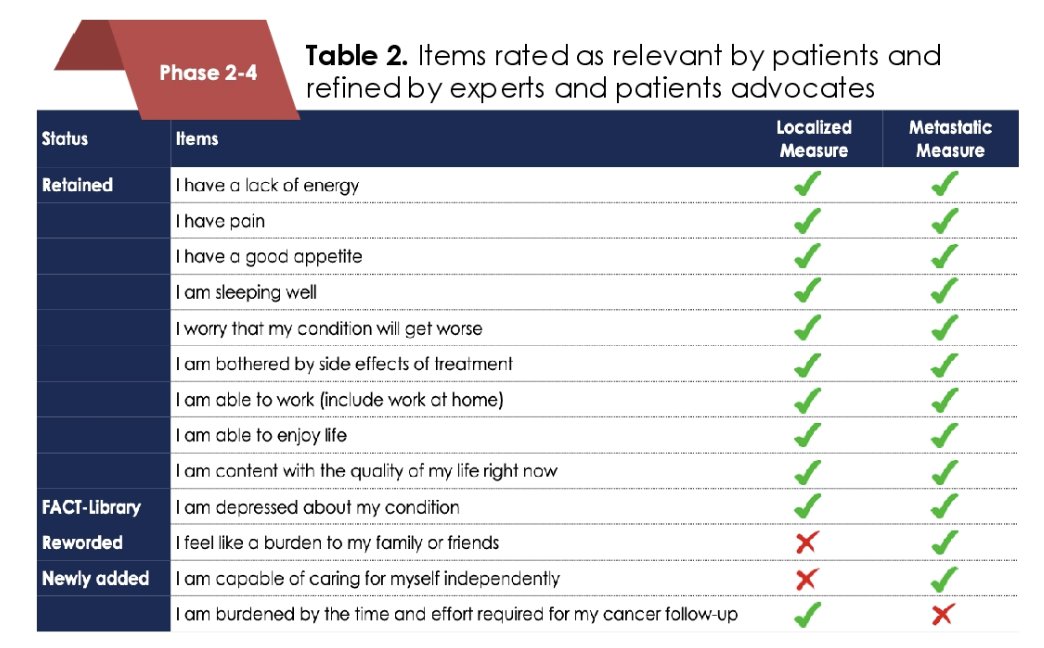
Phase 2 refined these further, excluding redundant items and adding 4 new questions focused on adjuvant therapy. Phase 3 led to minor revisions after advocate review, and Phase 4, the new items were harmonized with validated FACT library questions:
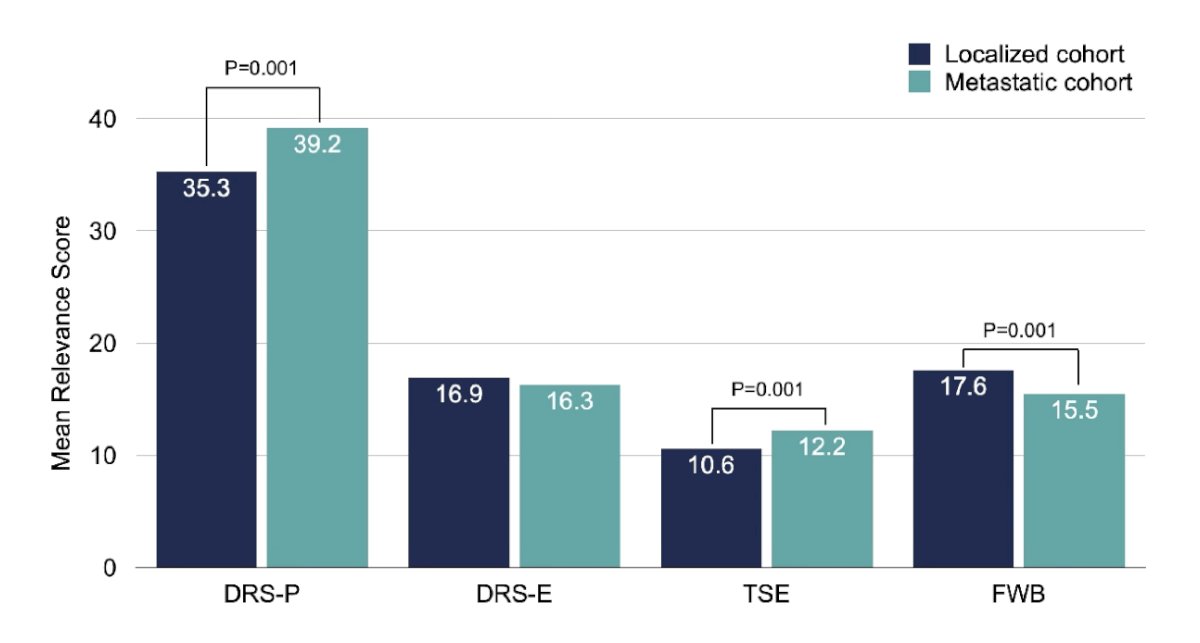
Analysis of the four domains revealed significant differences:
- The metastatic cohort reported higher relevance in disease related symptoms subscale – physical and treatment side effects subscale compared to the localized cohort (p < 0.001)
- The localized cohort reported higher relevance in functional and well being subscale compared to the metastatic cohort
- There was no difference observed in disease related symptoms subscale – emotional
The limitations of this study include a small sample size and retrospective methods that may limit generalizability.
Dr. Bergerot concluded her presentation discussing the development of FKSI-23, a new bespoke health-related quality of life questionnaire for the advanced and adjuvant setting in RCC with the following statements:
- Novel health related quality of life items were refined through collaboration with patients, advocates, and experts, ensuring relevance to RCC experiences
- Localized RCC prioritized functional well being and emotional health, while metastatic RCC highlighted physical symptoms and treatment side effects
- Tailored health related quality of life tools enhance symptom management, patient provider communication, and patient centered care
- FKSI-23 is being validated in the PRISM and CARE-1 trials
- These tools can inform treatment strategies and optimize health related quality of life assessment for RCC
Presented by: Cristiane D. Bergerot, MD, Oncoclinicas & Co, Brasilia, Brazil
Written by: Zachary Klaassen, MD, MSc – Urologic Oncologist, Associate Professor of Urology, Georgia Cancer Center, Wellstar MCG Health, @zklaassen_md on Twitter during the 2025 Genitourinary (GU) American Society of Clinical Oncology (ASCO) Annual Meeting, San Francisco, CA, Thurs, Feb 13 – Sat, Feb 15, 2025