

(UroToday.com) The 2025 American Society of Clinical Oncology (ASCO) Genitourinary (GU) Annual Symposium held in San Francisco, CA between February 13–15, 2025 was host to a renal cell, adrenal, penile, testicular, and urethral cancers poster session. Dr. Axel Merseburger presented the primary analysis from AVION, a real-world study of the effectiveness and safety of first-line (1L) avelumab + axitinib in patients with advanced renal cell carcinoma (aRCC).
In the JAVELIN Renal 101 phase III trial, 1L avelumab + axitinib resulted in significantly longer progression-free survival (PFS) and higher objective response rate (ORR) versus sunitinib in patients with aRCC, with an acceptable safety profile. In the final analysis (minimum follow-up: 68 months in all patients), the median investigator-assessed PFS was 13.9 versus 8.5 months (hazard ratio [HR]: 0.66, p<0.0001), and the ORR was 59.7% vs 32% (odds ratio [OR]: 3.23, p<0.0001), respectively.
The final analysis of OS favored avelumab + axitinib vs sunitinib, but differences did not reach statistical significance (median OS: 44.8 vs 38.9 months, respectively; HR: 0.88, p=0.067). The long-term safety of avelumab + axitinib treatment was demonstrated.1,2
Results from JAVELIN Renal 101 led to the approval of avelumab + axitinib in multiple countries worldwide. However, real-world data for avelumab + axitinib treatment in clinical practice remain limited. AVION is a real-world study evaluating the effectiveness and safety of avelumab + axitinib in routine clinical practice in Belgium, Germany, Greece, and Russia.
AVION (NCT04941768) is a prospective noninterventional study of patients with aRCC receiving 1L avelumab + axitinib in Belgium, Germany, Greece, and Russia. The study enrolled patients who had already received 1 or 2 doses of 1L avelumab + axitinib and received further treatment during the study. The primary objective was to evaluate the OS rate at 12 months from the index date (date of first treatment received after informed consent). Secondary objectives included evaluation of:
- OS rate at 24 months
- Duration of OS
- PFS
- ORR, duration of response, disease control rate
- Safety
- Health-related quality of life (HRQoL)
HRQoL was assessed using the National Comprehensive Cancer Network/Functional Assessment of Cancer Therapy Kidney Symptom Index - 19 Item Version (NFKSI-19). HRQoL was assessed at index date (baseline visit) and at every third cycle of avelumab treatment (intervals of ~6 weeks) until the end of treatment or end of 24 months of follow-up, whichever occurs first. The primary analysis was planned when all evaluable patients had completed 12 months of follow-up from the index date.
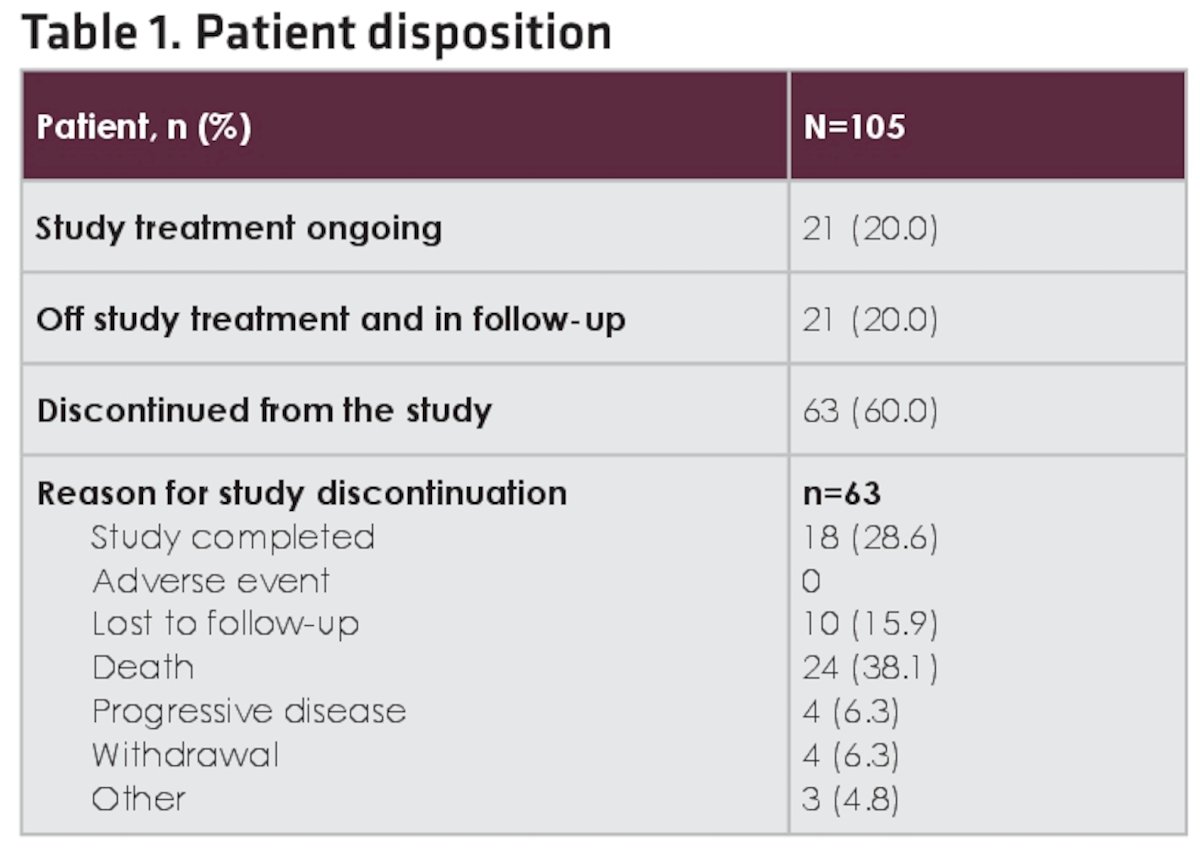
At data cutoff (July 5, 2024), 105 patients had been enrolled. At last follow-up:
- 21 patients (20%) had ongoing avelumab or axitinib treatment
- 21 patients (20%) had discontinued treatment and remained in follow-up
- 63 patients (60%) had discontinued from the study
The most common reasons for study discontinuation were death (38.1%), study completion (28.6%), and loss to follow-up (15.9%). 104 patients were included in the analysis population.
The baseline characteristics in the analysis population are summarized in the table below. Most patients were male (70.2%), had an Eastern Cooperative Oncology Group performance status of 0/1 (92.3%), and had clear cell RCC (89.4%). The median age was 70 years (25% of patients were >75 years old). The International Metastatic RCC Database Consortium risk score was favorable, intermediate, or poor in 26%, 45.2%, and 12.5% of patients, respectively.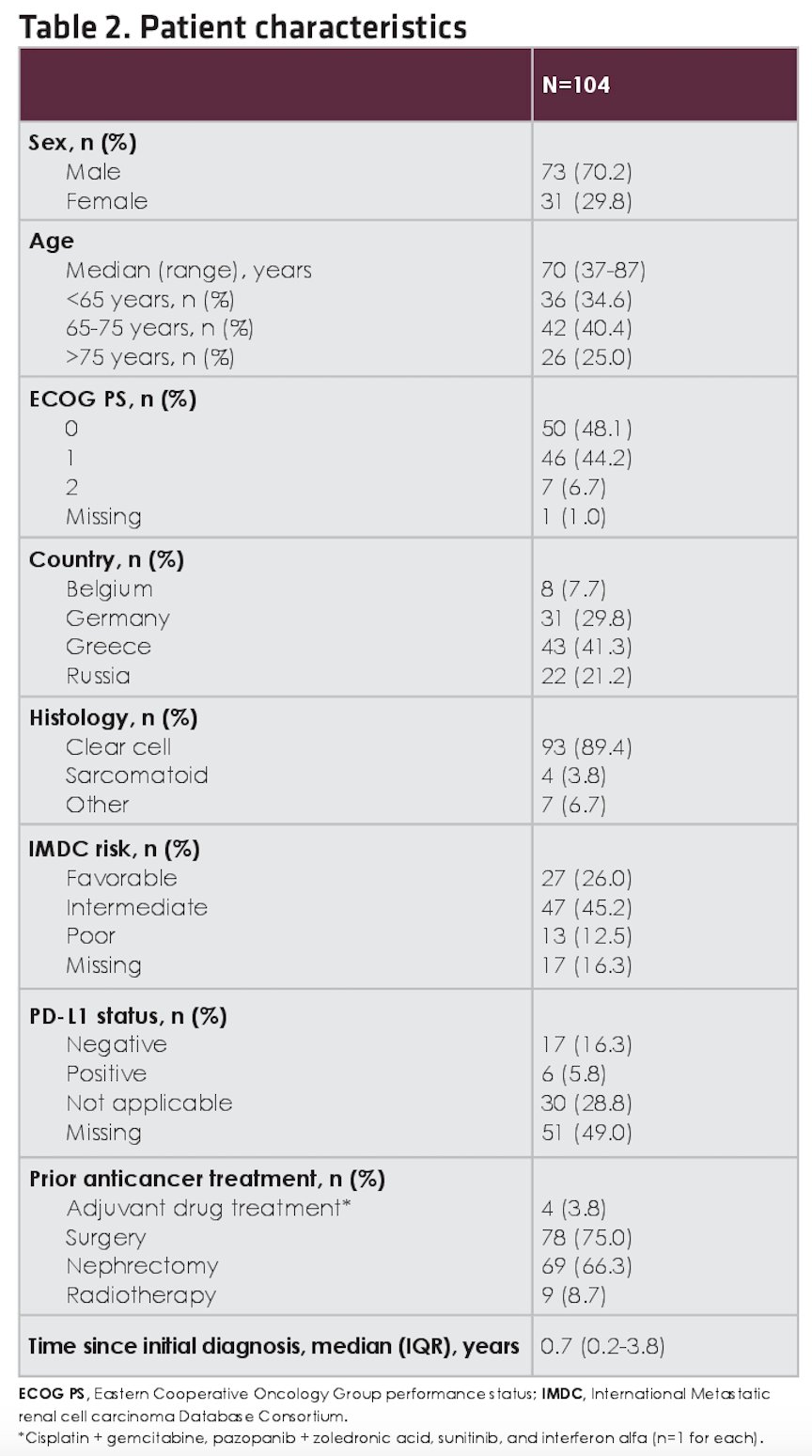
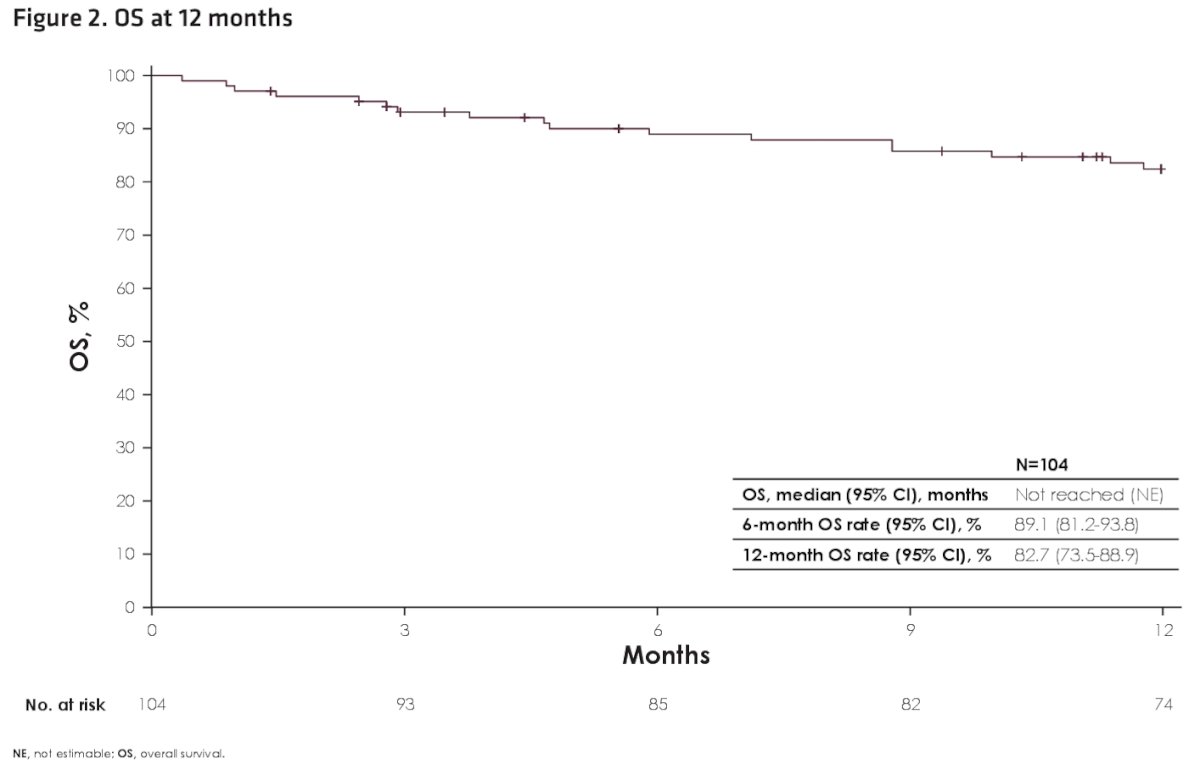
The median (IQR) durations of avelumab and axitinib treatment were 341 (151-559) and 354 (164-572) days, respectively. The median (IQR) time to discontinuation of avelumab + axitinib was 208 (77-446) days. The 6- and 12-month OS rates were 89% and 83%, respectively. Median OS was not reached.
Subgroup analyses of 12-month OS rates are shown in the table below.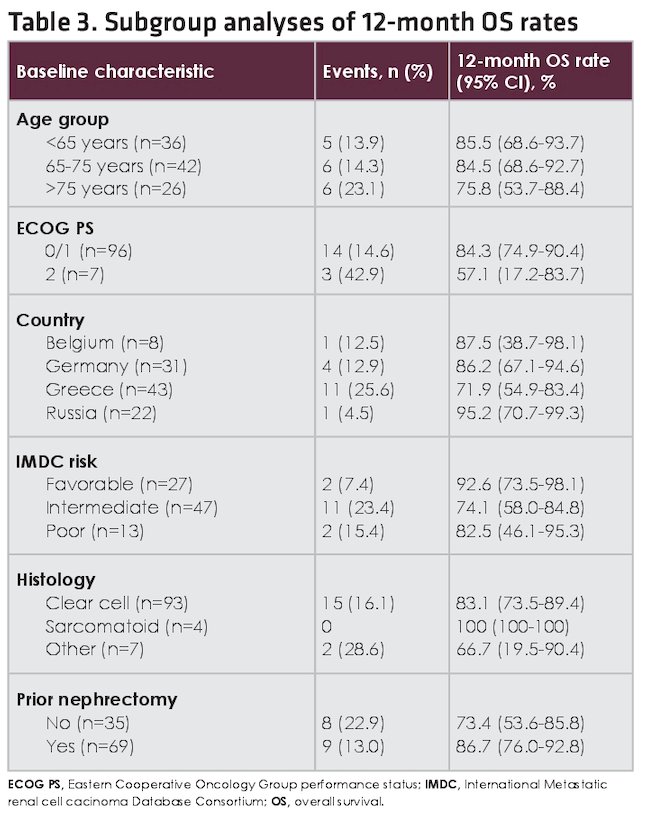
Other effectiveness endpoints are summarized in the table below:
- Median PFS was 11.3 months
- ORR was 46%
- Disease control rate was 79.3%

TRAEs occurred in 67.3% of patients, were grade ≥3 in 20.2%, and led to discontinuation of avelumab in 6.7% and axitinib in 9.6% (Table 5)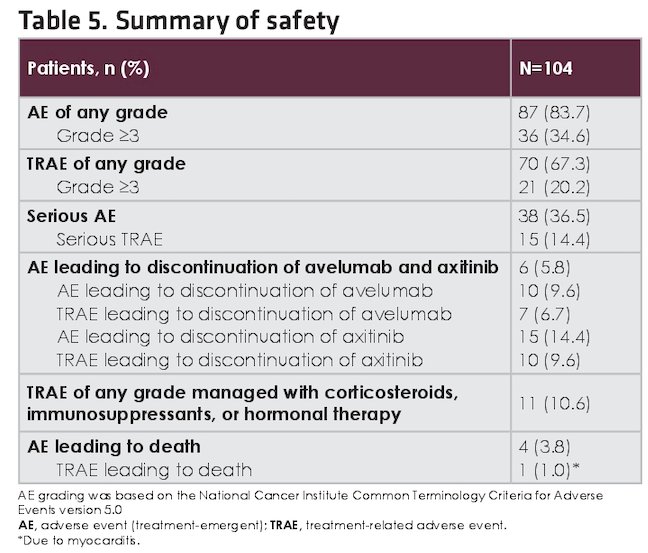
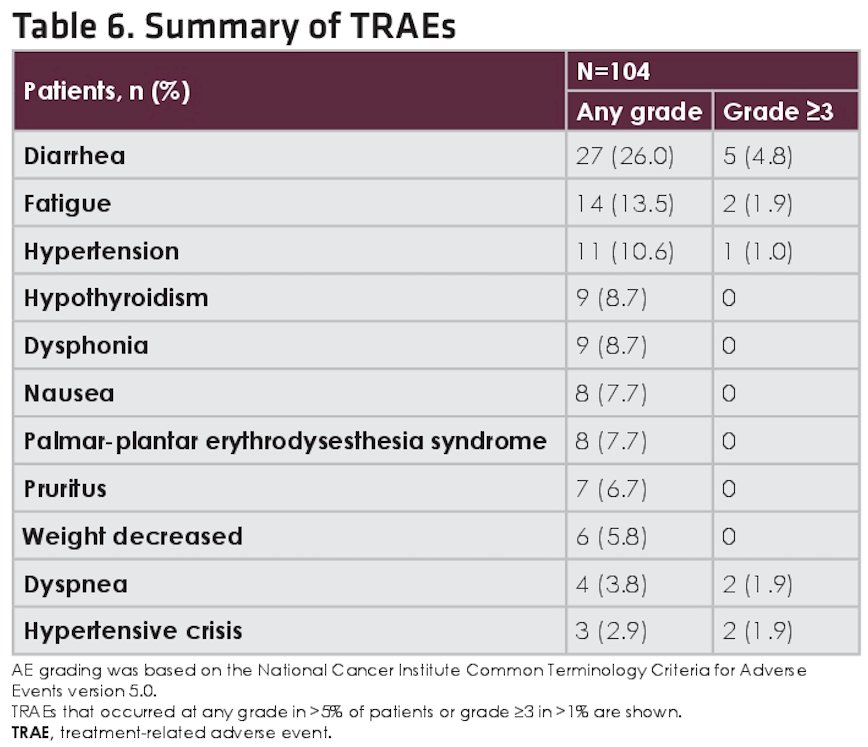
The most common TRAEs of any grade were diarrhea (26%), fatigue (13.5%), and hypertension (10.6%).
HRQOL scores were generally stable across the study period, including total score and subscales.

Dr. Merseburger concluded as follows:
- AVION is a prospective noninterventional study of patients with advanced renal cell carcinoma receiving 1st line avelumab + axitinib treatment in several countries (Belgium, Germany, Greece, and Russia)
- Results from the primary analysis of AVION (n=104) are consistent with those from JAVELIN Renal 101 and previous real-world studies of avelumab + axitinib in this setting
- Median overall survival (OS) was not reached, and the 12-month OS rate was 83%
- Median progression-free survival (PFS) was 11.3 months, and objective response rate (ORR) was 46%
- Grade ≥3 treatment-related adverse events (TRAEs) occurred in 20.2% of patients, and TRAEs led to discontinuation of avelumab or axitinib in 6.7% or 9.6%, respectively
- Corticosteroids, immunosuppressants, or hormonal therapy were administered to 10.6% of patients to manage any-grade TRAEs
- Health-related quality of life (HRQOL) scores were generally stable across the study period
- Overall, results from AVION demonstrate the effectiveness, safety, favorable tolerability, and stable HRQOL of avelumab + axitinib in a heterogeneous real-world population
Presented by: Axel S. Merseburger, MD, PhD, Chairman, Department of Urology, University Hospital Schleswig-Holstein, Lubeck, Germany
Written by: Rashid K. Sayyid, MD, MSc – Robotic Urologic Oncology Fellow at The University of Southern California, @rksayyid on Twitter during the 2025 Genitourinary (GU) American Society of Clinical Oncology (ASCO) Annual Meeting, San Francisco, CA, Thurs, Feb 13 – Sat, Feb 15, 2025.
References:- Motzer RJ, Penkov K, Haanen J, et al. Avelumab plus axitinib versus sunitinib for Advanced Renal-Cell Carcinoma. N Engl J Med 2019; 380(12):1103-1115.
- Choueiri TK, Motzer RJ, Rini BI, et al. Updated efficacy results from the JAVELIN Renal 101 trial: first-line avelumab plus axitinib versus sunitinib in patients with advanced renal cell carcinoma. Ann Oncol 2020; S0923-7534.