

(UroToday.com) The 2025 GU ASCO annual meeting featured a session on the ABCs of antibody drug conjugates and a presentation by Dr. Bixia Tang discussing a phase 1 study assessing SHR-A2102, a nectin-4 targeted antibody drug conjugate, in patients with advanced or metastatic urothelial carcinoma. Nectin-4 is a cell adhesion molecule that serves as an attractive therapeutic target for antibody drug conjugates, due to its high expression in a variety of solid tumors; nectin-4 is overexpressed in 97% of urothelial carcinomas. SHR-A2102 is a novel antibody drug conjugate that consists of a fully humanized IgG1 monoclonal antibody targeting nectin-4, a cleavable linker, and a topoisomerase I inhibitor payload with high membrane permeability and potent cell-killing efficacy. At GU ASCO 2025, Dr. Tang presented preliminary findings of this phase 1 trial, focusing on urothelial carcinoma.
Patients with locally advanced unresectable or metastatic urothelial carcinoma, who had failed or were intolerant to standard therapies, were eligible. SHR-A2102 was given IV at 1, 2, 4, 6, 8 mg/kg on D1 Q3W and 4 mg/kg on D1 and D8 Q3W during dose escalation. Subsequently, 6 and 8 mg/kg were selected for dose and efficacy expansions:

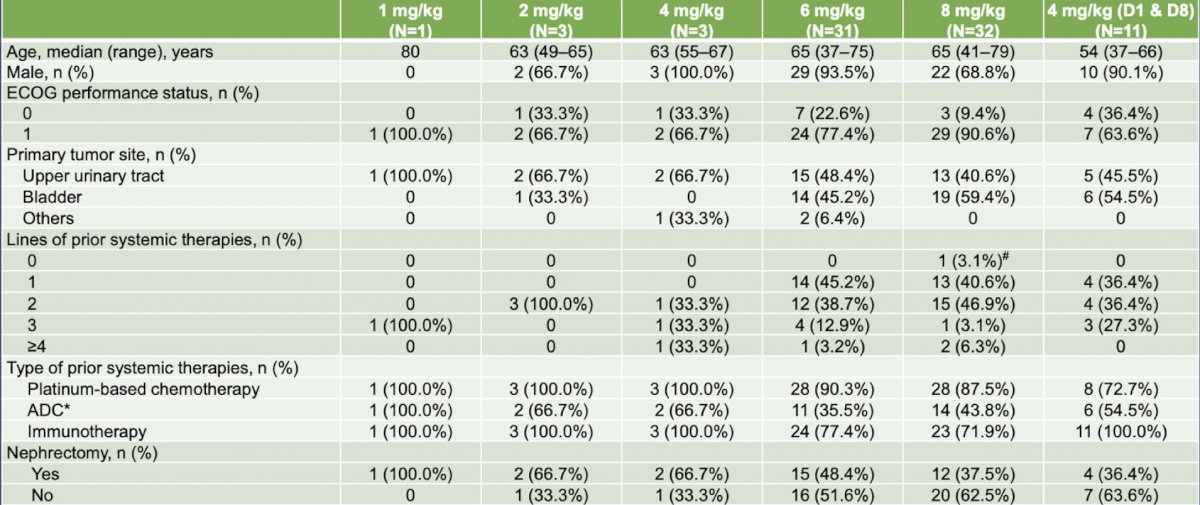
As of October 11, 2024, 81 urothelial carcinoma patients were enrolled with a median age of 65 years, 57.5% of patients having received ≥2 lines of prior systemic therapies, and 42.5% having received a prior antibody drug conjugate:
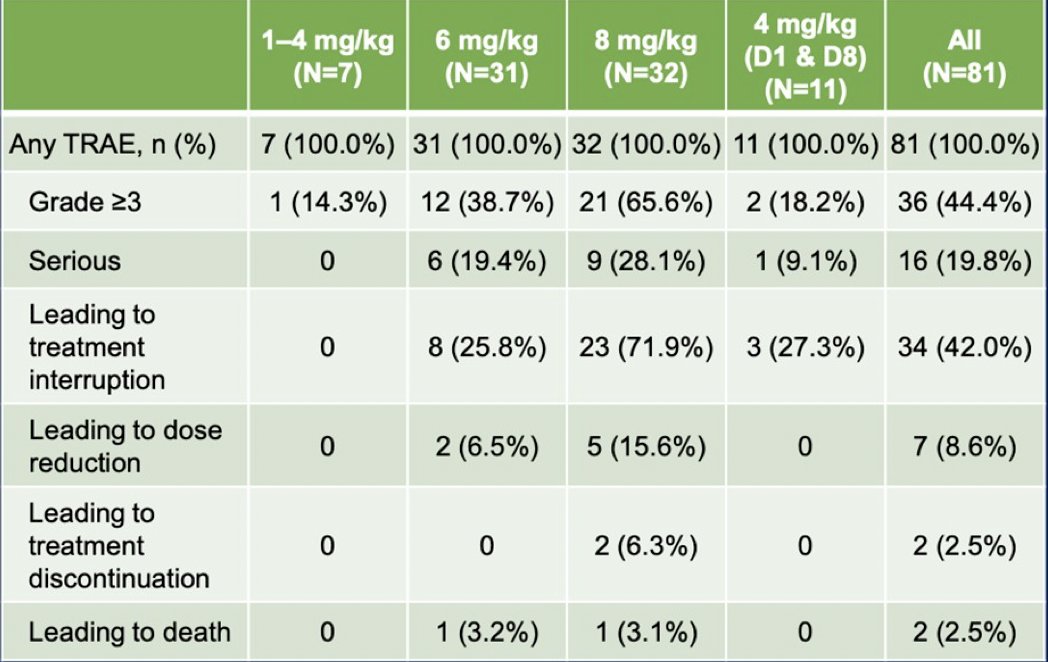
The median follow-up duration was 5.5 months (range: 0.4-15.3) and the median number of treatment cycles was 5.0 (range: 1-16). Overall, treatment related adverse events of grade 3 or worse occurred in 36 (44.4%) patients:
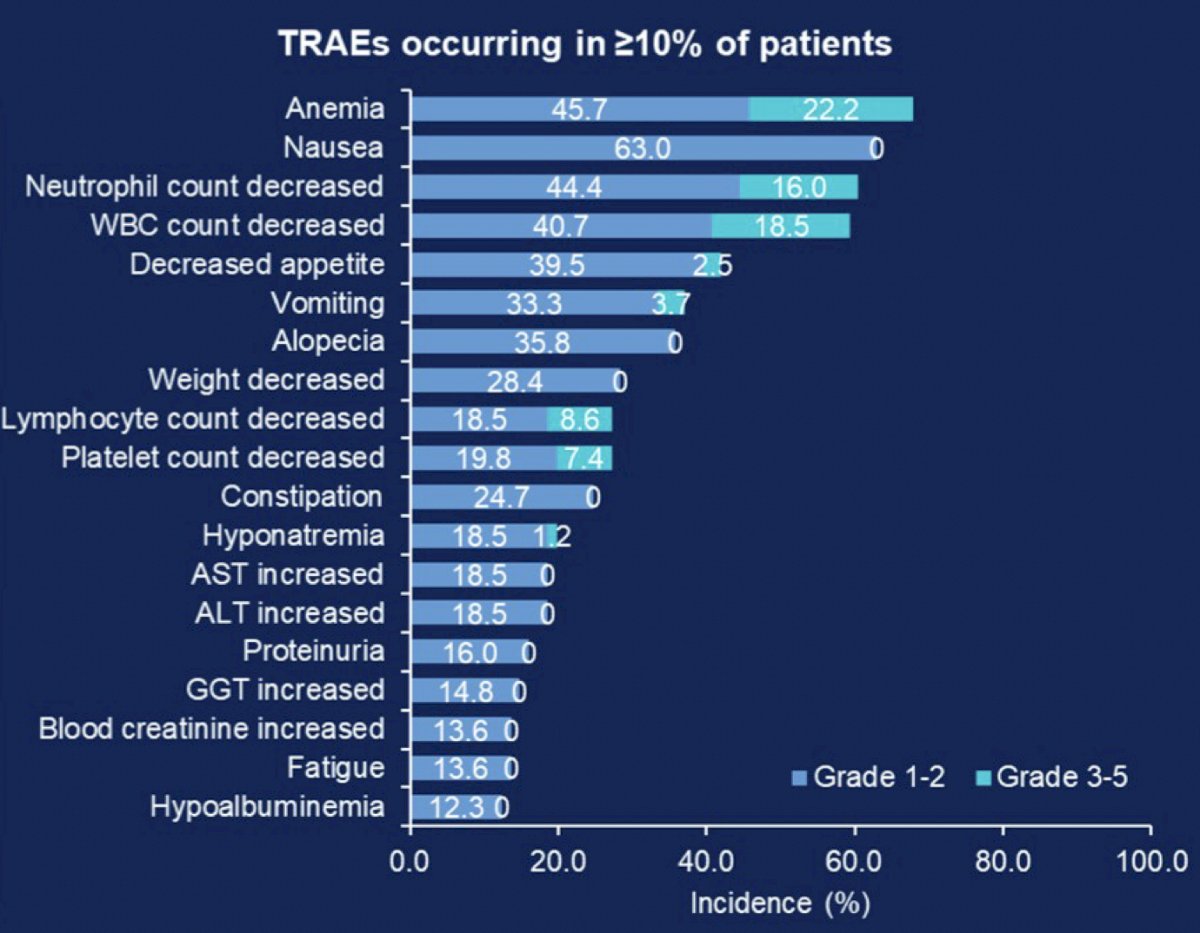
The most common (≥10%) treatment related adverse events (grade 3+) were anemia (22.2%), decreased WBC count (18.5%), and decreased neutrophil count (16.0%):
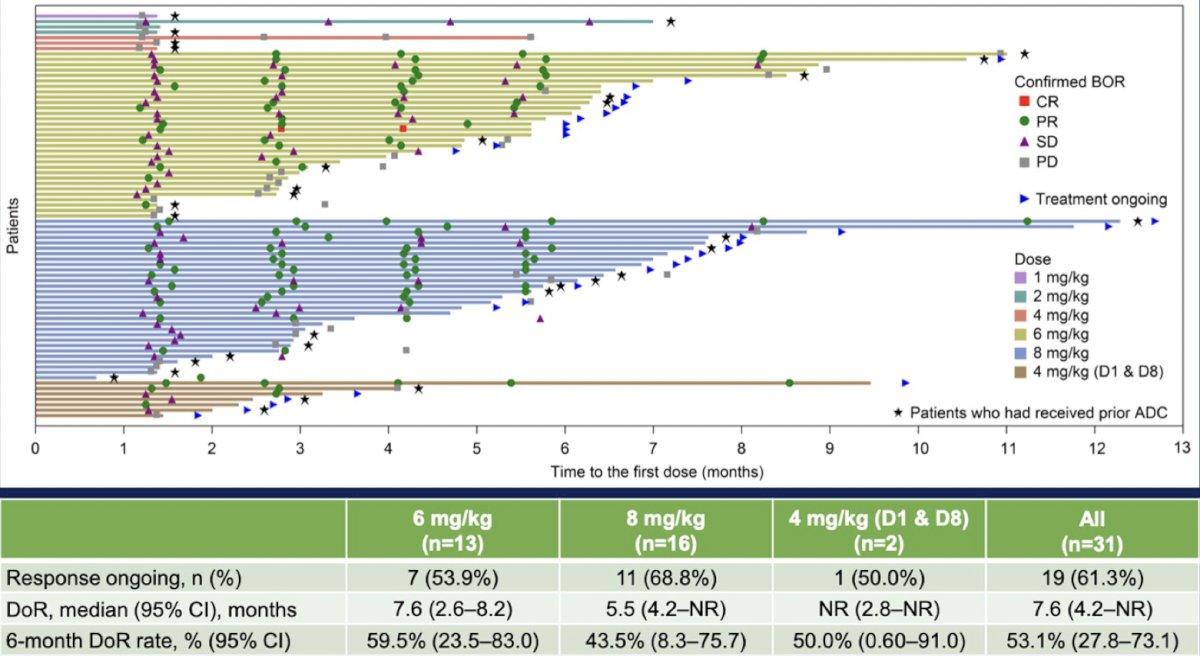
Confirmed objective response rate was 38.3% (95% CI 27.7–49.7) in all patients, and was 41.9% (95% CI 24.5–60.9) in the 6 mg/kg dose group and 50.0% (95% CI 31.9–68.1) in the 8 mg/kg dose group:

The 6-month duration of response rate was 53.1% (95% CI 23.1–83.0) in all patients, and was 59.5% (95% CI 23.5–83.0) and 43.5% (95% CI 8.3–75.7) in the 6 and 8 mg/kg groups, respectively:
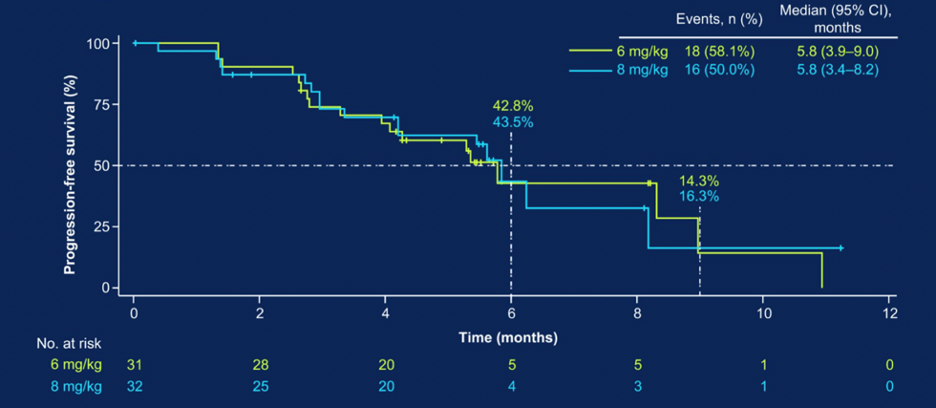
The median progression free survival in the 6 mg/kg group was 5.8 months (95% CI 3.9-9.0) and in the 8 mg/kg group was 5.8 months (95% CI 3.4-8.2):
Among 36 patients treated with prior antibody drug conjugates, the confirmed objective response rate was 36.1% (95% CI 20.8-53.8), with a 6 month duration of response rate of 52.4% (95% CI 20.1-77.0):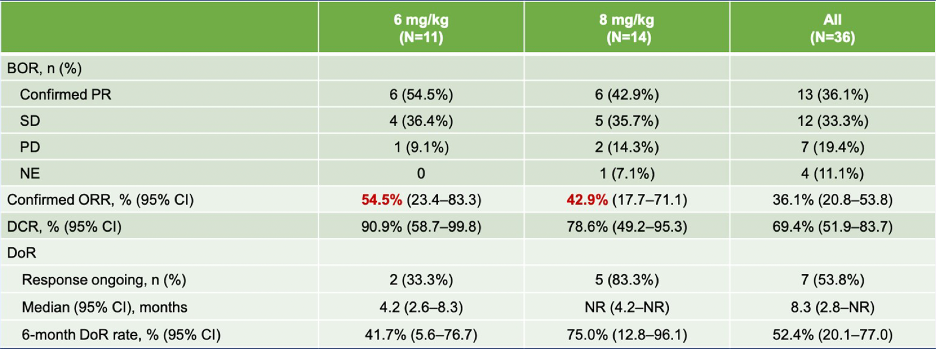
Dr. Tang concluded her presentation discussing a phase 1 study assessing SHR-A2102 in patients with advanced or metastatic urothelial carcinoma with the following take-home points:
- SHR-A2102 showed a tolerable and manageable safety profile in patients with advanced or metastatic urothelial carcinoma
- Common treatment related adverse events were hematological toxicities and gastrointestinal toxicities
- Incidences of treatment related adverse events leading to dose reduction (8.6%) and treatment discontinuation (2.5%) were relatively low
- The 6 mg/kg dose of SHR-A2102 had fewer toxicities compared to 8 mg/kg
- There was also promising anti-tumor activity observed at 6 and 8 mg/kg Q3W
- Objective response rate was 41.9% at 6 mg/kg and 50% at 8 mg/kg
- Median duration of response was 7.6 months at 6 mg/kg and 5.8 months at 8 mg/kg
- Median progression free survival was 5.8 months at 6 mg/kg and 5.8 months at 8 mg/kg
- 6 mg/kg Q3W was established as the recommended dose for SHR-A2102 monotherapy for pretreated advanced or metastatic urothelial carcinoma
Presented: by Bixia Tang, MD, Beijing Cancer Hospital, Beijing, China
Written by: Zachary Klaassen, MD, MSc – Urologic Oncologist, Associate Professor of Urology, Georgia Cancer Center, Wellstar MCG Health, @zklaassen_md on Twitter during the 2025 Genitourinary (GU) American Society of Clinical Oncology (ASCO) Annual Meeting, San Francisco, CA, Thurs, Feb 13 – Sat, Feb 15, 2025.