

(UroToday.com) The 2025 American Society of Clinical Oncology (ASCO) Genitourinary (GU) Annual Symposium held in San Francisco, CA between February 13–15, 2025 was host to a urothelial carcinoma rapid oral abstract session. Dr. Funda Meric-Bernstam presented updated results from the phase 1 TROPION PanTumor01 study of datopotamab deruxtecan in locally advanced/metastatic urothelial carcinoma.
Datopotamab deruxtecan (Dato-DXd) is a TROP2-directed antibody-drug conjugate (ADC) composed of an anti-TROP2 monoclonal antibody (mAb) covalently linked to a highly potent topoisomerase I inhibitor payload via a plasma-stable, tumor-selective, tetrapeptide-based cleavable linker.
TROPION-PanTumor01 is an ongoing, phase 1, multi-cohort, multicenter, open-label, dose-escalation and dose expansion study evaluating Dato-DXd in patients with several types of previously treated advanced solid tumors, including urothelial cancer.
The key eligibility criteria and primary/secondary endpoints are summarized below: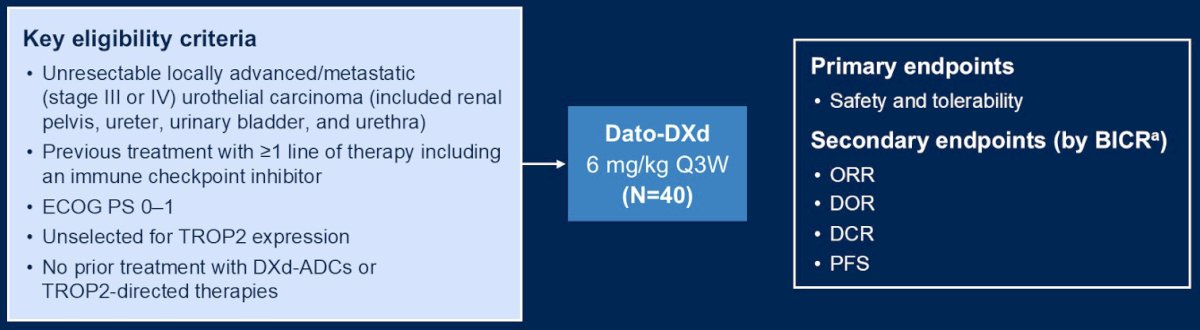
The demographic and baseline characteristics are summarized below. The median age was 66.5 years. The median time from diagnosis to study treatment was 24 months (range: 3–342 months). 60% of patients had received ≥3 prior lines of therapy in the locally advanced/metastatic setting. This was a heavily pre-treated population with all patients having received prior immunotherapy, 90% platinum-based chemotherapy, and 83% enfortumab vedotin.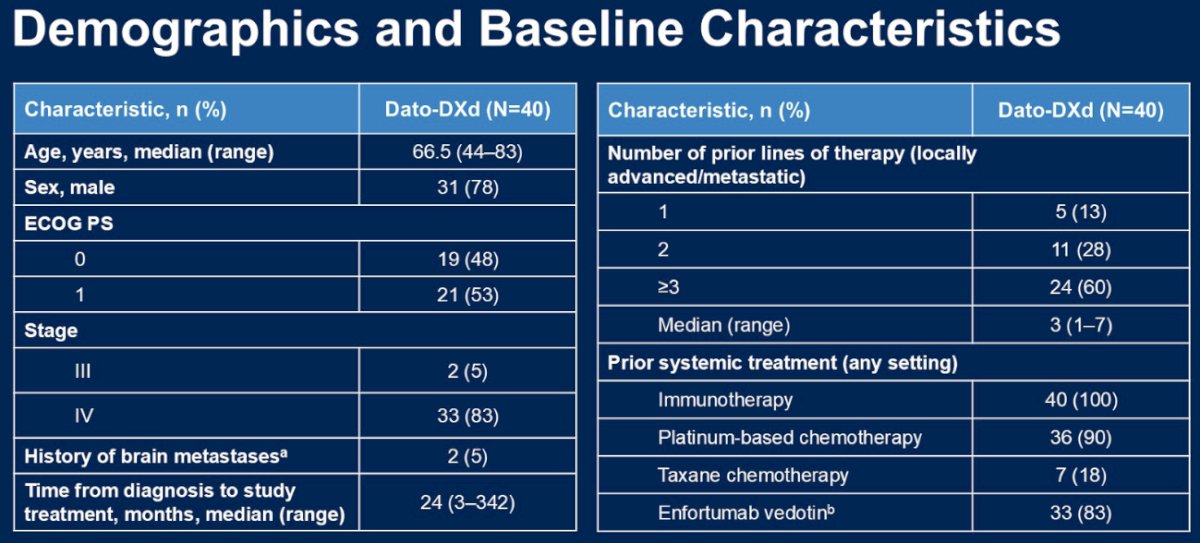
In the overall cohort, the objective response rate (ORR) was 25%, and the disease control rate (DCR) was 77.5%. One patient (2.5%) had a complete response, and nine patients had a partial response (22.5%). The median duration of response was not evaluable at this interim analysis, but the 6-months duration of response rate was 76.2%.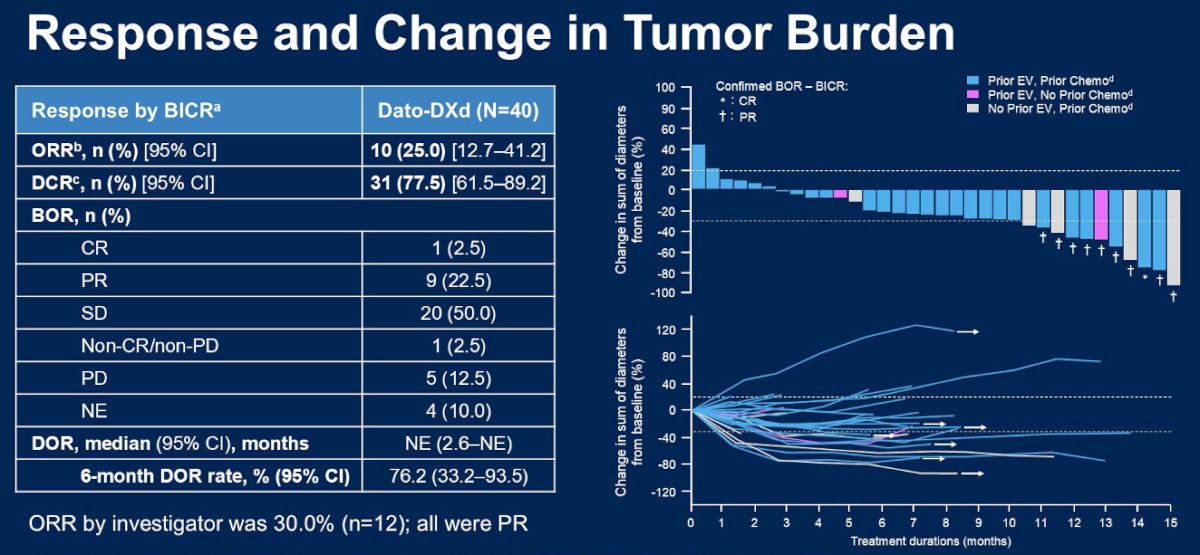
The median progression-free survival (PFS) was 6.9 months: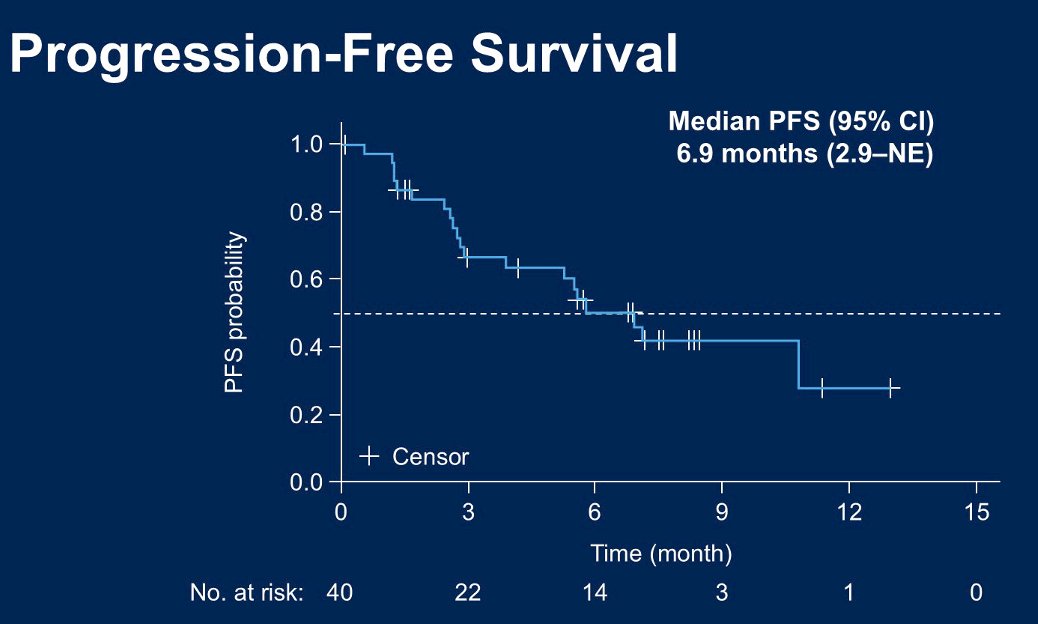
From a safety standpoint, any and grade ≥3 treatment-emergent adverse events (TEAEs) were observed in 98% and 55% of patients, respectively. Treatment-related deaths were observed in two (5%) patients.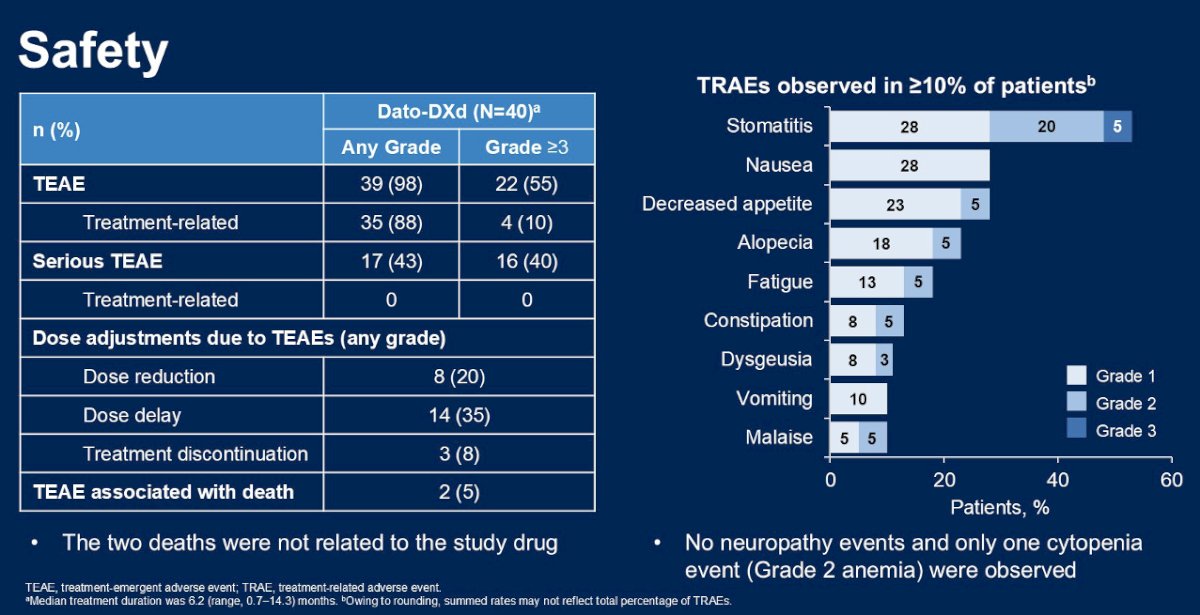
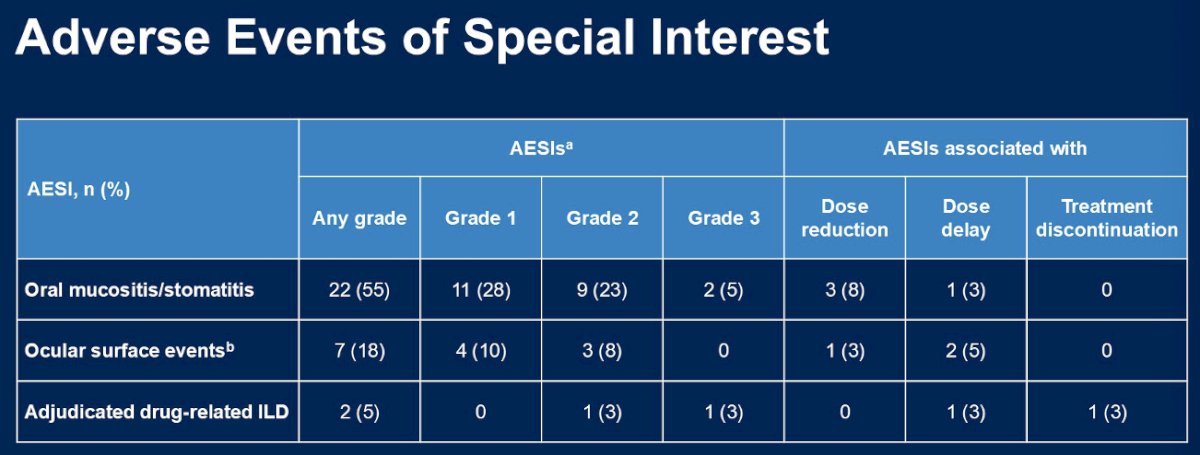
Adverse events of special interest are summarized below:
Dr. Meric-Bernstam concluded as follows:
- In this update from TROPION-PanTumor01, Dato-DXd continues to demonstrate encouraging activity in heavily pretreated patients with locally advanced/metastatic urothelial cancer
- The confirmed ORR by BICR was 25%, and the median PFS was 6.9 months
- The median DoR was not reached at 10 months of follow-up; 76% of responders remained in response at 6 months
- The safety profile of Dato-DXd was consistent with that in previous studies: no new safety signals were observed
- These findings support the ongoing evaluation of Dato-DXd in patients with urothelial cancer in the phase 2 TROPION-PanTumor03 (NCT05489211) trial
Presented by: Funda Meric-Bernstam, MD, Chair, Department of Investigational Cancer Therapeutics, Division of Cancer Medicine, MD Anderson Cancer Center, Houston, TX
Written by: Rashid K. Sayyid, MD, MSc – Robotic Urologic Oncology Fellow at The University of Southern California, @rksayyid on Twitter during the 2025 Genitourinary (GU) American Society of Clinical Oncology (ASCO) Annual Meeting, San Francisco, CA, Thurs, Feb 13 – Sat, Feb 15, 2025.
Related content: TROPION-PanTumor01 Trial for Advanced Bladder Cancer - Funda Meric-Bernstam